



Edwardian Fainting Couch
An edwardian fainting couch is a long, reclining seat designed for resting in semi-recumbent comfort, blending period woodwork with soft upholstery.
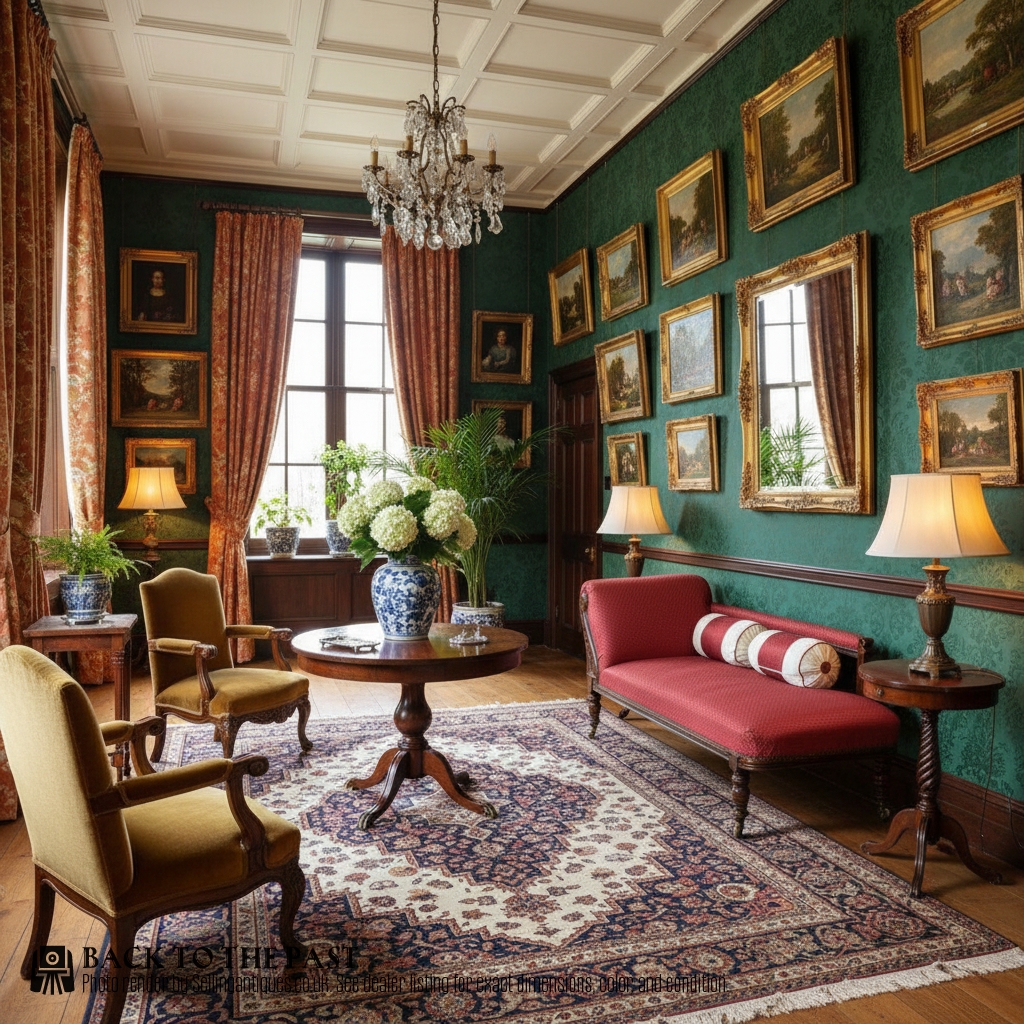
Edwardian Fainting Couch
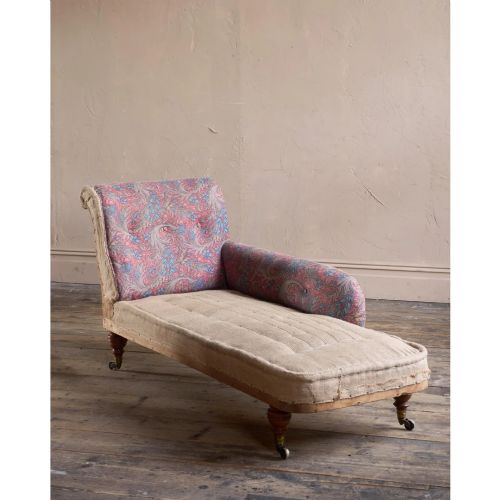
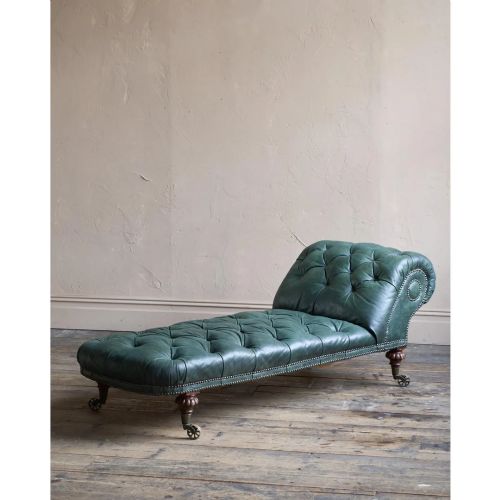
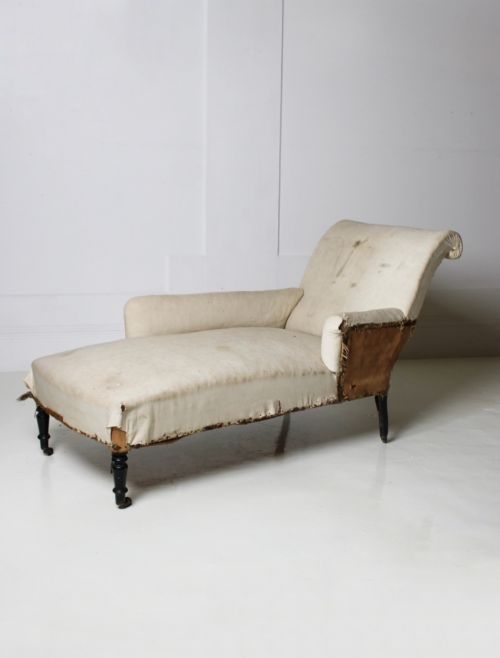
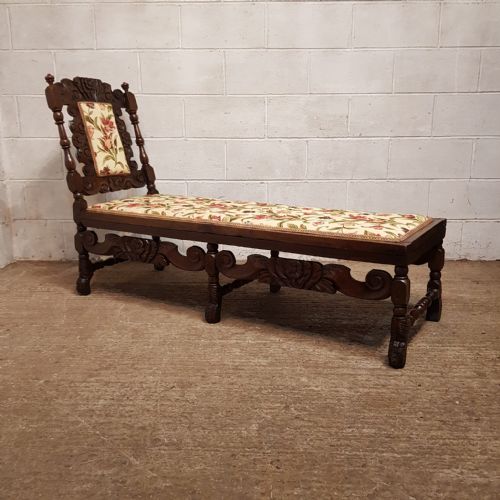
An edwardian fainting couch encompasses long seats and daybeds originating from the 19th century through to the early 20th century. These pieces bridge the gap between a standard armchair and a full sofa, offering a single raised end for reclining.
The versions most commonly met on this page span the Victorian, Edwardian, and 1900 periods. They appear under various forms including chaise longues and daybeds, reflecting the domestic comfort of their respective eras.
Makers such as Howard and Sons, William Birch, and Hampton and Sons contributed notable examples to this category. Their work displays the characteristic timber frames and varied upholstery styles found across the inventory.
How they were made
The construction relies heavily on solid timber frames fashioned from walnut, oak, and mahogany. These foundational woods provide the structural integrity required for long, horizontal seating.
Upholstery methods involve traditional stuffing finished with coverings of velvet, leather, fabric, calico, or brass detailing. Buttoned finishes and gilt decoration often complement the primary wooden structures.
Edwardian Fainting Couch Retail Price Guide 2026
Typical asking prices for edwardian fainting couch among the pieces listed under this phrase on Sellingantiques today, from the lower quarter to the upper quarter. They describe what is for sale here now, not the wider market.
Victorian sitting rooms required furniture robust enough to support heavy upholstery yet graceful enough to accommodate a lady in full bustle.
What varies in quality
Quality differentiates itself through the precision of the timber carving and the calibre of the frame construction. Pieces featuring solid oak or walnut frames exhibit greater durability than simpler alternatives.
The standard of upholstery and the inclusion of recognised maker attribution elevate the standing of a piece. Finer examples display meticulous attention to buttoning and the application of quality leather or velvet coverings.
Howard and Sons·William Birch·Hampton and Sons
The Edwardian Fainting Couch Glossary
- Chaise Longue
- A long reclining chair shaped like a chair combined with a couch. This form allows the user to sit with legs extended.
- Daybed
- A couch that can be used as a seat or a bed. These items serve a dual purpose in period interiors.
- Calico
- A plain-woven textile made from unbleached cotton. It frequently serves as a base upholstery layer beneath final decorative fabrics.
- Gilt Decorated
- Covered with a thin layer of gold leaf or gold paint. This treatment enhances the decorative timber surfaces of the frame.
Edwardian Fainting Couch: Frequently Asked Questions
What is an edwardian fainting couch?
An edwardian fainting couch is a type of daybed or chaise longue designed for reclining in a semi-seated position. These pieces date across the 19th and early 20th centuries.
They combine a timber frame of walnut, oak, or mahogany with upholstery such as velvet, leather, or fabric. Their defining characteristic is a raised headrest at one end.
How were these daybeds used originally?
These seats were utilised in domestic interiors for resting without fully retiring to a bedroom. They provided a comfortable place to recline during the day.
Ladies often used them while wearing restrictive corsets, which explains the traditional association with fainting. They functioned as both decorative furniture and practical resting places.
How do I identify the period of a chaise longue?
Dating relies on observing the timber species, carving styles, and upholstery techniques. Victorian pieces often feature heavier carved oak, while Edwardian examples tend to show lighter construction.
Maker stamps or labels, when present, offer the most precise indication of origin and date. Comparing the overarching design style to known 19th-century forms also aids identification.
What materials should I expect to find?
The frames are constructed primarily from hardwoods such as mahogany, walnut, and solid oak. Brass details occasionally accent the wooden structures.
Upholstery materials include leather, velvet, patterned fabric, and calico linings. Buttoned finishes are frequently employed across the padded surfaces.