




Edwardian Entry Stand
An Edwardian entry stand welcomes visitors with practical storage for hats, coats and umbrellas in the hallway.
Edwardian Entry Stand
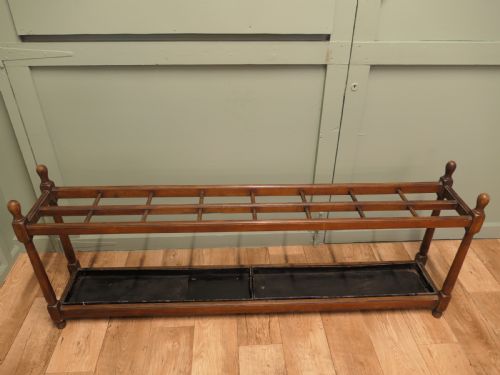
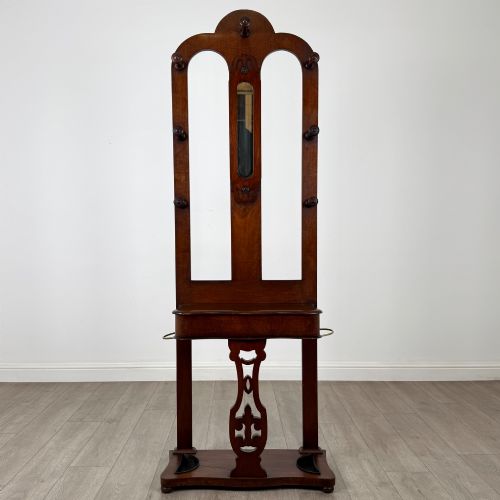
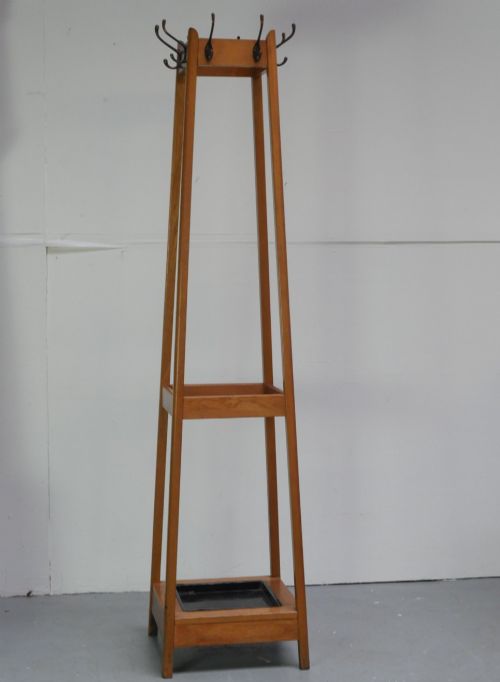
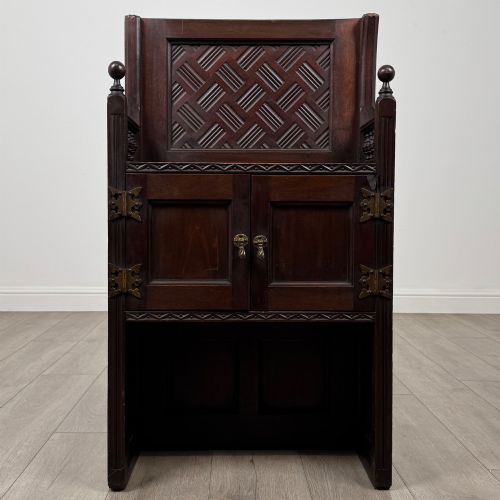
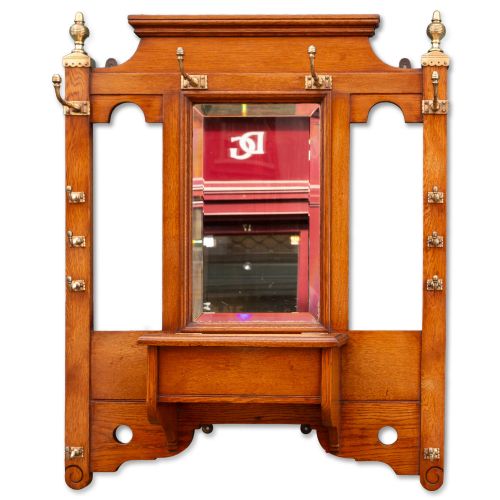
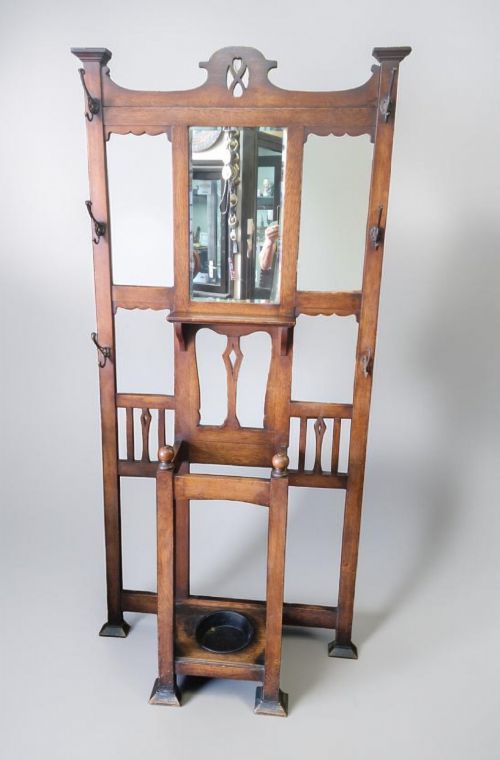
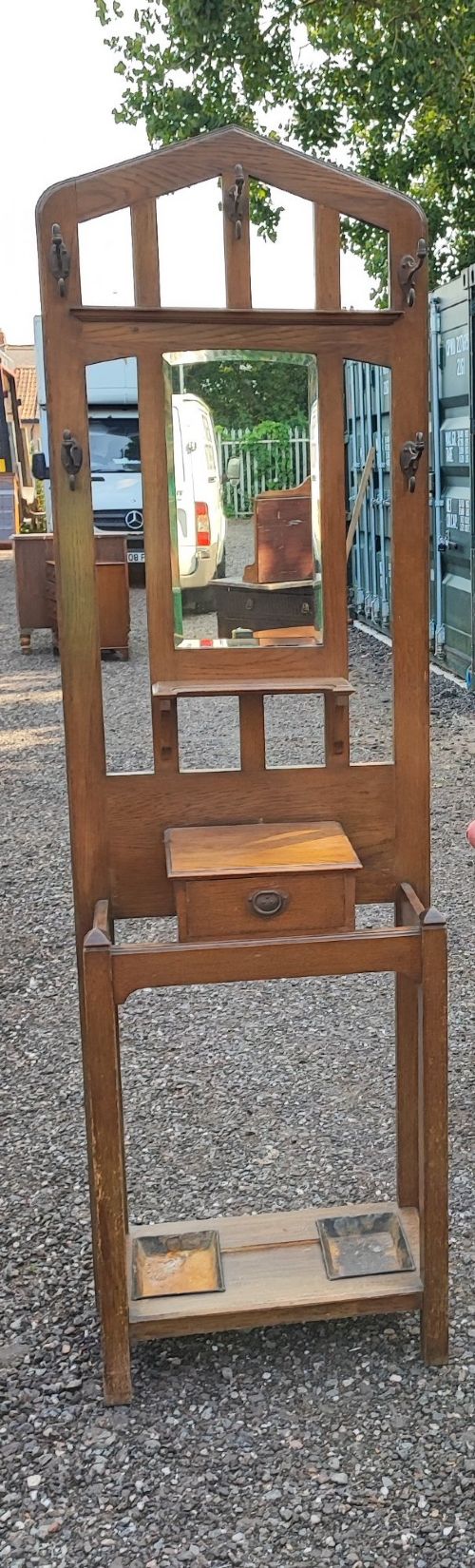
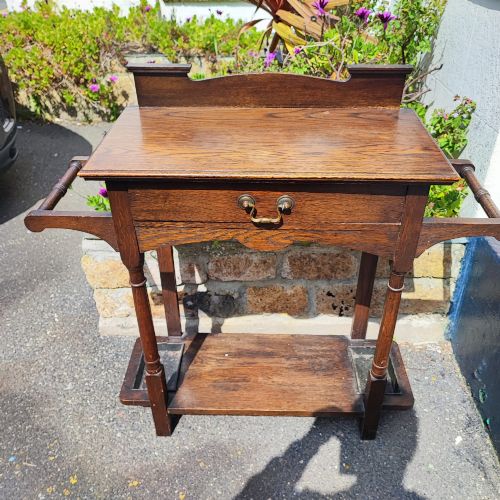
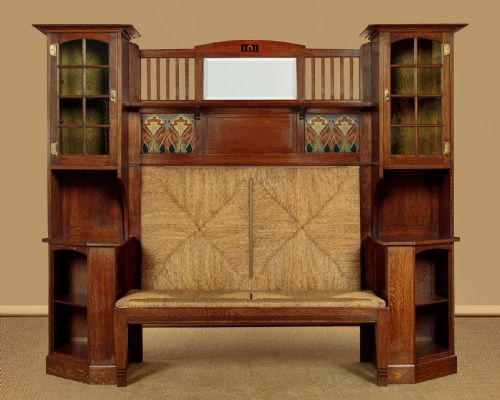
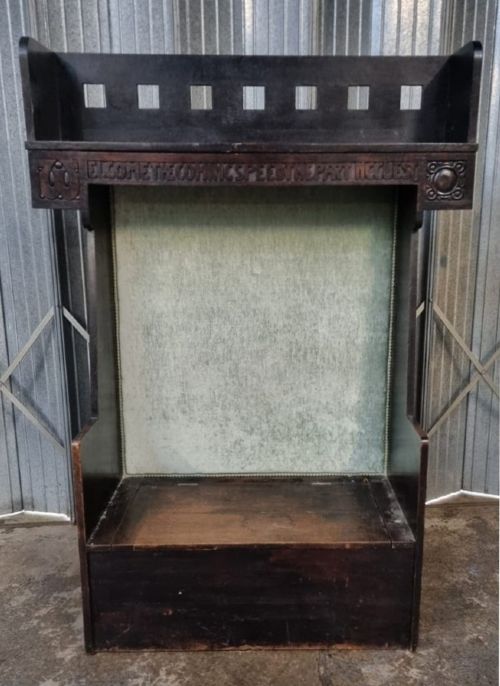
The edwardian entry stand appears primarily as a hall stand, hall seat, or stick stand designed for the hallway. Pieces on this page span the Edwardian period, 1900, 1910, and 1920, alongside Victorian and 19th-century examples.
Forms range from narrow wall-mounted coat racks and bentwood stands to substantial combinations incorporating seats, cabinets, and umbrella wells. The materials include oak, mahogany, walnut, bamboo, cast iron, and brass.
Stylistic influences cover Arts and Crafts, Art Nouveau, English Country House, and Gothic traditions. Many items integrate mirrors, glove boxes, and brass or iron hooks for daily organisation.
Materials and Construction
Makers utilised solid timbers like oak and mahogany, often shaping them through carving, bending, or inlay work. Metal elements such as cast iron and brass provided durable frameworks and drip trays for umbrellas.
Structural integrity relied on pegged joints, turnings, and wall-mounting brackets where appropriate. Mirrors and marble inserts were frequently integrated into the wooden carcasses to add utility and light to the hall.
Carved Greenman motifs peer out from the woodwork, adding a touch of folklore to greet your guests.
Assessing Quality
Quality rests on the selection of timber, the depth of carving, and the robustness of the metalwork. Pieces showing detailed Arts and Crafts hand-carving or substantial cast iron structures stand apart from simpler utility items.
The integration of fitted components such as original brass drip trays, bevelled mirror plates, and functioning glove drawers elevates a piece. Superior construction employs dense oak or rich mahogany with sound joinery throughout the framework.
The Edwardian Entry Stand Glossary
- Hall stand
- A multi-functional hallway item combining coat hooks, a hat shelf, a mirror, and umbrella holders. It provides a central drop-off point for outdoor garments.
- Bentwood
- Wood softened by steam and bent into curved structural forms. This technique created light yet resilient frames for hats and coats.
- Drip tray
- A removable metal basin placed at the base of stick stands to catch moisture from wet umbrellas. These are typically fashioned from brass or cast iron.
- Arts and Crafts
- A design movement valuing handcraftsmanship, simple forms, and honest materials. It rejected mass-produced ornamentation in favour of visible construction.
Edwardian Entry Stand: Frequently Asked Questions
Where should I place an entry stand?
An entry stand belongs in a hallway, vestibule, or porch where household members and guests remove coats and boots.
Position the piece against a sturdy wall, leaving enough clearance for doors, drawers, and umbrella storage.
How do I maintain wooden hall stands?
Dust timber surfaces regularly with a soft cloth and apply a quality wax periodically to nourish the grain.
Protect the wood from prolonged moisture by emptying umbrella drip trays promptly and wiping up rainwater.
Did Edwardian stands include mirrors?
Many hall stands incorporated bevelled mirrors into the upper wooden framework to let visitors check their appearance.
These mirrors also reflected natural light into darker entrance halls.
What is the difference between a hall seat and a hall stand?
A hall seat incorporates an integrated bench, often with a hinged lid for concealed storage beneath the seat.
A hall stand focuses primarily on vertical storage with hooks, shelves, and umbrella compartments rather than seating.