
Antique Stick and Hat Stand
When choosing an antique stick and hat stand, you select a functional piece of hallway furniture designed to store outerwear and walking gear.
Antique Stick and Hat Stand
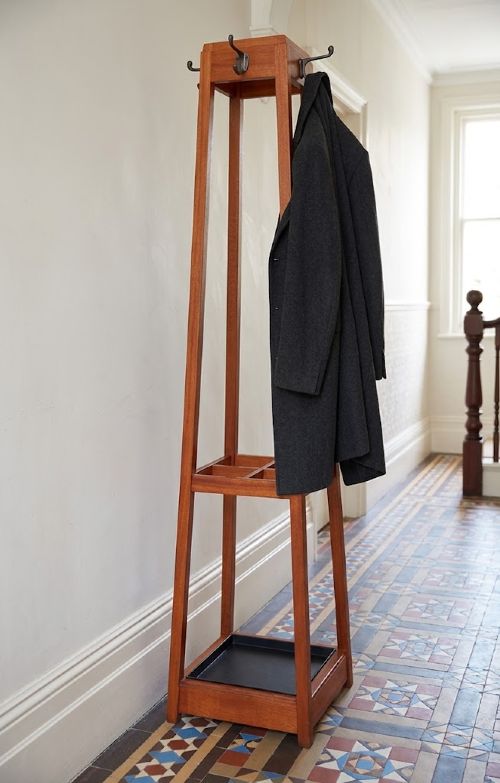
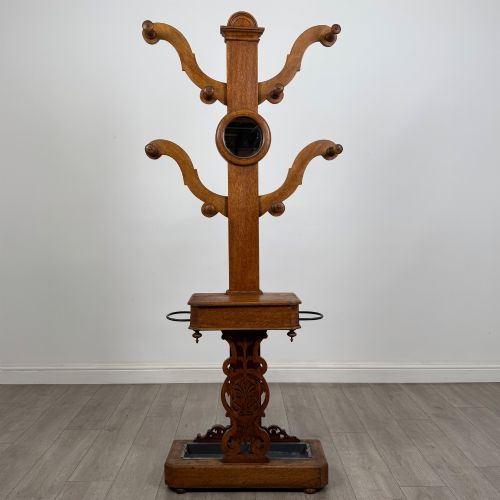
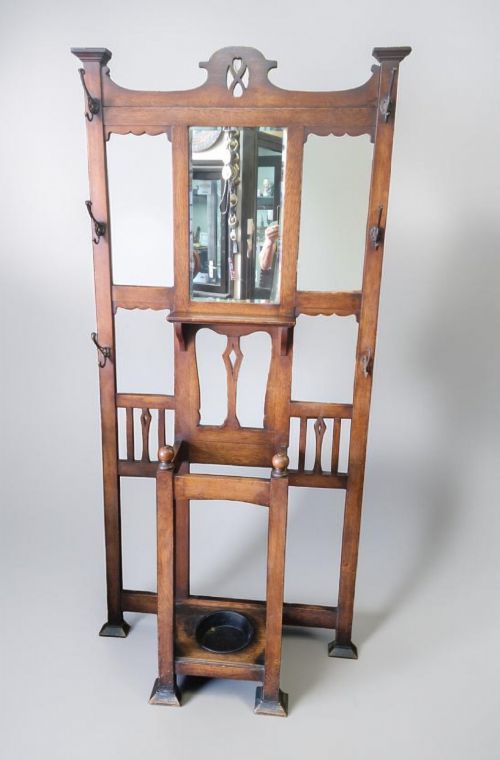
An antique stick and hat stand serves as a traditional piece of hallway furniture created to hold coats, hats, umbrellas, and walking sticks. These items appear primarily in Victorian and Edwardian periods, constructed to organise entrance spaces in large homes.
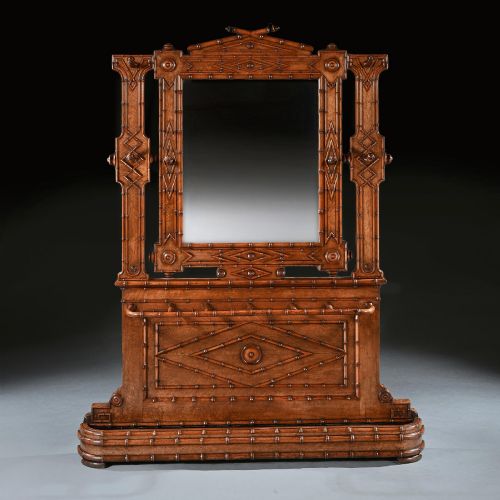
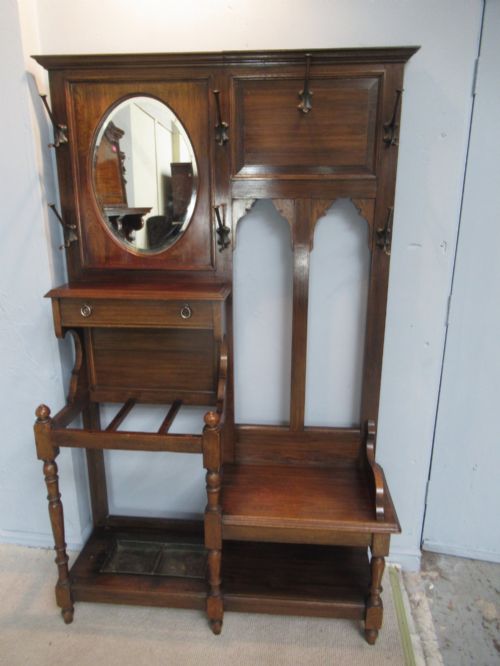
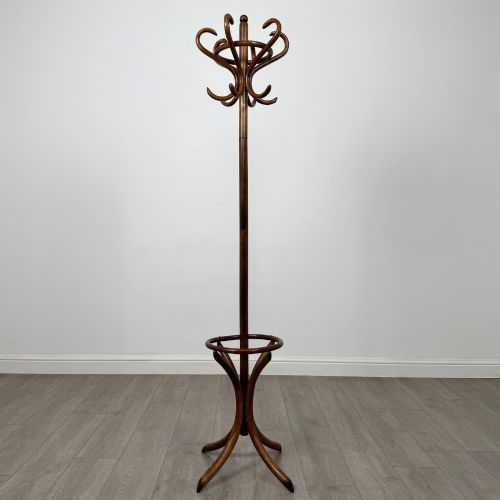
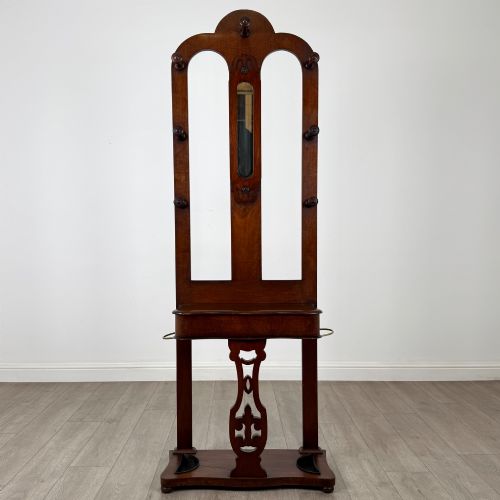
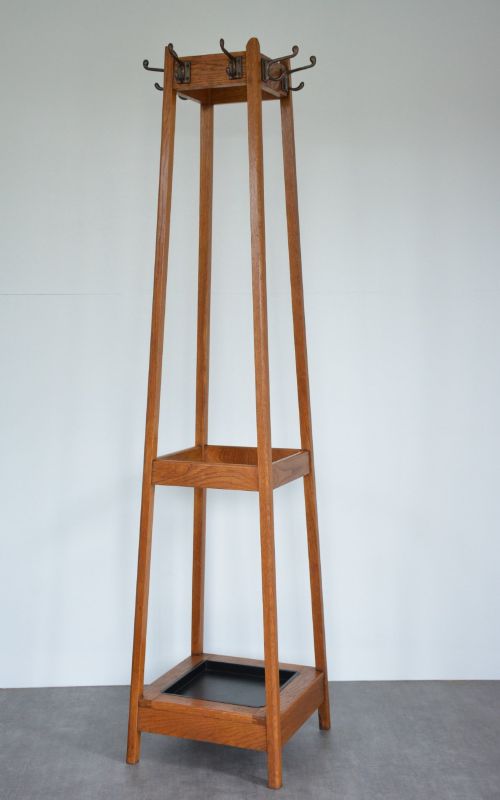
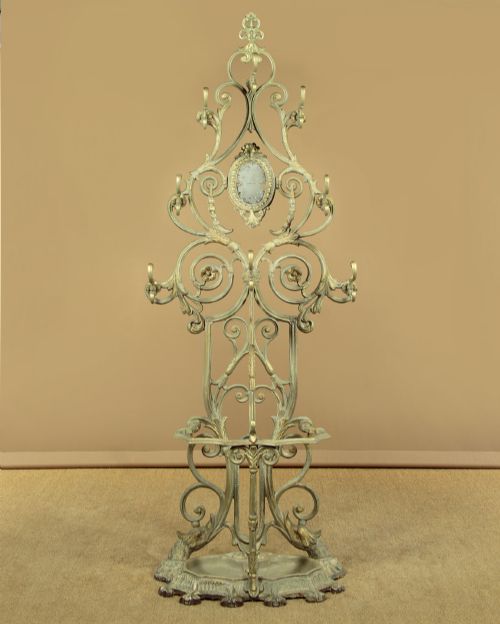
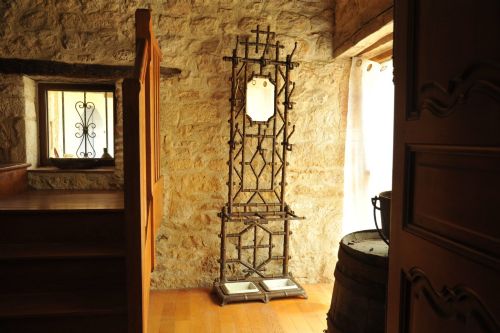
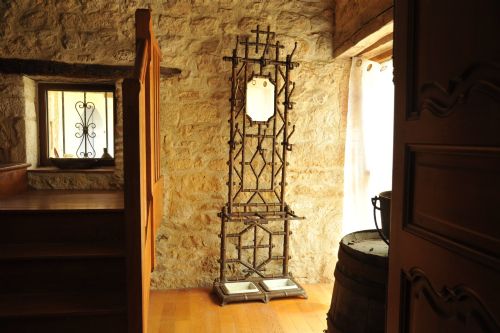
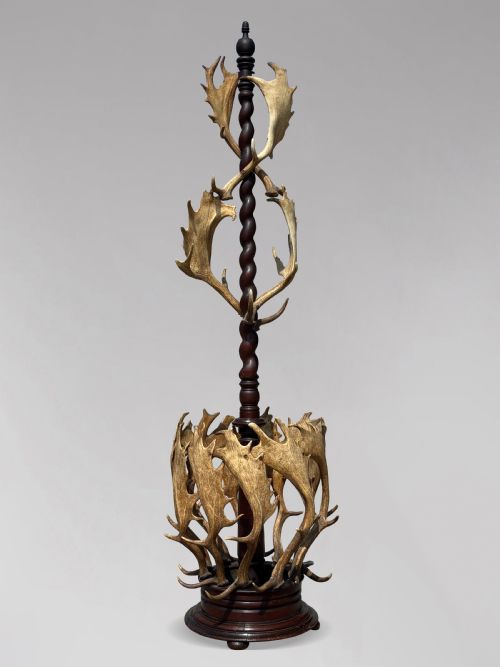
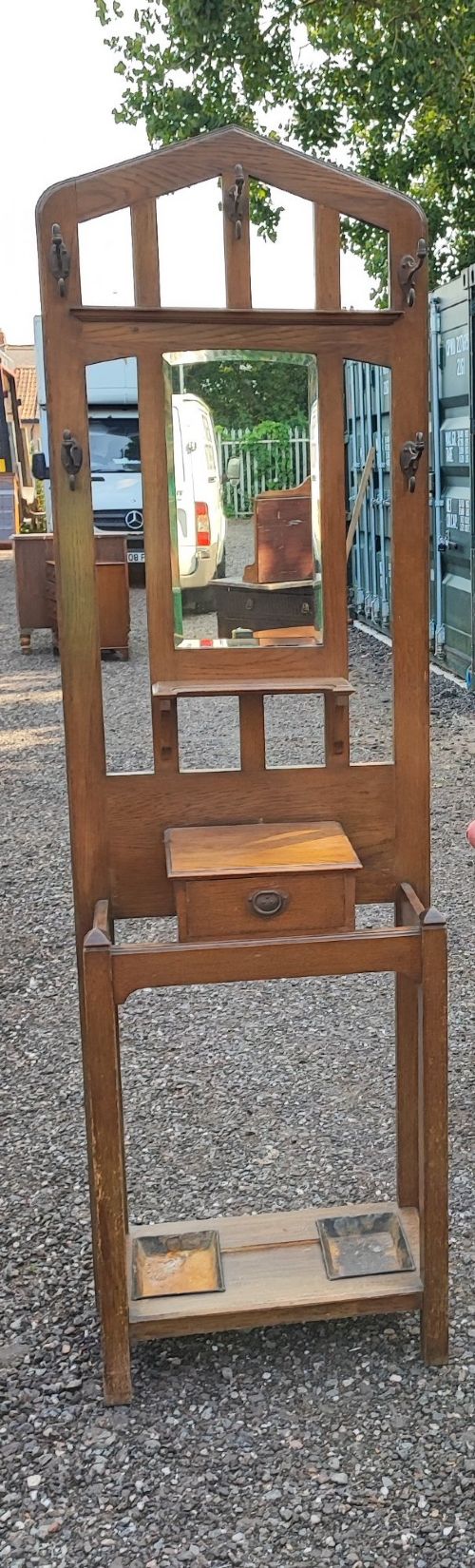
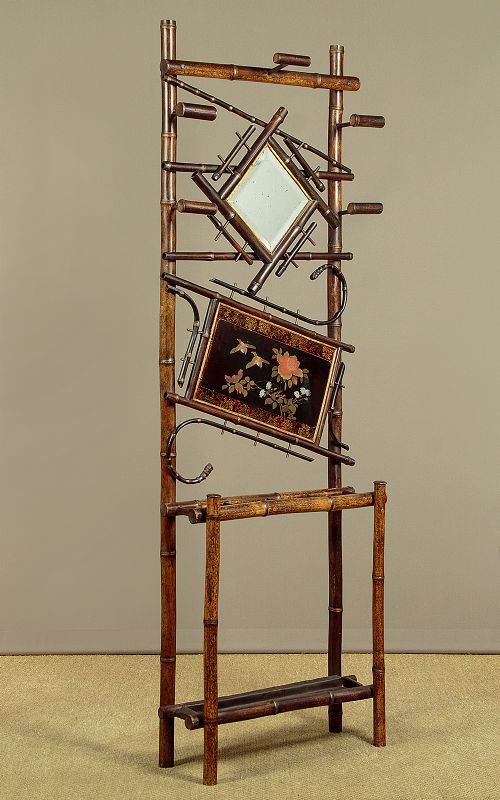
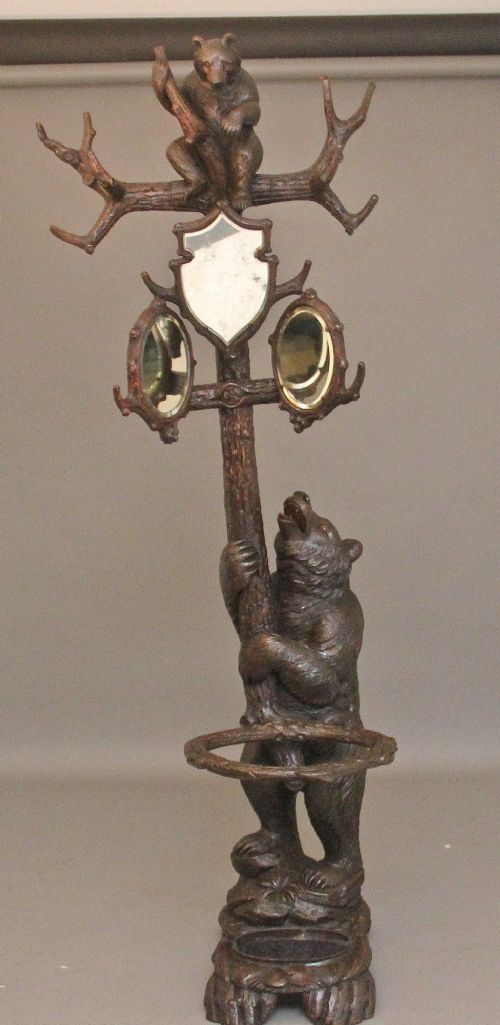
Buyers will encounter many variations on this page, ranging from heavy carved oak and mahogany frames with central mirrors to lighter bamboo and cast iron designs. The selection frequently includes Arts and Crafts models alongside French faux bamboo and Black Forest carved bear pieces.
Materials and construction methods
Cabinetmakers utilised solid timbers such as oak, mahogany, and walnut, often incorporating carved details like Greenman motifs or geometric inlays. Many examples feature integrated brass hooks, glass panels, and marble shelves designed to withstand daily use in domestic hallways.
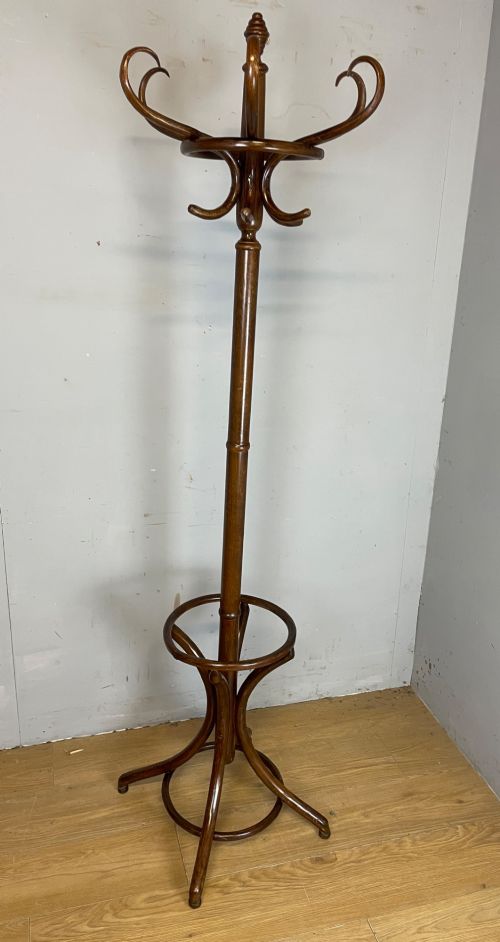
Cast iron and metal variations frequently employed foundry work, as seen in Coalbrookdale style pieces, complete with integrated drip trays to catch rainwater from umbrellas. Bentwood designs utilised steamed beech to achieve curved frames, whilst bamboo and faux bamboo structures relied on natural cane joined with pinned connections.
Carved bears gaze solemnly from the timber crests of Black Forest hall stands, forever guarding your umbrella.
Distinguishing quality across pieces
Quality in these hall stands rests upon the depth and execution of the woodwork, particularly in carved details like foliage or animal figures. Superior examples exhibit substantial timber weights, well-fitted bevelled mirrors, and original brass or metal hardware rather than replacement fittings.
The choice of materials also signals standard, with finely figured mahogany and dense walnut sitting above simpler softwood structures. Structural integrity in joints, robust umbrella wells, and intact drip trays demonstrate the durability built into higher tier examples.
Coalbrookdale·Falkirk Foundry
The Antique Stick and Hat Stand Glossary
- Bentwood
- A technique of steaming wood, typically beech, to bend it into curved structural shapes. This method creates lightweight yet resilient frames common in late nineteenth and early twentieth century stands.
- Faux bamboo
- Simulated bamboo carved or painted onto wood or cast iron to mimic the appearance of natural cane. It gained popularity during the Aesthetic Movement and Japonisme periods.
- Drip tray
- A metal or ceramic basin positioned at the base of a stand to catch water from wet umbrellas. These trays protect flooring and the lower frame from moisture damage.
- Greenman
- A sculptural architectural ornament depicting a human face surrounded by or entwined with leaves and vines. It appears frequently in carved Victorian oak furniture.
- Aesthetic Movement
- A late nineteenth century design style that emphasised visual beauty over narrative subject matter. Pieces from this movement often utilise bamboo, ebonised finishes, and Japanese influences.
Antique Stick and Hat Stand: Frequently Asked Questions
Where should I place a hall stand?
Position your piece in an entrance hall or porch where it can serve its original purpose of holding outdoor wear. Ensure there is adequate wall space to support taller designs featuring mirrors and heavy timber crests.
Allow sufficient clearance around the base so that umbrellas and walking sticks can be easily removed from their respective holders without scraping adjacent walls.
How do I care for wooden hall stands?
Maintain the timber by applying appropriate furniture wax periodically to nourish the surface and preserve the grain. Keep the piece away from direct heat sources and dramatic temperature shifts to prevent wood splitting.
Inspect the metal drip trays regularly, emptying and drying them to prevent rust formation from accumulated rainwater running off wet umbrellas.
Are cast iron stands stable?
Cast iron stands provide substantial weight at the base, which naturally anchors the structure against the heavy load of winter coats and iron-tipped walking sticks. Their solid construction prevents tipping when multiple garments hang from the upper hooks.
Check that the base sits level on your flooring and that any bolted joints connecting the upper frame to the heavy base remain secure over time.
How do I identify a Victorian piece?
Victorian examples typically display deeper carved ornamentation, dense hardwoods like mahogany or oak, and often incorporate bevelled mirror plates. They frequently feature heavier proportions compared to lighter Edwardian or bentwood alternatives.
Look for construction characteristics such as hand-cut joinery and traditional brass or cast iron hooks screwed directly into the backboard rather than modern mechanical fasteners.