

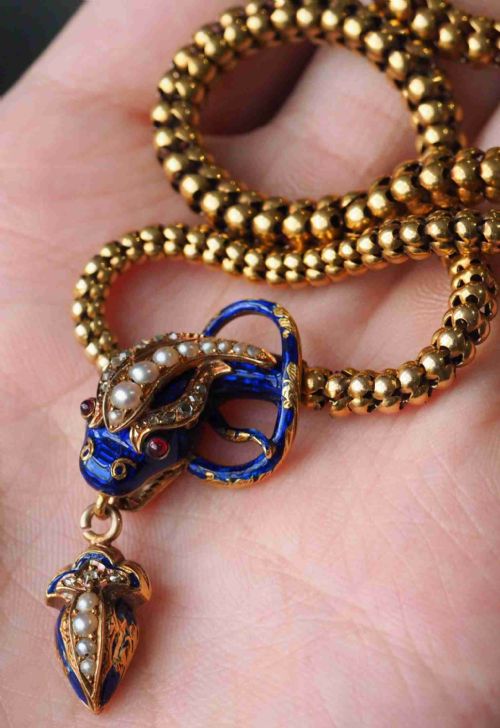


Edwardian Enamel Jewellery
Edwardian enamel jewellery brings together delicate vitreous coatings and precious metals in brooches, pendants and trinket boxes crafted across the early twentieth century.
Edwardian Enamel Jewellery
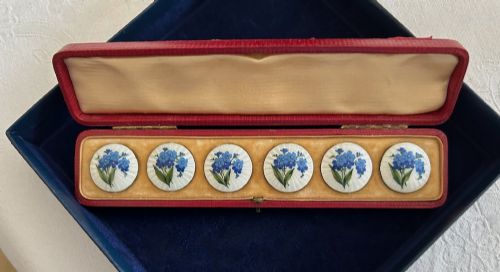
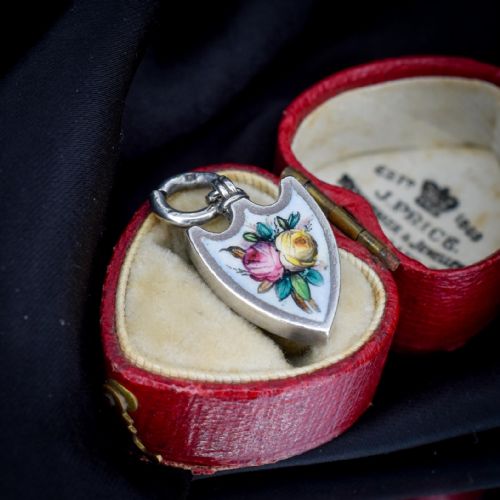
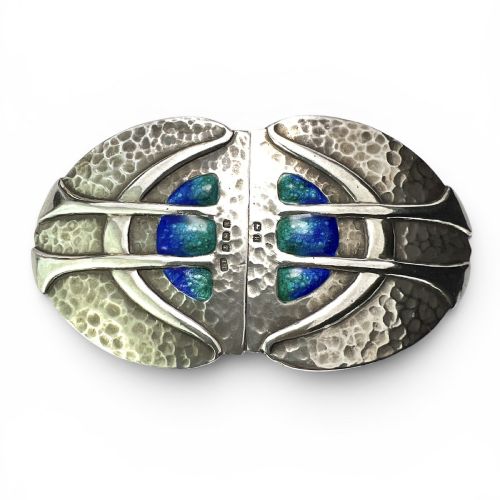
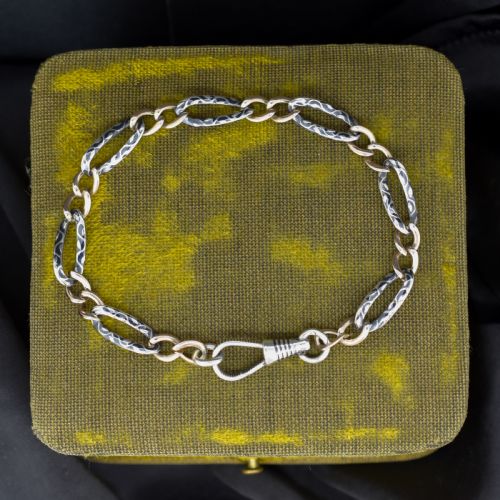
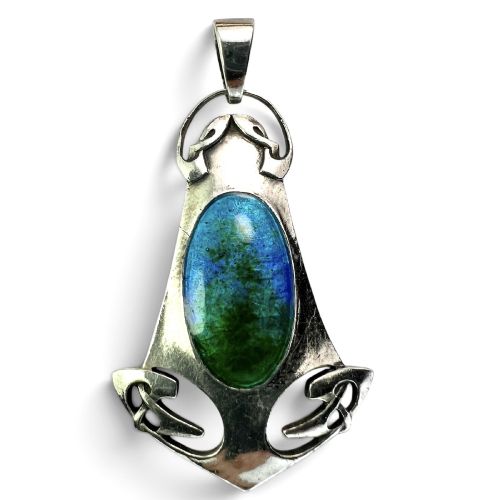
Edwardian enamel jewellery encompasses personal ornaments and small decorative boxes created during the Edwardian period and neighbouring decades. Pieces range from silver and gold brooches, pendants and bracelets to belt buckles and trinket boxes.
How they were made
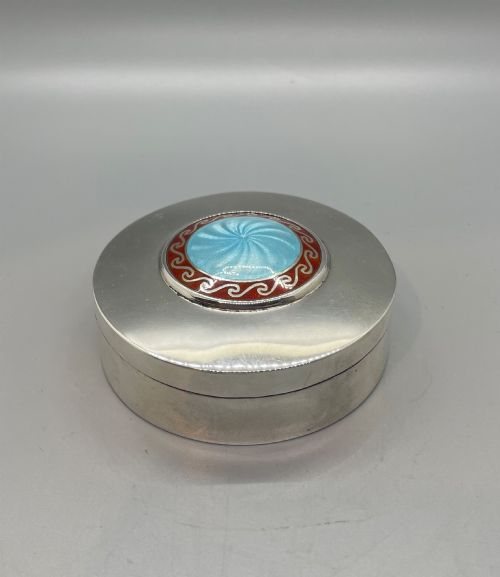
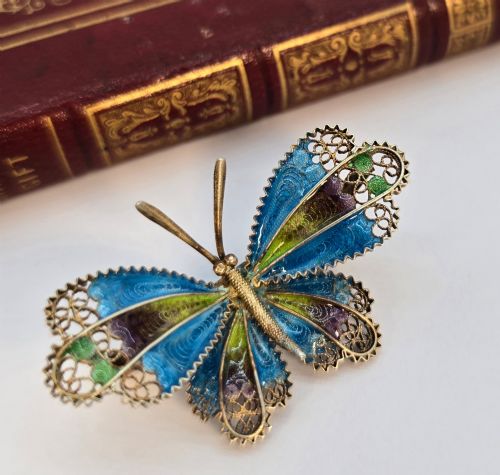
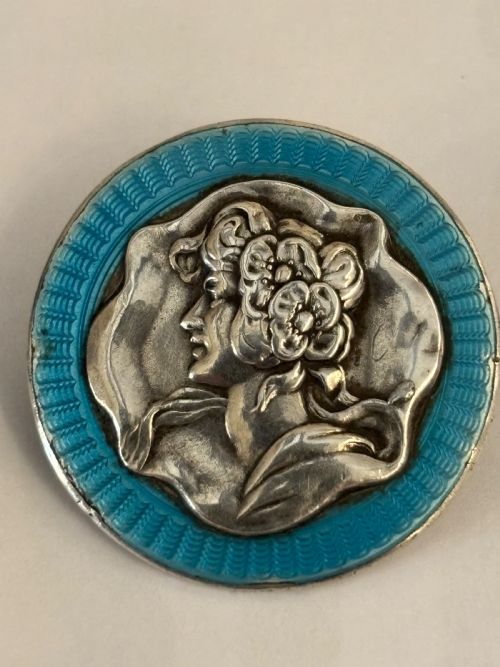
Craftsmen applied powdered glass, known as vitreous enamel, onto metal bases including silver, sterling silver, yellow gold and platinum, then fired the pieces in a kiln to fuse the coating. Techniques such as guilloche created patterned machine-turned backgrounds beneath translucent enamel, while plique-a-jour suspended translucent enamel within open metal wireframes like stained glass.
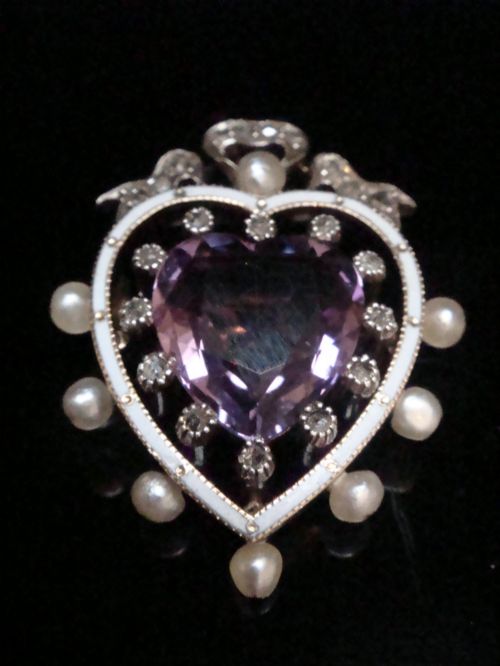
Makers integrated gemstones like pearls, diamonds, peridots, amethysts and moonstones into the metalwork, often securing them alongside hand-set enamel flower petals, leaves or butterfly wings.
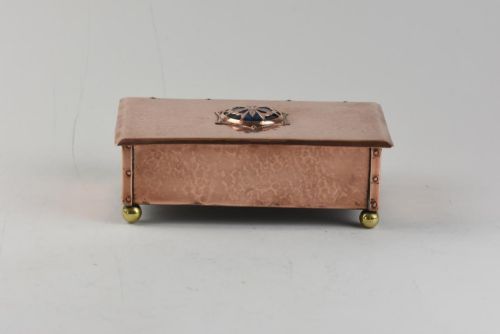
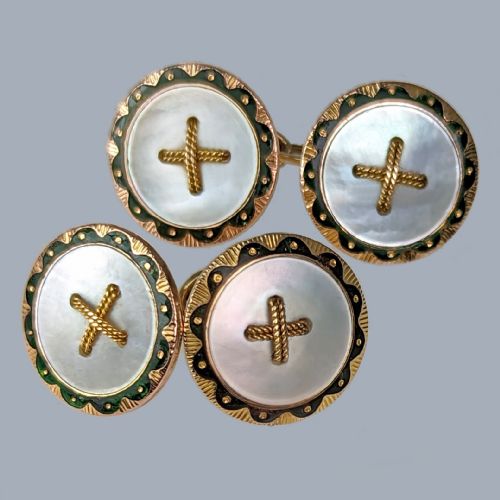
The selection includes functional accessories such as silver trinket boxes alongside wearable pieces like chatelaine clips, belt buckles and snake necklaces.
What varies in quality
Quality rests upon the precision of the metalwork and the clarity of the vitreous enamel. Superior examples display smooth, evenly distributed enamel surfaces free from firing flaws, cracks or heavy restoration.
The refinement of the mounting and the integration of accompanying stones such as natural pearls or diamonds distinguish finer pieces from standard production. Maker attribution to notable designers or workshops further elevates the standing of an item.
James Fenton·Murrle Bennett·Archibald Knox·Liberty and Co·Henry Matthews·Solomon Blanckensee Son·C.E. Turner·J and R Attenborough
The Edwardian Enamel Jewellery Glossary
- Guilloche
- An ornamental technique where a mechanical lathe engraves a precise repeating pattern onto a metal substrate before translucent enamel is applied over the top. This allows the underlying geometric design to show through the coloured glass layer.
- Plique-a-jour
- An enamelling method resembling cloisonne but without a backing metal, leaving open cells that allow light to shine through the translucent enamel. The finished effect mirrors miniature stained glass.
- Vitreous enamel
- A material made by fusing powdered glass to a metallic substrate through high-temperature firing. It produces a durable, glossy coloured surface used extensively in period ornaments.
- Sterling silver
- A silver alloy containing proportions of silver and other metals to increase durability while maintaining a bright metallic lustre. It serves as the primary structural metal for many period brooches and belt buckles.
- Cabochon
- A gemstone shaped and polished with a smooth convex dome rather than faceted edges. This cut highlights the natural lustre of stones like moonstones and amethysts.
Edwardian Enamel Jewellery: Frequently Asked Questions
What is Edwardian enamel jewellery?
Edwardian enamel jewellery comprises decorative ornaments and accessories produced around the turn of the twentieth century, featuring fused glass coatings on precious metals.
These items encompass brooches, pendants, bracelets and belt buckles adorned with floral patterns, insects and abstract motifs.
How do I care for enamel jewellery?
Enamel requires gentle handling because glass coatings can chip or scratch if struck against hard surfaces. Store pieces separately in soft pouches and avoid harsh chemical cleaners or ultrasonic baths.
Clean them instead with a soft damp cloth and dry thoroughly to preserve the lustre of the metal and glass.
How do I identify Art Nouveau enamel?
Art Nouveau pieces showcase organic, flowing lines inspired by natural forms such as flowers, vines, swans and insects. Designers frequently employed plique-a-jour enamel and curved silver mounts to capture asymmetric movement.
These designs contrast with the more symmetrical geometric layouts found in later decorative periods.
Were these pieces worn every day?
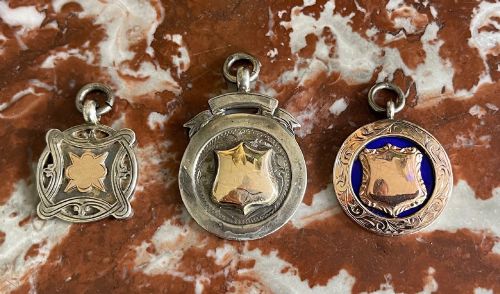
Period ornaments like belt buckles, watch fobs and everyday brooches served functional roles in daily Edwardian dress. Wealthy wearers also pinned decorative pendants and lockets to fine chains for social occasions.
Over time, many items transitioned from practical wardrobe accessories into collected keepsakes.