

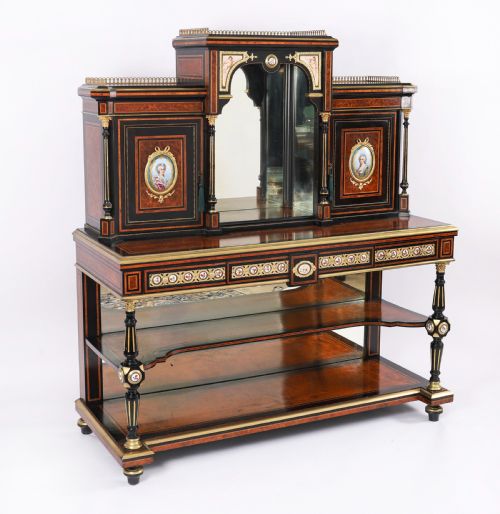


Edwardian Ebonised Tables
Edwardian ebonised tables bring dark polished surfaces and refined proportions into modern rooms, uniting functional design with period charm.
Edwardian Ebonised Tables
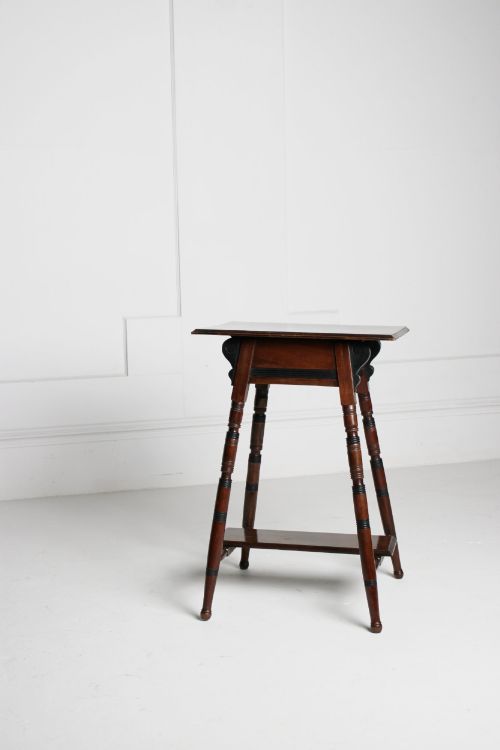
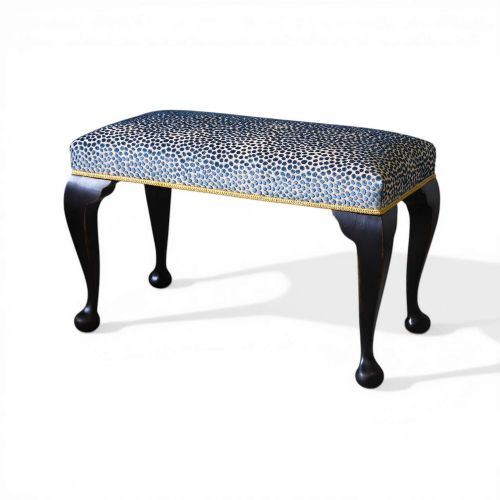
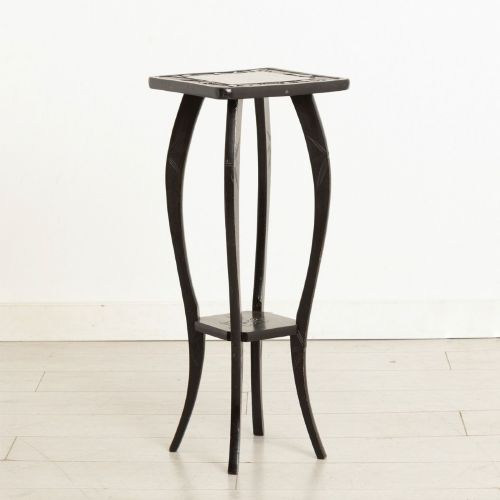
Edwardian ebonised tables comprise occasional pieces, writing desks, and card tables produced during the late nineteenth and early twentieth centuries. These forms reflect a period of refined domestic comfort, utilising darkened finishes that mimic costly ebony on more accessible woods like mahogany and walnut.
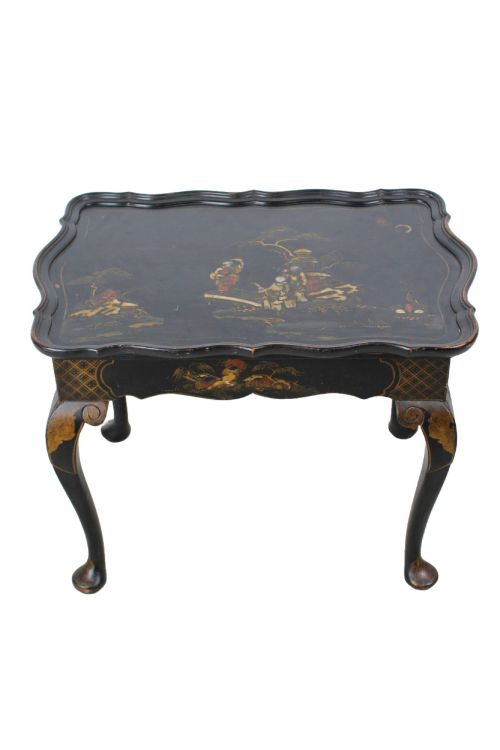
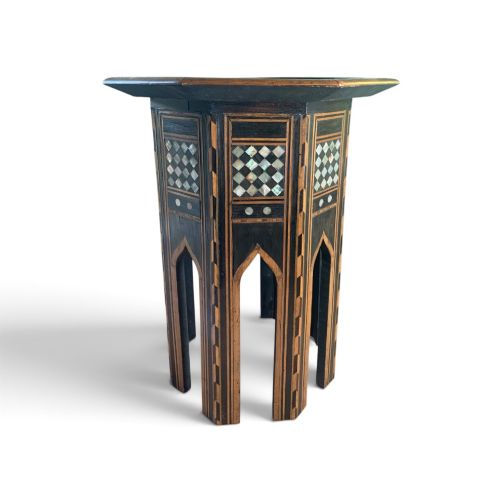
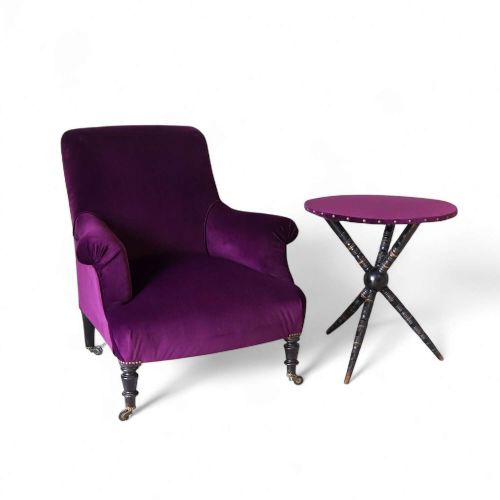
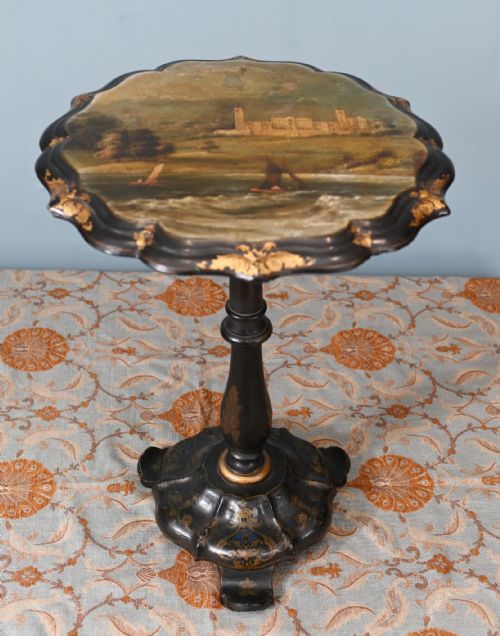
The versions most frequently met on this page include compact occasional tables and writing desks, alongside specialised forms featuring decorative influences such as Chinoiserie and Moorish Revival. These pieces served diverse roles in period drawing rooms, functioning as surfaces for tea, writing, or display.
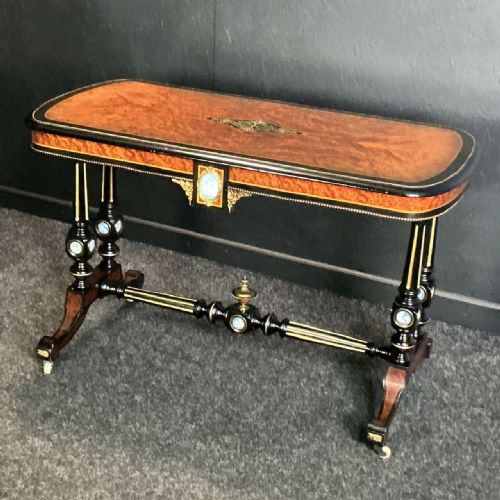
Makers and designers of the era adapted earlier Aesthetic Movement sensibilities into lighter Edwardian frameworks, producing versatile furniture that balances rigid ebonised framing with subtle gilt details or inlaid marquetry.
How They Were Made
The construction of these pieces relies on base timbers treated with ebonisation techniques to achieve a dense, black surface resembling exotic hardwood. This dark finish is frequently accented with gilt brass mounts, inlay, or painted Chinoiserie motifs to provide contrast and visual depth.
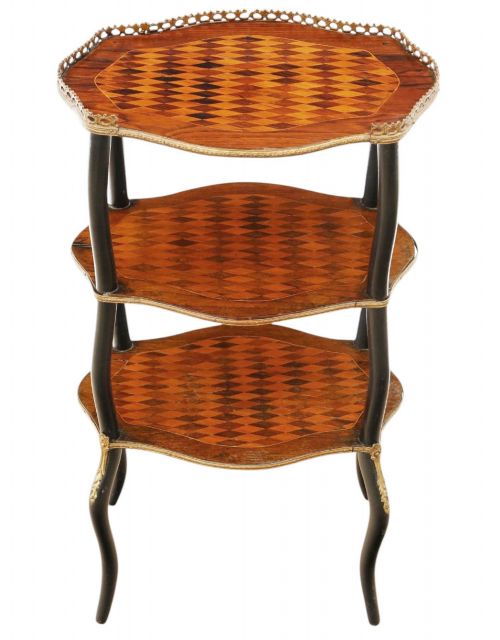
Cabinet makers utilised traditional joinery alongside turned legs, brass sabots, and inlaid parquetry to construct durable occasional furniture. Materials like burr walnut and amboyna sometimes appear alongside ebonised framing to highlight specific panels or table tops.
Some ebonised tables hide folding envelope tops or secret compartments designed for Victorian correspondence and hidden card games.
What Varies in Quality
Quality in these pieces is dictated by the crispness of the ebonised finish, the integrity of the underlying timber, and the precision of any inlay or gilt brass detailing. Superior examples exhibit tightly fitted joints, stable framing, and well-preserved decorative surfaces that retain their intended sheen without heavy degradation.
The refinement of the hardware, such as cast brass sabots or specialised hinges on envelope card tables, separates standard production items from finer workshop pieces. Better examples also show superior hand-finishing on turned elements and more sophisticated integration of stylistic influences like Moorish or Aesthetic Revival motifs.
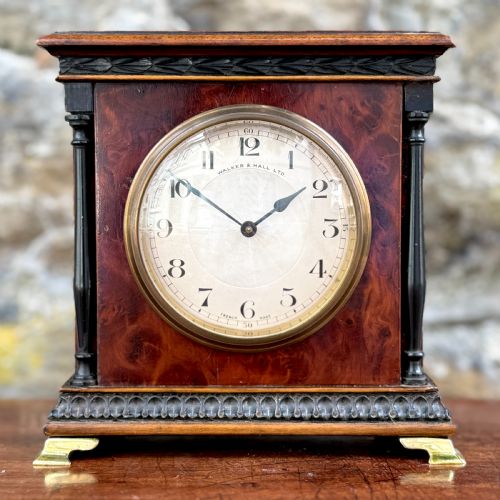
Druce & Co London·Liberty of London·Cottier & Co. London·Walker and Hall
The Edwardian Ebonised Tables Glossary
- Ebonised Wood
- Timber treated with stain or paint to imitate solid ebony. This dark finish gained immense popularity during the Victorian and Edwardian periods for creating striking contrast against gilt or inlaid details.
- Aesthetic Movement
- A late nineteenth-century design style emphasising art for art's sake and drawing inspiration from Japanese and simplified forms. Pieces from this movement often feature ebonised surfaces paired with parcel gilt highlights.
- Chinoiserie
- European decorative style reflecting Chinese artistic motifs and landscapes. This technique appears on tables and screens through hand-painted or lacquered ornamentation on dark grounds.
- Etagere
- A set of open shelves for displaying small objects or ornaments. These tiered display stands combine vertical storage with decorative framing.
- Parquetry
- Geometric mosaic woodwork used for decorative surfaces on table tops and panels. Craftsmen arrange small pieces of contrasting wood to create intricate patterns.
Edwardian Ebonised Tables: Frequently Asked Questions
How were they used?
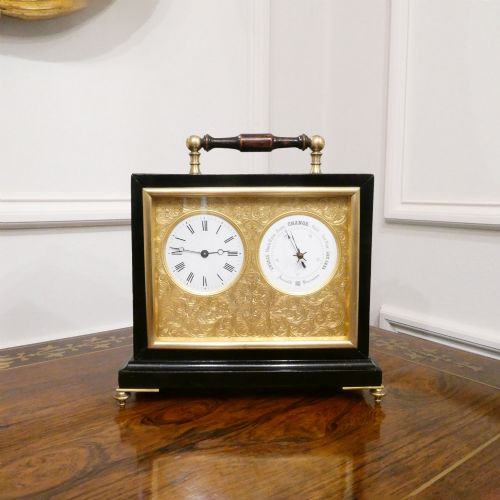
Households utilised these surfaces for serving tea, holding desk clocks, or providing a stable area for correspondence and games. Their portable nature allowed them to be easily moved around reception rooms as needed.
Specialised variants like envelope card tables and nesting sets offered adaptable functionality for entertaining guests.
How to live with them?
These items integrate smoothly into contemporary interiors by providing dark, grounding accents that anchor neutral or brightly coloured spaces. Their compact proportions make them suitable for use as bedside surfaces, lamp tables, or small writing desks.
Care involves dusting with a soft cloth and avoiding direct sunlight to preserve the dark finish and any delicate inlay.
How to tell periods apart?
Distinguishing between Victorian and Edwardian examples involves looking at the overall weight and decorative vocabulary of the piece. Victorian items often display heavier Aesthetic Movement influences with dense carving or parcel gilt, while Edwardian versions tend toward lighter proportions and refined inlay.
Construction methods and accompanying hardware styles also offer clear indicators of their manufacturing era.