
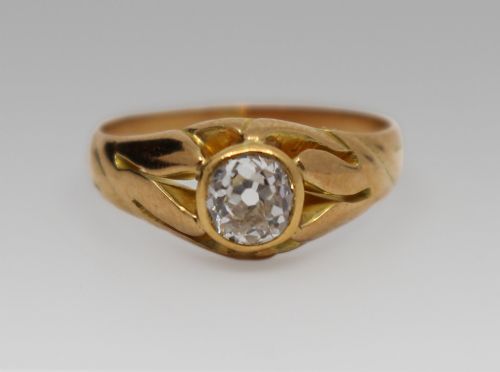
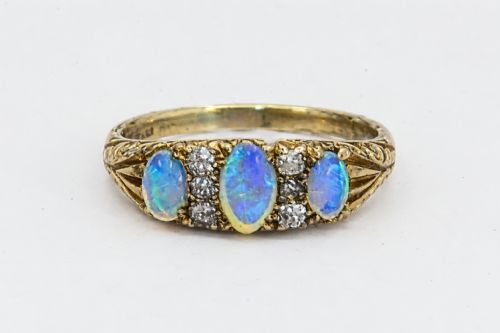
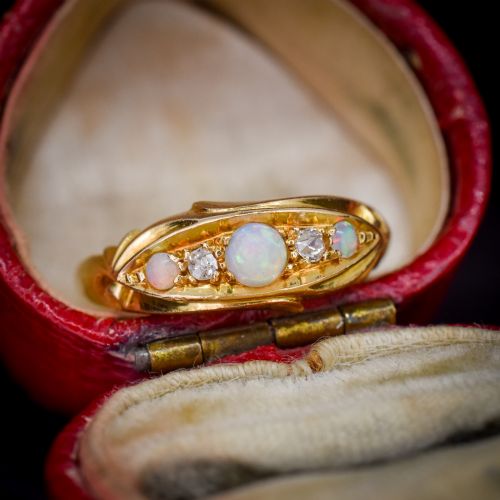
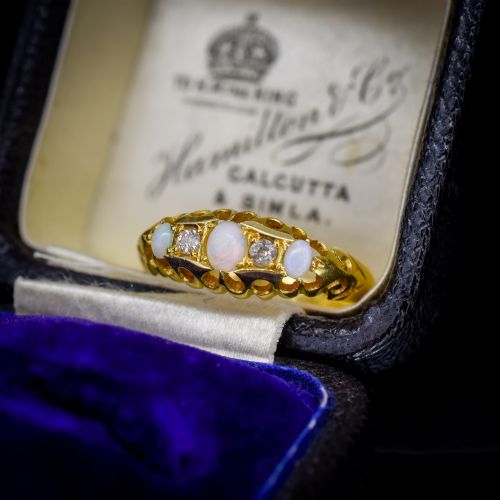

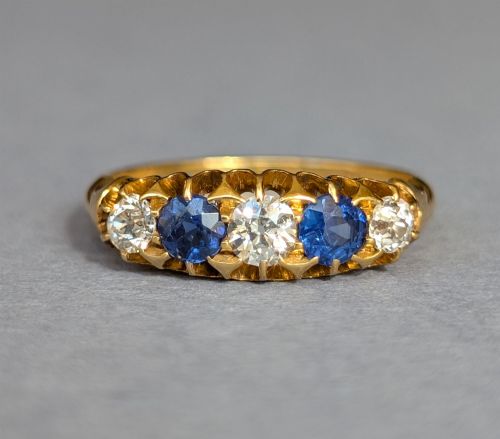
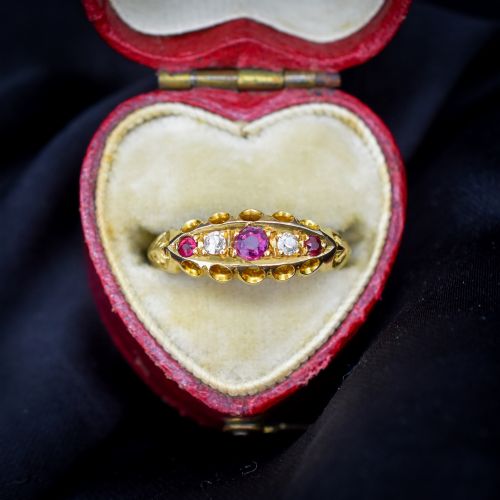
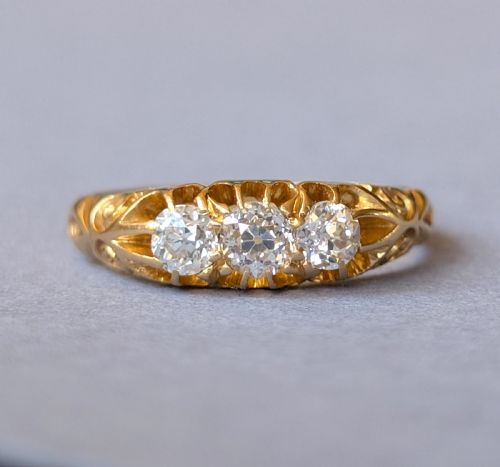
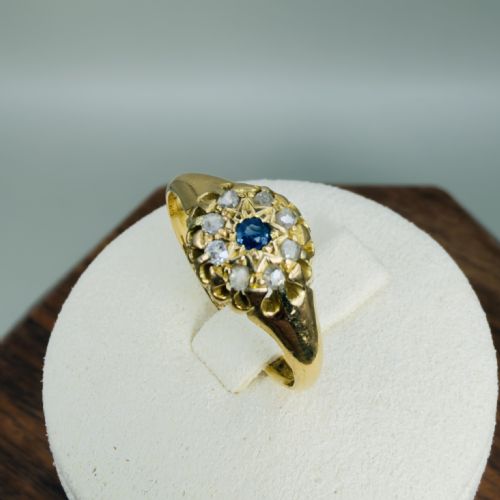

Edwardian Diamond Carved Ring
An edwardian diamond carved ring brings together early twentieth-century goldsmithing and durable gemstones, offering intricate detail and lasting daily wear.
Edwardian Diamond Carved Ring
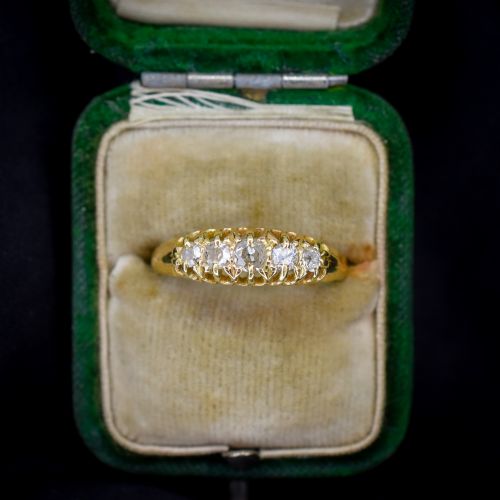
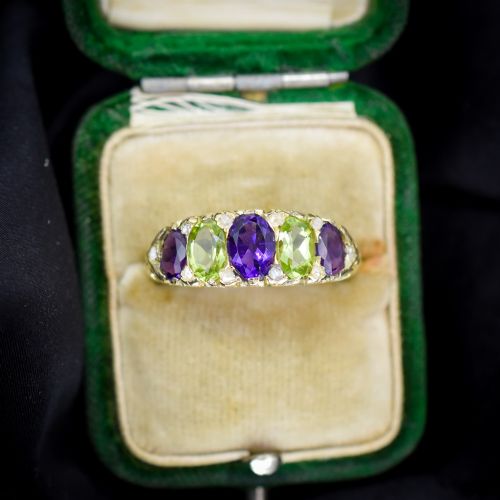
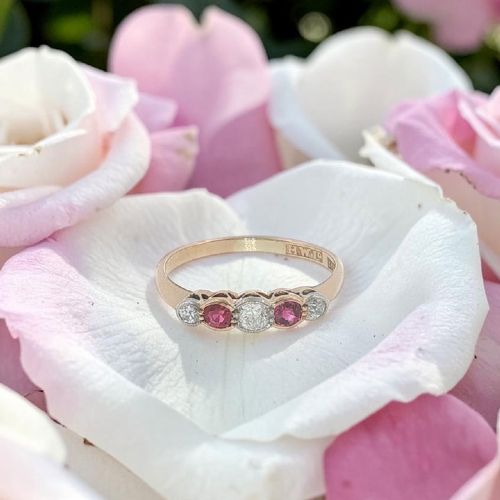
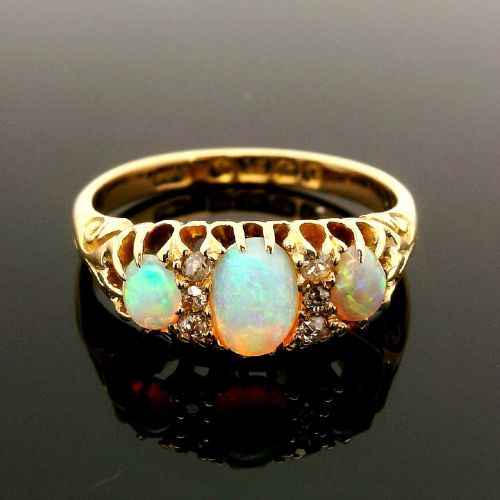
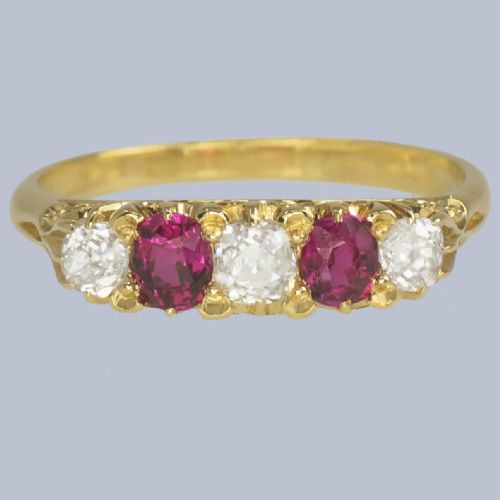
An edwardian diamond carved ring typically combines eighteen-carat yellow gold or platinum settings with old-cut diamonds, rubies, sapphires, or opals. These pieces span the late Victorian era through the Edwardian period and into the nineteen-twenties, reflecting turn-of-the-century design trends.
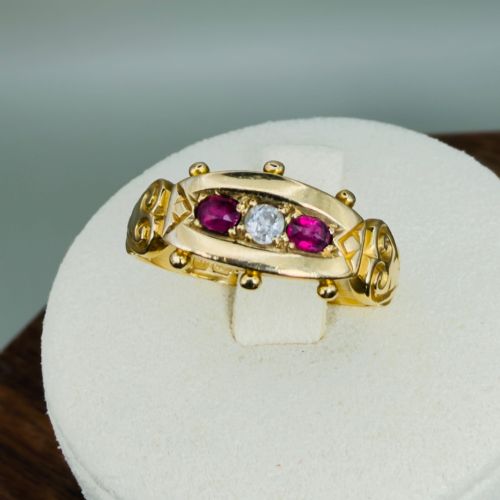
The most common formats on this page include boat rings, five-stone rows, and cluster settings. Many examples carry hallmarks from assay offices such as Chester and Birmingham alongside specific dates from the early nineteen-hundreds.
Materials and technique
Goldsmiths of the period employed eighteen-carat gold and platinum to secure old-cut and old-mine diamonds alongside coloured stones like rubies, sapphires, and opals. Metalwork often featured scroll motifs, starburst engravings, and boat-shaped profiles.
Stones were hand-set into shaped channels or raised claws, accompanied by detailed gallery work and shank engravings characteristic of turn-of-the-century workshops.
The listings span the Victorian, Edwardian, and Art Deco periods, utilising eighteen-carat yellow gold, platinum, diamonds, opals, sapphires, and rubies.
Quality differences
The standard of a piece rests on the crispness of the carved details and the secure integrity of the stone settings. Better examples maintain symmetrical gem placement and clear, legible hallmarking without excessive wear to the surrounding gold shank.
Proportion and stone match dictate overall harmony, where well-matched old-cut diamonds and evenly saturated rubies or sapphires elevate the piece above simpler production standards.
The Edwardian Diamond Carved Ring Glossary
- Boat ring
- A ring setting featuring a curved, boat-like profile that tapers towards the shoulders. This shape typically accommodates multiple gemstones arranged in a horizontal row.
- Old-cut diamond
- A hand-faceted diamond cut prior to the standardisation of modern round brilliants. These stones often display smaller tables and deeper pavilions.
- Trilogy ring
- A ring featuring three primary gemstones set in a row. The central stone usually sits slightly higher or larger than the flanking two.
- Hallmark
- An official stamp applied to precious metals indicating purity, origin assay office, and year of manufacture. British pieces frequently display town marks and date letters.
- Gypsy ring
- A style where gemstones are flush-set directly into the thick, tapered band of the metal. This design was popular for both men and women during the late nineteenth and early twentieth centuries.
Edwardian Diamond Carved Ring: Frequently Asked Questions
How do I care for my ring?
Clean these items gently using warm water and a soft brush, avoiding harsh ultrasonic cleaners that might damage softer stones like opals.
Store pieces individually in lined boxes to prevent metal friction and stone contact between different items.
Can these rings be resized?
Most gold and platinum bands can be adjusted by a skilled jeweller, though antique settings require careful handling to preserve adjacent shank engravings and hallmarks.
Consult a specialist who understands antique construction methods before undertaking alterations.
What defines an Edwardian piece?
Edwardian jewellery dates from the reign of King Edward VII, spanning the early nineteen-hundreds up to the First World War. Designs from this timeframe frequently utilise platinum alongside yellow gold for light, delicate aesthetic effects.
Motifs often incorporate garlands, scrolls, and cluster arrangements framing central old-cut diamonds.
How are old-cut diamonds different?
Old-cut and old-mine diamonds possess hand-cut facets shaped individually by artisans rather than by automated machinery. They generally feature smaller table facets and higher crowns.
This historic cutting style produces a distinctive pattern of light under candle or ambient indoor illumination.