


Edwardian 5 Stone Ring
An edwardian 5 stone ring balances linear elegance with old cut brilliance, making it a sought-after choice for engagement and everyday wear.
Edwardian 5 Stone Ring
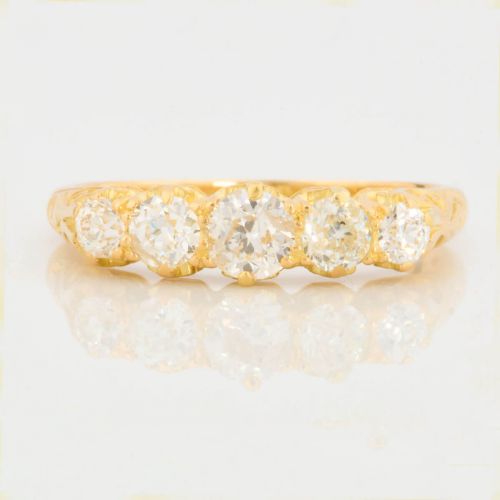
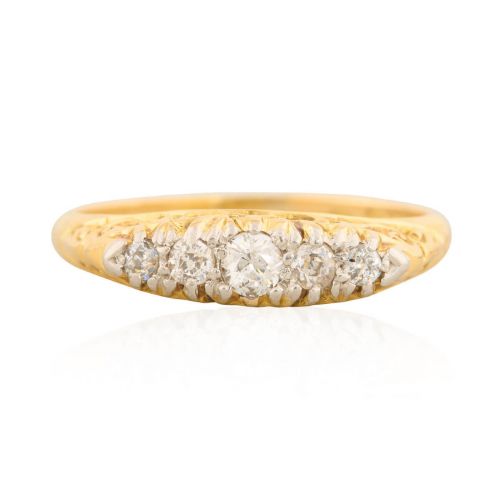
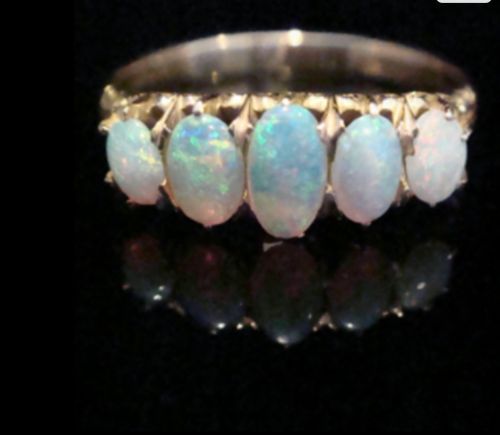
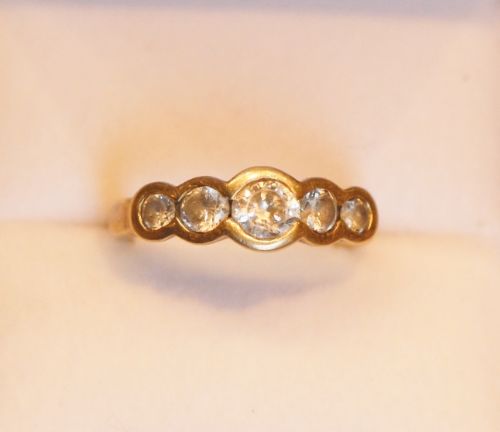
The edwardian 5 stone ring typically presents a graduated row of gems aligned across the finger. These pieces combine refined proportions with the delicate metalwork characteristic of the early twentieth century.
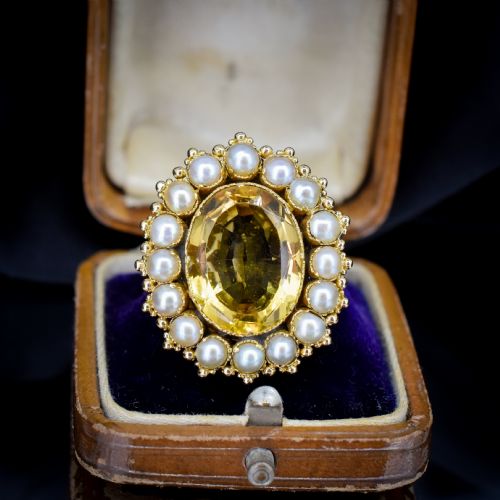
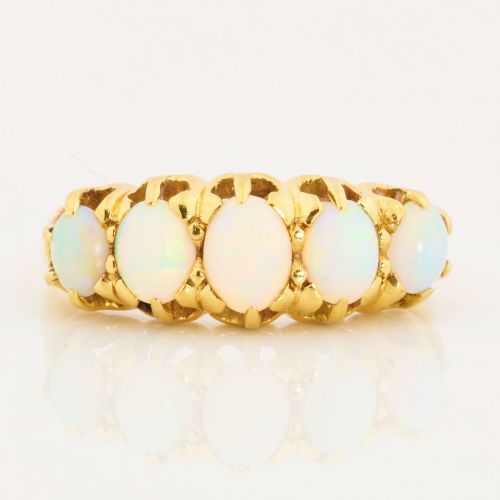
Most examples encountered on this page pair old cut diamonds with 18ct yellow gold or platinum settings. Variations incorporate alternating rubies, sapphires, opals, or emeralds between diamond accents.
Originating predominantly from the years surrounding the Edwardian period, these rings reflect the transition from late Victorian heft towards lighter, airier mountings. The silhouette sits low to the hand for practical daily use.
Materials and construction
Goldsmiths of the era relied heavily on 18ct yellow gold for the shank while increasingly adopting platinum for the stone settings. Platinum allowed for delicate claw and rub-over arrangements that maximised light entry into old cut diamonds.
Stones were hand-set using traditional grain, claw, or boat-shaped mounting techniques. This meticulous bench work ensured secure stone retention while minimising visible metal around the gems.
Listings feature 18ct gold, platinum, diamonds, rubies, sapphires, opals, and pearls across Victorian, Edwardian, and later vintage periods.
Judging construction and stone merit
Quality rests on the symmetry and matching of the stones across the finger. Graduated rows look best when the central gem leads harmoniously into diminishing outer stones without awkward gaps.
The integrity of the setting work separates standard workshop output from finer bench production. Minimalist claw work that shows little residual solder and retains robust gallery rails demonstrates superior craftsmanship.
The Edwardian 5 Stone Ring Glossary
- Old cut
- A diamond cutting style prevalent before modern brilliant faceting, characterised by a smaller table, higher crown, and open culet. These stones catch candle or gas light with a softer, broader flash.
- Boat ring
- A setting style where the central stones sit within a navette or boat-shaped platform. This outline often incorporates shoulders engraved with foliate motifs.
- Plat
- A common historical shorthand or assay mark reference for platinum. Platinum gained widespread use during the Edwardian era for its strength and bright white surface.
- Collet
- The collar or metal rim that holds a gemstone in place. In these rings, collets are frequently detailed with millegrain edges.
- Millegrain
- A decorative technique creating a raised border of tiny beads along the edge of a metal setting. It imparts a soft texture typical of Edwardian jewellery.
Edwardian 5 Stone Ring: Frequently Asked Questions
How do I wear an edwardian 5 stone ring daily?
These rings suit daily wear provided you check the claws periodically for wear. Pairing them with flat wedding bands prevents friction against the shared prongs.
Remove them during heavy manual tasks to protect the older stone cuts and delicate platinum or gold settings from impact.
Are all stones in these rings diamonds?
While many feature graduated diamonds exclusively, numerous examples intersperse rubies, sapphires, or natural opals. Colourful gems offered popular alternatives or birthstone symbolism during the period.
Examining the arrangement reveals whether coloured stones flank a central diamond or form an alternating pattern.
How can I date an edwardian 5 stone ring accurately?
Assay office hallmarks stamped inside the 18ct gold shank provide definitive year letters for Birmingham and Chester. Maker marks and style traits like platinum-topped gold further narrow down the decade.
Stylistic cues such as boat mountings or delicate claw configurations align closely with manufacturing standards from nineteen hundred to nineteen twenty.
What is the difference between old mine cut and old European cut?
Old mine cuts feature a squarish girdle and smaller table reflecting nineteenth-century hand-polishing traditions. Old European cuts tend towards a rounder girdle with more symmetrical facet geometry.
Both deliver the characteristic deep-pavilion warmth found across antique diamond jewellery.