




Edwardian Diamond Bar Pin
When you handle an edwardian diamond bar pin, you touch linear jewellery designed to fasten lapels with platinum and gold set against the shift from Victorian weight to Art Deco geometry.
Edwardian Diamond Bar Pin
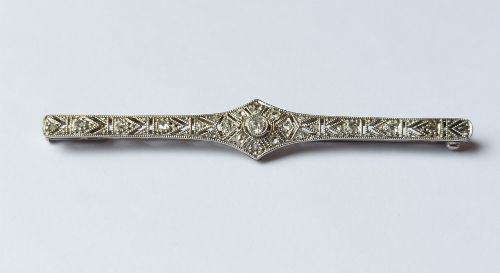
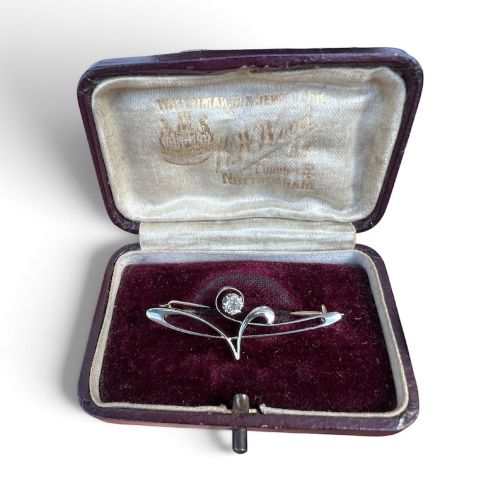
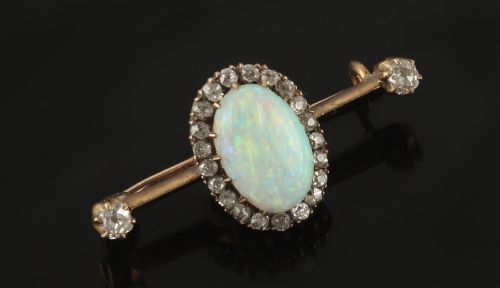
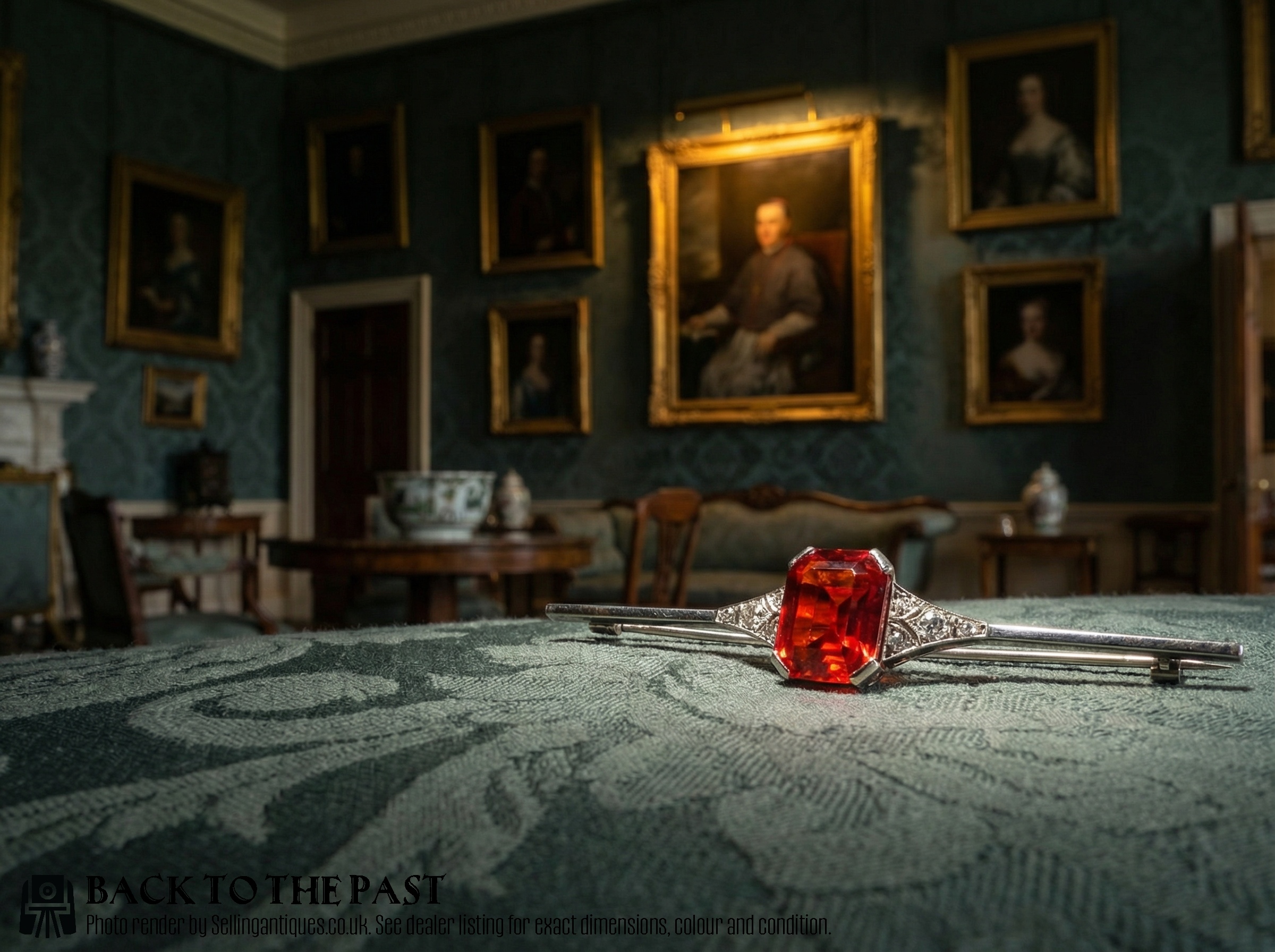
An edwardian diamond bar pin is an elongated linear brooch fastening garments with gemstones and precious metals, predominantly originating from the Edwardian era through the Art Deco period. The listings here contain numerous bar brooches and pins configured with diamonds alongside rubies, emeralds, sapphires, and pearls.
Most examples meet the eye as slender horizontal mounts executed in platinum, yellow gold, white gold, or silver, often carrying floral, insect, animal, or geometric motifs. Pieces span from late Victorian origins through the nineteen-twenties, showing how jewellers transitioned from heavier organic settings to lighter symmetrical frameworks.
How they were made
Craftsmen built these bar brooches using combinations of platinum, yellow gold, white gold, and silver, often pairing a platinum top layer with a gold reverse to support the stones while keeping the metalwork bright. Diamond clusters and single stones were set alongside pearls, rubies, and emeralds using traditional claw, bezel, and silver-set foil techniques suited to the period.
Makers shaped the underlying bars into simple linear shafts or elaborate pictorial subjects like birds, bicycles, and floral sprays, incorporating old-cut European diamonds and rose-cut diamonds into the framework.
Edwardian Diamond Bar Pin Retail Price Guide 2026
Typical asking prices for edwardian diamond bar pin among the pieces listed under this phrase on Sellingantiques today, from the lower quarter to the upper quarter. They describe what is for sale here now, not the wider market.
Several pins feature unexpected miniature creatures like monkeys, insects, and cycling cockerels caught mid-dash in diamonds.
What varies in quality
The standard of an edwardian diamond bar pin rests on the harmony of its metalwork, the weight and cut of the diamonds, and the integrity of the original pin mechanism and clasp. Pieces featuring platinum settings combined with substantial old-cut diamonds demonstrate superior construction compared to lighter base-metal alternatives.
Execution of delicate motifs, such as feathered wings on insect or bird brooches and the precise alignment of calibré-cut rubies or emeralds, separates ordinary production from finer workshop output.
The Edwardian Diamond Bar Pin Glossary
- Bar pin
- A long, slender brooch designed to be worn horizontally across fabric, often secured with a simple pin stem and safety catch.
- Old-cut diamond
- A vintage diamond facet pattern characterised by a small table, high crown, and open culet, cut by hand before modern proportions were standardised.
- Rose-cut diamond
- A gemstone cut with a flat base and a domed crown of triangular facets resembling an unopened rosebud.
- Platinum
- A dense, white precious metal frequently utilised in Edwardian and Art Deco jewellery for its strength in holding tiny pavé-set stones.
Edwardian Diamond Bar Pin: Frequently Asked Questions
How do I wear a bar pin safely?
Fasten the pin diagonally through heavier fabrics like wool or lapels to distribute the weight evenly across the garment.
Ensure the safety catch or C-clasp holds the pin stem securely before leaving it unattended on clothing.
Were these pins used differently than brooches?
Bar pins were traditionally utilised to secure lace collars, scarves, or lapels rather than heavier cloaks.
Their elongated shape was specifically engineered to lie flat against tailored clothing without sagging.
How can I tell Edwardian pieces from Art Deco ones?
Edwardian examples tend to feature organic motifs like garlands, flowers, and insects rendered in platinum and yellow gold with softer outlines.
Art Deco pieces shift toward strict geometric symmetry, utilising white gold and platinum with sharper linear arrangements.
What metals are most common in these pins?
Yellow gold and platinum dominate the period, often utilised together with a platinum face over a gold body.
Silver and white gold also appear frequently, particularly in French and later nineteen-twenties examples.