
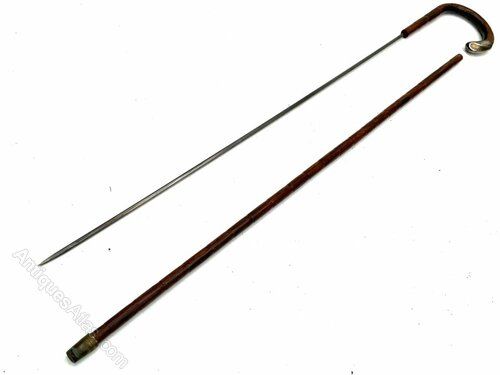


Edwardian Defence Stick
These Edwardian defence sticks are practical gentleman's walking canes housing concealed blades, combining everyday walking support with personal protection.
Edwardian Defence Stick
An edwardian defence stick typically manifests as a gentleman's walking stick or cane featuring a hidden sword or blade inside the shaft. These pieces emerge predominantly from the Edwardian period, along with related examples from the nineteenth century and the decades surrounding nineteen hundred.
Makers fashioned these walking sticks from materials such as partridge wood, malacca, bamboo, rosewood, and chestnut. Handles vary significantly, incorporating crook designs, root balls, silver horses heads, horn, and antler.
Many examples include functional metal components such as silver collars, silver mounts, and steel blades originating from Toledo or makers like Wilkinson. Buyers encountering this selection will find various combinations of these woods, handles, and concealed blades.
How they were made
Craftsmen built these defence sticks by hollowing out wooden shafts from materials like partridge wood, malacca, and rosewood to securely house steel blades. The integration required precise fitting so the wooden sheath closed flush against the handle and collar.
Metalwork played a structural and decorative role, utilising brass and silver for collars, mounts, and distinctive handles shaped like horses heads or simple crooks. Blades were forged from steel, sometimes featuring specific regional origins like Toledo or manufacturer inscriptions such as Wilkinson.
For the gentleman who preferred his equestrian interests close at hand, an edwardian defence stick could be fitted with a solid silver horse's head concealing a Toledo steel blade.
What varies in quality
The sophistication of the handle and metal mounts dictates much of the variation in these pieces, ranging from plain wooden crook handles to detailed silver horse head sculptures or horn and antler grips. Finer examples incorporate hallmarked silver collars and named steel blades from established makers like Wilkinson or Toledo workshops.
The choice of shaft material also separates standard items from superior productions, with dense timbers like partridge wood and finished malacca offering better durability than simpler bamboo or chestnut shafts. The precision with which the concealed blade locks into the wooden housing determines the overall execution of the piece.
The Edwardian Defence Stick Glossary
- Partridge wood
- A dense, heavily mottled tropical timber utilised for walking stick shafts. Its distinctive partridge-feather pattern makes it durable and visually striking.
- Malacca
- A smooth, strong cane derived from Asiatic palms, frequently employed for gentleman's walking sticks and sword sticks. It bends well and takes a high polish.
- Toledo blade
- A steel blade forged in the Spanish city of Toledo, renowned historically for its strength and flexibility. These blades were often imported and fitted into British walking sticks.
- Root ball handle
- A natural handle formed from the root mass of a tree or shrub attached to the stick shaft. It provides a knobby, organic grip for the user.
- Silver collar
- A decorative and structural metal band fitted around the upper shaft of a walking stick, often bearing hallmarks. It reinforces the timber where the handle joins.
Edwardian Defence Stick: Frequently Asked Questions
What is an edwardian defence stick?
An edwardian defence stick is a gentleman's walking cane designed with a hidden blade inside the shaft. Gentlemen carried them during the Edwardian era and surrounding decades for personal security during urban walks.
The category encompasses walking sticks constructed from woods like partridge wood and malacca, fitted with steel blades and various handles including silver mounts, horn, and antler.
How were these walking sticks used?
These items served a dual purpose as everyday walking aids and discreet tools for self-defence. The user could rely on the wooden shaft for physical support while walking through city streets.
In situations requiring protection, the wooden outer sheath separated from the handle to reveal a concealed steel blade, allowing the owner to defend themselves.
What materials make up the shafts?
The shafts utilise a variety of natural timbers and canes, with partridge wood and malacca appearing frequently among surviving pieces. Other materials include bamboo, rosewood, and chestnut, sometimes shaped from root ball sections.
Craftsmen often added metal components such as brass, steel, and silver for collars and mounts to reinforce the structure.
How do handle styles vary?
Handles range from simple curved crooks to organic root ball formations and carved animal shapes. Materials for these grips include horn, antler, and silver.
Examples exist featuring detailed silver horses heads alongside more utilitarian horn and wooden handles, reflecting the original owner's taste and budget.