
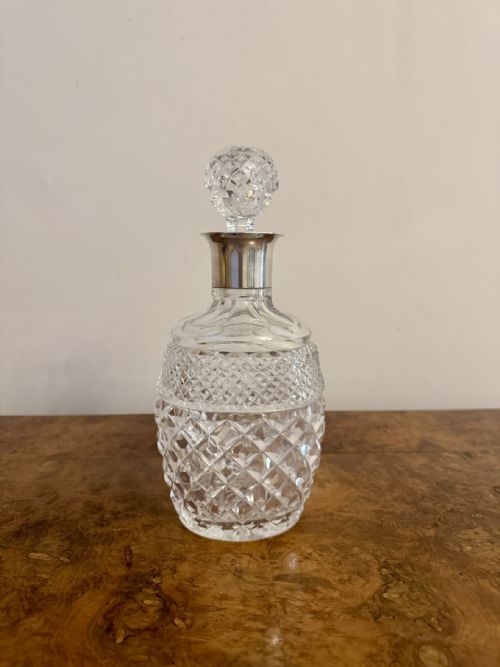
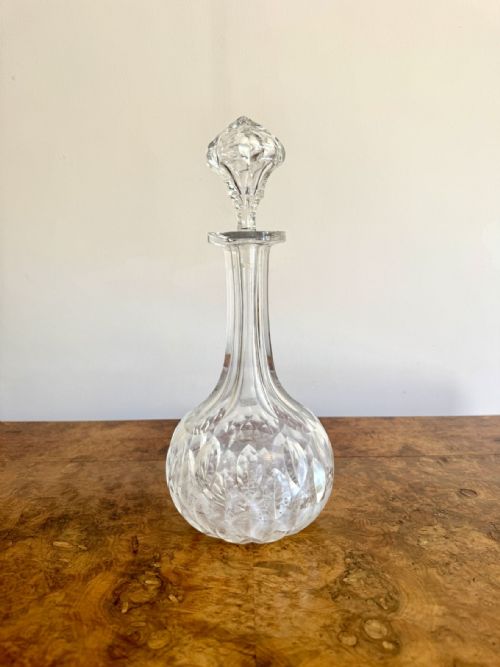
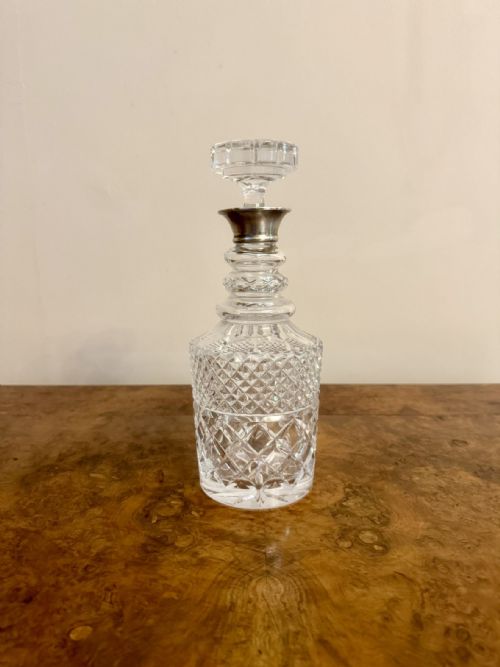
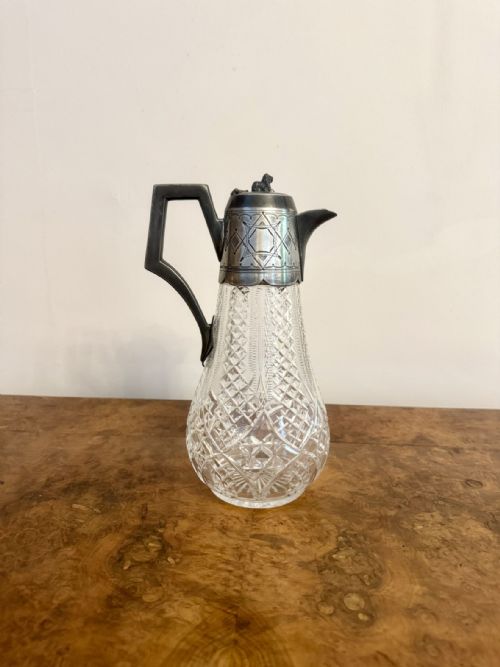

Edwardian Cut Crystal Decanter
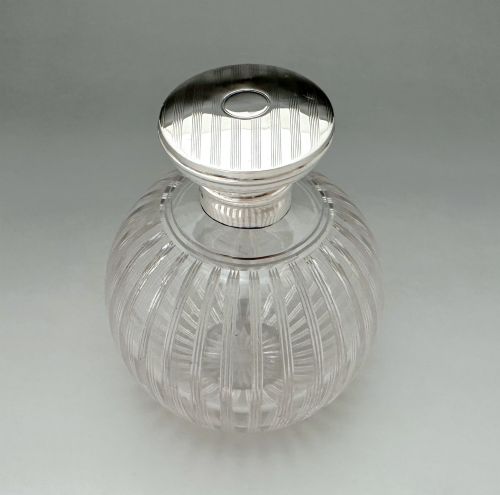
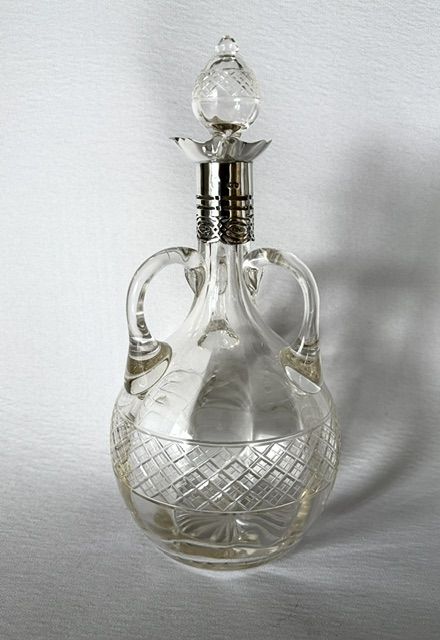
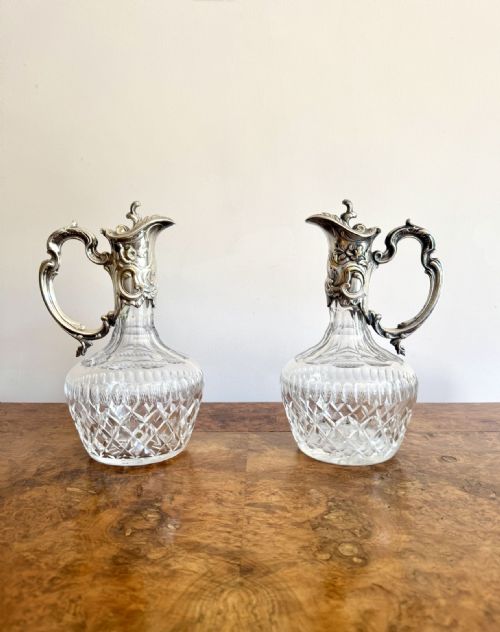
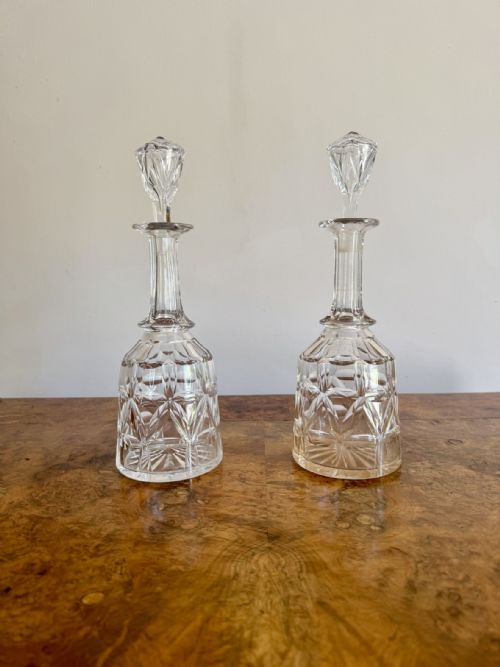
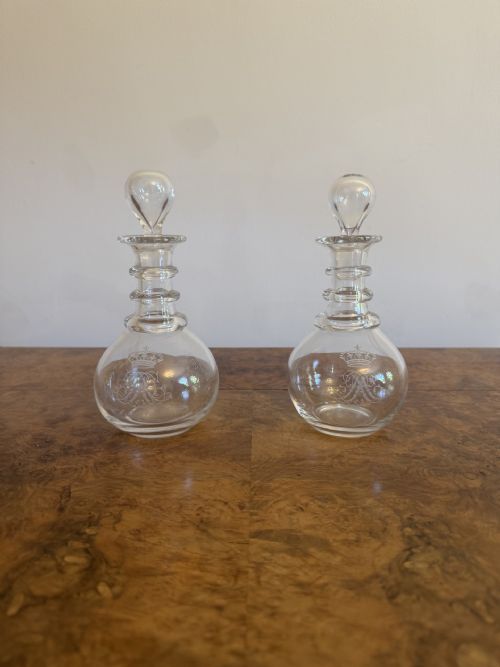
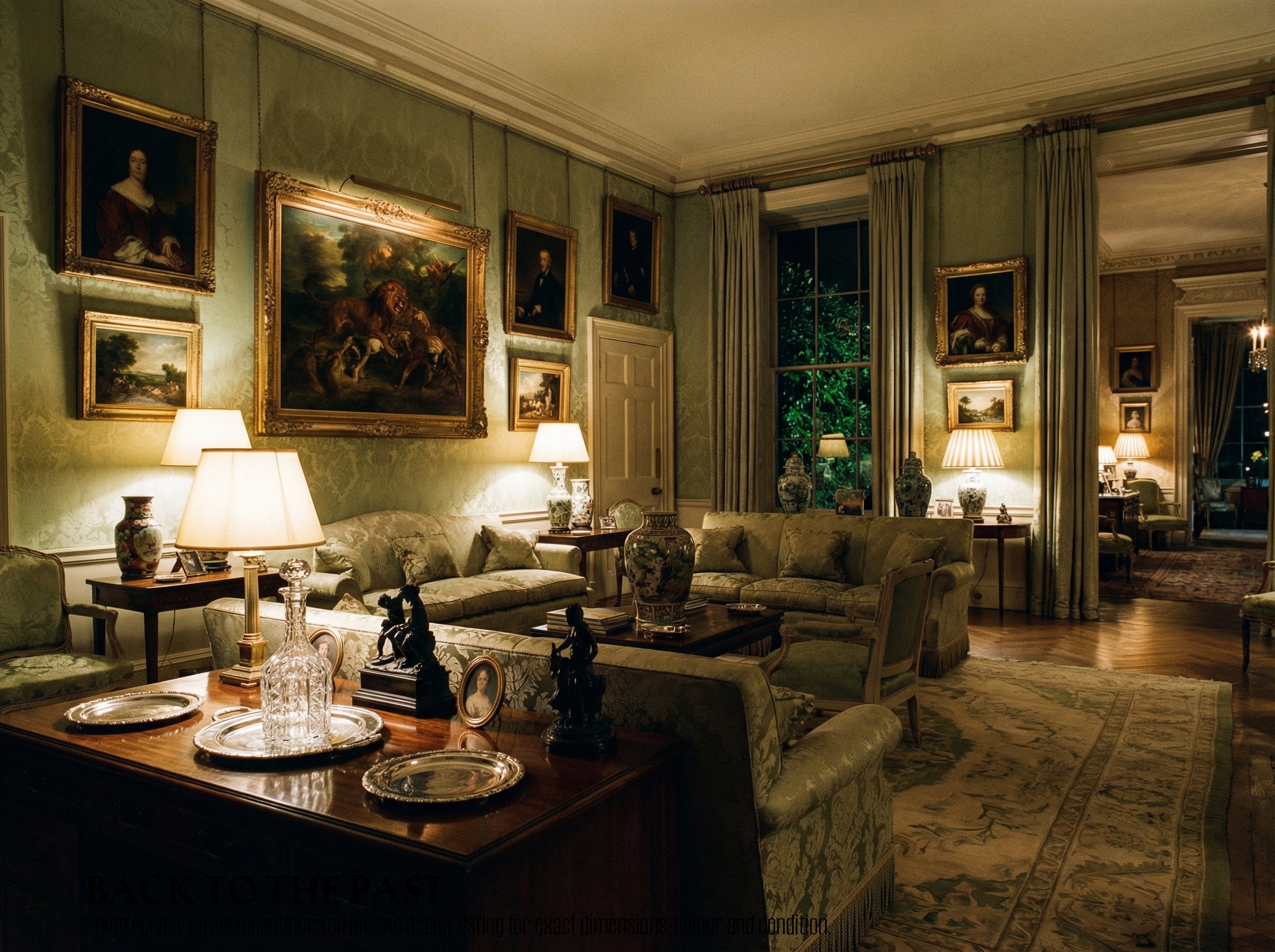
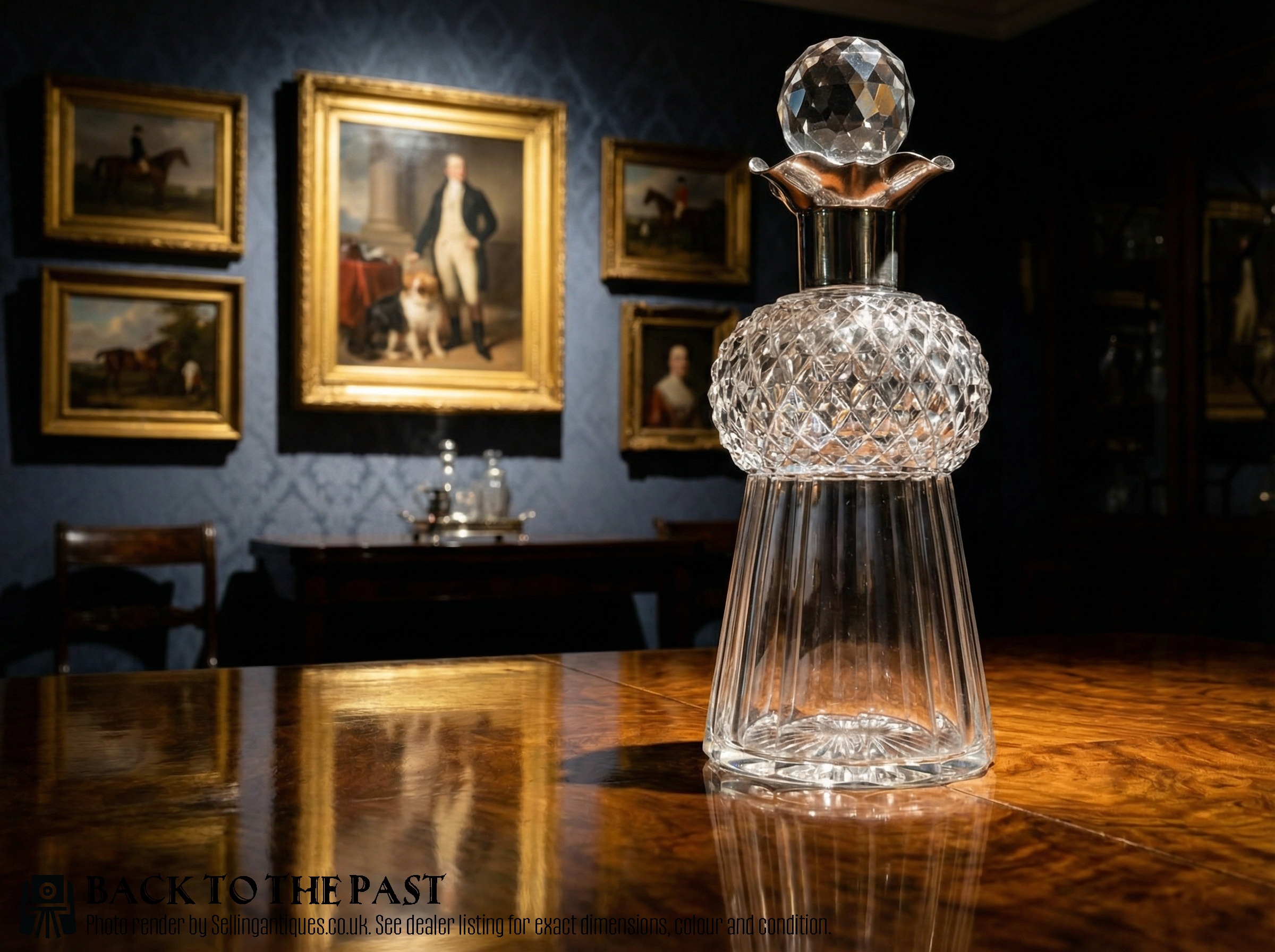
An Edwardian cut crystal decanter brings heavy-cut brilliance and silver mounts to the sideboard, offering a sturdy vessel for spirits.
Edwardian Cut Crystal Decanter
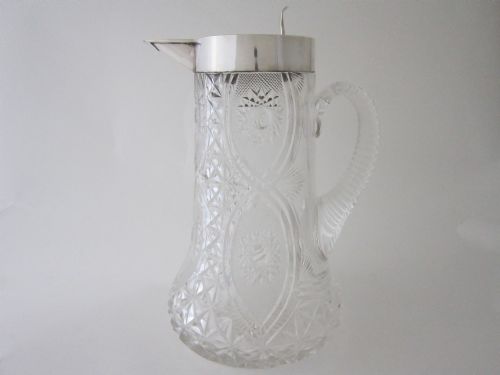
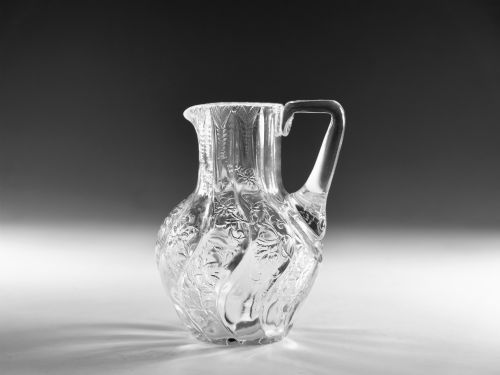
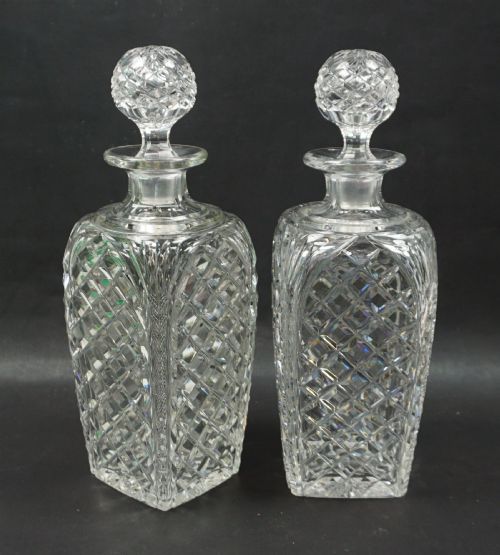
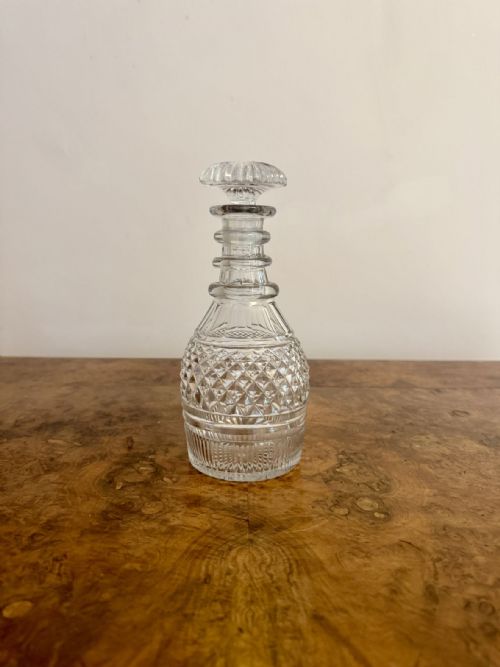
The edwardian cut crystal decanter category encompasses heavy glass vessels designed for serving spirits and wine, frequently accompanied by matching claret jugs, scent bottles, and complete tantalus sets. Buyers searching this phrase encounter vessels shaped in square tapered forms, bell profiles, and hobnail cuts originating primarily from the Edwardian period alongside late Victorian and George V examples.
The primary forms on this page include single standing decanters, paired sets, and multi-bottle tantalus units housed in oak frames with silver plated or sterling silver locking mechanisms. Makers and retailers of the era produced these pieces utilising lead crystal and cut glass, often finished with silver collars or mounts around the neck.
How they were made
Makers produced an edwardian cut crystal decanter by blowing lead crystal into moulds or free-blowing the vessel before cutting geometric and floral patterns directly into the thick glass surface using rotating wheels. Artisans then fitted sterling silver or silver plated collars, stoppers, and mounts to the glass necks.
Workshop production involved combining heavy glass bodies with brass fittings on tantalus frames and satin wood inlays on cabinet bases. Engraved decorations and intaglio details appeared alongside deep hobnail cutting to create the tactile surfaces characteristic of the period.
Object forms span square section tapered decanters, bell shapes, claret jugs, scent bottles, and multi-bottle locking tantalus sets.
What varies in quality
The distinction between tiers of an edwardian cut crystal decanter rests on the depth and crispness of the glass cutting, the weight of the lead crystal, and the presence of hallmarked sterling silver mounts rather than basic silver plate. Superior examples display sharp, well-defined facets that catch the light directly, paired with heavy, stable bases and securely fitted stoppers.
Design complexity further separates standard production from exceptional pieces, visible in matched sets housed within fitted oak tantalus frames, engraved labeling on the glass, and specialised forms such as bell shapes or ewers by known makers like Stevens & Williams or James Powell.
Stevens & Williams·Webb Corbett·James Powell
The Edwardian Cut Crystal Decanter Glossary
- Tantalus
- A locked wooden frame holding decanters securely behind a bar to prevent unauthorized access to the contents while still displaying the crystal.
- Hobnail cut
- A raised, multi-faceted geometric glass pattern resembling the hobnails used on heavy boots, providing a tactile grip and high light refraction.
- Claret jug
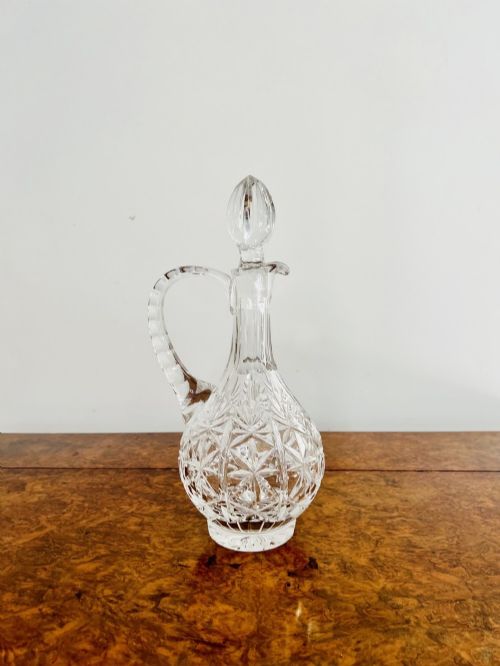
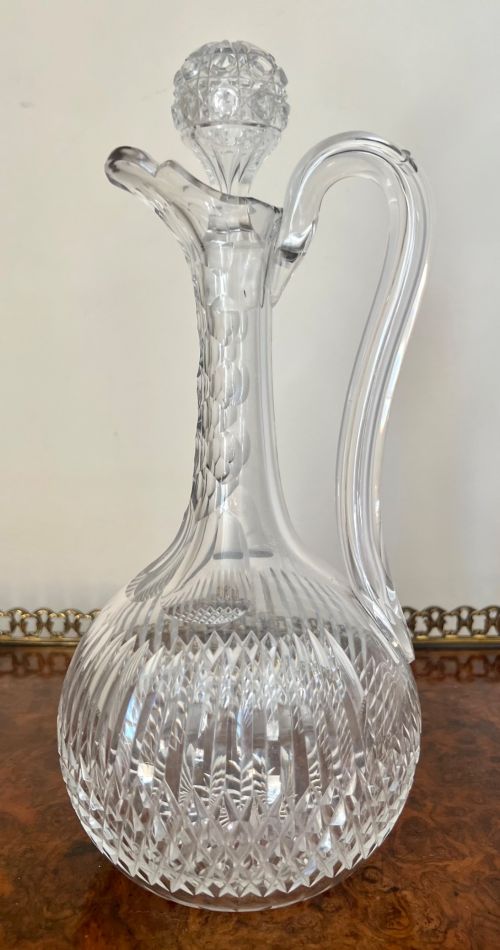
- A pouring vessel with a handle and spout, typically featuring a silver mount and hinged lid, used specifically for serving red wine.
- Intaglio
- A technique where designs are sunk below the surface of the glass by grinding and polishing rather than raised in relief.
- Sterling silver collar
- A band of solid silver fitted around the neck of a decanter, frequently bearing hallmarks indicating the assay office and year.
Edwardian Cut Crystal Decanter: Frequently Asked Questions
What is a tantalus?
A tantalus is a locking wooden frame that holds decanters securely in place, preventing anyone from pouring the contents without a key.
These frames typically house two or three cut crystal bottles and sit on sideboards or in games compendiums from the period.
How do I clean inside a decanter?
Cleaning the interior requires warm water and specialised non-abrasive cleaning beads or rice to gently dislodge sediment without scratching the crystal surface.
Stoppers should be stored separately from the bottles when not in use to prevent them from becoming stuck over time.
Are the stoppers original?
Original stoppers are custom-ground to fit the specific neck of each individual decanter during manufacture.
Checking for matching numbers or identical cut patterns on both the bottle and the base of the stopper helps confirm their authenticity.
Can I use them for daily serving?
These decanters function well for serving spirits and wine during meals or gatherings, provided they receive careful hand washing.
Avoiding sudden temperature changes protects the heavy lead crystal from thermal shock.