

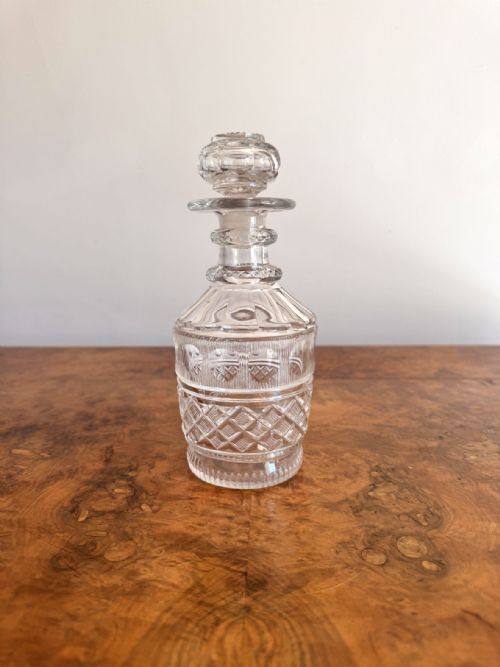
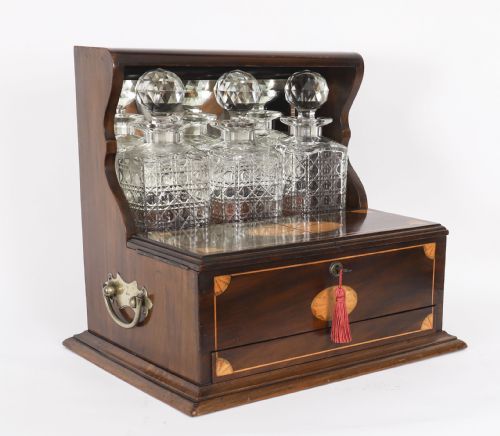
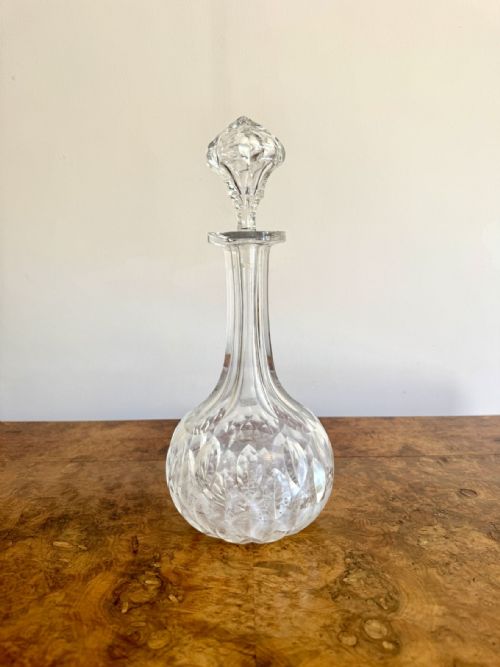


Traditional Crystal Decanter
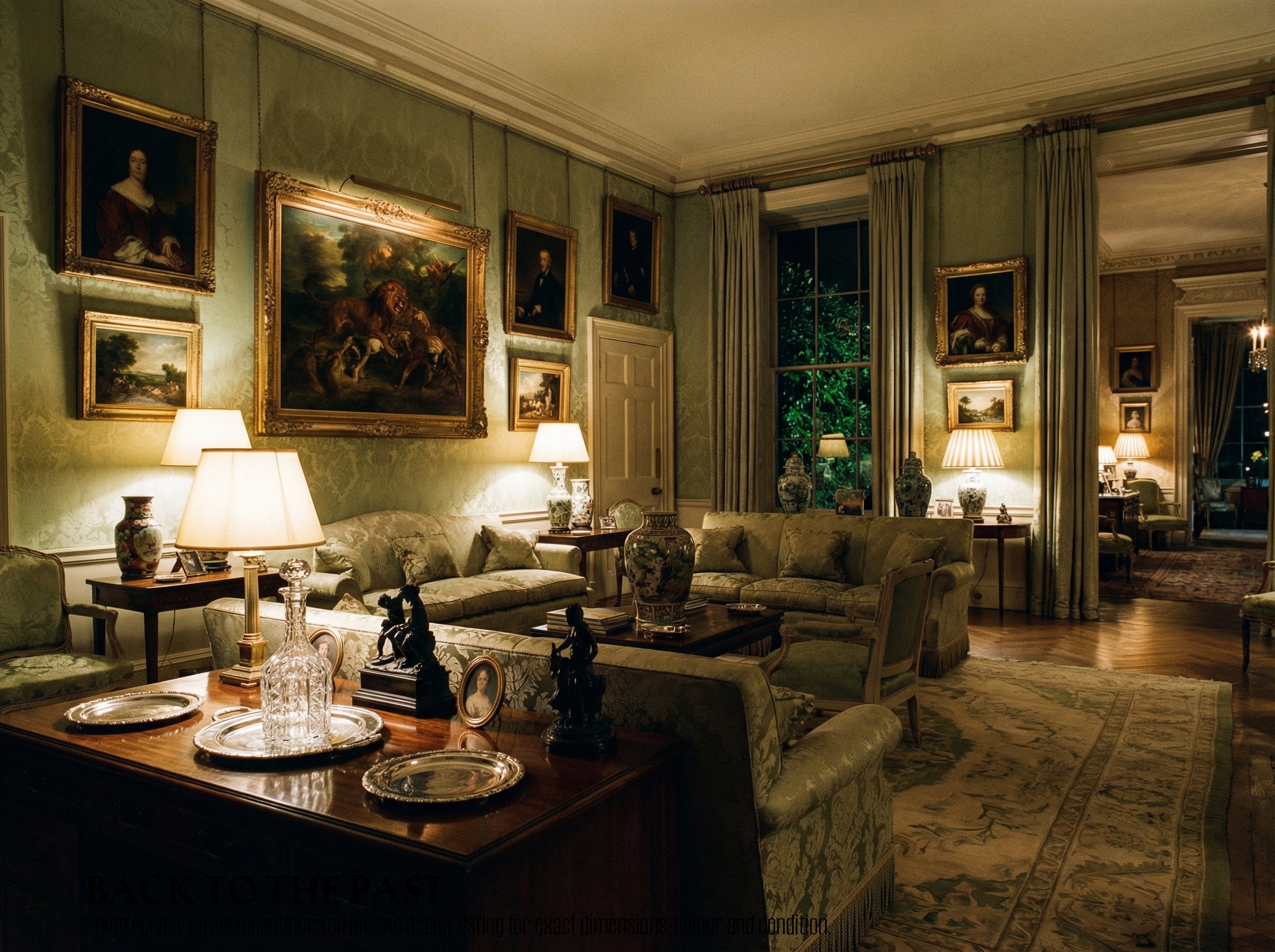
A traditional crystal decanter brings heavy-cut brilliance and period weight to a sideboard, holding spirits with genuine nineteenth or early twentieth-century presence.
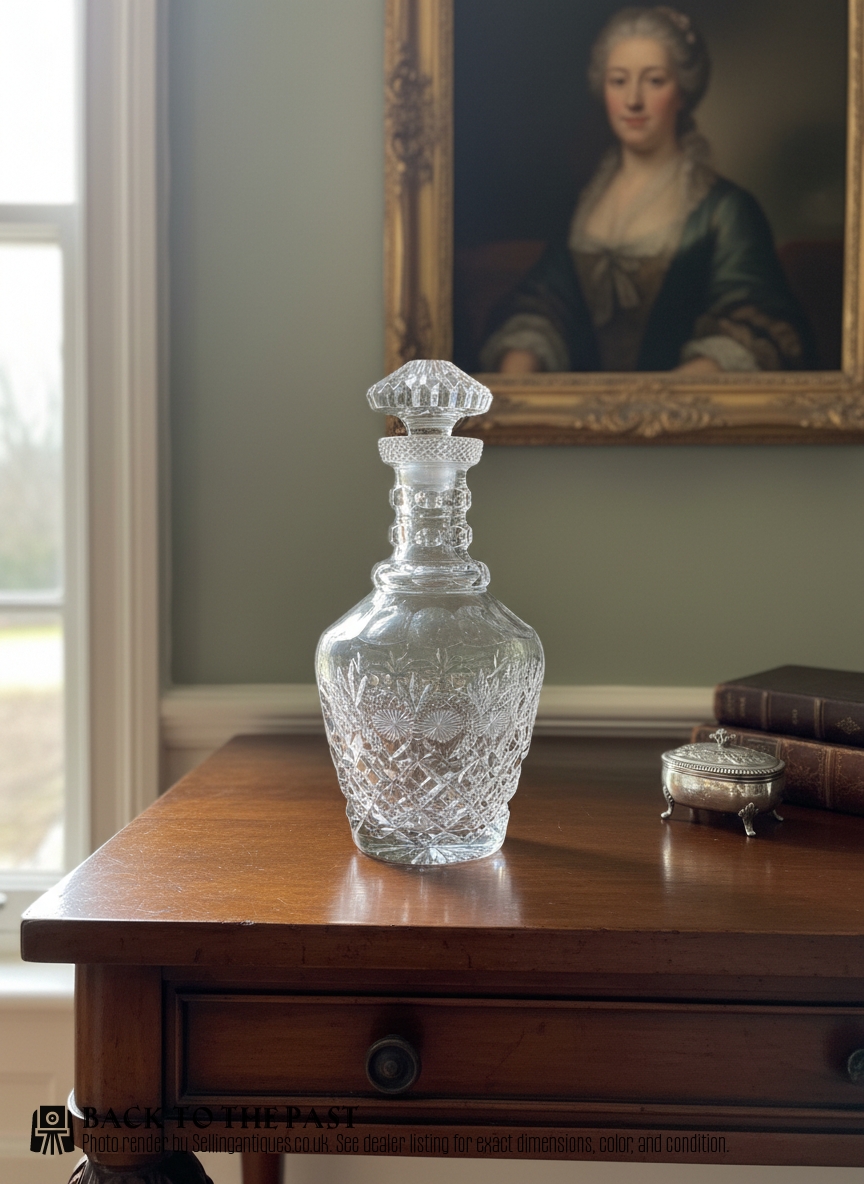
Traditional Crystal Decanter
A traditional crystal decanter is a heavy, light-catching vessel designed for serving spirits and wine, spanning styles from late Regency through Victorian and Edwardian eras. You will most frequently encounter Edwardian and Victorian cut glass examples on this page, often standing tall or shaped with bell profiles.
The selection includes matched pairs as well as individual pieces, alongside occasional tantalus sets housing multiple bottles within inlaid mahogany frames with brass details. Forms range from straightforward spirit decanters to carafes and elaborate nineteenth-century designs intended for formal dining and drawing rooms.
Origins trace across the Victorian and Edwardian periods, with recurring dates placing the heaviest concentration around the late nineteenth and early twentieth centuries. These pieces reflect the domestic habits of their time, combining functional drinking vessels with decorative objects meant to catch the light.
How they were made
Makers fashioned these pieces from lead crystal, cut glass, and standard glass, applying deep facets and geometric patterns that refract light across the room. The exterior surfaces frequently display intricate wheel-cut flutes, diamonds, and star motifs that require steady hand skill to execute evenly.
Structural mounts on related items integrate mahogany wood and brass hardware, particularly in locking tantalus frames designed to secure the bottles. Glass bodies are occasionally finished with engraved decoration alongside the heavy structural cutting.
Traditional Crystal Decanter Retail Price Guide 2026
Typical asking prices for traditional crystal decanter among the pieces listed under this phrase on Sellingantiques today, from the lower quarter to the upper quarter. They describe what is for sale here now, not the wider market.
The listings span the nineteenth and early twentieth centuries, featuring materials such as lead crystal, cut glass, mahogany, and brass.
What varies in quality
Quality rests in the crispness of the cutting and the weight of the material, where sharper facets and heavier lead crystal produce a clearer ring and brighter refraction. Finer examples maintain precision in their geometric patterns and symmetry across pairs, whereas lesser pieces show softer edges and simpler moulding.
The integrity of matched sets and the presence of original stoppers distinguish the better survivals from assembled groups. Superior items also benefit from well-preserved frames and fittings where mahogany and brass components remain tightly joined.
The Traditional Crystal Decanter Glossary
- Cut glass
- Glass decorated by grinding designs into the surface with abrasive wheels. This technique creates sharp facets that catch ambient light.
- Lead crystal
- Glass containing metallic oxide that increases weight, brilliance, and clarity. It allows for deeper and sharper cutting than standard glass.
- Tantalus
- A locking wooden frame holding decanters visible but secure from unauthorized access. The name references the mythological figure kept just out of reach.
- Carafe
- An open-topped glass container used for serving water or wine without a stopper. They share the glass-making materials of closed decanters.
- Regency
- A British design period spanning the early nineteenth century known for classical elegance. Pieces from this era often feature clean geometric lines.
Traditional Crystal Decanter: Frequently Asked Questions
Are these decanters safe for modern use?
Most pieces made from lead crystal are suitable for serving spirits for short durations. Historic lead crystal can leach trace amounts into contents left sitting for extended periods.
Pour contents into the vessel shortly before serving rather than storing liquor inside permanently. This preserves both the spirit and the historic material.
How do I spot an original stopper?
Look for matching cut patterns and hand-ground matching numbers on both the base of the stopper and inside the neck. Original stoppers fit flush and share the exact degree of wear as the body.
Replacements often sit unevenly or display different clarity in the glass under natural light. Examine the ground glass joint for signs of hand-lapping rather than modern machine grinding.
What is the difference between a decanter and a carafe?
A decanter includes a fitted stopper designed to seal the contents and preserve volatile spirits or wines. Carafes remain open at the top and serve immediate dining needs.
Decanters generally feature heavier cut crystal construction intended for display on sideboards. Carafes prioritize simpler, open-pour functionality for table service.