



Diamond Cut Glass Bottle
A diamond cut glass bottle brings heavy crystal and sharp geometric facets to the table, catching the light across decanters, cruets, and scent bottles.
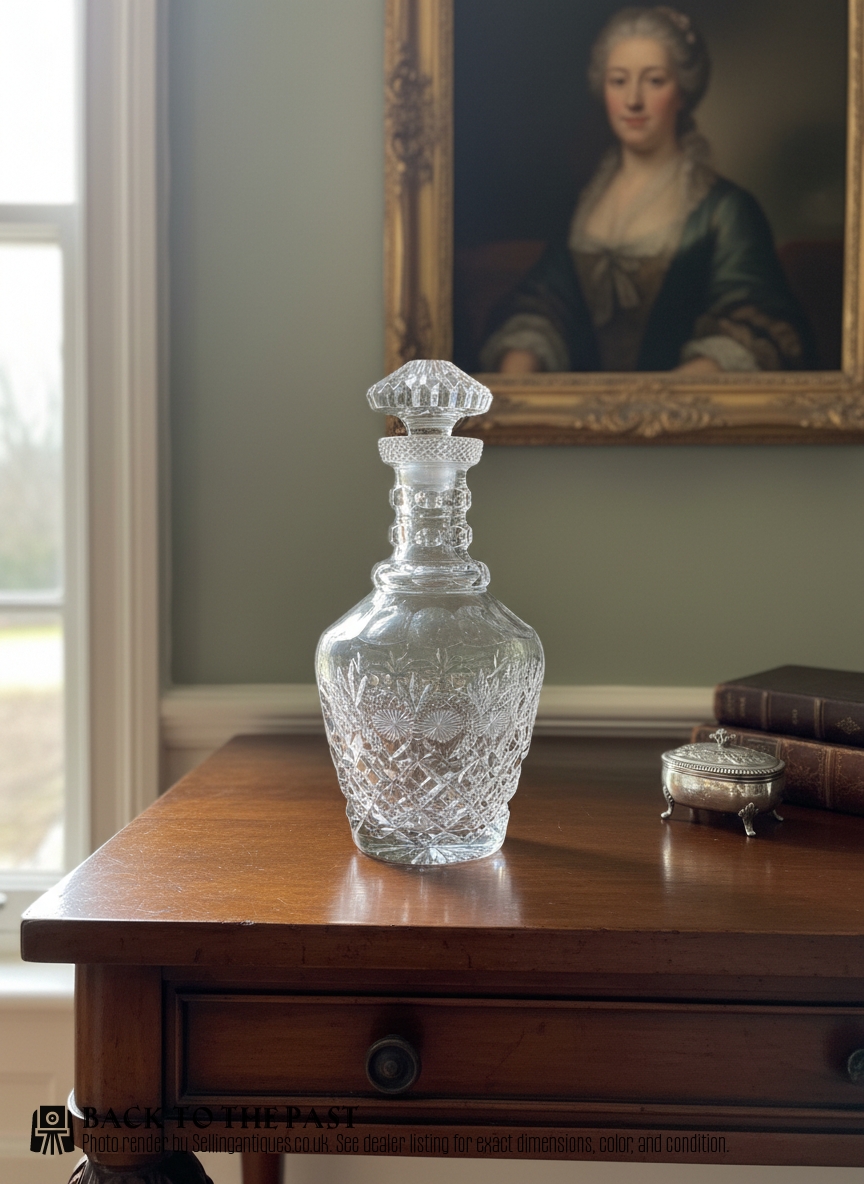
Diamond Cut Glass Bottle
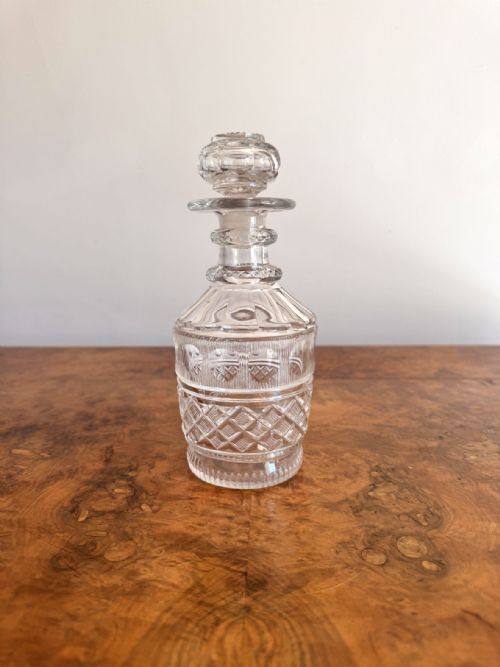
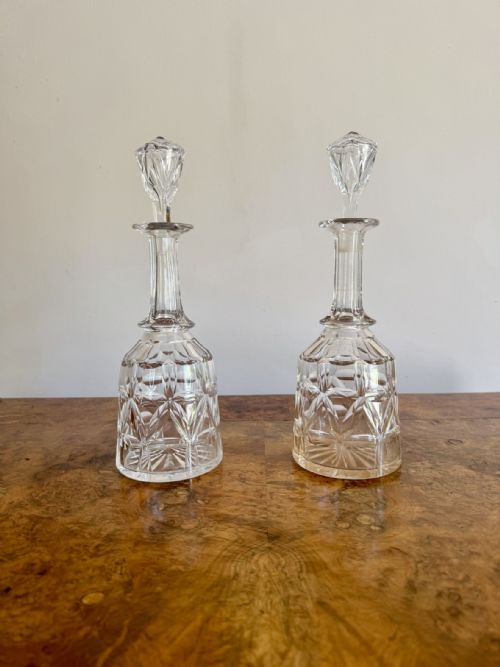
A diamond cut glass bottle search turns up heavy drinking vessels and small toilette containers spanning the Georgian, Victorian, and Edwardian eras. Decanters dominate the selection, alongside cruet sets, carafes, champagne coolers, and scent bottles.
Edwardian and Victorian pieces appear most frequently in this selection, often rendered in lead crystal or cut glass. The forms range from tall bell-shaped decanters to small silver-topped perfume bottles.
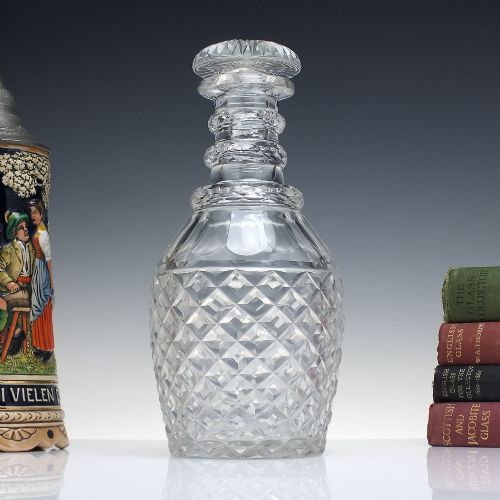
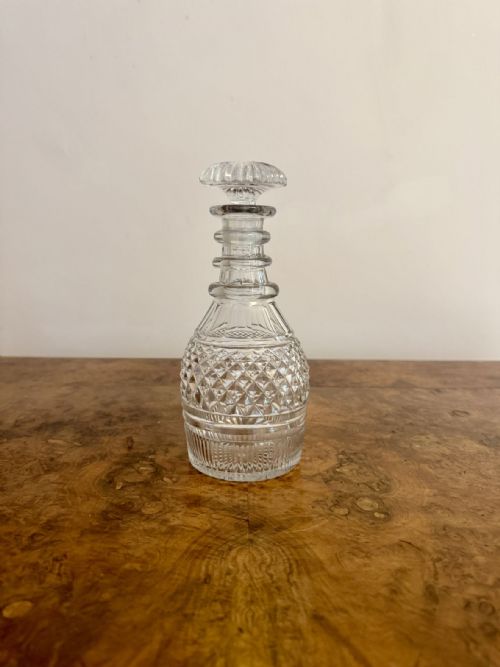
Earlier Georgian and Regency examples also feature, showing deep geometric cutting on heavier glass bodies. Alongside plain glass, some vessels incorporate sterling silver collars, silver plating, or gilt bronze mounts.
Materials and Cutting Techniques
These pieces rely on lead crystal, cut glass, and standard glass, shaped into vessels and finished with wheel-cut facets. The cutting creates raised diamond patterns that texture the surface of the bottle.
Mounts and hardware add metalwork to the glass bodies, utilising sterling silver for collars and bottle tops, silver plating, and gilt bronze for structural mounts on coolers.
Diamond Cut Glass Bottle Retail Price Guide 2026
Typical asking prices for diamond cut glass bottle among the pieces listed under this phrase on Sellingantiques today, from the lower quarter to the upper quarter. They describe what is for sale here now, not the wider market.
Listings span the Georgian, Regency, Victorian, and Edwardian periods, utilising cut glass, lead crystal, sterling silver, and gilt bronze.
Judging the Standard of Cutting and Mounts
Quality rests primarily on the crispness and depth of the wheel-cutting across the body. Sharper, deeper facets catch the light more intensely than shallow, smoothed-out impressions.
The integration of precious metals distinguishes finer pieces. Hallmarked sterling silver collars, silver-topped closures, and gilt bronze mounts elevate the standard beyond standard glass stoppers.
Hukin & Heath
The Diamond Cut Glass Bottle Glossary
- Cut Glass
- Glass shaped and decorated by holding it against a rotating abrasive wheel. This technique produces deep geometric patterns across the surface of the bottle.
- Lead Crystal
- Glass containing lead oxide, which increases the weight, refractive index, and clarity of the material. It allows for sharper facet cutting.
- Decanter
- A vessel used for holding and serving wine or spirits. These pieces often feature heavy stoppers and cut glass bodies.
- Cruet Set
- A collection of small bottles or jars held in a stand for condiments, vinegar, or oil. They frequently incorporate cut glass bodies with silver elements.
- Scent Bottle
- A small container designed for perfumes or colognes. They often feature sterling silver screw caps or hinged lids.
Diamond Cut Glass Bottle: Frequently Asked Questions
What is a diamond cut glass bottle used for?
These vessels primarily function as decanters for wine and spirits, cruets for the dining table, or small scent bottles for the dressing table. Their heavy cut glass bodies were designed to both store liquids securely and catch ambient light.
Over the centuries, owners used them to serve guests at formal dinners or to hold perfumes in domestic settings. Today, they serve both decorative purposes and practical beverage storage.
How do I tell Georgian from Edwardian cut glass?
Georgian pieces generally feature heavier lead glass with deeper, hand-cut facets and often display slightly irregular pontil marks on the base. Edwardian examples tend to show more uniform machine-assisted cutting and lighter overall proportions.
Examining the weight and the sharpness of the diamond pattern helps reveal the period of manufacture. Silver collars and hallmarked mounts also provide specific date markers.
Are all these bottles made of lead crystal?
The inventory includes a mix of lead crystal, lead glass, and standard cut glass. Lead crystal contains lead oxide, which gives the material greater weight and brilliance.
Standard cut glass also appears across the selection, offering similar geometric patterns without the same density. Both materials respond well to wheel-cutting techniques.
How should I clean a cut glass decanter?
Cleaning requires warm water and mild detergent, avoiding harsh abrasives that might scratch the exterior surface or damage silver collars. Wooden bottle beads or specialised brushes help reach residue inside narrow necks.
Extreme temperature changes must be avoided to prevent thermal shock to the heavy glass. Thorough drying ensures moisture does not linger inside the bottle.