

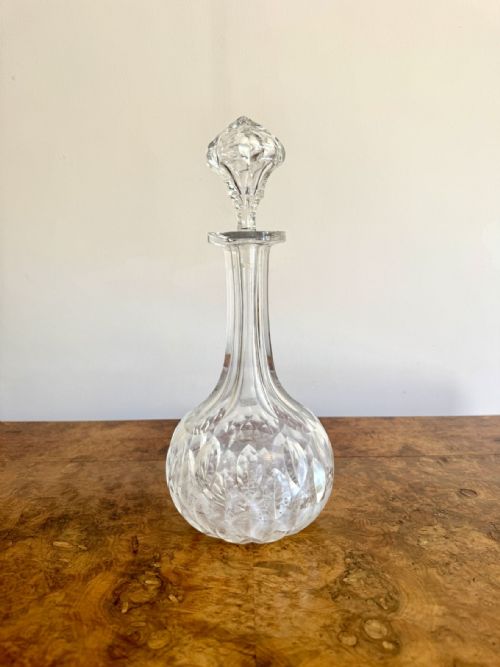
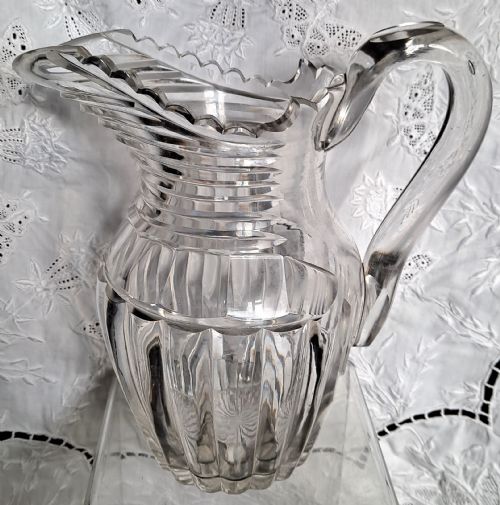


Heavy Lead Glass Decanter
These heavy lead glass decanter pieces are substantial vessels designed for serving spirits and water, prized for their brilliant refractive surfaces and satisfying weight in the hand.
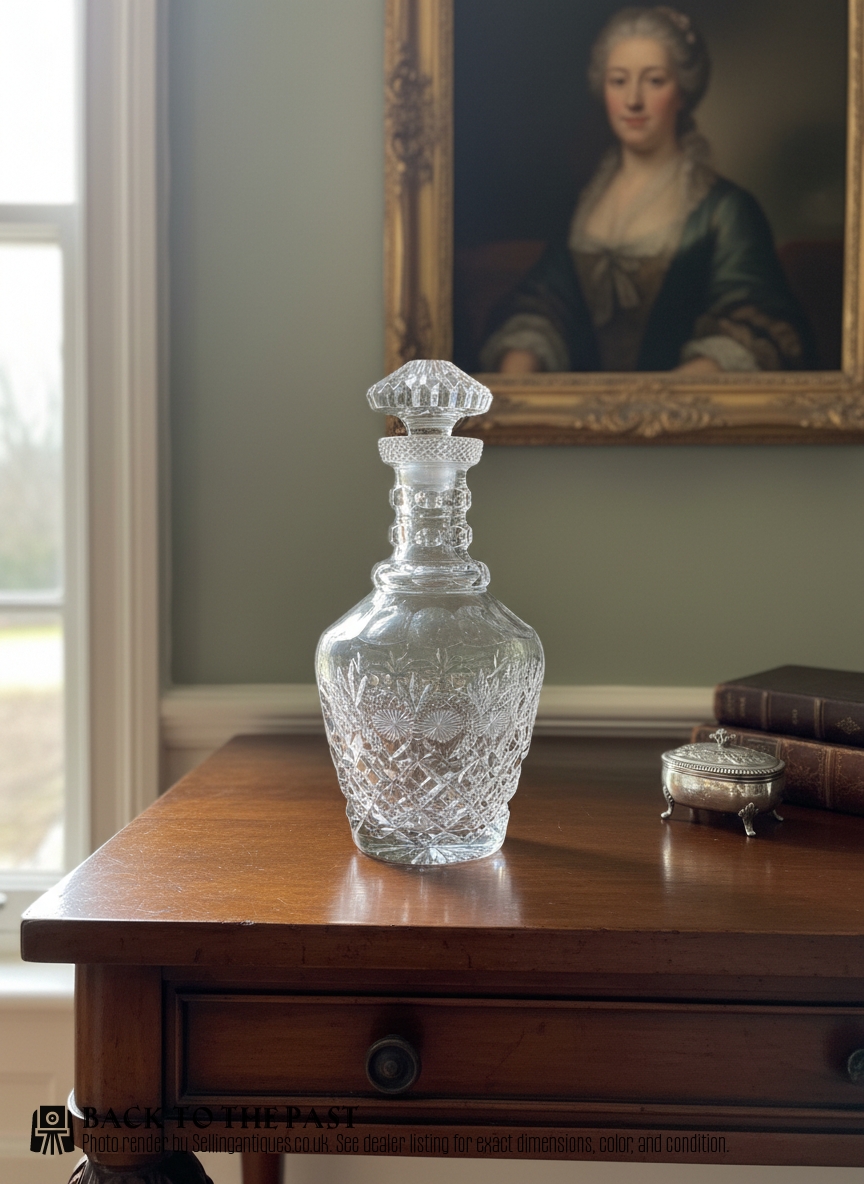
Heavy Lead Glass Decanter
A heavy lead glass decanter is a solid drinking vessel shaped for holding and pouring wine, spirits, or water. When you search for this phrase, you encounter forms spanning the Georgian, Regency, Victorian, and Edwardian eras.
The selections on this page are dominated by Edwardian and Victorian examples, alongside earlier Regency and Georgian pieces. Most take the form of traditional decanters, though related vessels such as water jugs and three-ring carafes also appear.
How they were made
These vessels are shaped from lead glass or crystal using traditional glassblowing techniques before the surface is heavily worked. Artisans employ deep wheel-cutting methods to carve geometric patterns and flutes directly into the thick walls of the material.
The inclusion of lead oxide in the batch gives the metal its characteristic heft, clarity, and brilliance. This dense composition allows the cutter to achieve sharp, clean facets that catch the light from every angle.
Heavy Lead Glass Decanter Retail Price Guide 2026
Typical asking prices for heavy lead glass decanter among the pieces listed under this phrase on Sellingantiques today, from the lower quarter to the upper quarter. They describe what is for sale here now, not the wider market.
The inventory spans the Georgian, Regency, Victorian, and Edwardian periods, utilising lead crystal, cut glass, and standard lead glass.
What varies in quality
The distinction between standard and superior examples lies in the crispness of the cutting and the weight of the metal. Finer pieces display deeply incised facets with sharp edges that feel substantial and perfectly balanced in the hand.
Attention to detail in the neck rings, stoppers, and overall symmetry separates ordinary production from exceptional work. Earlier Regency and Georgian specimens often exhibit a distinct depth of colour and surface texture absent in later mass-produced wares.
The Heavy Lead Glass Decanter Glossary
- Lead glass
- A type of glass containing metallic oxide that increases the weight, refractive index, and working time for cutting. It is the defining material for vessels requiring deep surface decoration.
- Cut glass
- Glass decorated by holding the vessel against a rotating abrasive wheel to carve patterns into the surface. This technique creates facets that scatter light and improve grip.
- Carafe
- An open-topped glass container used for serving water or wine without a stopper. Examples often feature applied glass rings around the neck for secure handling.
- Regency
- A British design period spanning the early nineteenth century characterised by classical restraint and bold architectural forms. Decanters from this era often feature clean geometric cutting.
Heavy Lead Glass Decanter: Frequently Asked Questions
How do I date a heavy lead glass decanter?
Dating relies upon observing the shape of the body, the style of the neck rings, and the manner of the cutting. Georgian and Regency pieces typically show hand-polished pontil marks and heavier proportions.
Later Victorian and Edwardian examples often feature more elaborate machine-influenced facets and standardised stoppers. Comparing the weight and clarity provides further clues to the period of manufacture.
Are these decanters safe for holding wine?
These vessels were historically manufactured for storing and serving alcoholic beverages and water. Lead glass can leach trace amounts of lead into acidic liquids stored for extended periods.
For modern use, pouring wine or spirits into the decanter for immediate serving presents no practical concern. Long-term storage of contents over weeks or months is generally discouraged by collectors.
What is a three ring carafe?
A three ring carafe is a specific form featuring three distinct horizontal glass ridges applied or wheel-cut around the neck. These rings originally served a practical purpose to prevent the vessel from slipping from wet fingers.
This form is particularly associated with the late eighteenth and early nineteenth centuries. They remain sought after for their pleasing proportions and tactile utility.