
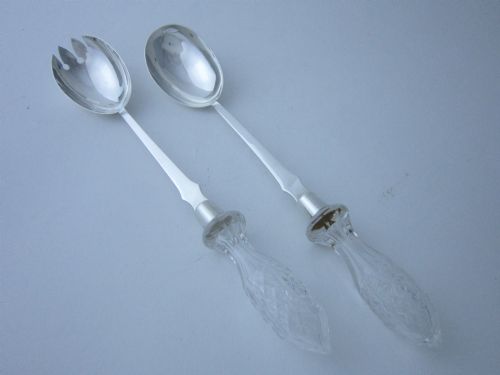


Edwardian Crystal Tableware
Edwardian crystal tableware brings brilliant sparkle to the table through heavy cut glass paired with bright silver mounts.
Edwardian Crystal Tableware
While the pieces span several periods from the eighteenth century to the twentieth, the Edwardian examples dominate the listings. These objects combine clear heavy glass with sterling silver or silver plate mounts to create functional dining accessories.
How edwardian crystal tableware was made
Makers utilised lead crystal and cut glass, shaping the heavy material through deep wheel-cutting to catch the light. This technique produced sharp facets and geometric patterns across bowls, jugs, and decanters.
Silversmiths combined sterling silver and silver plate with the glass bodies, mounting rims, collars, and handles securely onto the vessels. These metal additions often bear hallmarks indicating assay offices like Chester, providing precise dates of manufacture.
Materials across these table items combine lead crystal and cut glass with sterling silver, silver plate, and occasional velvet linings.
What varies in quality
Quality rests upon the depth and crispness of the glass cutting, where sharper facets and heavier metal mounts indicate finer production standards. Pieces with matched components and intact silver work command greater attention from collectors.
The presence of original fitted cases or fully hallmarked sterling silver mounts elevates an object above standard plated versions. Clarity of the crystal and absence of heavy wear to the cut edges distinguish the superior items.
The Edwardian Crystal Tableware Glossary
- Cut glass
- Glass decorated by grinding facets and patterns into the surface using rotating wheels. This process creates the characteristic brilliance seen on Edwardian tableware.
- Cruet set
- A matched collection of small bottles or containers holding condiments like oil, vinegar, salt, and pepper. They usually sit within a metal stand for table service.
- Sterling silver
- An alloy consisting of ninety-two point five percent silver and seven point five percent other metals. It provides durable mounts and fittings for glass vessels.
- Silver plate
- A layer of silver applied to a base metal core such as brass or copper. It offered a bright finish for tableware at a more accessible cost.
- Decanter
- A stoppered glass vessel used for holding and serving wine or spirits. Edwardian examples often feature heavy cut crystal bodies and matching glass stoppers.
Edwardian Crystal Tableware: Frequently Asked Questions
What is included in edwardian crystal tableware?
This category covers glass dining accessories ranging from large fruit bowls and decanters to smaller items like condiment sets and preserve pots. Many feature combined elements of cut glass and silver.
Items designed for service dominate the selection, including salad servers, jugs, and cruet sets intended for formal dining tables.
Are sterling silver mounts marked?
Sterling silver components usually carry hallmarks that indicate the maker, the assay office, and the year of manufacture. These small stamped marks help verify the period of the piece.
Silver plate items use different stamps that denote plating quality rather than official assay marks for solid precious metal.
How do I date these glass items?
Dating relies heavily on accompanying silver hallmarks, style conventions, and manufacturing techniques recorded in individual listings. Pieces often date from the Edwardian era around nineteen hundred.
Stylistic shifts between Victorian heaviness and later twentieth-century minimalism also provide clear clues to an object's age.