

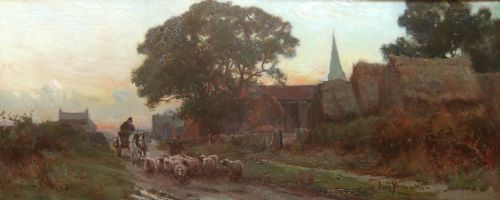


Edwardian Country Landscape Art
Edwardian country landscape art captures rural scenes of cottages, farmland and rivers across Britain during the early twentieth century.
Edwardian Country Landscape Art
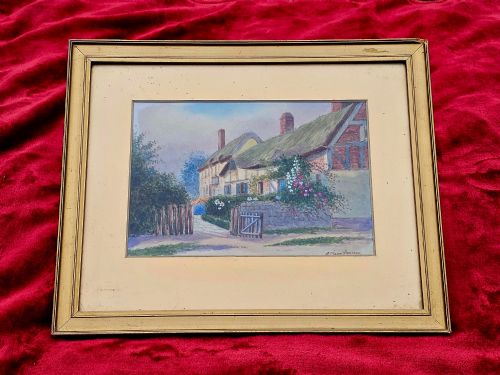
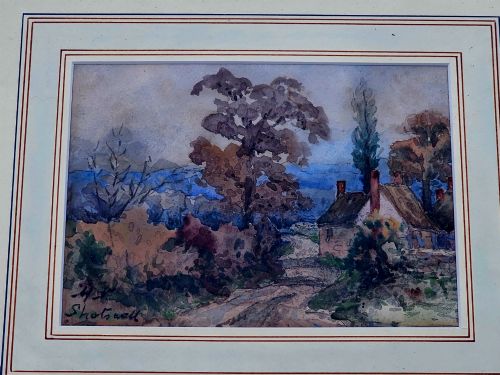
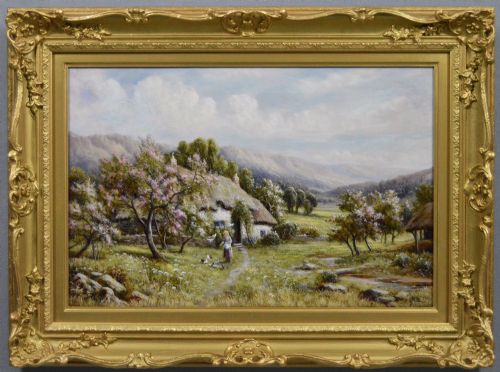
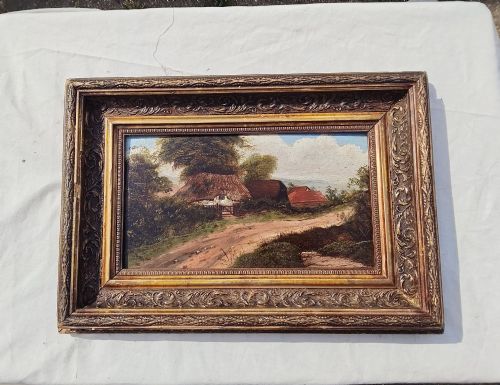
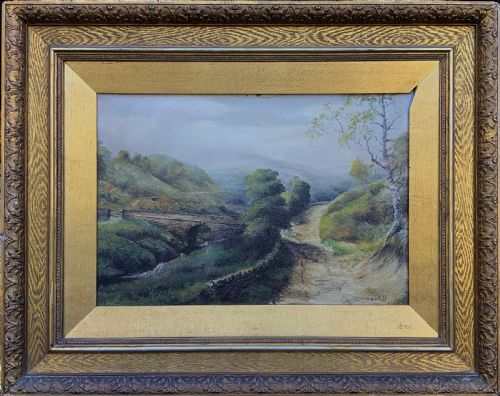
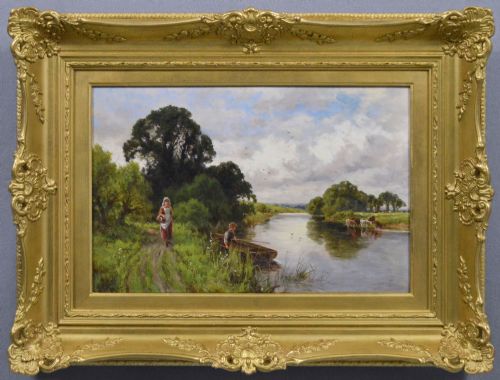
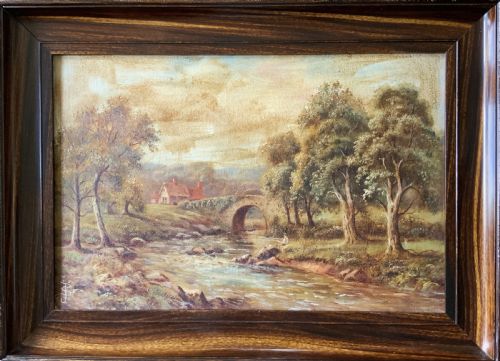
Edwardian country landscape art encompasses painted scenes of rural Britain, featuring thatched cottages, meandering rivers, farmyards, and expansive moorlands. These works document the countryside through the lens of late nineteenth-century and early twentieth-century painters working in British Impressionism and pastoral styles.
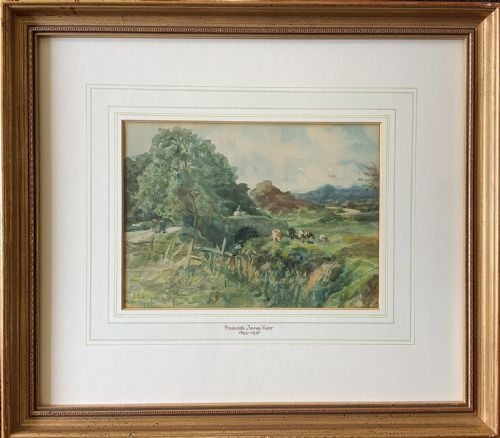
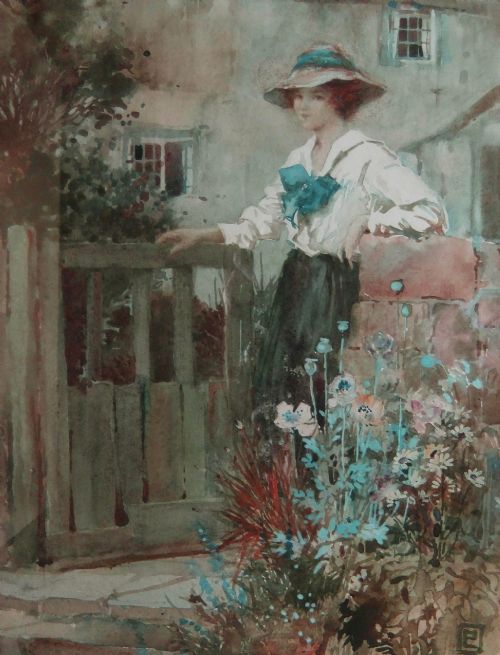
Buyers browsing this selection will frequently encounter watercolours on paper and oil paintings on canvas or card. The compositions often include figures by cottage gates, cattle grazing near streams, and quiet rural lanes typical of the period.
The material originates predominantly from artists active between the late Victorian era and the 1930s. Regional British scenes span locations from Yorkshire and Nottinghamshire to Devon and the Thames.
Distinguishing quality in the selection
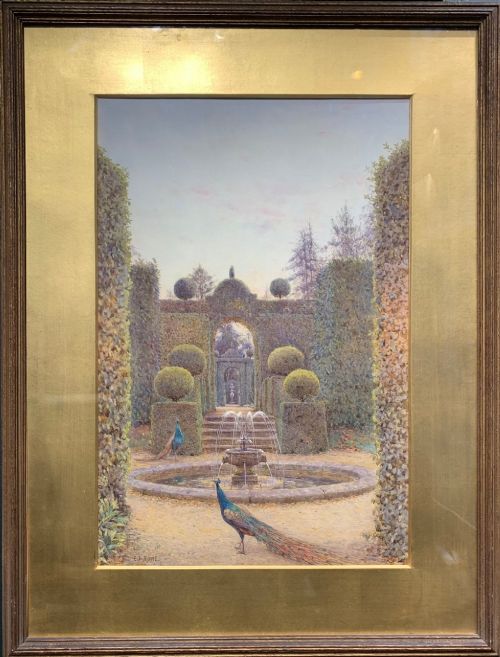
Quality separates through the artist's handling of light, atmosphere, and spatial depth within the rural setting. Stronger pieces display confident brushwork and balanced compositions that capture specific weather conditions or times of day, such as eventide.
The distinction also lies in the clarity of the provenance and the skill shown in rendering human figures or animals naturally within the wider landscape. Finer examples maintain structural integrity in the original wood framing and preservation of the pigment under glass.
Edwardian Country Landscape Art Retail Price Guide 2026
Typical asking prices for edwardian country landscape art among the pieces listed under this phrase on Sellingantiques today, from the lower quarter to the upper quarter. They describe what is for sale here now, not the wider market.
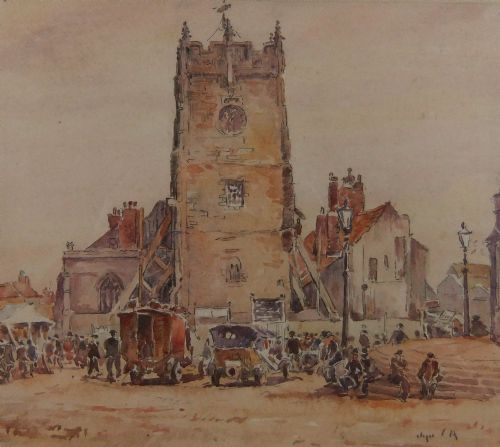
Several watercolours preserve the exact moment a Romany Gypsy caravan paused near a round house on Clifton Lane.
A. Marie Parsons·Robert John Hammond·John Smith Atherton·Ernest Arthur Rowe·Frederick James Kerr·George Wright·Percy Lancaster·Henry H Parker·Sydney Yates Johnson·F.J. Snell·Owen Bowen·Edgar Woollatt·J. C Grey·Henry John Yeend King·William Greaves·Ernest Pile Bucknall·Philip Henry Rideout·Rowland Henry Hill·M. C. Hider·John Atkinson·Frederick James Knowles·Theresa Stannard·Linnie Watt·Ernest Higgins Rigg·Frederick G. Coulridge
The Edwardian Country Landscape Art Glossary
- Watercolour
- A painting method where fine pigment is suspended in water-soluble liquid and applied to paper. This medium allows for luminous washes and delicate colour transitions.
- Oil on Canvas
- Pigment bound in a drying oil applied directly to stretched woven fabric. This technique permits rich texture and deep colour saturation.
- British Impressionism
- A painting style focused on light and everyday subjects influenced by French movements but adapted locally. Artists recorded fleeting natural effects outdoors.
- Pastoral Style
- Artistic representation portraying rural life and idealized agricultural scenes. These works celebrate peaceful country living, farms, and cottage gardens.
- Provenance
- The documented history of ownership and origin for a work of art. This record helps confirm authenticity and background.
Edwardian Country Landscape Art: Frequently Asked Questions
What subjects appear in Edwardian landscapes?
These artworks typically show rural British scenes, including thatched cottages, farmyards, riverbanks, and cattle grazing in fields. Artists recorded everyday country life and recognizable local landmarks.
Human figures occasionally feature working near streams, walking down country lanes, or gathered outside rural homes and horse fairs.
How should I care for watercolour paintings?
Watercolours on paper require protection from direct sunlight to prevent fading of the pigments over time. Keeping them behind glass in stable indoor humidity preserves the paper support.
Avoid hanging these pieces in damp rooms or areas prone to extreme temperature fluctuations to protect both the painting and its wooden frame.
Are oil paintings on canvas durable?
Oil paint on canvas forms a resilient surface that tolerates normal indoor environments well. The canvas relies on proper tension across a wooden stretcher to prevent sagging.
Dusting the surface gently with a dry, soft cloth helps maintain the paint layer without introducing moisture or cleaning agents.
How do I identify the period of a landscape?
Period indicators include the clothing style of any figures depicted, architectural details of cottages, and the framing materials used. Signatures and dates added by the artist provide direct evidence.
Stylistic traits such as Impressionist brushwork or traditional pastoral composition also help narrow the active years of creation.