


Edwardian Corinthian Lamp Base
These edwardian corinthian lamp base pieces bring classical architecture into the room, cast in solid brass and silver plate to hold a light.
Edwardian Corinthian Lamp Base
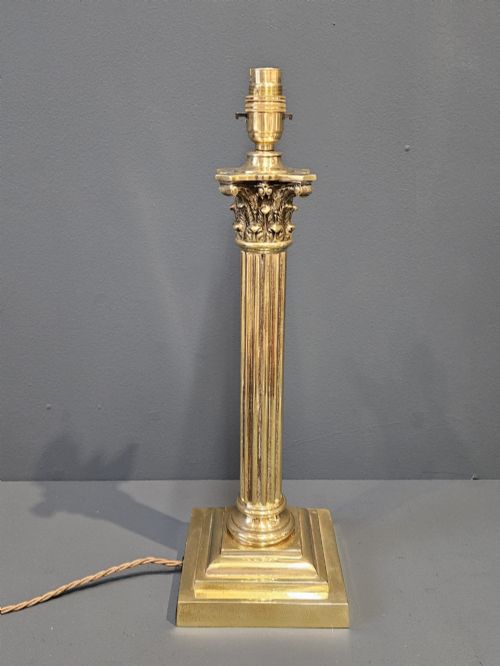
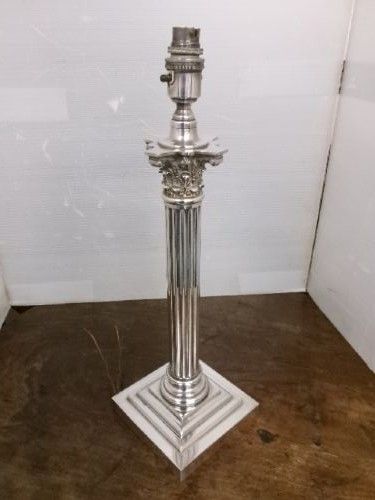
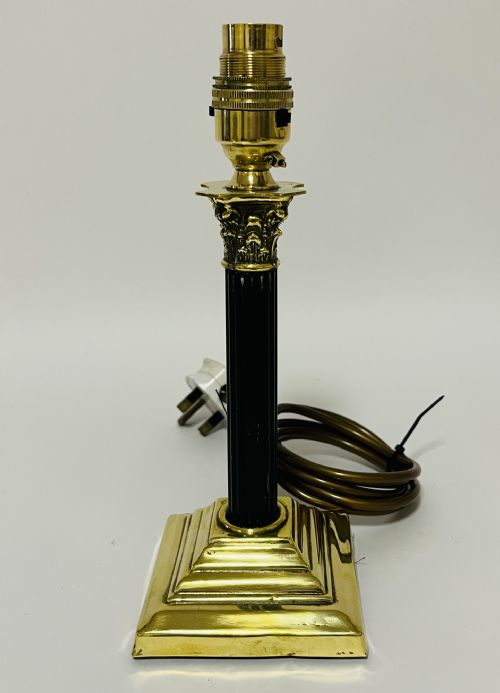
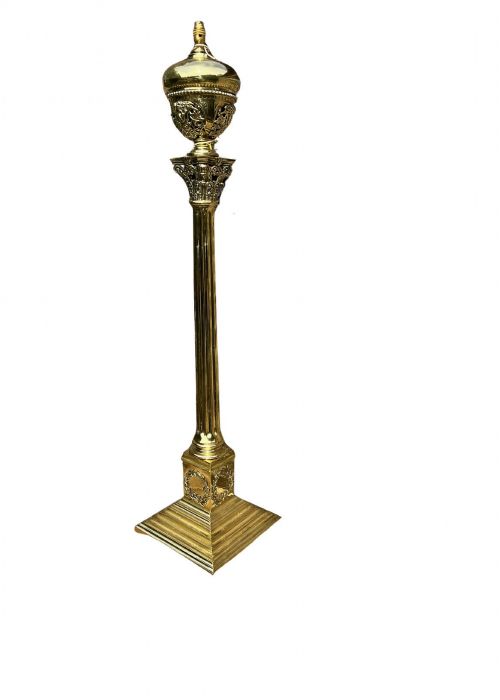
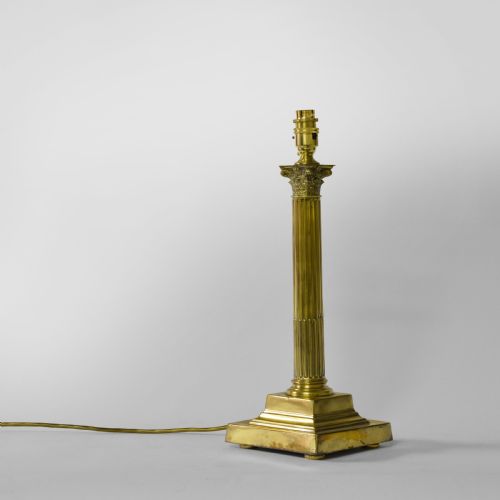
An edwardian corinthian lamp base takes the form of a classical column, topped with ornate acanthus leaves and fluted shafts. The pieces on this page appear mostly as table lamps and standard lamps, standing tall on square stepped pedestals.
The style draws heavily from neoclassical revival tastes, appearing across the Victorian, Edwardian and early twentieth century periods. Brass and silver plate dominate the selection, alongside occasional examples incorporating cut glass or marble.
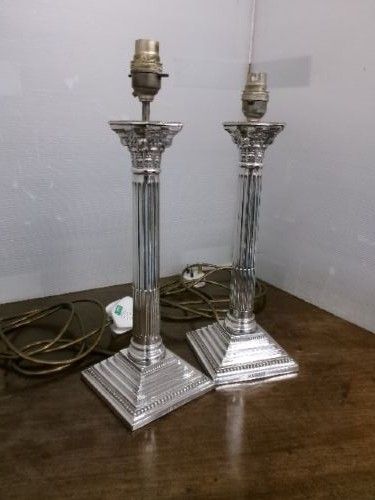
Makers adapted ancient architectural orders for domestic interiors, producing heavy metal columns designed to carry silk or fabric shades. Collectors encounter both single table pieces and matched pairs intended for sideboards or desks.
How they were made
Foundries cast brass and metal components in sections before assembling them around a central weighted core for stability. Capitals bearing the characteristic acanthus leaf motifs required skilled chasing to sharpen the cast details.
Silver plating was applied over base metals using electroplate methods, creating a bright reflective surface that emulated solid silver. Cut glass sections, where present, were shaped by hand and mounted between metal collars.
Listings span the nineteenth century through the 1930s, showing a persistent demand for neoclassical brass and silver plate forms.
What varies in quality
The crispness of the casting defines the upper tier of these columns, particularly in the deep relief of the capital's foliage and the clean edges of the fluted shaft. Heavy gauge metal and substantial weight indicate a superior build that prevents tipping.
Proportions also distinguish finer examples, where the height of the column balances precisely with the stepped base and the weight of the plinth. Silver plated versions depend upon the preservation of the original plating without excessive wear through to the base metal.
Walter Latham & Son
The Edwardian Corinthian Lamp Base Glossary
- Corinthian column
- An architectural column order distinguished by an ornate capital decorated with rows of acanthus leaves. This motif forms the defining feature of the lamp bases on this page.
- Capital
- The uppermost member of a column that serves as the decorative transition to the entablature above. On these lamps, it sits directly beneath the bulb holder.
- Fluting
- Shallow vertical grooves carved or cast into the shaft of a column. They create rhythmic shadow and highlight along the length of the metal.
- Electroplate
- A method of depositing a thin layer of silver onto a base metal using electrical current. This technique became common during the nineteenth century for domestic metalwork.
- Standard lamp
- A tall floor-standing lamp designed to rise above furniture and illuminate a wider area. Several examples in the evidence record this taller form.
Edwardian Corinthian Lamp Base: Frequently Asked Questions
How do I wire an old lamp base?
Rewiring requires feeding modern heat-resistant flex up through the central channel of the column to a compliant lampholder. Many buyers retain an electrician to ensure the internal wiring meets current safety standards.
Older brass tubes often accumulate dust inside, so the channel should be cleared before new cable is pulled through the base.
Are these lamps heavy?
Most examples possess considerable weight because makers cast the metal thickly and loaded the base with iron or lead weights. This prevents the tall column from tipping when fitted with a large fabric shade.
Lifting one reveals a solid heft that distinguishes quality nineteenth and early twentieth century metalwork from later hollow reproductions.
How do I clean silver plated brass?
Silver plate requires gentle treatment with a non-abrasive cloth and mild polish to preserve the thin metallic layer over the brass. Aggressive scrubbing will wear through the plating and expose the yellow metal underneath.
Plain brass parts respond well to traditional metal cleaners, provided care is taken to avoid the surrounding fabric cord or glass sections.
What shades suit these columns?
Traditional silk or fabric shades complement the neoclassical proportions, often echoing the square footprint of the stepped base. Pleated designs match the vertical lines of the fluted column shaft.
Proportion is key, ensuring the shade diameter balances the height of the metalwork without overwhelming the capital.
How do I date an Edwardian lamp?
Dating relies on the combination of material finishes, assembly methods, and any surviving maker marks stamped onto the weighted base. Edwardian examples sit alongside Victorian and 1920s pieces that share identical neoclassical column designs.
Examine the plug, switches, and internal fittings for clues, though many older columns have been updated with modern electrical components.