




Edwardian Collectors Chest
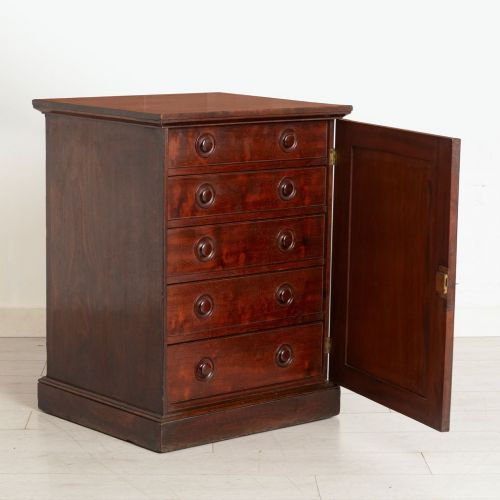
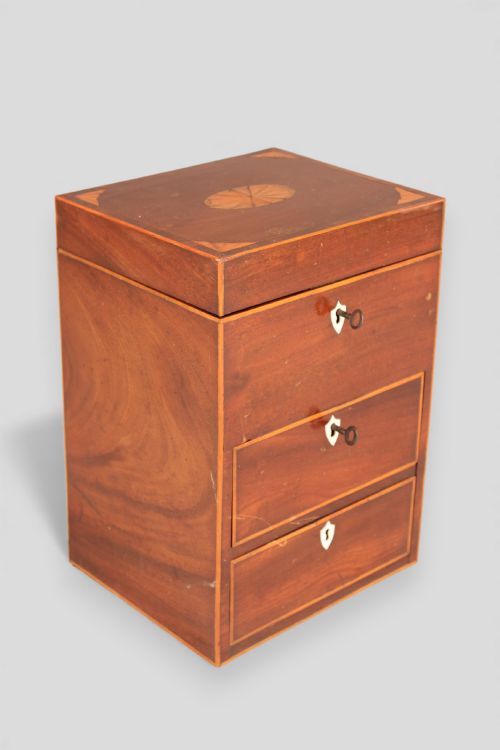
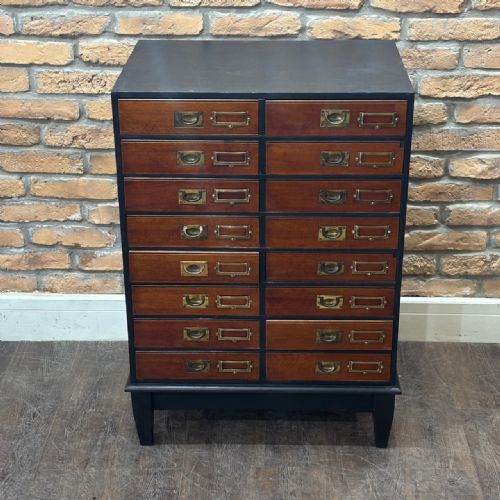
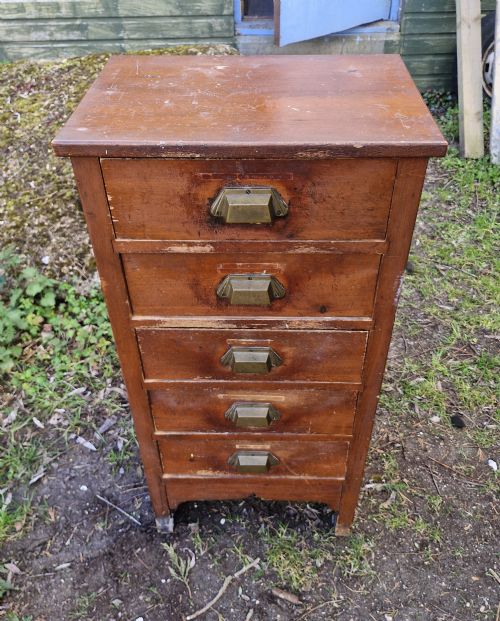
An edwardian collectors chest organises small specimens or papers in multiple shallow drawers secured by a locking mechanism.
Edwardian Collectors Chest
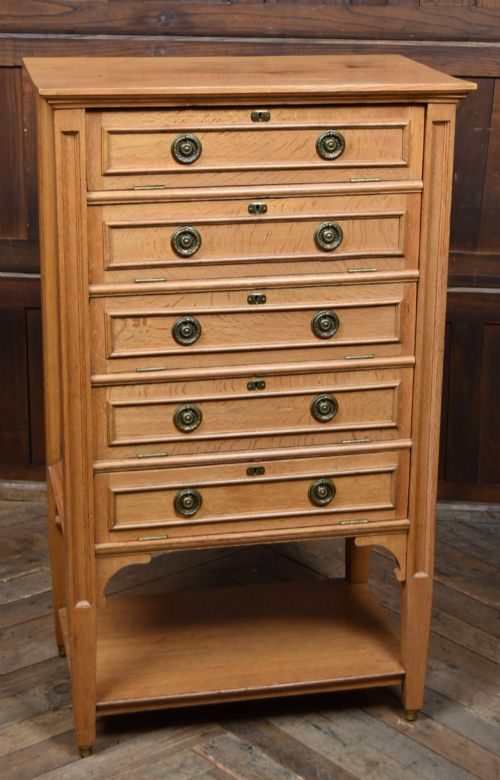
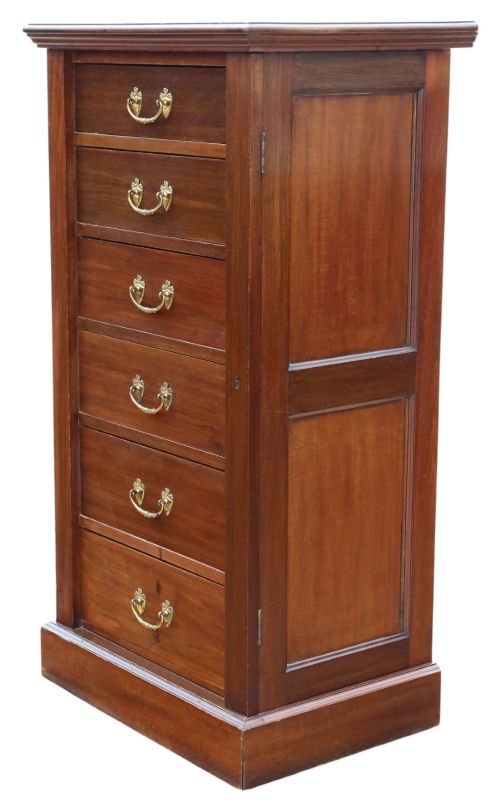
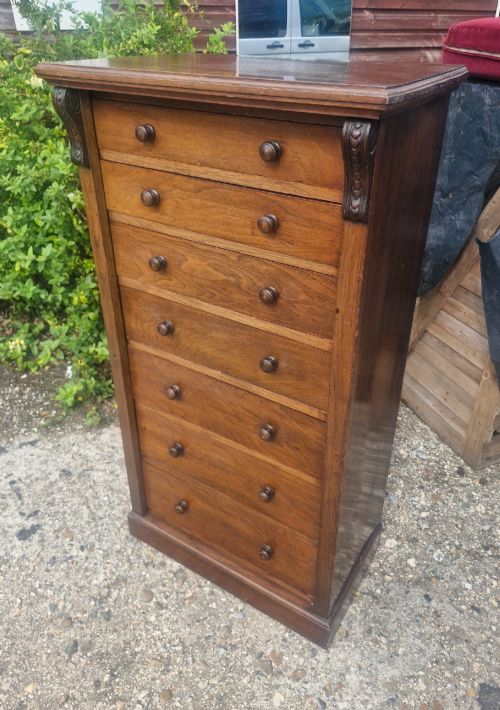
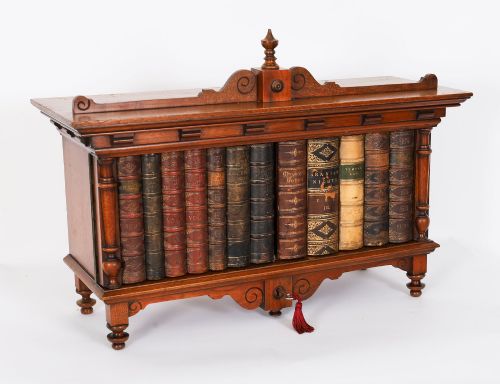
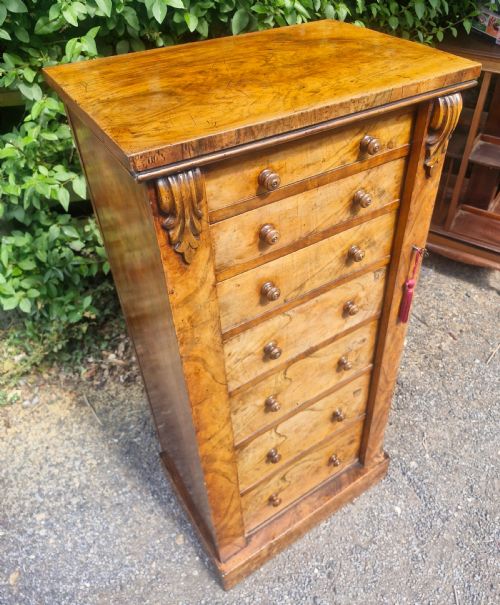
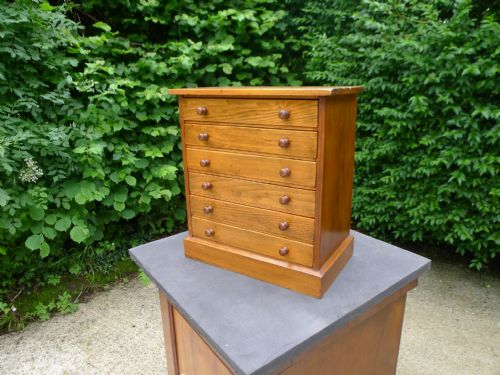
An edwardian collectors chest is a multi-drawer storage piece designed to house specimens, documents or small items securely. These cabinets range from compact table-top examples to larger floor-standing Wellington chests fitted with locking side pilasters.
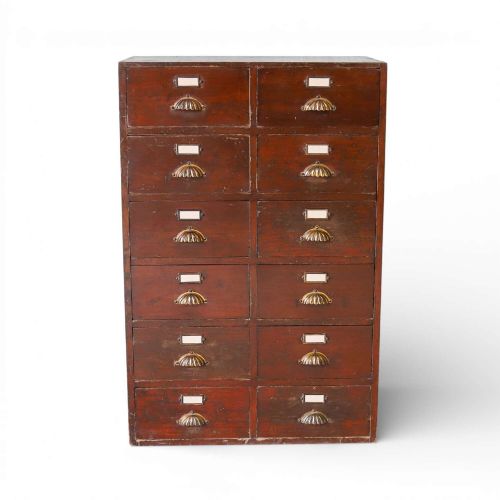
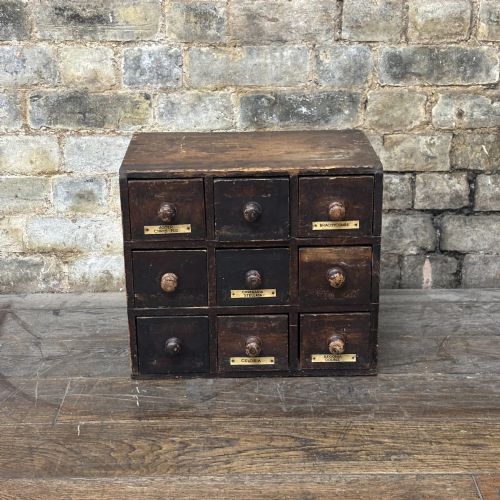
The pieces appearing here include oak, mahogany and walnut forms created around the turn of the twentieth century. Many share construction traits with contemporary filing cabinets, medical chests and apothecary boxes from the same period.
How they were made
Cabinet makers utilised dense hardwoods such as mahogany, oak and walnut alongside secondary softwoods like pine for internal framing and drawer linings. Timber selection prioritised stability to ensure small, close-fitting drawers continued to slide smoothly within their carcases.
Listings feature oak, mahogany, walnut, pine and laburnum timbers across Edwardian, Victorian and Georgian production periods.
What varies in quality
The standard of an edwardian collectors chest depends on the precision of its joinery and the grade of timber employed in its construction. Superior examples feature closely dovetailed drawer boxes and well-figured veneers that remain firmly adhered to their substrates.
Original furniture brings higher distinction, particularly when retaining functional locking bars, keys and maker signatures or labels. Altered interiors or replaced drawer pulls alter the integrity of the piece.
Brady of Edmonton·Manoah Rhodes and Sons Ltd
The Edwardian Collectors Chest Glossary
- Wellington chest
- A tall, narrow chest of drawers featuring a hinged locking pilaster on one side that secures all drawers when locked. This form originated in the nineteenth century and remained popular through the Edwardian period.
- Specimen cabinet
- A purpose-built storage unit with shallow drawers designed to hold natural history collections such as insects, minerals or coins. Interiors often retain green baize or velvet linings.
- Fiddleback mahogany
- Mahogany timber displaying a wavy, undulating grain pattern resembling the back of a violin. Cabinet makers selected this decorative wood for high-status drawer fronts and panels.
- Pilaster
- A vertical architectural element projecting from the side of a cabinet carcase. On these chests, the locking pilaster swings open to release the drawers.
- Dovetail joint
- A traditional interlocking corner joint utilised in drawer construction. Hand-cut dovetails indicate cabinet-making skill and contribute to long-term durability.
Edwardian Collectors Chest: Frequently Asked Questions
What were collectors chests originally used for?
These chests stored delicate items like coins, botanical samples, minerals and insects. Naturalists relied on shallow drawers to organise and protect classified specimens.
Later adaptations served offices and surgeries as filing units or medical cabinets. The compartmentalised layout suited any pursuit requiring orderly classification.
How do I secure the locking drawers?
Most Wellington chests and cabinets use a hinged side pilaster that swings or lifts away once the main brass lock is opened. Turning the key releases this locking bar to allow drawer access.
Keys are frequently absent on surviving antique examples. A locksmith can often replicate or adapt a mechanism while preserving original hardware.
Can I use these cabinets for modern office filing?
Certain configurations accommodate modern paper sizes, though historical drawer dimensions vary significantly. Many Edwardian variants suit stationery, craft supplies or jewellery storage rather than standard folders.
Checking internal drawer measurements ensures the storage space meets your specific functional requirements.
How do I tell an Edwardian chest from a Victorian one?
Dating relies on timber choices, construction methods and stylistic cues recorded in the carcase design. Edwardian pieces often display lighter oak or inlaid mahogany details reflecting Arts and Crafts influence.
Victorian predecessors tend to feature heavier proportions and darker French polished walnut or dense mahogany surfaces.