



Edwardian Coat Rack Mirror
An edwardian coat rack mirror combines a functional hallway organiser with a polished looking glass, bringing practical timber and glass into daily use.
Edwardian Coat Rack Mirror
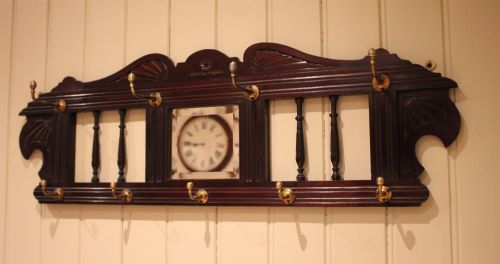
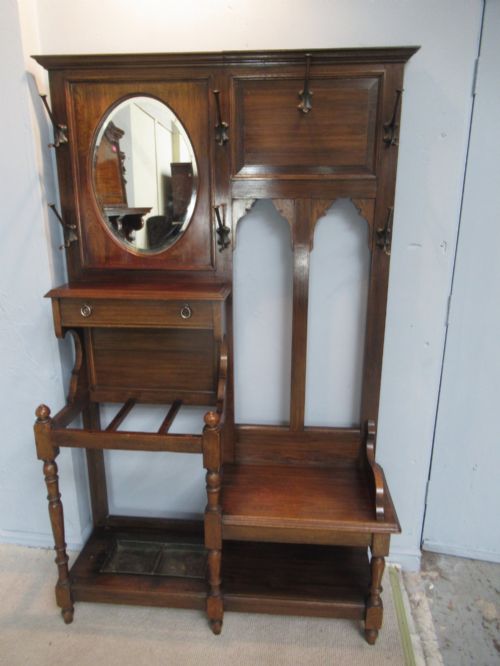
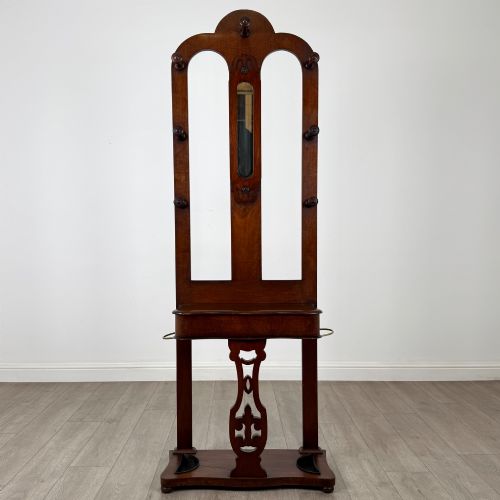
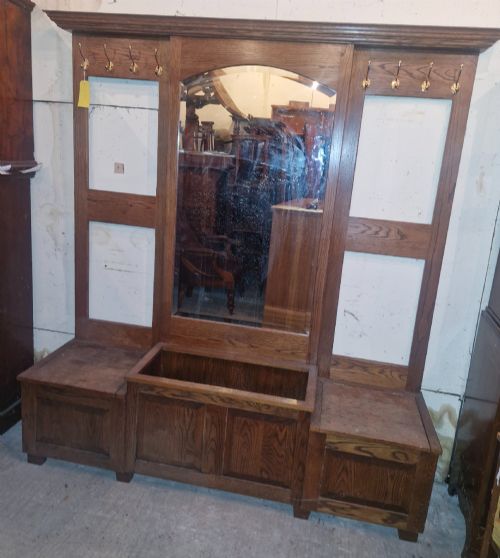
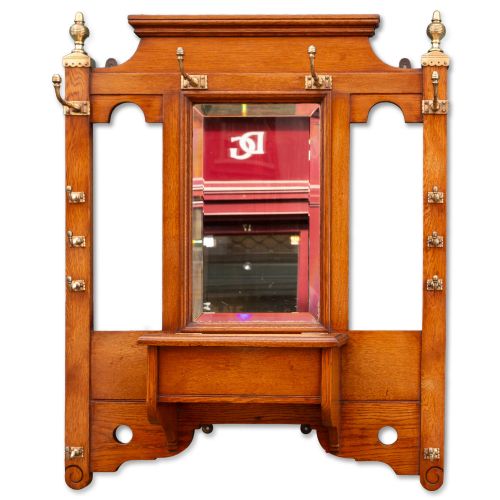
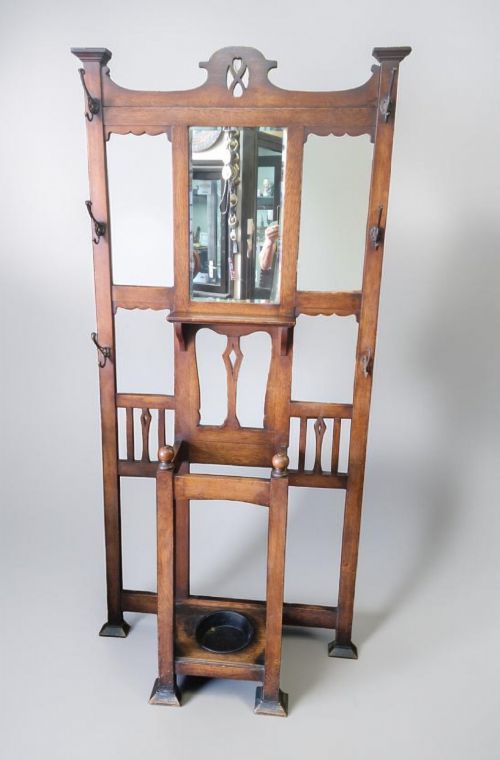
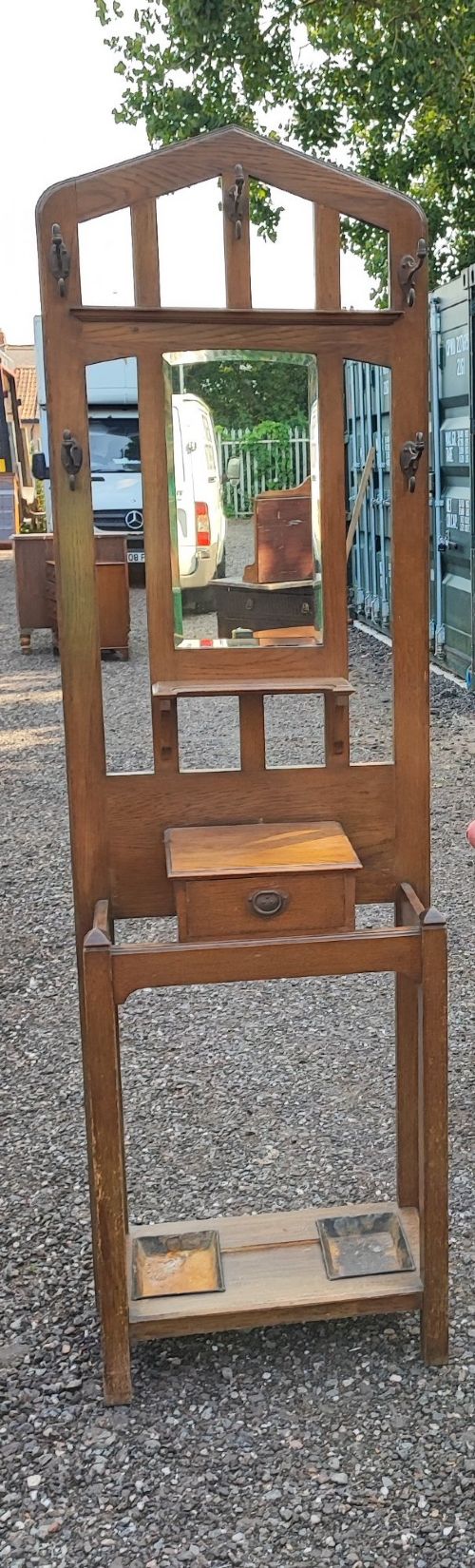
When searching for an edwardian coat rack mirror, you encounter pieces designed for entrance halls that combine hanging hooks for hats and coats with integrated glass plates. These items serve the practical purpose of checking appearance and storing outerwear upon entering a home.
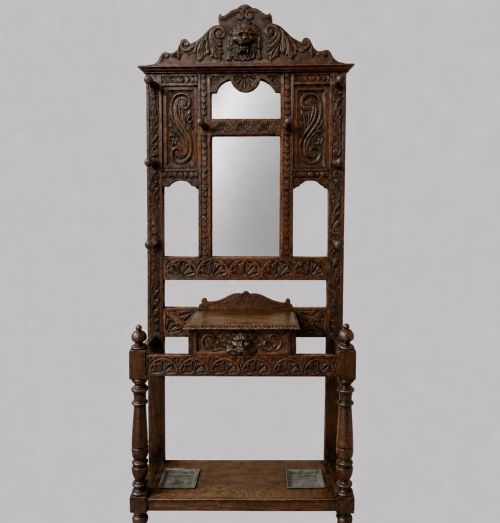
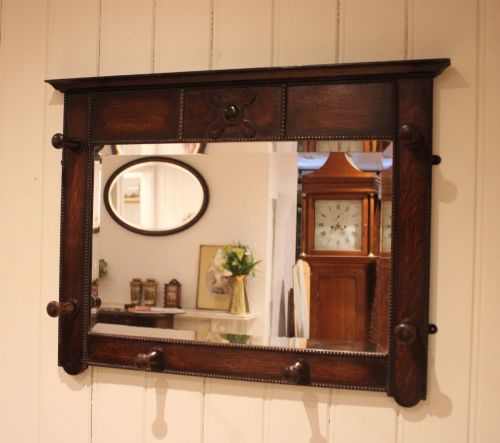
The pieces appearing here include wall-mounted racks alongside substantial freestanding hall stands incorporating seating, umbrella wells, and marble or wooden surfaces. Oak and mahogany form the primary timber framework across these domestic hallway furnishings.
Originating from the late Victorian period through the Edwardian era and into the early twentieth century, these items reflect the domestic priorities of their time. The designs range from compact wall-hung mirrors with brass hooks to architectural hall trees.
Materials and construction
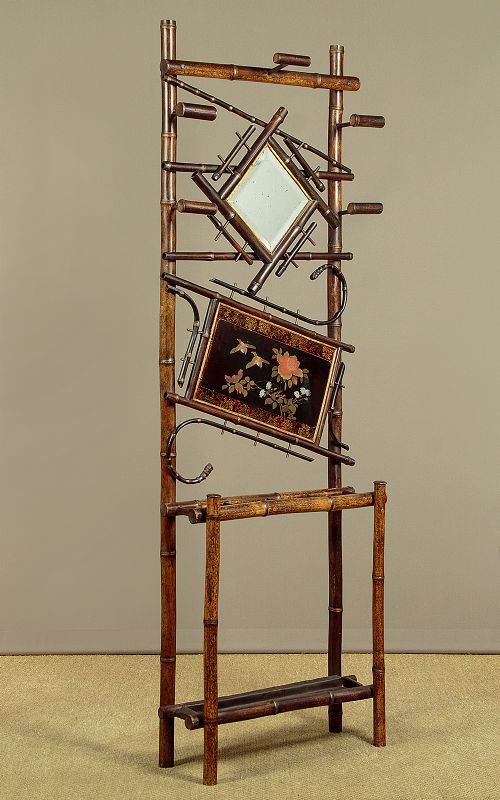
Carpenters utilised solid oak and mahogany as the structural base, often shaping the timber with carved details or geometric inlays. Golden oak, walnut, and bamboo also appear, showing the variety of woods selected for hallway furniture.
Metal components such as brass, cast iron, and standard metal form the coat hooks, umbrella rails, and occasional drip trays. These metal elements are screwed directly into the timber backing or mounted alongside bevelled glass mirror plates.
Several pieces feature carved Green Man faces staring quietly from the wooden crests, watching over the daily collection of hats and scarves.
Judging the execution
The standard of carving and joinery separates standard production items from finer workshop pieces. Hand-carved details, such as figural motifs or stylized plant forms found in Arts and Crafts and Art Nouveau examples, require greater skill than plain moulded timber.
Materials also indicate the tier of manufacture, with heavy brass hooks, thick bevelled mirror plates, and inset ceramic tiles marking more substantial commissions. Simpler pieces rely on basic cast hooks and thinner pine or oak panels.
Fischel·Coalbrookdale·Ellen E. Houghton of Minton
The Edwardian Coat Rack Mirror Glossary
- Bevelled plate
- A mirror glass whose edges are cut at an angle to create a sloping border. This technique adds depth and catches the light differently than flat plate glass.
- Hall stand
- A large freestanding piece of entrance furniture combining coat hooks, a mirror, and often umbrella storage or a seat. These items anchor the hallway decor.
- Arts and Crafts
- A design movement prioritising visible construction, simple lines, and natural materials. Pieces from this style often display hand-wrought metalwork.
- Green Man
- A sculptural architectural ornament depicting a face made of or entwined with leaves and vines. This motif frequently appears carved into oak hall furniture.
- Bentwood
- Wood steamed and bent into curved shapes, commonly utilised in lightweight furniture frames. This technique creates fluid structural lines.
Edwardian Coat Rack Mirror: Frequently Asked Questions
How were these pieces used originally?
These furnishings stood in entrance halls to receive hats, coats, and umbrellas while providing a mirror for last-minute adjustments before stepping outside.
They acted as central greeting points in homes, managing outdoor garments and keeping hallways orderly.
Where should I place a wall-mounted rack?
Wall-mounted versions hang best at a comfortable height in entryways, narrow corridors, or boot rooms where floor space is limited.
They require secure wall fixings to support the weight of heavy winter coats placed on the hooks.
How do I identify an Arts and Crafts example?
Arts and Crafts pieces show honest construction, simple geometric lines, and often feature hammered copper or brass hardware alongside exposed joinery.
They avoid excessive surface decoration in favour of highlighting the natural grain of the oak or mahogany.
Are these pieces suitable for modern hallways?
Their combination of hooks, mirrors, and storage makes them practical for contemporary homes needing functional entrance organisation.
They fit well in period properties and add character to modern interior spaces.