
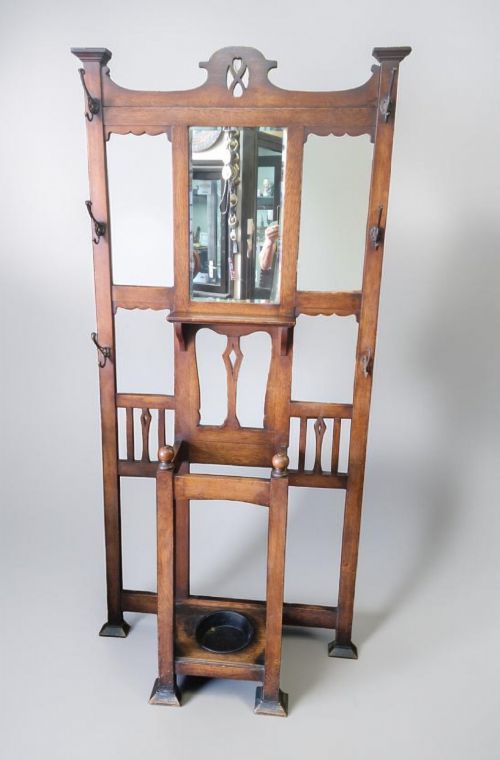
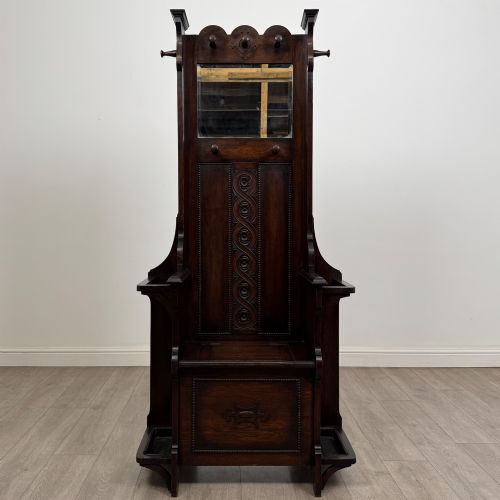
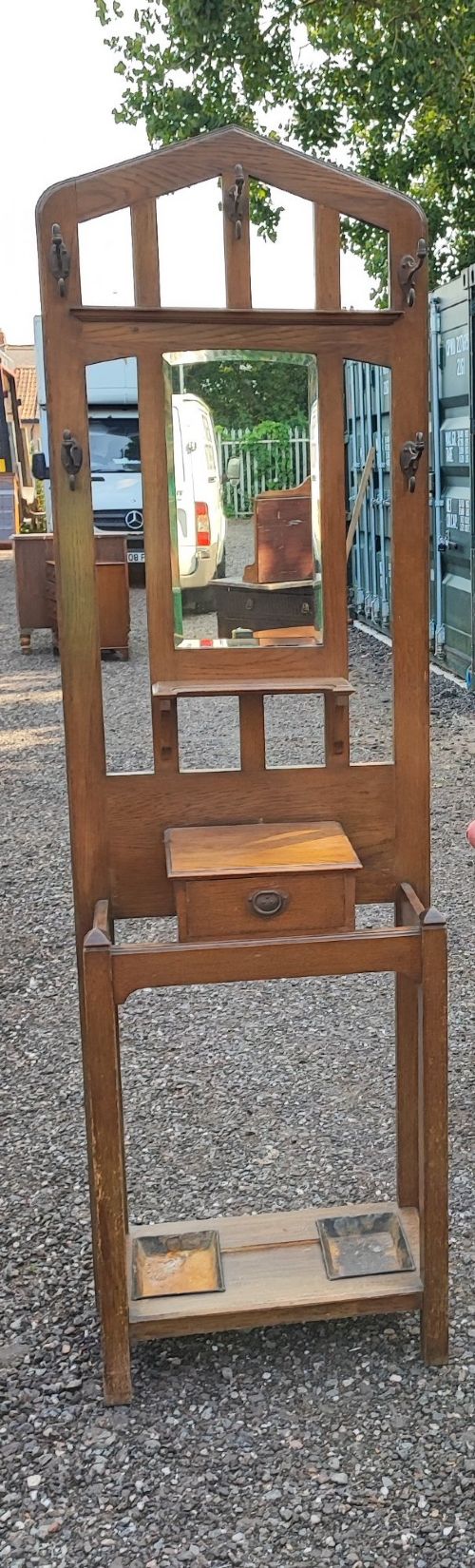
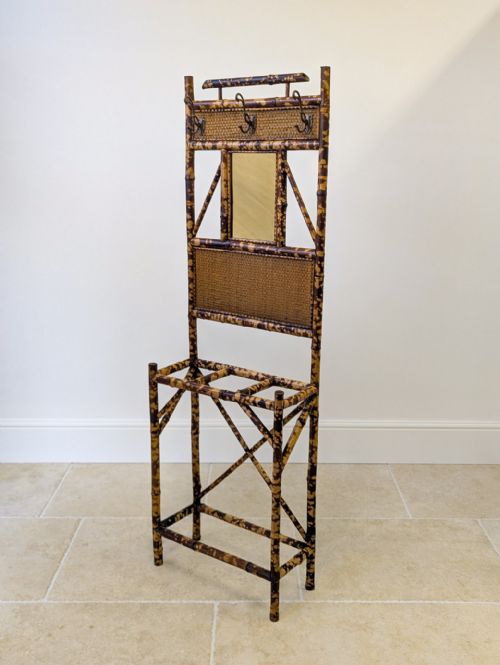


Vintage Stick Stand Mirror
These vintage stick stand mirror pieces are the central pieces of entrance furniture that combine looking glasses with umbrella storage, and you want one for instant hallway utility and period presence.
Vintage Stick Stand Mirror
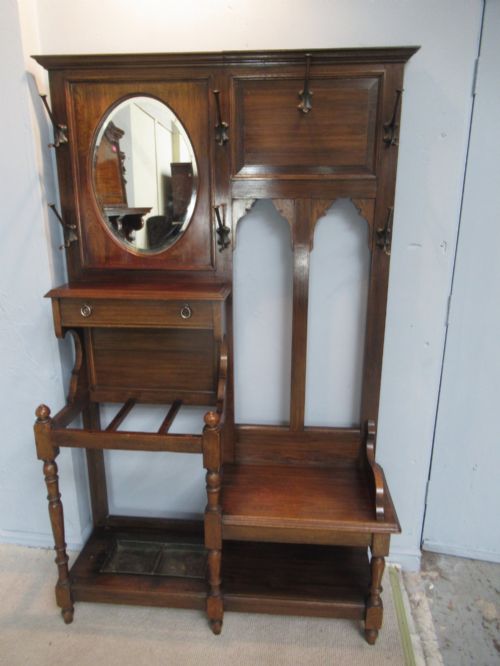
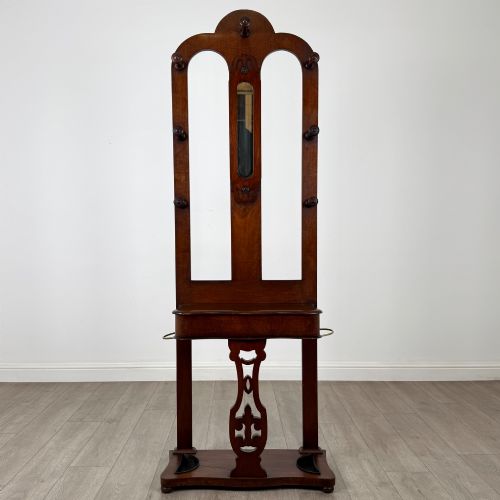
When you search for a vintage stick stand mirror, you encounter entrance furniture built to organise outerwear and walking gear while providing a final check of your appearance before leaving the house. The listings on this page consist predominantly of hall stands and hallstands originating from the Victorian, Edwardian, and Arts and Crafts periods, constructed to serve the bustling hallways of period homes.
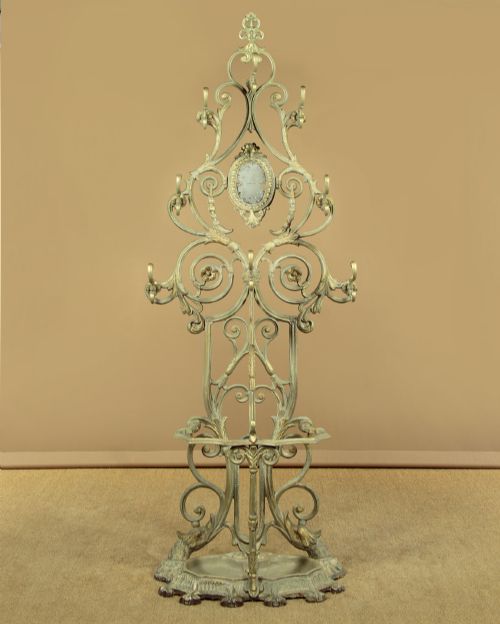
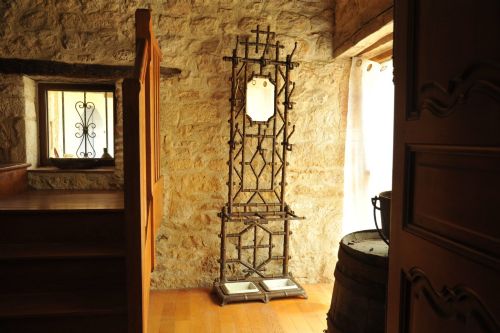
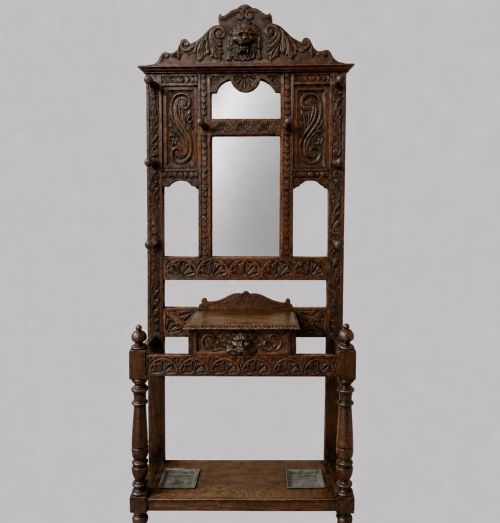
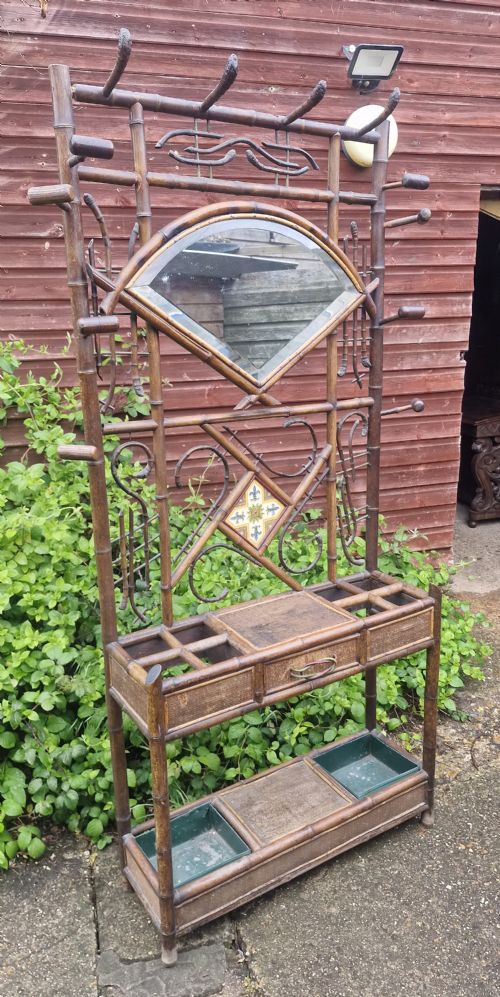
These items integrate hat hooks, coat pegs, stick and umbrella wells with integrated drip pans, and a central mirror plate. You find forms ranging from heavy carved oak and mahogany frames to lighter bamboo and cast iron structures, each designed to maximise limited hallway space.
Materials and construction methods
Cabinetmakers and foundries utilised a distinct palette of materials including solid oak, mahogany, walnut, bamboo, and cast iron. Timber pieces employ traditional joinery such as mortise and tenon frames, while metal examples cast structural components and drip pans in iron or brass.
Mirrors are bevelled or plain glass plates secured within wooden or metal rebates, accompanied by cast brass or iron hooks for garments. Bamboo versions utilise split and whole canes lashed together with pins and binding, supporting umbrella sections often fitted with zinc or metal liners.
Several pieces feature ferocious carved Green Man faces glaring out from the oak to guard your wet umbrellas.
Distinctions in quality
The distinction between standard domestic hall furniture and superior pieces lies in the ambition of the timber carving and the integrity of the structural assembly. Finely executed examples display deep relief work such as Green Man motifs, select quarter-sawn oak figuring, or intricate marquetry inlay characteristic of the Arts and Crafts movement.
Quality also rests in the retention of original components, such as matching metal drip trays, robust bevelled mirror glass without excessive desilvering, and heavy cast iron foundations that stabilise tall wooden frames against the weight of heavy coats.
Coalbrookdale
The Vintage Stick Stand Mirror Glossary
- Hall stand
- A piece of hallway furniture combining coat hooks, a mirror, and umbrella storage. It serves as a single station for outdoor apparel upon entering a house.
- Drip pan
- A removable metal tray placed beneath umbrella and stick wells to catch moisture. They protect wooden flooring from water damage.
- Aesthetic Movement
- A late nineteenth-century design style emphasising visual beauty over narrative subject matter. Pieces often feature bamboo frames and simplified geometric lines.
- Arts and Crafts
- A design movement valuing handcrafted construction and visible natural materials. Items from this tradition display honest joinery and inlaid details.
- Faux bamboo
- Metal or wooden framing painted or moulded to imitate natural bamboo stalks. Makers utilised this technique to achieve an exotic aesthetic using domestic materials.
Vintage Stick Stand Mirror: Frequently Asked Questions
How do I secure a tall hall stand?
Many tall hallway pieces require fixing to the wall via concealed brackets at the top to prevent tipping under the weight of heavy winter coats and umbrellas.
Ensuring the piece is anchored safely protects both the furniture and the floor surface.
What is the difference between oak and bamboo versions?
Oak examples provide heavy structural stability and traditional carved ornament suited to substantial entrance halls. Bamboo versions offer a lighter visual profile popular during the aesthetic movement.
Both types incorporate mirrors and stick wells, but serve different interior atmospheres.
Are the drip pans usually original?
Metal drip trays frequently suffered from rust and replacement over decades of domestic use. Finding a piece with its original zinc or brass tray adds to the completeness of the item.
Replacements are common and functional, though collectors value surviving factory components.
How do I date a hall stand?
Dating relies on stylistic clues such as the presence of Aesthetic bamboo, Arts and Crafts inlay, or heavy Victorian Gothic carving. Timber choice and mirror bevelling style also indicate the manufacturing decade.
Examining the construction methods on the reverse reveals period-specific joinery.