





Edwardian Claw and Ball Chair
An Edwardian claw and ball chair brings substantial carved timber and period presence into a room.
Edwardian Claw and Ball Chair
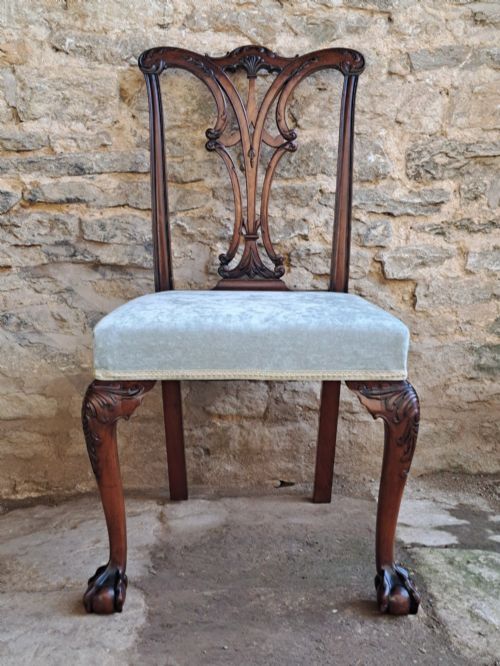
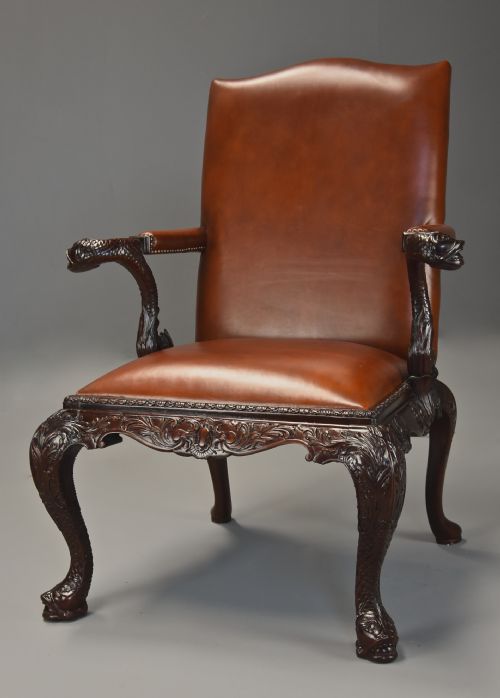
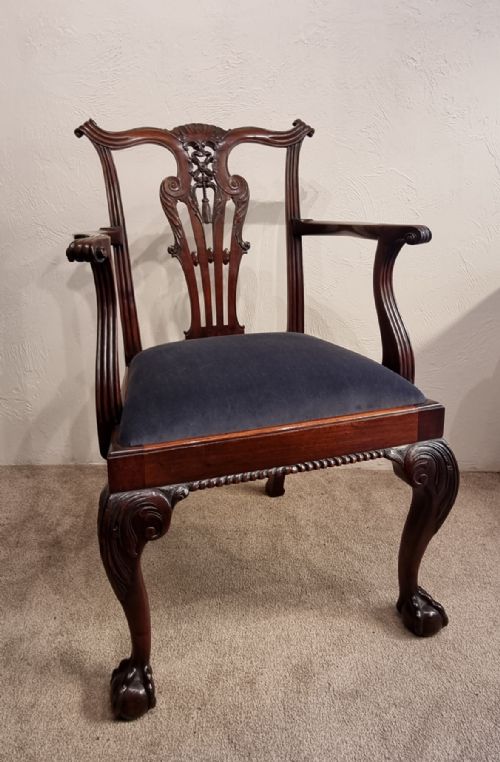
An edwardian claw and ball chair draws directly upon earlier Georgian and Chippendale aesthetics, reinterpreting traditional forms through early twentieth-century cabinetmaking. These pieces span dining chairs, carvers, and larger armchairs shaped with prominent carved foot details.
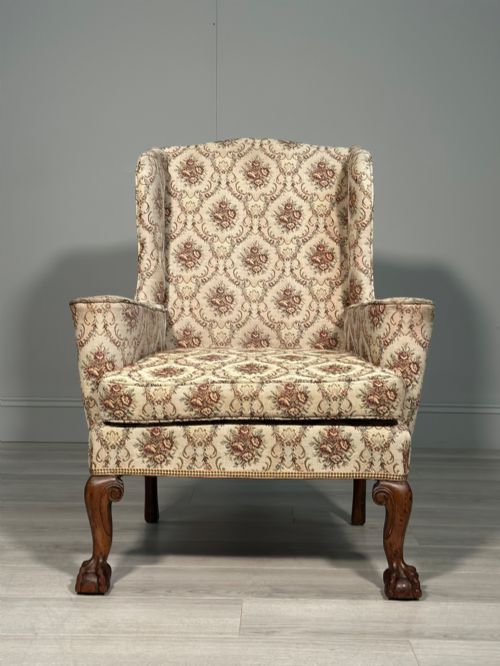
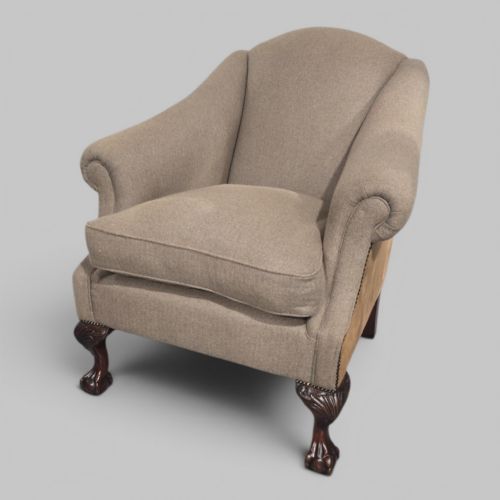
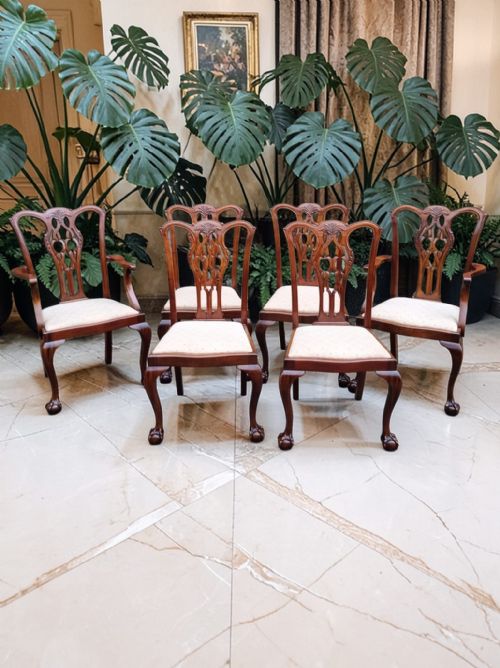
The version most commonly encountered on this page is the dining chair or armchair rendered in mahogany, frequently arriving in sets or pairs reflecting revival tastes. Alongside these, occasional upholstered armchairs and club chairs appear, integrating similar ball and claw motifs.
While the Edwardian period provides the core timeframe, related examples stretch from the late nineteenth century through to the 1930s, encompassing Victorian and George II revival idioms. Makers and workshops of the era reproduced these historicist designs with considerable ambition.
Construction and Materials
Mahogany and walnut form the structural backbone of these pieces, selected for their density and suitability for intricate carving. Timber frames are shaped into Chippendale and Georgian revival silhouettes, supporting carved backsplats and distinctive feet.
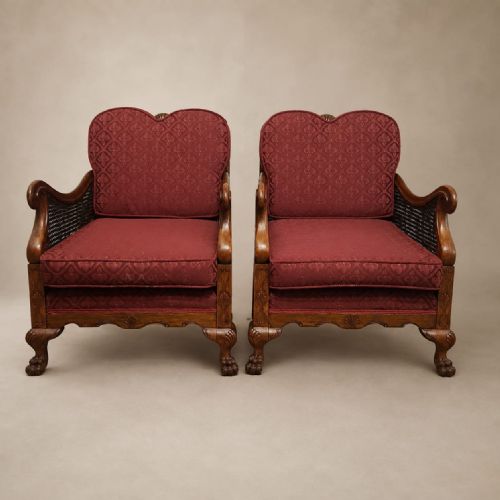
Upholstered variants incorporate materials such as leather, fabric, velvet, textile, and tapestry, secured over traditional sprung or stuffed bases. Brass hardware and split cane elements appear on specific bergere and easy chair variants.
Edwardian Claw and Ball Chair Retail Price Guide 2026
Typical asking prices for edwardian claw and ball chair among the pieces listed under this phrase on Sellingantiques today, from the lower quarter to the upper quarter. They describe what is for sale here now, not the wider market.
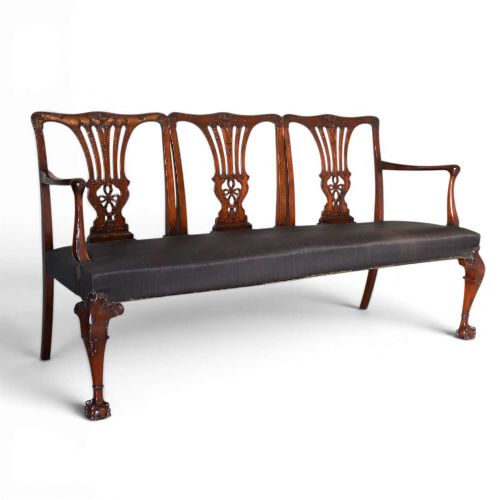
Object types span dining chairs, armchairs, piano stools, and settees executed in Chippendale and George II revival styles.
Evaluating Quality and Craftsmanship
The crispness and depth of the timber carving dictate the visual standard of the piece, particularly around the knuckles of the claw and ball feet and the pierced splats of the back. Superior examples display sharp, hand-finished detailing rather than soft or mechanical shaping.
The integrity of the timber frame and the choice of primary wood underpin structural longevity, distinguishing robust dining carvers from lighter bedroom or occasional chairs. Upholstered variants rely on the quality of the covering materials, whether substantial leather or woven tapestry.
Howard and Sons·Spillman and Co·Trollope and Colls Ltd
The Edwardian Claw and Ball Chair Glossary
- Claw and ball
- A carved furniture foot depicting a bird's talon clutching a spherical ball, heavily utilised in eighteenth-century and revival seating.
- Carver
- An armchair designed with elbow supports, traditionally placed at the heads of a dining table alongside matching single chairs.
- Chippendale revival
- A late nineteenth and early twentieth-century style resurrecting the mid-eighteenth-century designs associated with Thomas Chippendale.
- Bergere
- An enclosed upholstered armchair with wooden framing, often featuring cane panels to the sides and back.
- Splats
- The vertical central strip of wood within a chair back, frequently pierced and carved in revival furniture.
Edwardian Claw and Ball Chair: Frequently Asked Questions
Were these chairs used for dining?
Many examples function as dining chairs or carvers, often found grouped in sets of varying sizes around a table.
Other variants serve as occasional armchairs, drawing room seats, or bedroom chairs intended for specific domestic spaces.
What materials are used in these chairs?
Solid hardwoods such as mahogany and walnut dominate the structural framing and carved elements across the available selection.
Upholstered components incorporate leather, velvet, tapestry, and fabric, sometimes supplemented by cane panels or brass fittings.
How do I distinguish revival periods?
Revival pieces blend historical motifs from the Georgian or Victorian eras with the manufacturing techniques of the early twentieth century. Construction methods and timber finishing help clarify the actual age of the piece.
Comparing the specific stylistic vocabulary against known nineteenth and twentieth-century cabinetmaking trends reveals the exact revival context.