

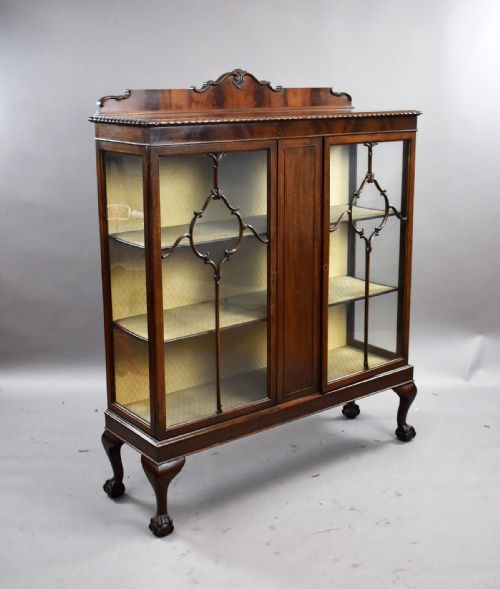


Edwardian Chippendale Bookcase
An edwardian chippendale bookcase marries eighteenth-century revival carving with the practicality of turn-of-the-century storage.
Edwardian Chippendale Bookcase
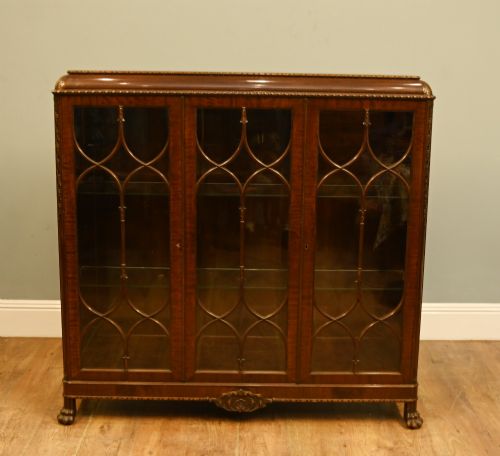
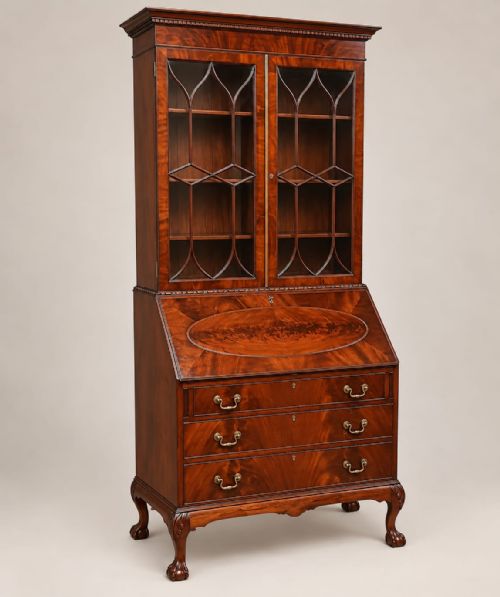
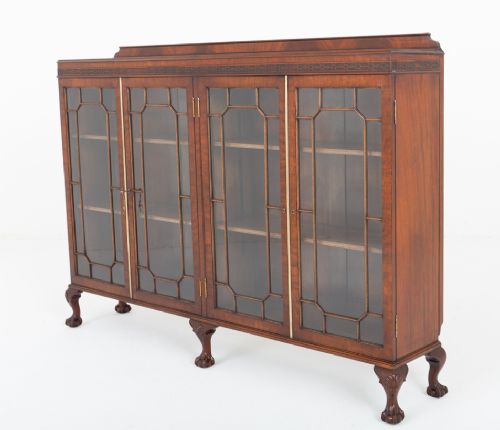
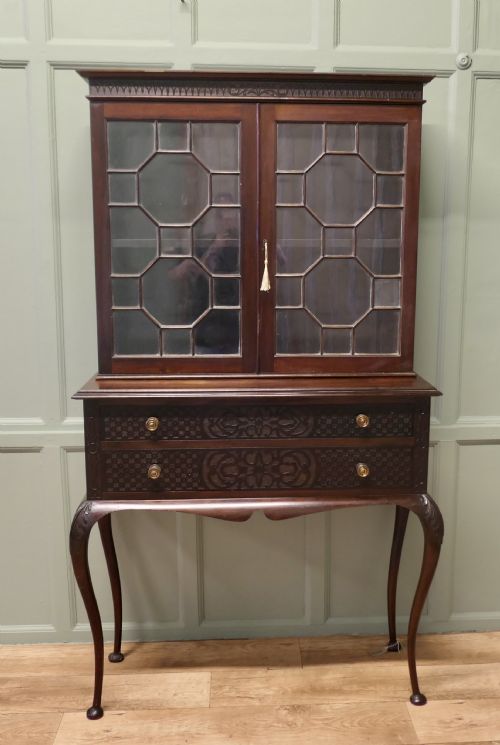
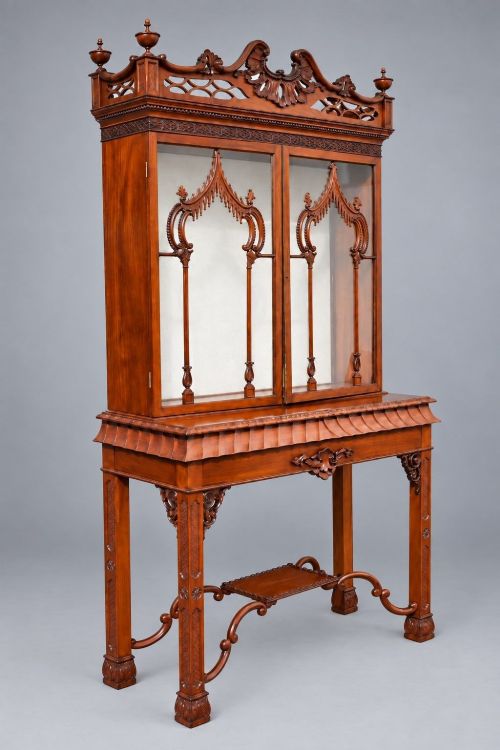
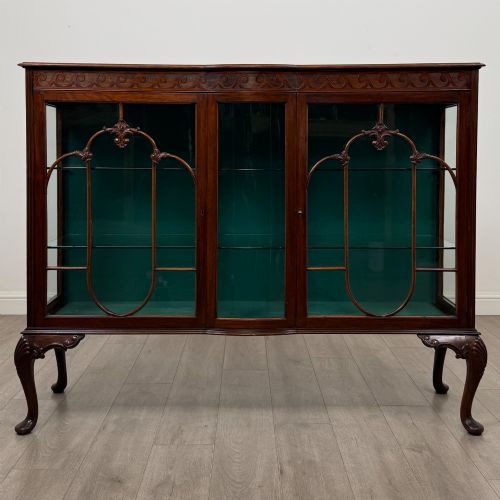
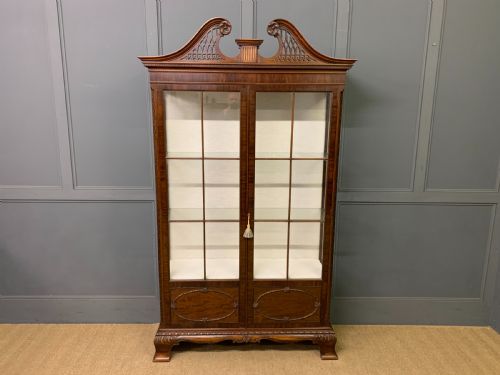
The edwardian chippendale bookcase brings together revival styles and domestic practicality from the late nineteenth and early twentieth centuries. These pieces appear in forms ranging from tall glazed display cabinets to open shelving and pieces raised on stands.
Most examples originate from the Edwardian era, alongside pieces spanning the late Victorian period and the early twentieth century. Makers drew on Chippendale Revival and Chinese Chippendale styles to shape these display cabinets and bookcases.
Materials and Construction
Mahogany serves as the primary timber, occasionally complemented by satinwood accents, paired with glass for glazed doors and brass fittings. Workshops also utilised paint, mirror plates, and fabric linings within display compartments.
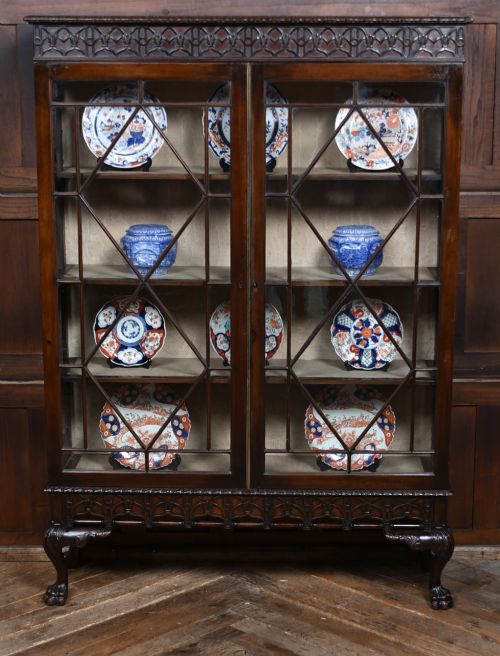
Glazing takes the form of astragal bars dividing glass panes into geometric or Chinese-inspired patterns. Carved details define the revival style, applied to cornices, rails, and stands.
Some revolving bookcases let you spin your entire library with a gentle nudge.
Execution and Detail
Quality rests on the crispness of the carved mahogany and the precision of the astragal glazing bars. Heavier proportions distinguish standard production from refined examples bearing workshop attribution.
Finer pieces show careful timber selection and balanced proportions across breakfront and tall narrow formats. Interior elements such as adjustable shelving and original fabric linings further differentiate execution.
Edwards & Roberts·Warings
The Edwardian Chippendale Bookcase Glossary
- Astragal glazed
- Glass doors divided into smaller panes by narrow wooden bars known as astragals. This method provides structural support while framing the contents.
- Chippendale Revival
- A decorative movement drawing on eighteenth-century designs associated with Thomas Chippendale. It reinterprets carved motifs and Chinese-inspired fretwork.
- Breakfront
- A cabinet design where the central section projects forward from the flanking wings. This configuration adds architectural depth to large bookcases.
- Cabinet on stand
- A storage section elevated on a separate supporting frame with legs. This form lightens the visual weight of tall timber furniture.
Edwardian Chippendale Bookcase: Frequently Asked Questions
How do I identify Chinese Chippendale style?
Chinese Chippendale elements include frets, lattice glazing patterns, and blind fretwork carved along the rails and stiles. These decorative touches set the style apart from standard revival pieces.
Such details reflect eighteenth-century European interpretations of Chinese design, revived around nineteen hundred.
Are shelves adjustable in these bookcases?
Many examples feature adjustable wooden shelving supported by traditional rackwork or metal pins. This adaptability allows storage for volumes of varying heights.
Original interiors sometimes retain fabric linings or painted surfaces behind the glazed doors.
How should I care for mahogany timber?
Mahogany benefits from stable room temperatures away from direct sunlight and heat sources. Regular dusting with a dry, soft cloth maintains the polished surface.
Avoid silicone-based polishes, which can build up on the carved details and timber grain over time.