

Edwardian China Vitrine
An edwardian china vitrine brings light into a room, offering a glazed stage for ceramics and glassware.
Edwardian China Vitrine
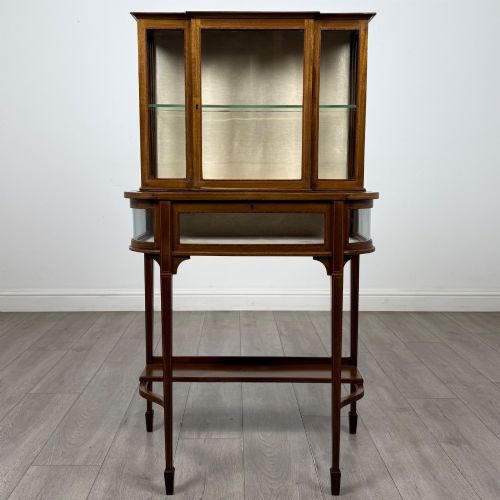
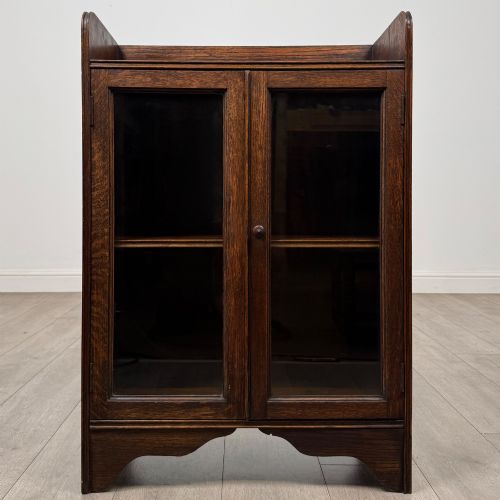
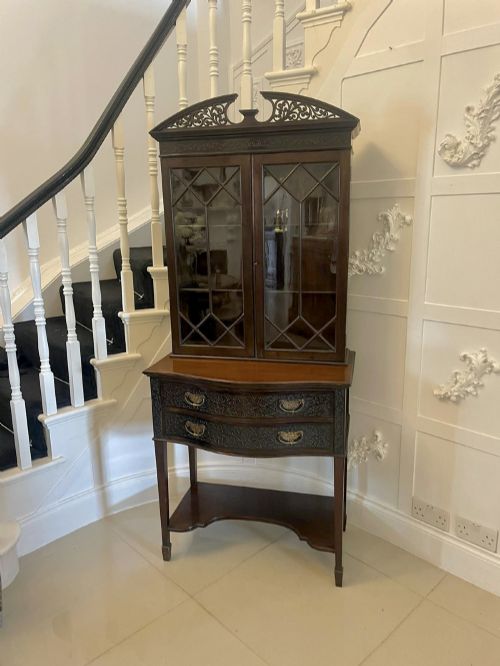
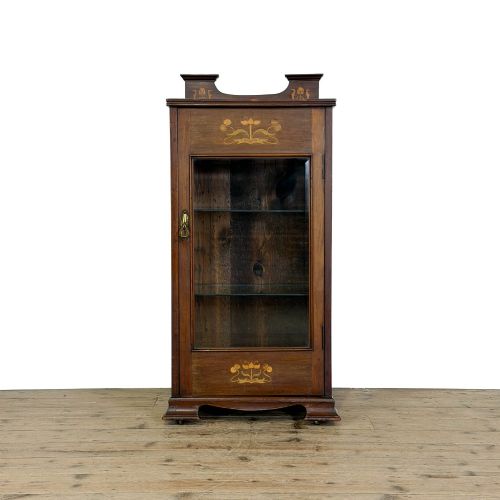
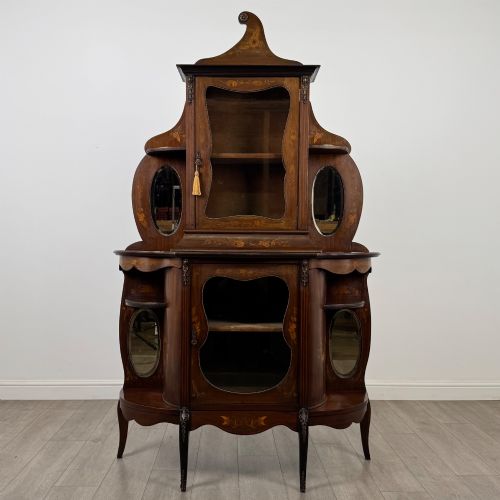
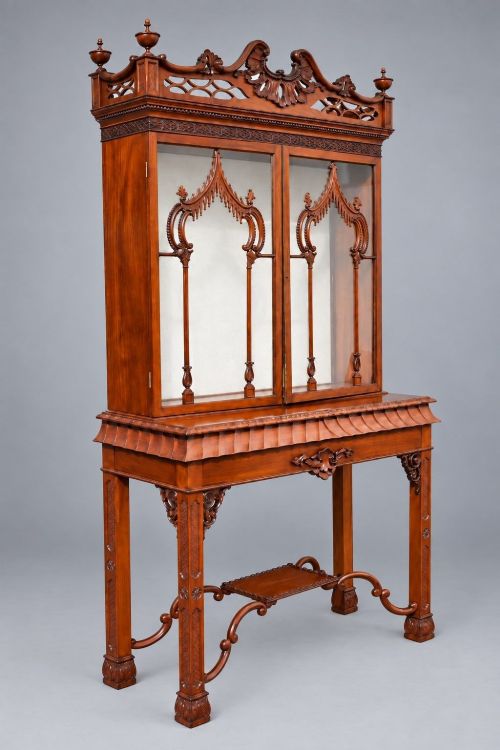
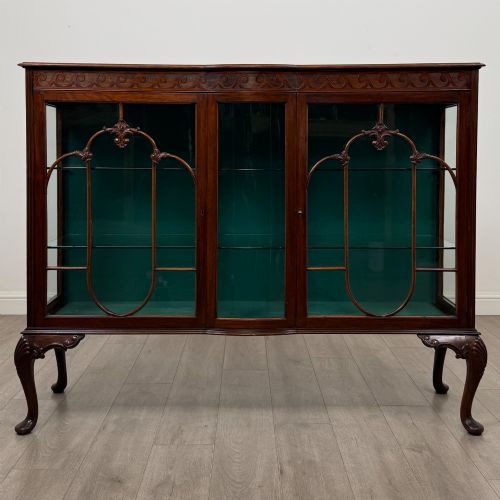
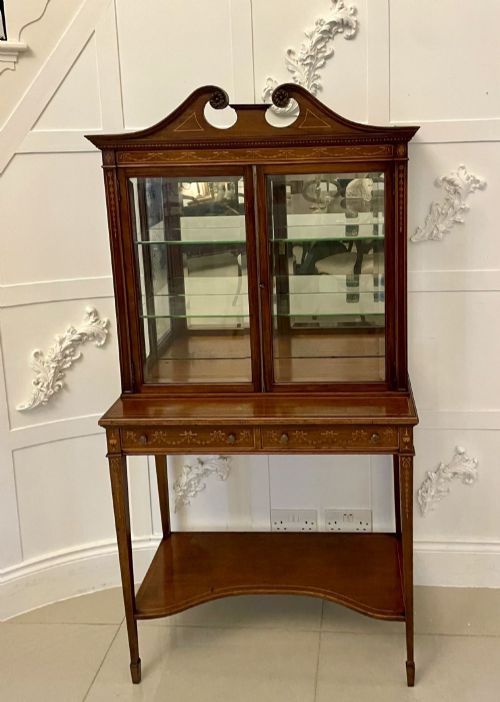
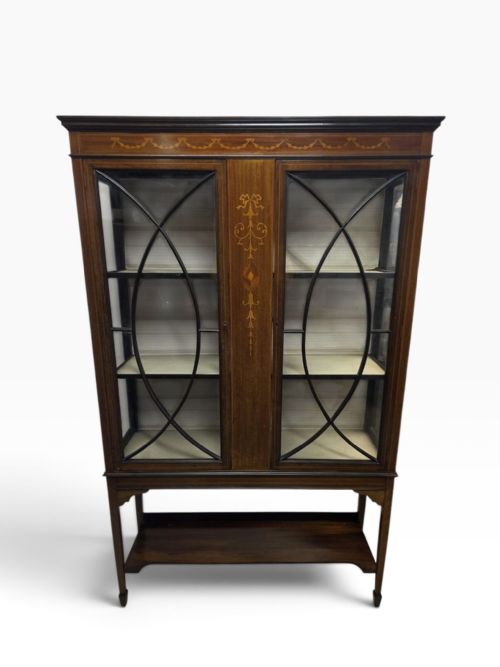
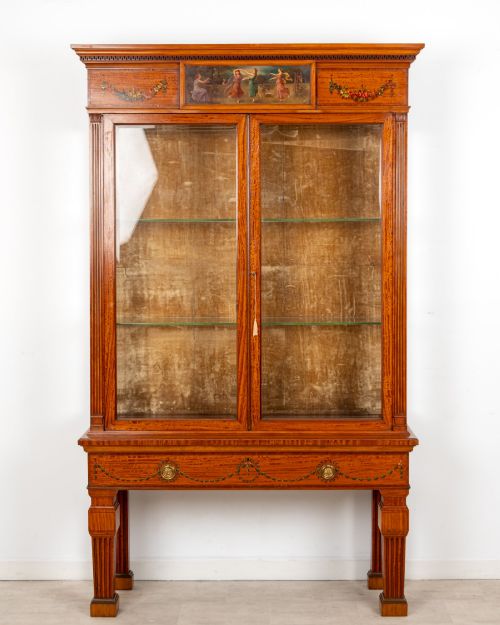
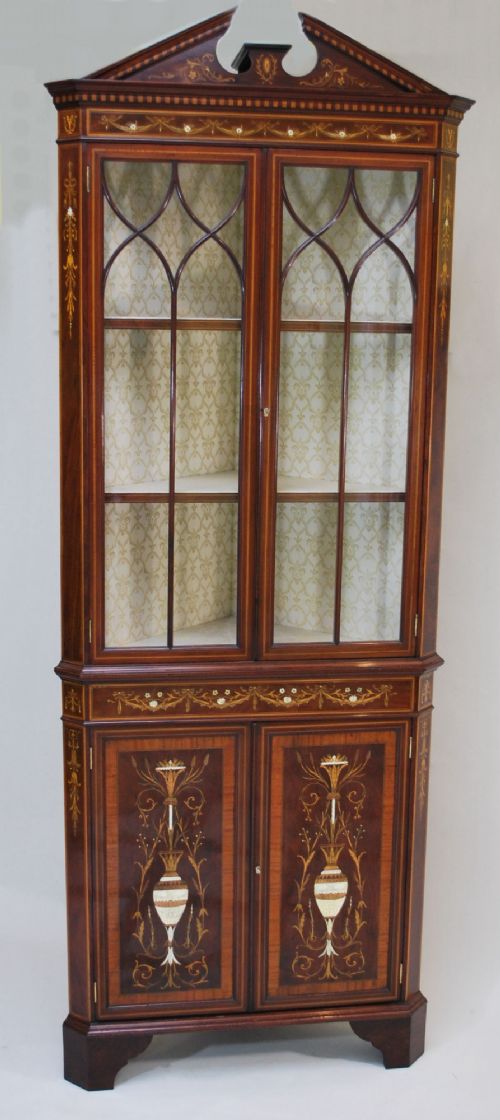
The edwardian china vitrine functions primarily as a display cabinet, designed to showcase precious porcelain and collectibles behind glass panels. These pieces emerge predominantly from the Edwardian era and the late nineteenth century, encompassing forms such as corner cabinets and two-part glazed display units.
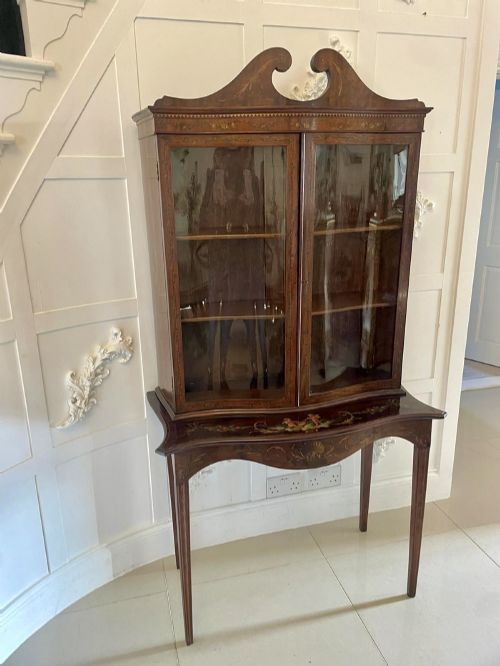
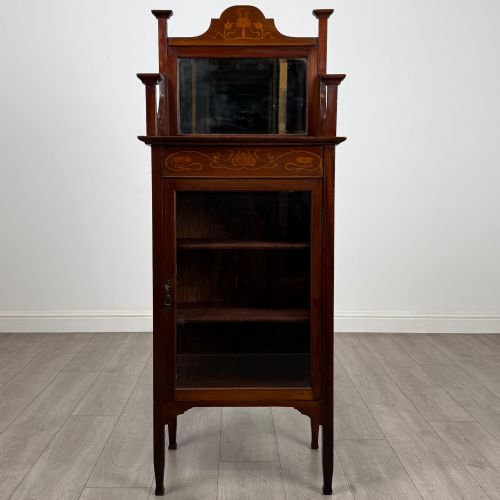
Makers and workshops of the period drew heavily on historic design revivals, producing pieces in Sheraton Revival, Chippendale Revival, and Queen Anne styles alongside Art Nouveau variations. Walnut, mahogany, and satinwood form the structural foundation of these cabinets, frequently enriched with marquetry and satinwood inlay.
How they were made
Cabinet makers utilised dense hardwoods like mahogany, walnut, and oak to build the carcasses, often applying delicate satinwood inlay and marquetry to the exterior surfaces. Glass panels were fitted into glazed doors to protect the contents while maintaining maximum visibility from the exterior.
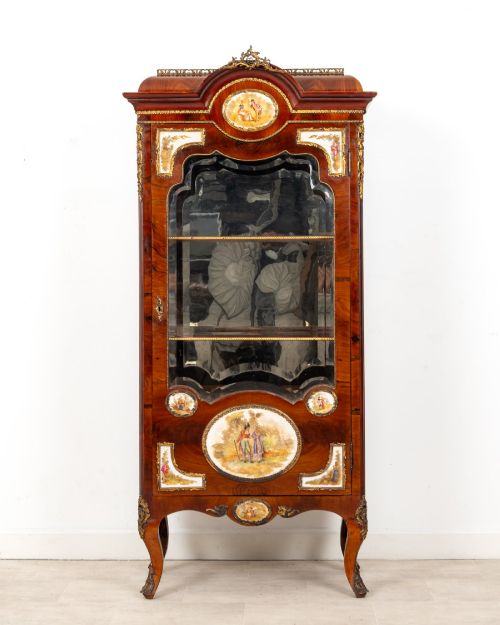
Secondary materials included brass fittings, mirrored backs to reflect light through displayed items, and fabric linings. Certain workshops incorporated hand-painted decorations and carved wooden details to elevate the visual appeal of the cabinet.
Cabinet makers occasionally added mirrors inside so your porcelain could admire its own backside all day long.
What varies in quality
The distinction between standard production and top-tier pieces rests on the precision of the cabinet work and the ambition of the ornamentation. Cabinets bearing signatures from notable makers or workshops typically exhibit superior timber selection and finer marquetry details.
The sophistication of the stylistic revival also dictates standing, with intricate hand-painted decoration, serpentine forms, and well-executed classical stringing marking out the finest examples from simpler utilitarian cupboards.
Hampton & Sons·Edwards & Roberts·H. J. Hatfield & Sons·Maple & Co·Shapland and Petter
The Edwardian China Vitrine Glossary
- Vitrine
- A glass-fronted cabinet designed specifically for displaying fine porcelain, china, and objects of curiosity. The term originates from the French word for glass.
- Marquetry
- Decorative patterns formed by fitting together thin veneers of wood, ivory, or shell onto a structural carcass. This technique allows for complex pictorial and geometric designs on cabinet doors and panels.
- Sheraton Revival
- A late nineteenth and early twentieth century design movement that reinterpreted the lighter, neoclassical furniture forms popularized by Thomas Sheraton in the eighteenth century. Pieces in this style often feature tapered legs and satinwood inlay.
- Serpentine
- A furniture front or shelf curved in a continuous wave, convex at the centre and concave at the ends. This shape requires advanced woodworking skill to execute properly.
- Chinoiserie
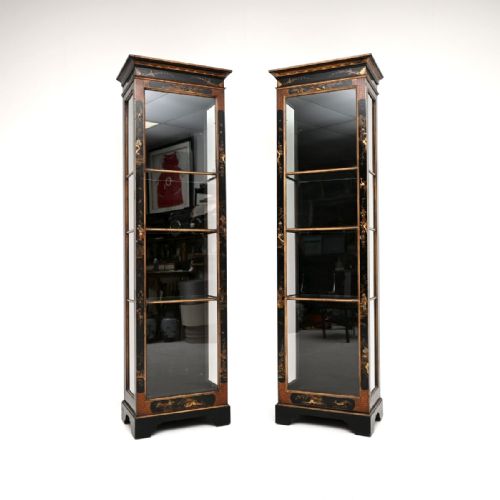
- European decorative style employing Chinese artistic motifs and techniques, such as lacquered finishes and painted scenes. It appeared on specialist display cabinets during the Edwardian period.
Edwardian China Vitrine: Frequently Asked Questions
What is an edwardian china vitrine?
An edwardian china vitrine is a glazed display cabinet built to house and exhibit ceramic collections, glassware, and decorative objects. These cabinets protect delicate items from dust while allowing them to be viewed from multiple angles.
Most examples date from the early twentieth century and the late Victorian period, utilising woods such as mahogany, walnut, and satinwood with glass door panels.
How do I style a vitrine at home?
Living with a vitrine involves balancing the density of your collection with the visible interior space of the cabinet. Use the glass shelves to group ceramics by colour, height, or period to create deliberate visual arrangements.
Ensure the room's lighting complements the glass and any mirrored backs within the cabinet to maximise the reflection of light through your displayed items.
How do I distinguish Edwardian from Victorian cabinets?
Edwardian cabinets generally display lighter proportions, brighter wood tones such as satinwood, and refined neoclassical revival details. Victorian predecessors tend to be heavier in construction, utilising darker mahogany with deeper carved ornament.
Stylistic overlaps occur frequently in the transitional years around nineteen hundred, where makers combined Victorian scale with emerging Edwardian lightness.
Were these cabinets used only for china?
While designed primarily for porcelain and china teasets, these cabinets also accommodated books, silver, and cabinet-sized curiosities. Two-part models allowed the lower enclosed section to store bulkier items while the upper glazed vitrine displayed the finest pieces.
Corner cabinets served a similar dual purpose while making efficient use of smaller domestic spaces.