


Edwardian Cased Silver Cutlery
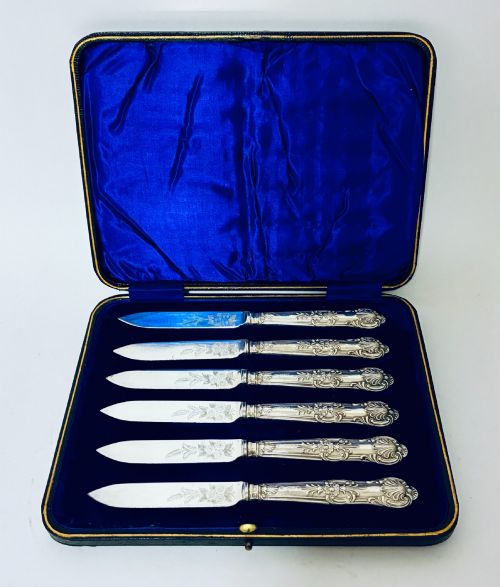
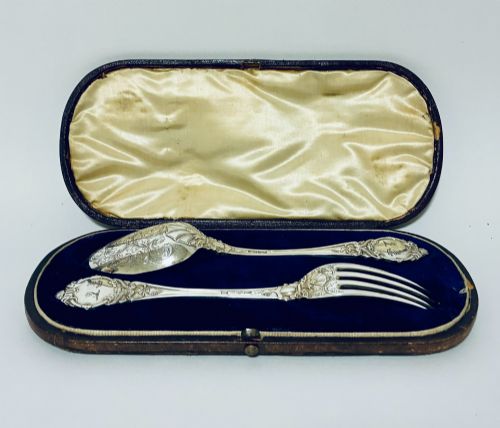
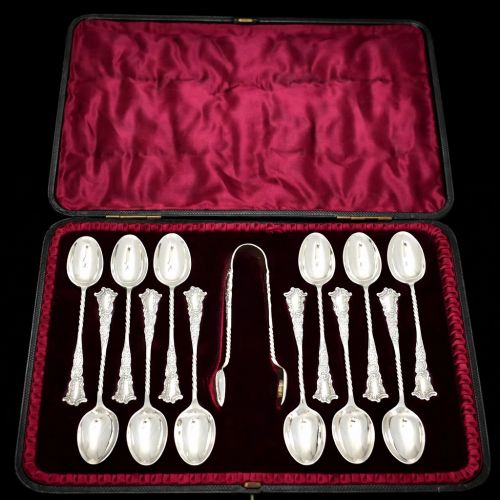
Edwardian cased silver cutlery brings together matched implements and fitted presentation boxes, prized for formal dining and gift giving.
Edwardian Cased Silver Cutlery
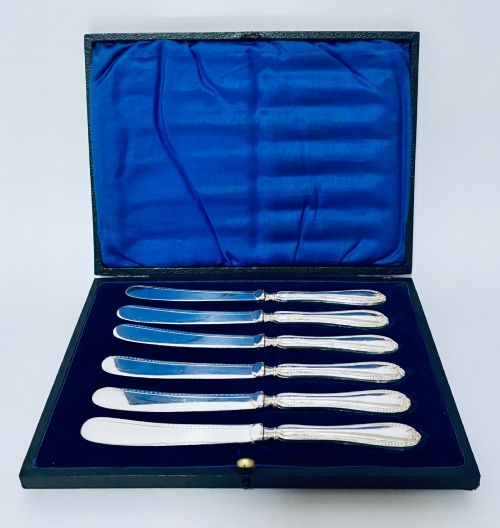
Edwardian cased silver cutlery comprises complete sets, small serving collections, and specialty tools housed in dedicated storage boxes. These objects serve formal dining and tea rituals, offering fitted protection for delicate utensils.
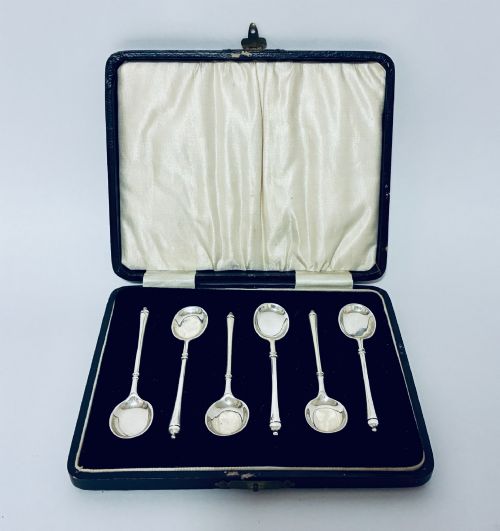
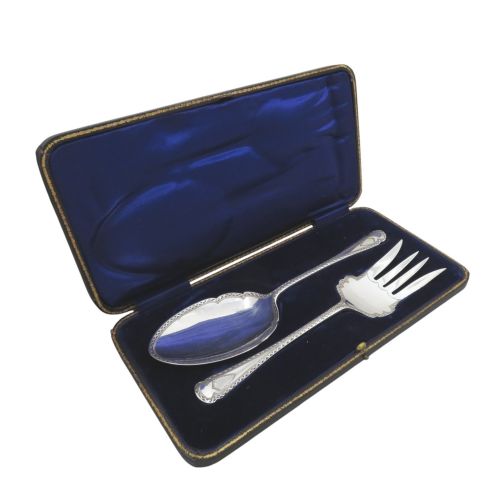
The sets range from large fish and dessert services to smaller christening sets, coffee spoons, and grape shears. Utilitarian pieces like butter knives, cake forks, and lobster picks appear frequently alongside serving spoons and tongs.
Origins span the late nineteenth century through the nineteen thirties, with a strong concentration of Edwardian and George V examples. Presentation boxes often feature internal linings of silk, velvet, or satin.
Distinctions in standard
Quality rests in the integrity of the fitted case and the retention of its original textile lining, alongside the crispness of hallmarks on the silver. Complete sets with matching makers and assay marks hold greater cohesion than assembled groups.
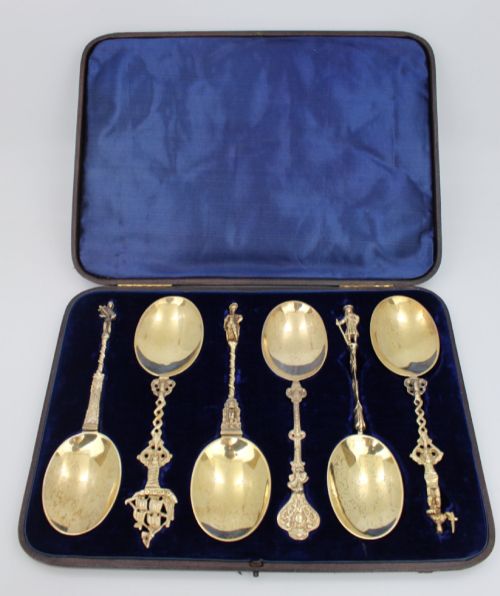
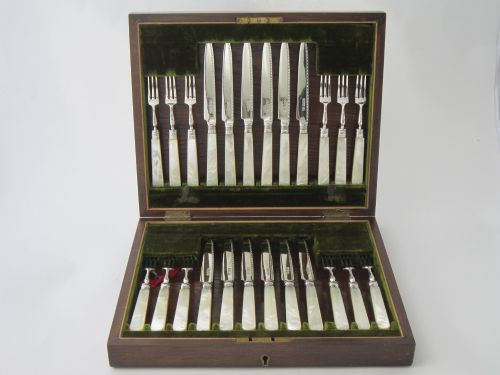
The choice of handle material introduces variation, where carved mother of pearl or intact silver-gilt finishes elevate the presentation above standard silver plate and wooden handles.
Golf enthusiasts can dine with specialised cake knives shaped precisely like miniature golf clubs.
William Devenport·Harrods·Waring & Gillows·Robert Stebbings
The Edwardian Cased Silver Cutlery Glossary
- Hallmark
- Official marks stamped onto precious metals indicating the maker, assay office, and year of testing. These stamps provide precise dating for silver cutlery.
- Silver-gilt
- Sterling silver that has been coated with a thin layer of gold on the surface. This technique produces a rich golden appearance across spoons and tongs.
- Mother of pearl
- The iridescent internal layer of mollusc shells used for knife and fork handles. It provides a smooth, tactile grip with natural tonal variation.
- Canteen
- A fitted wooden box or chest designed to hold a complete set of cutlery. These containers keep large services organised and protected.
- Grape shears
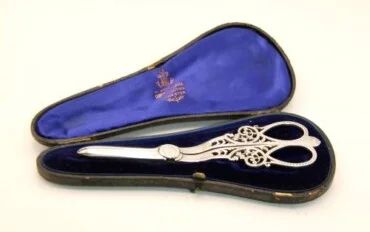
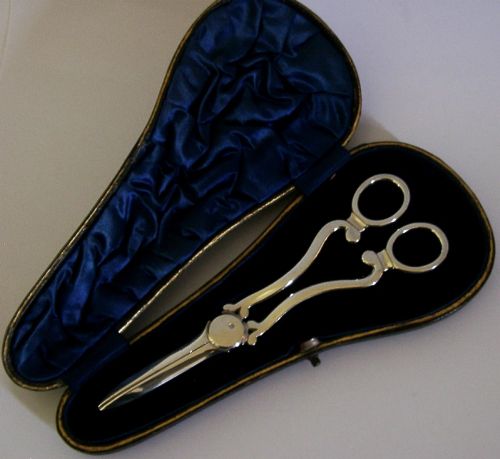
- Specialised scissors designed for snipping individual grapes from a larger bunch at the dining table. They often feature ornate silver handles.
Edwardian Cased Silver Cutlery: Frequently Asked Questions
What is included in a cased cutlery set?
These sets contain matched eating implements, serving pieces, or specialty utensils secured inside a fitted presentation box. Common configurations range from six-piece spoon sets to large fish and dessert services.
Interiors are lined with textiles such as silk, velvet, or satin, with individual slots or straps designed to hold every knife, fork, or spoon firmly in place.
How do I clean silver cutlery safely?
Sterling silver and silver plate require gentle cleaning with specialised silver polish and a soft cloth to remove tarnish without scratching the metal. Avoid abrasive pads that damage engraved details.
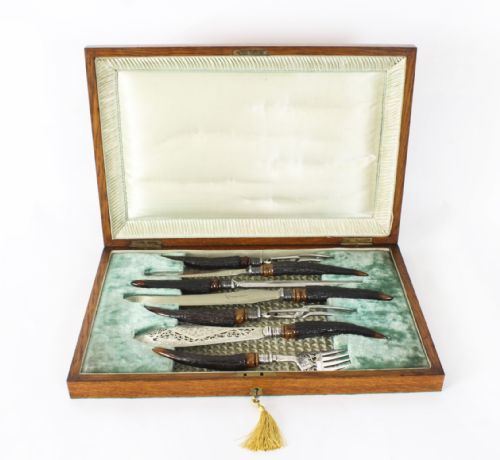
Pieces with mother of pearl or antler handles should be kept away from hot water and harsh detergents to prevent cracking or loosening of the handle materials.
Can I use antique cutlery for dining?
Many sets remain entirely functional for daily dining or special occasions, particularly solid sterling silver items. Care must be taken with hollow handles and vintage knife cement.
Hand washing is essential for all antique pieces, as modern dishwashers use harsh chemicals and high heat that ruin silver finishes and delicate box linings.
How do I date cased cutlery sets?
Dating relies primarily on the hallmarks stamped into the silver components, which indicate the specific assay office and year of manufacture. Stylistic markers also point to specific periods.
Art Nouveau designs display flowing organic lines, while Edwardian pieces often favor neoclassical motifs, and later sets from the nineteen thirties lean towards Art Deco geometry.