

Edwardian Carver Armchair
An Edwardian carver armchair provides the sturdy elegance of the early twentieth century, combining robust timber frames with generous arm supports for the home.
Edwardian Carver Armchair
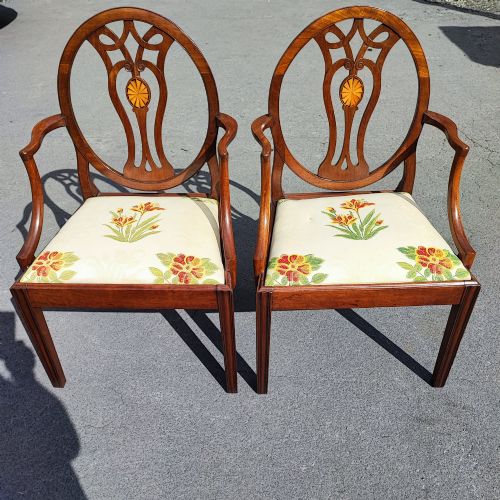
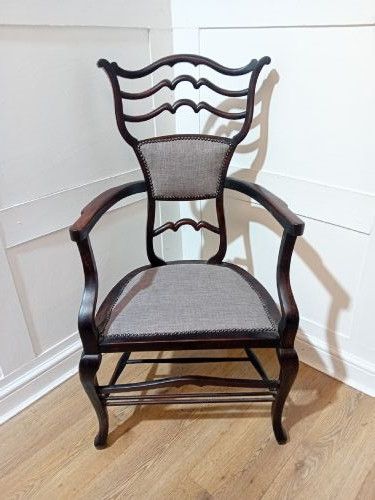
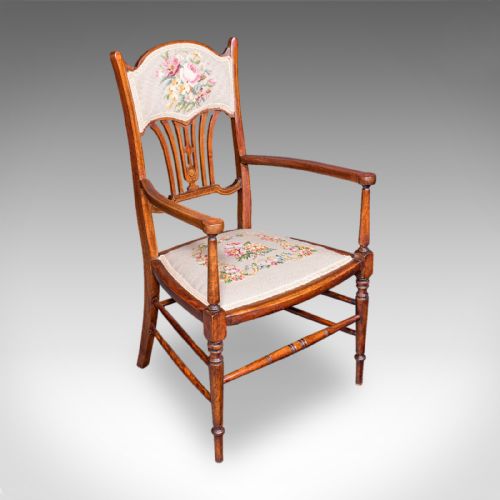
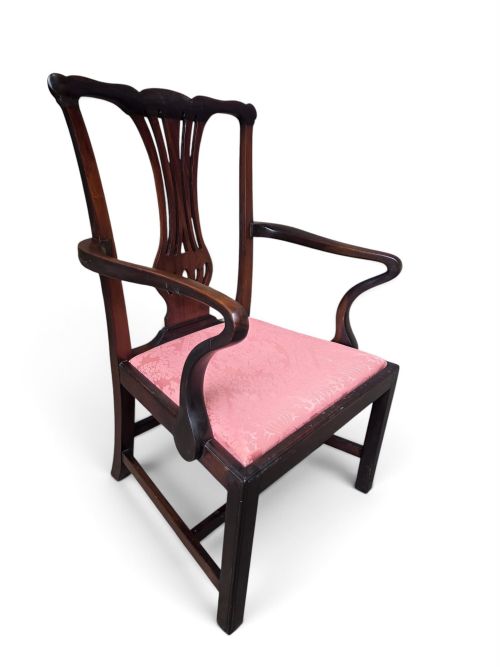
An Edwardian carver armchair is a seated timber piece featuring integral armrests, designed originally for the head of a dining table or as a salon accent. These chairs emerge predominantly from the early twentieth century and the Edwardian period, though influences stretch back through Victorian eras.
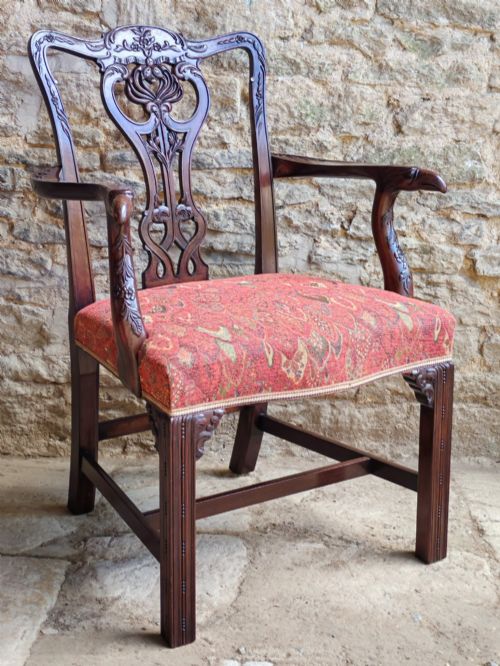
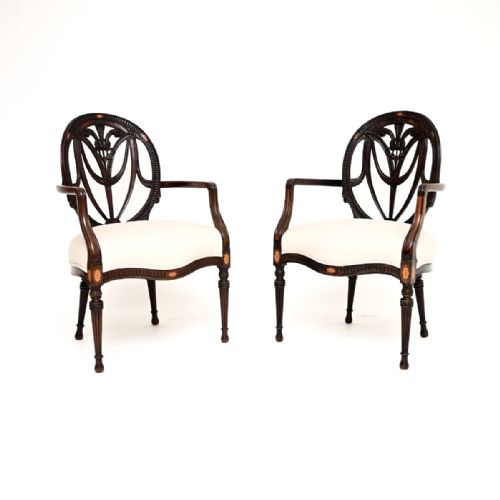
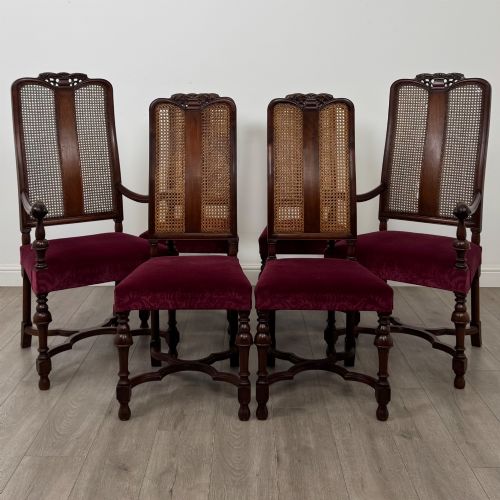
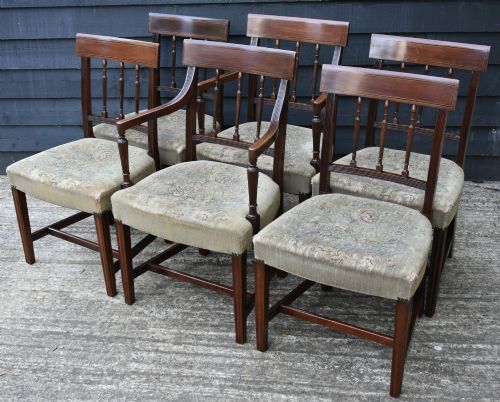
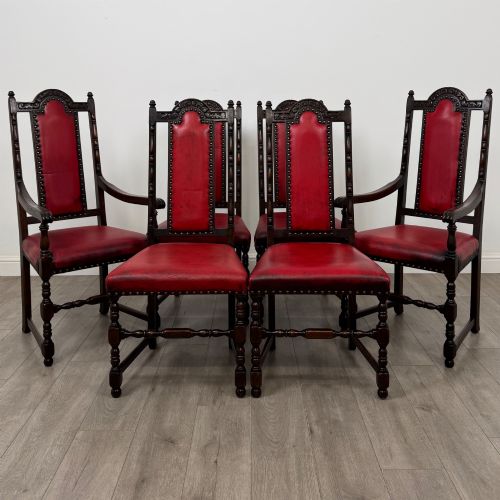
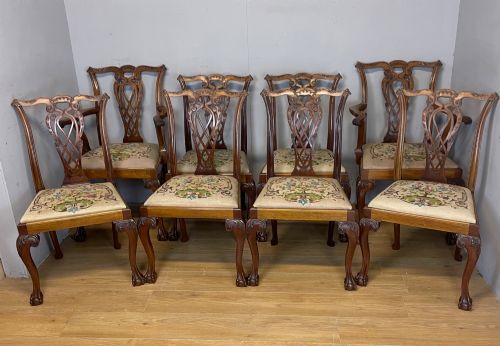
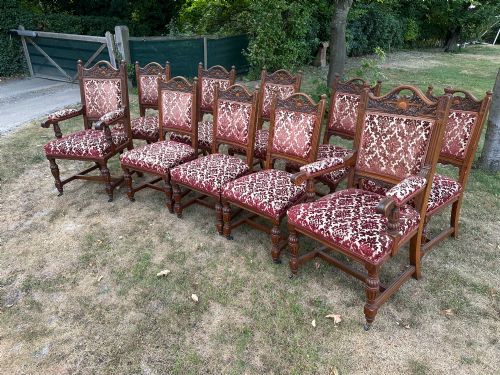
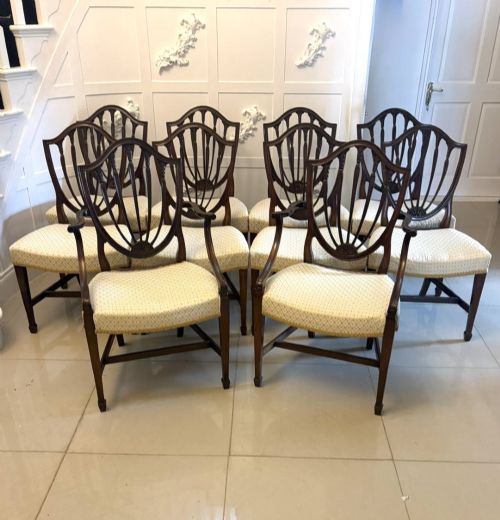
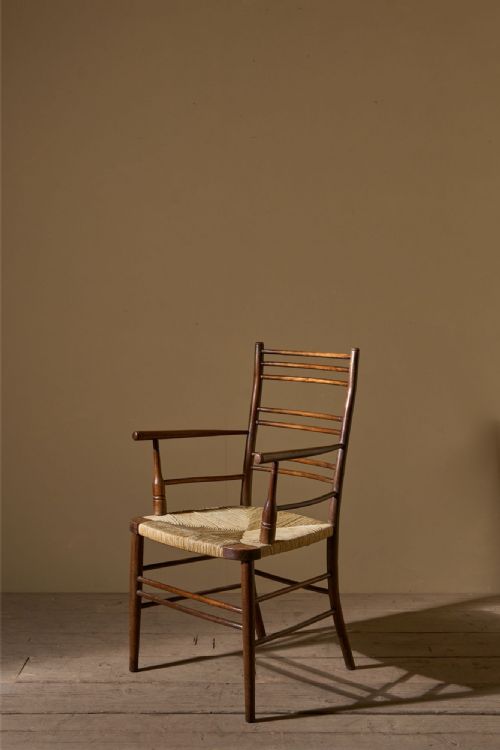
The most common examples encountered on this page are constructed from mahogany or oak, often decorated with revival styles such as Chippendale, Sheraton, or Georgian motifs. Makers also produced variations incorporating cane, leather, and rush seats alongside painted satinwood.
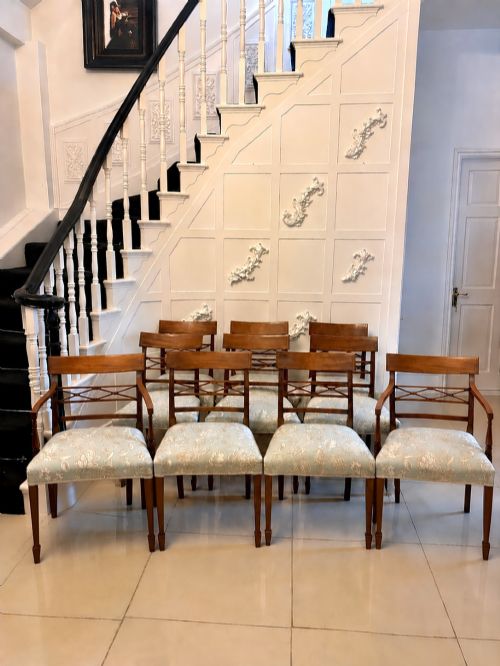
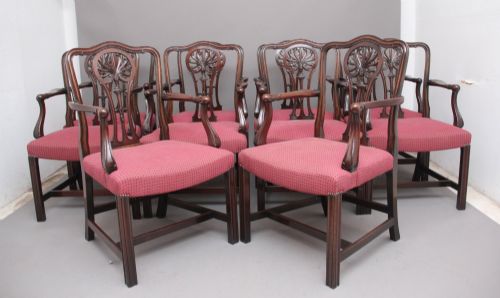
Buyers frequently find these seating items offered in matched pairs or as part of larger dining sets comprising side chairs and matching carvers. They serve practical domestic seating roles while carrying historical design revivals from the nineteen hundreds.
Distinctions in craftsmanship
Quality rests upon the crispness of the timber carving and the precision of any wood inlay, distinguishing standard production from superior workshops. Selection of dense grain mahogany or quarter-sawn oak elevates a piece above simpler domestic alternatives.
The integrity of the structural joints and the retention of original upholstery materials, such as stamped leather or hand-woven rush, define the higher tier of surviving examples.
Some Edwardian armchairs doubled as comfortable desk seats for writing love letters by candlelight.
Howard and Sons·Liberty Morris And Co·Warings·Maple And Co·Alfred Allen Of Birmingham·Waring And Gillow
The Edwardian Carver Armchair Glossary
- Carver armchair
- An armchair with wooden armrests, historically placed at the head of a dining table or used as a desk seat.
- Chippendale Revival
- A late nineteenth and early twentieth century design movement copying eighteenth century cabinet maker Thomas Chippendale styles.
- Sheraton Revival
- A decorative style from the Edwardian period drawing inspiration from George Sheraton furniture designs with light inlays.
- Rush seat
- A seating surface woven from dried marsh plants, commonly found on Arts and Crafts and country chairs.
- Satinwood
- A durable, yellowish timber native to Ceylon and India, frequently utilised for fine cabinet work and decorative inlays.
Edwardian Carver Armchair: Frequently Asked Questions
How do I use a carver armchair at a dining table?
Carver armchairs traditionally sit at the head and foot of a dining table to mark positions of importance. They also function well as standalone reading chairs in bedrooms or studies.
Ensure you measure the height of your table apron to verify the armrests clear the underside when pushed in.
Are these chairs suitable for daily use?
Most Edwardian carver armchairs were built from solid hardwoods like mahogany and oak, designed for robust everyday service. Their sturdy timber frames accommodate regular sitting.
Check that the joints remain tight and the seating pad offers adequate support before daily domestic integration.
How do I distinguish Edwardian revival styles from original pieces?
Revival pieces from the Edwardian period incorporate machine assistance alongside hand-carving, displaying turn-of-the-century timber conditioning. They emulate eighteenth or nineteenth century aesthetics while retaining characteristic Edwardian finishing.
Examine the secondary woods, screw types, and polish beneath the seat to confirm the manufacturing era.
What maintenance do cane and rush seats require?
Cane and rush panels need occasional light dusting and should not be subjected to excessive moisture or direct heat sources. Keeping the environment stable prevents the natural fibres from becoming brittle.
Applying a damp cloth gently to rush or cane helps maintain flexibility in the dried plant material over decades.