

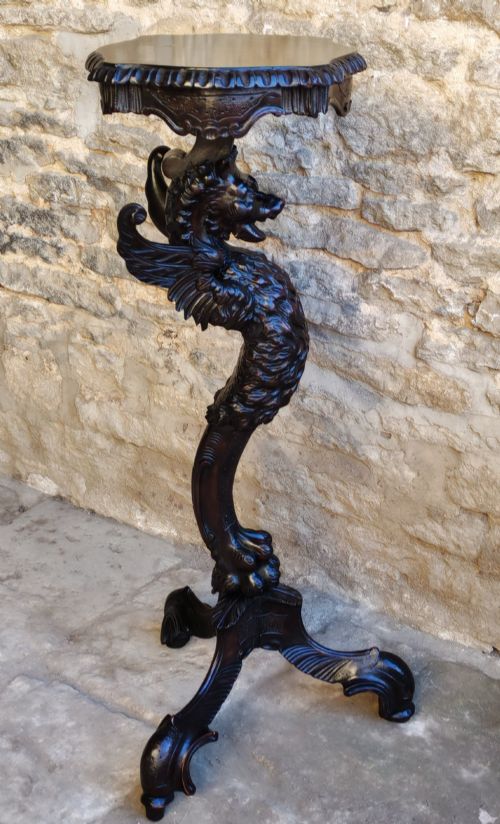
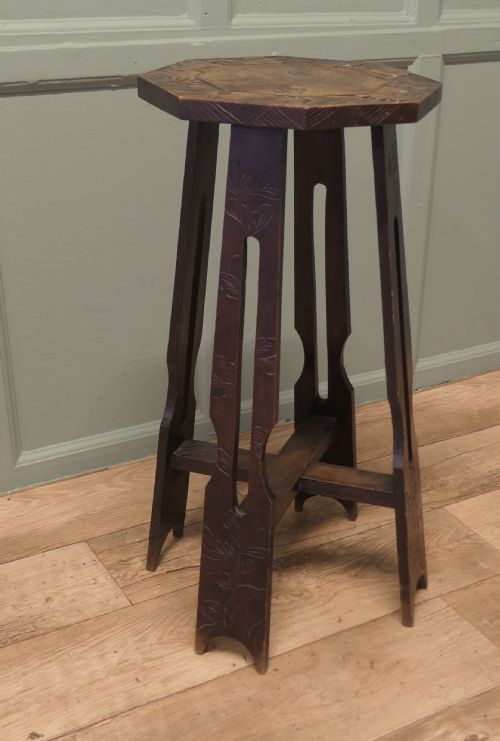
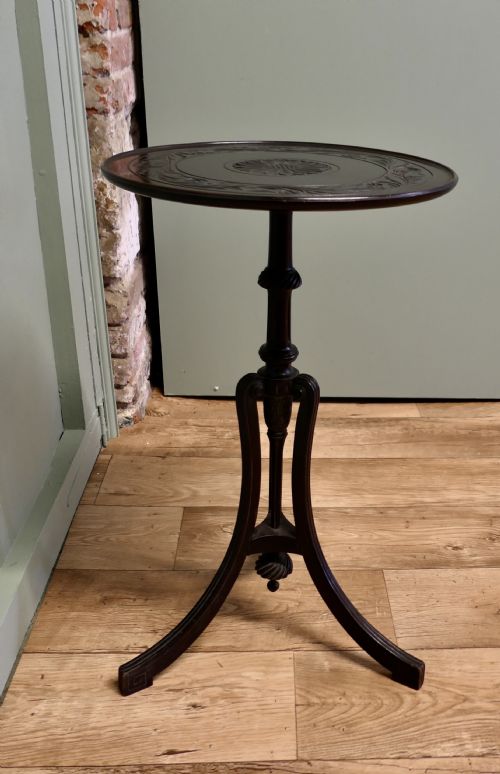
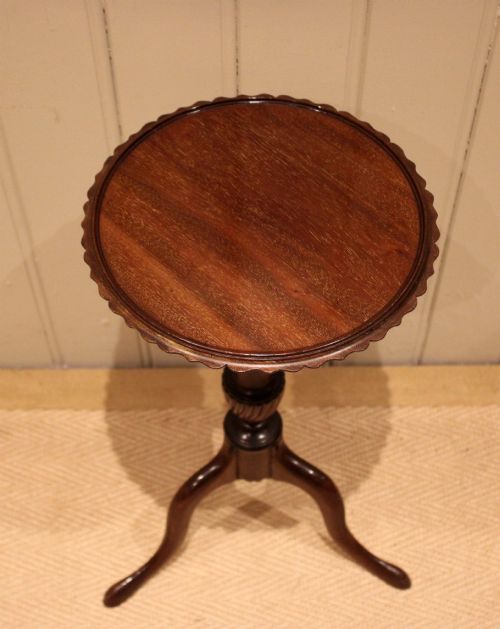
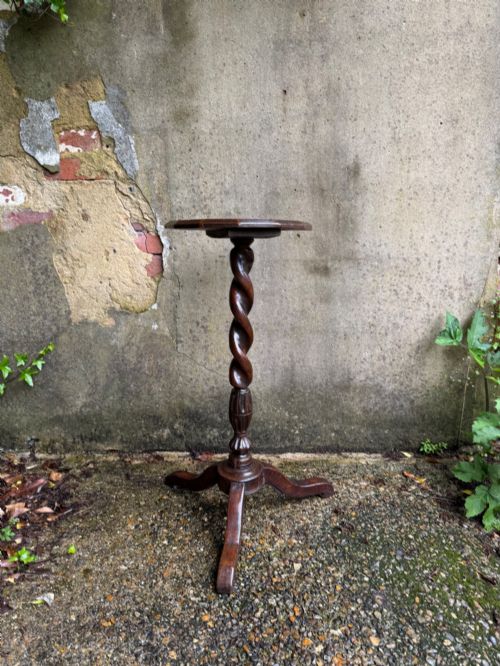
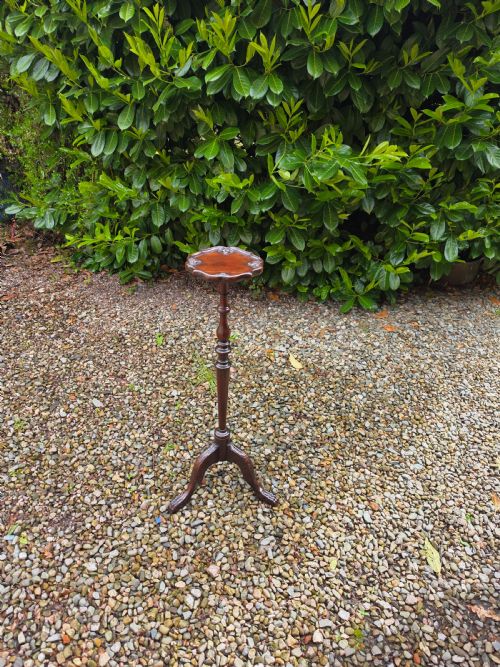

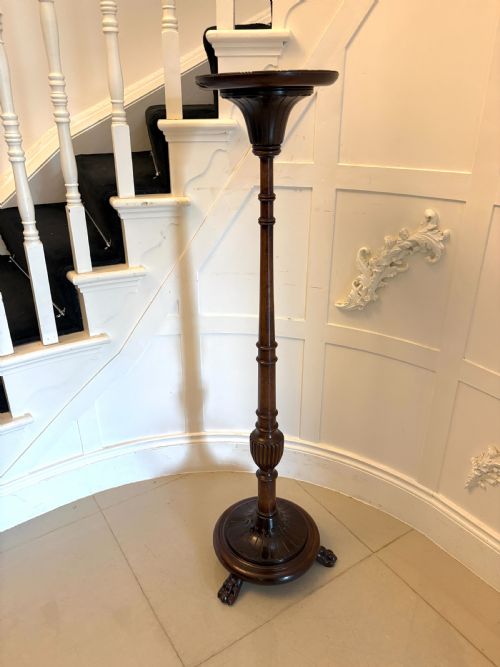
Edwardian Carved Pedestal Stand
An edwardian carved pedestal stand brings architectural height and detailed woodwork to a room, holding plants, lamps or ornaments with understated proportion.
Edwardian Carved Pedestal Stand
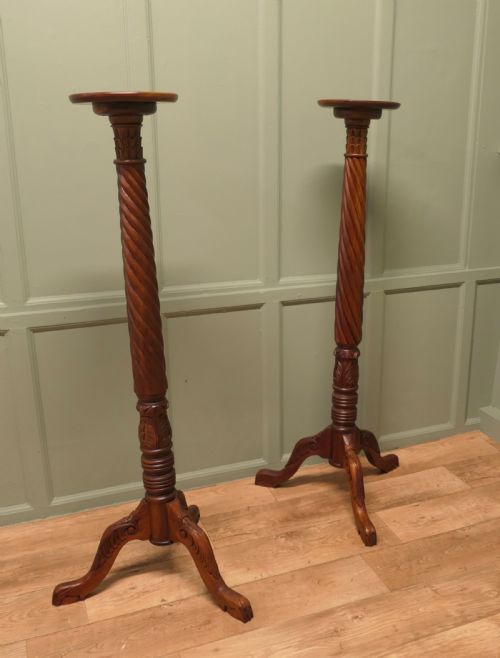
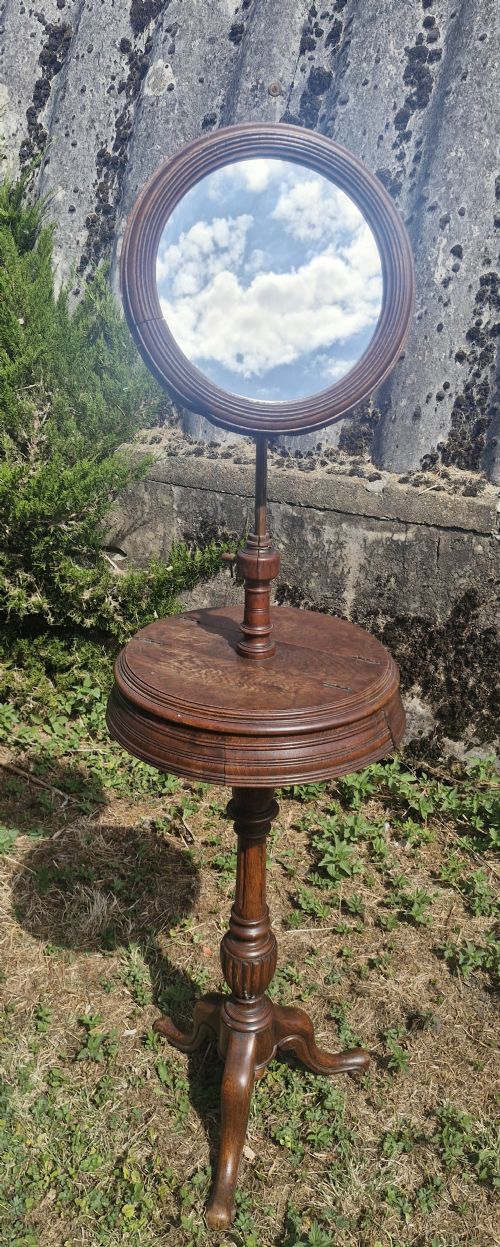
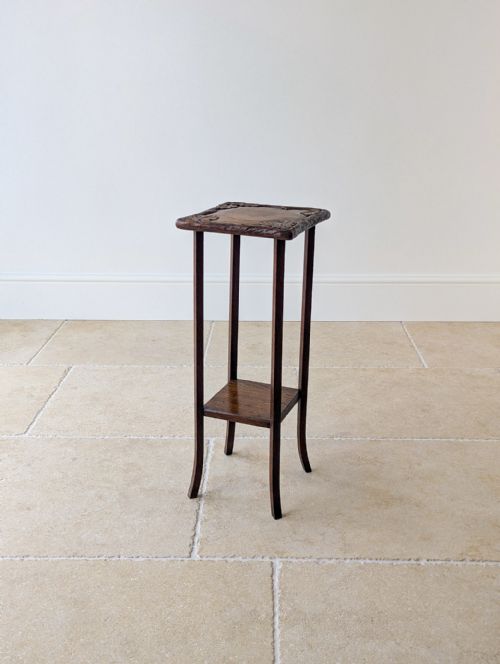
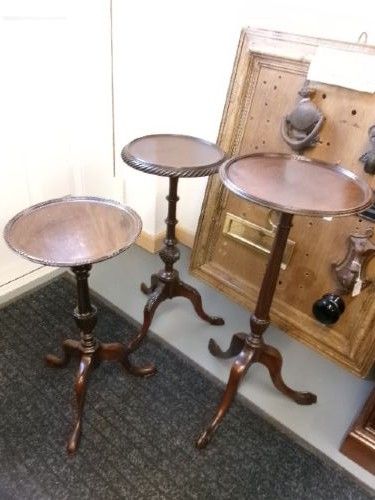
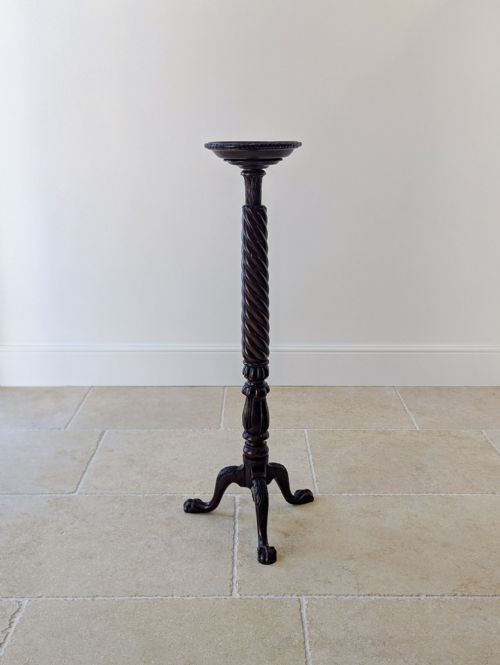
An edwardian carved pedestal stand typically appears as a tall, slender support designed to elevate urns, plants or lighting above the floor level. These pieces share functional DNA with torcheres, plant stands, jardiniere stands and occasional wine tables.
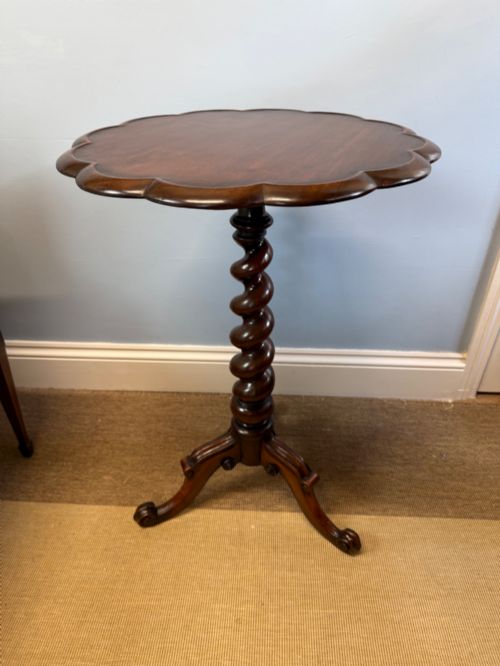
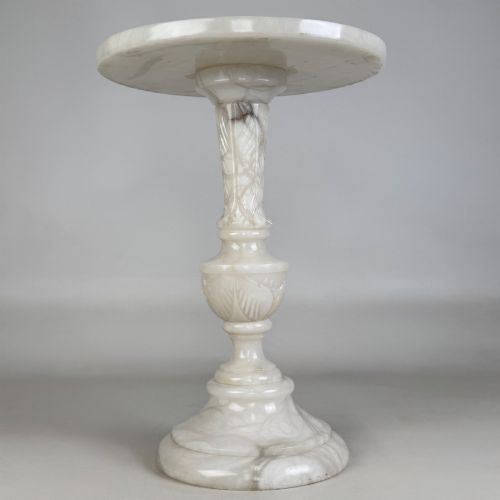
While the search specifies the Edwardian era, the pieces found on this page span the nineteenth century through the nineteen-thirties, taking in Victorian and early twentieth-century examples. Forms range from tripod bases and spiral pillars to multi-tiered plant stands and marble-topped columns.
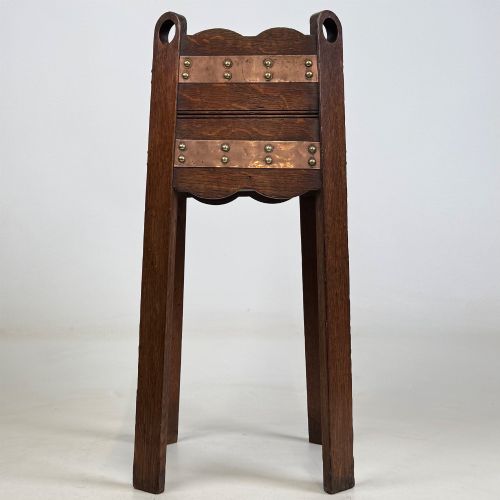
Makers and makers' workshops of the period drew upon Georgian Revival, Arts and Crafts, Art Nouveau and Chippendale Revival vocabularies. The resulting furniture shifts from simple oak barley-twist supports to elaborate carved mahogany columns with brass details or inlaid tops.
Materials and Construction
Timbers dominate the construction of these stands, with mahogany and oak appearing most frequently alongside walnut, elm, hardwood and giltwood. Cabinetmakers shaped these woods into turned pillars, fluted columns and octagonal tops, often uniting them with internal pegging or sturdy central threaded rods.
Decorative metal accents frequently accompany the woodwork, including cast brass detailing, engraved pillar mounts and inset marble or onyx tops. Carving ranges from crisp leaf motifs on table edges to deep spirals and textural geometric patterns across the shafts.
Edwardian Carved Pedestal Stand Retail Price Guide 2026
Typical asking prices for edwardian carved pedestal stand among the pieces listed under this phrase on Sellingantiques today, from the lower quarter to the upper quarter. They describe what is for sale here now, not the wider market.
The furniture styles represented range from Victorian and Edwardian through to Arts and Crafts, Art Nouveau and Chippendale Revival.
Judging Quality and Craftsmanship
The distinction between standard utility stands and finer pieces rests in the ambition of the carving and the integrity of the timber selection. Dense, well-figured mahogany or quarter-sawn oak with deeply undercut foliage shows superior workshop time compared to shallow, mechanical stamping.
Stability and balance define the engineering of a tall stand. Heavier top surfaces, such as marble or thick stone inserts, require heavy tripod or stepped bases with tight joinery to prevent swaying when supporting heavy ceramic planters or lamps.
Liberty & Co·Bulstrode Cambridge
The Edwardian Carved Pedestal Stand Glossary
- Torchere
- A tall, slender stand originally designed to hold a torch or candle, later adapted for lamps and floral displays. These pieces rely on elevated, narrow columns to display objects at eye level.
- Jardiniere stand
- A specialised piece of furniture built to hold a heavy plant pot or flower container. They frequently feature waterproof liners or durable stone and marble surfaces.
- Barley twist
- A decorative turning technique resembling a spiralling rope or barley sugar stick. This profile appears frequently on the upright shafts of oak stands from the early twentieth century.
- Tripod base
- A three-legged support structure commonly found beneath wine tables and torcheres. Three legs maintain firm contact with uneven floorboards far better than four feet.
- Giltwood
- Timber that has been coated with a thin layer of gold leaf or metallic paint. It brings a bright, reflective surface to decorative Edwardian and Victorian furnishings.
Edwardian Carved Pedestal Stand: Frequently Asked Questions
What is the difference between a pedestal and a torchere?
A torchere specifically denotes a tall, slender stand intended for lighting or a single decorative object. Pedestals and plant stands often possess broader tops designed to support heavier jardinieres, urns or sculptures.
While their silhouettes overlap significantly in Edwardian furniture, torcheres lean towards decorative turned or carved columns, whereas plant stands frequently incorporate multiple tiers or wide circular platforms.
Can these stands hold heavy ceramic planters?
Many stands were built specifically for heavy botanical displays and feature sturdy hardwood frames, solid pillar columns and wide tripod bases to manage weight safely. Marble-topped versions naturally resist water damage from overflowing plant pots.
Buyers should examine the width of the base relative to the top platform. Wider leg spreads provide the necessary centre of gravity for heavier indoor trees or ceramic jardiniere bowls.
How do I identify an Edwardian piece from a Victorian one?
Edwardian stands generally discard the heavy, dark finishes and dense ornamentation typical of high Victorian furniture in favour of lighter mahogany tones, simpler Arts and Crafts lines or delicate inlay. Victorian examples tend to display heavier carved mouldings, exotic hardwoods and bold spiral pillars.
However, revival styles persisted across both decades, meaning construction techniques and timber choice offer a more reliable guide to age than decorative style alone.
Where should I place a tall stand in a room?
These pieces excel in empty corners, beside reading chairs or framing doorways where floor space is limited but vertical interest is required. Their narrow footprints allow them to introduce greenery or lighting into neglected spatial gaps.
Because they draw the eye upward, placing them near windows or plain walls accentuates their carved woodwork and architectural profiles without cluttering circulation paths.