
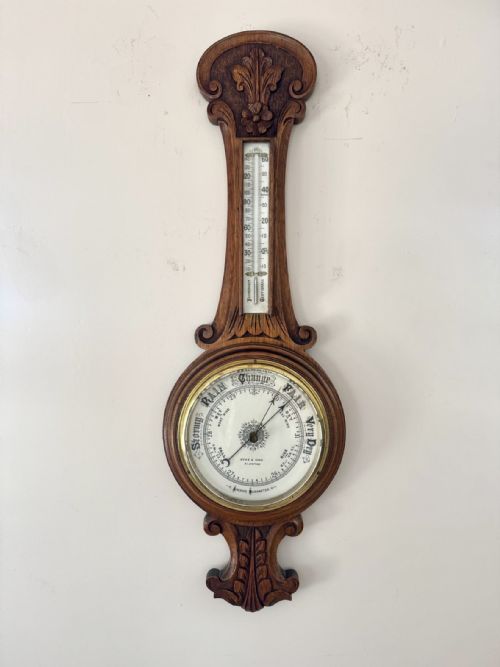
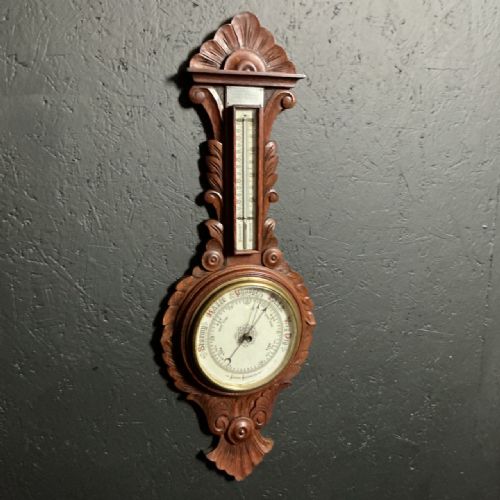
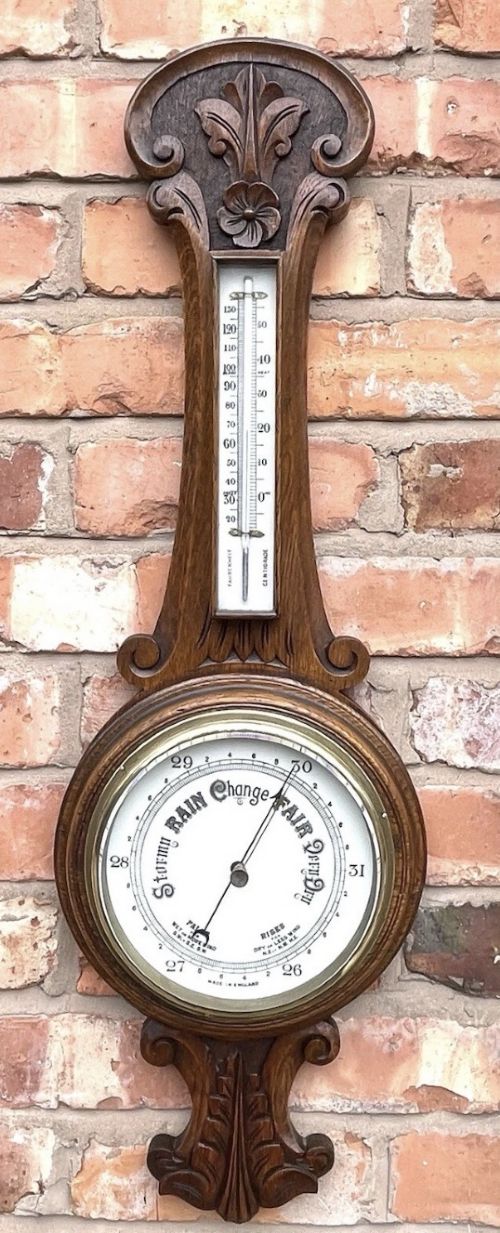


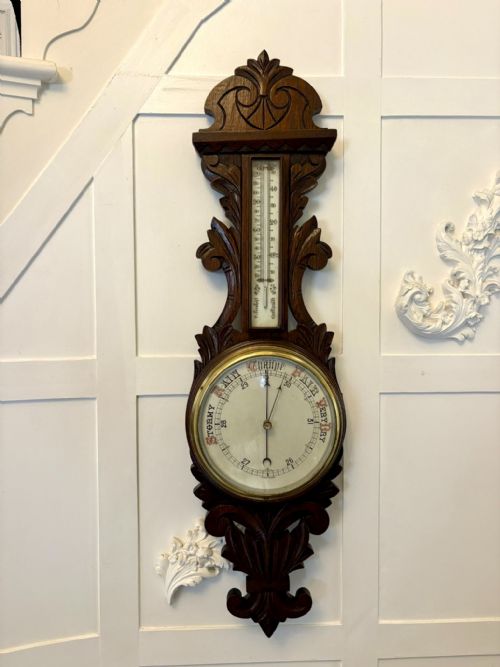


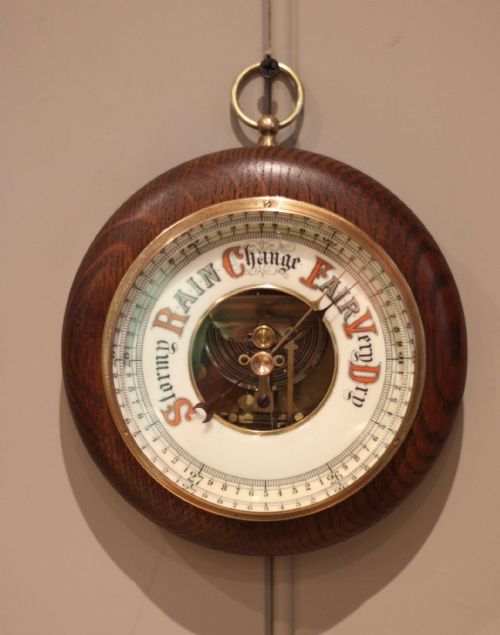


Edwardian Carved Oak Barometer
An edwardian carved oak barometer brings practical weather reading and solid timber craftsmanship into a hall or study with quiet authority.
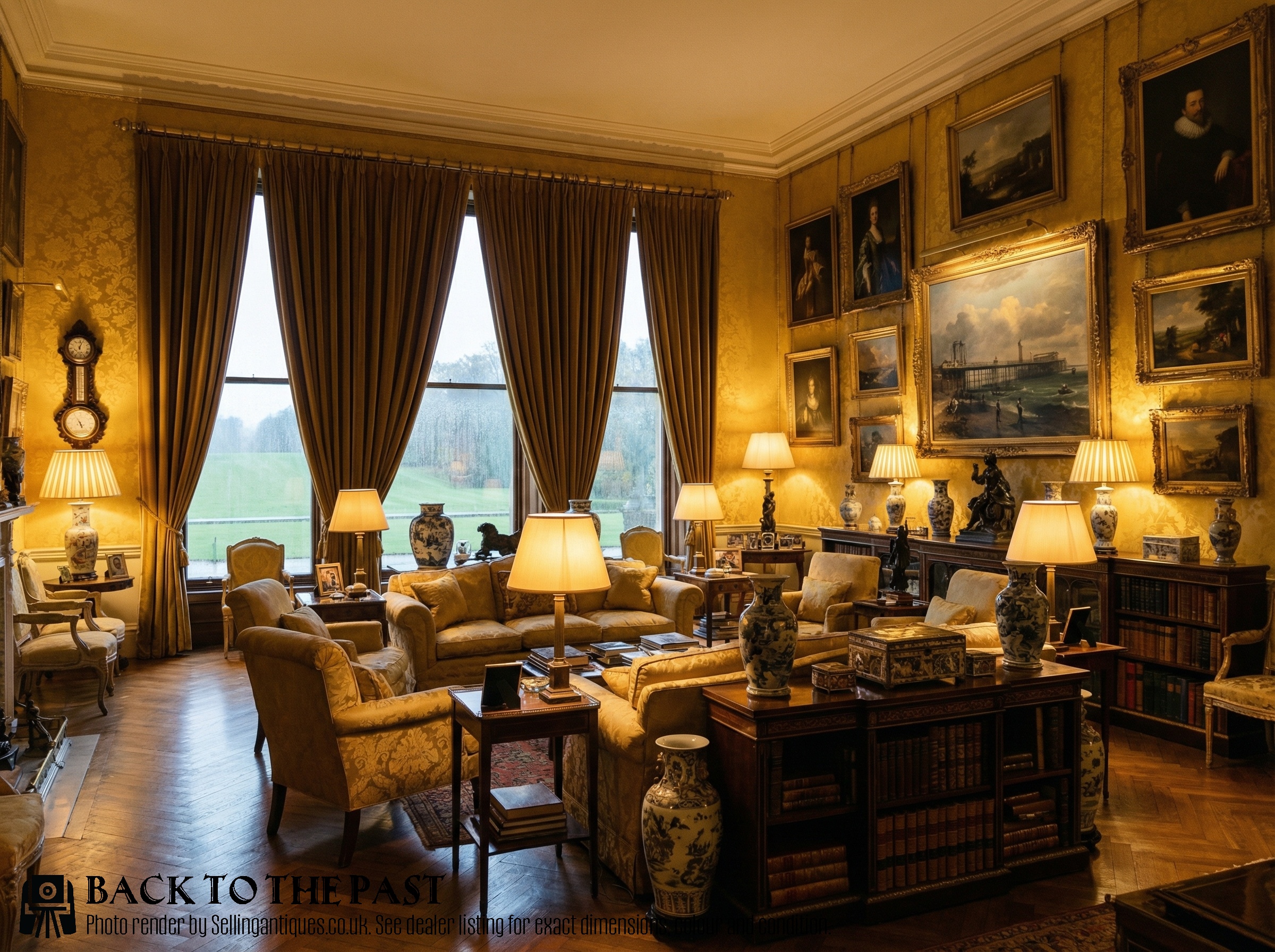
Edwardian Carved Oak Barometer
An edwardian carved oak barometer is a domestic weather glass housed in figured timber, most frequently found on this page in the banjo format with an integrated thermometer.
The selections span from the late Victorian era through the Edwardian period, often taking the form of wall-hanging banjo cases carved with foliage, scrolls, or birds.
Makers ranged from notable scientific instrument houses in London and Sleaford to regional workshops, producing both compact circular dials and substantial architectural instruments.
What Varies in Quality
Depth and crispness of the timber carving separate standard production pieces from those bearing detailed bird motifs or elaborate architectural scrolls.
Signed movements by established makers like Negretti & Zambra or J Hicks elevate an instrument above unmarked workshop examples.
Edwardian Carved Oak Barometer Retail Price Guide 2026
Typical asking prices for edwardian carved oak barometer among the pieces listed under this phrase on Sellingantiques today, from the lower quarter to the upper quarter. They describe what is for sale here now, not the wider market.
Site listings show materials spanning oak, walnut, brass, glass, bone, and ceramic across wall barometers, stick barometers, and desk clocks.
Hyde & Sons Sleaford·Negretti & Zambra·J Hicks of London
The Edwardian Carved Oak Barometer Glossary
- Aneroid barometer
- An instrument that measures atmospheric pressure using a flexible metal capsule without liquid. It expands and contracts with weather changes to move the indicator needle.
- Banjo barometer
- A tall, symmetrical wall instrument shaped like a banjo, typically combining a dial barometer at the top with a thermometer and hygrometer along the vertical stem.
- Mercury filled
- Containing liquid mercury in a glass tube to indicate barometric pressure by the height of the column. These stick barometers offer traditional scientific reading.
- Admiral Fitzroy storm barometer
- A large wall instrument designed by Admiral Fitzroy, featuring an open mercury tube alongside a thermometer and detailed written instructions for predicting gales.
Edwardian Carved Oak Barometer: Frequently Asked Questions
How do I read an aneroid barometer?
Read the main pointer to see the current atmospheric pressure indicated on the dial face. Tap the glass lightly to settle any friction in the internal linkage before taking your reading.
Set the secondary brass pointer manually over the main needle so you can track whether pressure rises or falls over the course of the day.
Where should I hang a wall barometer?
Choose an interior wall that avoids direct sunlight and heavy heat sources like radiators. Stable indoor temperatures ensure the internal metal mechanism responds accurately to atmospheric changes rather than room drafts.
Ensure the wall fixing is secure, particularly with larger carved oak banjo cases that carry substantial weight in the lower bulb.
How do I tell Edwardian from Victorian pieces?
Victorian cases often feature heavier, deeper relief carving with naturalistic motifs like birds and dense foliage. The woodwork tends to feel massive and imposing on the wall.
Edwardian examples frequently show lighter proportions, cleaner lines, and simpler circular or banjo formats that reflect changing interior tastes toward airier hallways.
Are mercury barometers safe in the home?
Mercury barometers contain sealed glass tubes where the liquid metal remains safely enclosed under normal conditions. They require careful handling only if moved or taken down from the wall.
Keep the instrument upright during any relocation to prevent the mercury column from surging and potentially breaking the glass tube.