
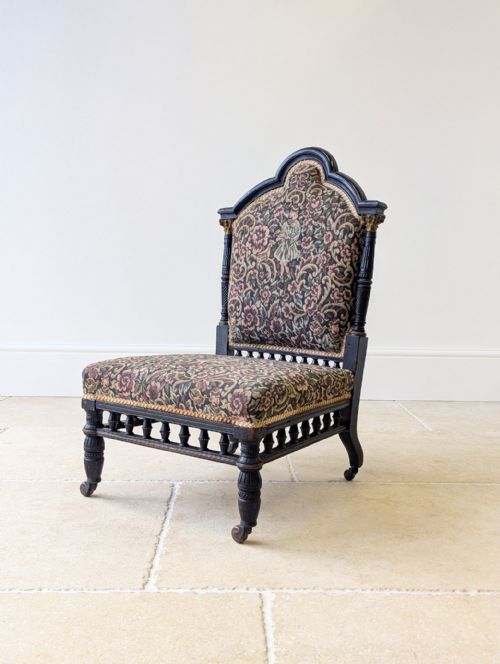
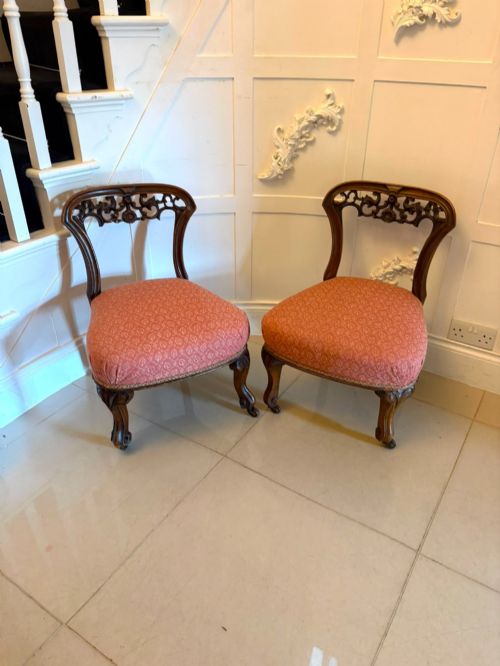
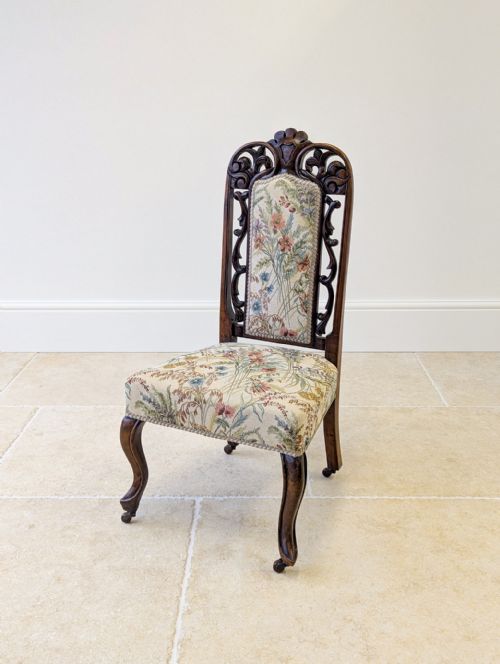


Edwardian Carved Nursing Chair
An Edwardian carved nursing chair offers low-slung seating and intricate woodwork, combining period craftsmanship with practical domestic comfort.
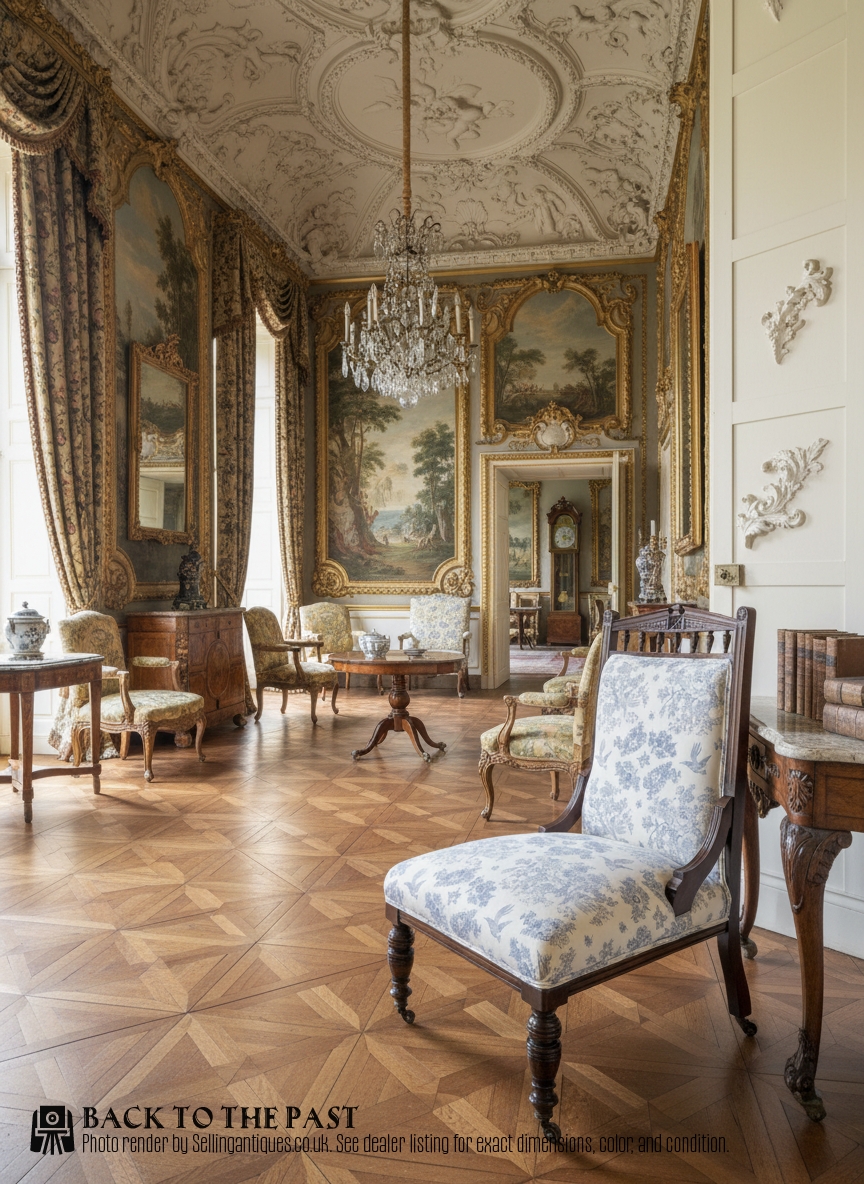
Edwardian Carved Nursing Chair
An Edwardian carved nursing chair is a low-seated chair designed for comfort and ease, frequently found alongside Victorian examples on this page. These pieces emerge primarily from the Edwardian and Victorian periods, spanning the late nineteenth and early twentieth centuries.
The selection ranges from dedicated nursing chairs to related low seating forms such as bedroom chairs, salon chairs, and occasional chairs. Makers of the period produced these seats in walnut, mahogany, rosewood, and beech, incorporating diverse upholstery styles.
Buyers encountering this phrase will find chairs featuring carved wooden frames, low seats suited to domestic chambers, and occasional inlaid details. The pieces reflect the transition from ornate Victorian styles to the lighter aesthetic of the Edwardian era.
Materials and construction
Carpenters shaped the frames of these chairs from hardwoods including mahogany, walnut, rosewood, oak, and beech. These timbers allowed for robust structural support while accommodating detailed hand-carving along the crest rails and legs.
Upholstery techniques utilised traditional textiles such as silk, velvet, and fabric, often secured over sprung or padded seats. Additional decorative elements included floral inlay, brass castors, and ceramic components.
Listings feature walnut, mahogany, rosewood, beech, and oak frameworks paired with silk, velvet, and textile upholstery across Victorian and Edwardian periods.
Determinants of quality
Quality in these chairs rests upon the crispness of the wood carving and the selection of cabinet timbers like figured walnut or dense mahogany. Superior examples display refined proportions and hand-carved details that remain sharp and well-defined.
The integrity of the original frame construction and the fidelity of any floral inlay distinguish finer workshop output from standard production. Well-preserved upholstery schemes or sympathetic restorations further elevate an individual piece.
The Edwardian Carved Nursing Chair Glossary
- Nursing chair
- A low-seated Victorian or Edwardian chair originally designed to allow a mother to feed an infant comfortably. These seats feature low frames and supportive backrests.
- Cabriole leg
- A furniture leg that curves outward at the knee and tapers inward toward the foot, often ending in a pad or scroll. This form draws inspiration from seventeenth-century design.
- Inlay
- A technique where contrasting materials such as lighter wood or metal are inserted into depressions within a solid wood surface to form decorative patterns.
- Bergere
- An enclosed upholstered armchair with wooden framing exposed around the sides and back. The arm panels and backrest frequently incorporate woven cane.
- Ebonised
- Wood finished with a dark stain or paint to imitate the appearance of expensive ebony. This treatment was particularly popular during the Aesthetic Movement and late Victorian periods.
Edwardian Carved Nursing Chair: Frequently Asked Questions
What is an Edwardian carved nursing chair used for?
These chairs provided low seating for domestic spaces, originally intended to assist with tasks requiring a seated position close to the floor. Today, they serve as decorative and functional accent chairs in bedrooms and living rooms.
Their compact scale and supportive backs make them suitable for smaller corners where standard armchairs might overwhelm the room.
How do I tell Victorian and Edwardian chairs apart?
Victorian chairs tend to feature heavier proportions, darker ebonised or rosewood finishes, and dense ornamentation rooted in Gothic Revival or Aesthetic Movement styles. Edwardian pieces often display lighter timbers like beech and mahogany with more restrained carving or subtle inlay.
Examining the underlying timber and the nature of the decorative motifs usually clarifies the period of manufacture.
Are these chairs comfortable for daily seating?
Their low seats and supportive backrests offer a distinct seating posture compared to modern lounge furniture. Many examples feature padded upholstery designed for relaxed daily use in private rooms.
Their comfort depends heavily on the condition of the internal padding and the height of the specific frame.
What woods were commonly used for these chairs?
Cabinetmakers utilised dense hardwoods including mahogany, walnut, rosewood, and oak for high-end seating. Beech appeared frequently in occasional and rocking chairs due to its strength and adaptability to turning.
Surfaces were often polished to highlight the natural grain of the timber or ebonised for a dramatic dark finish.