
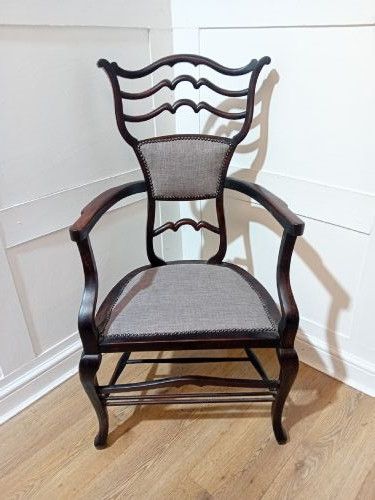
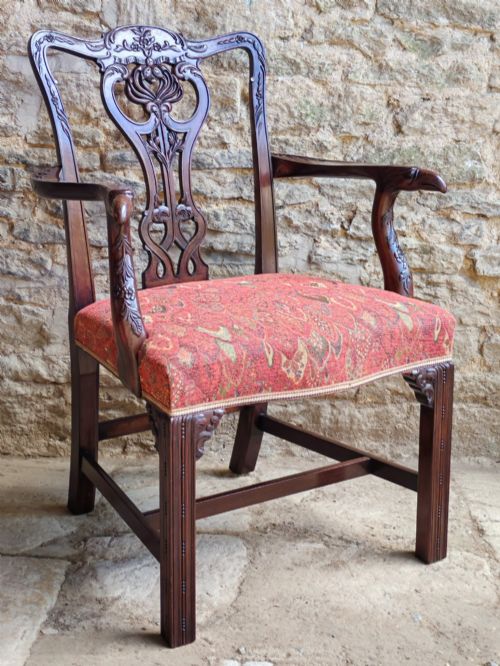
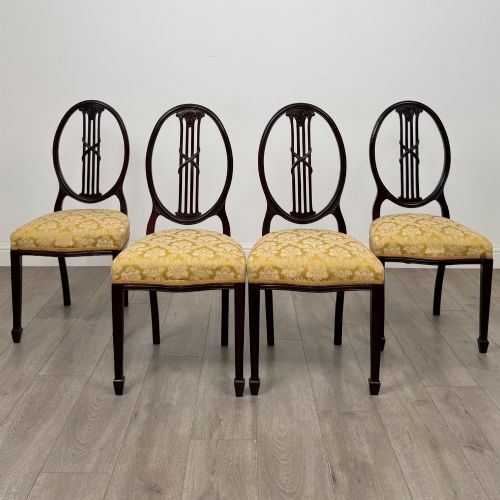
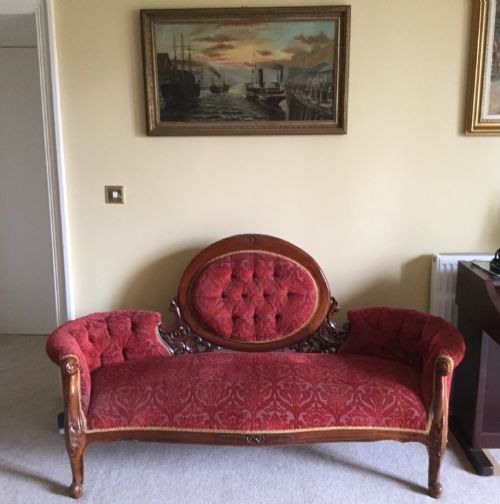
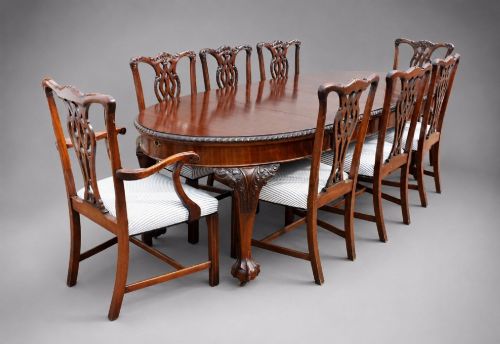
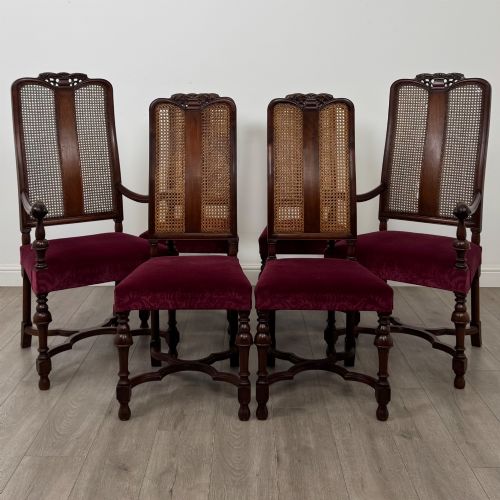
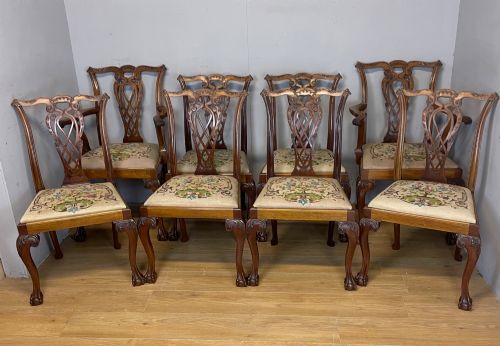
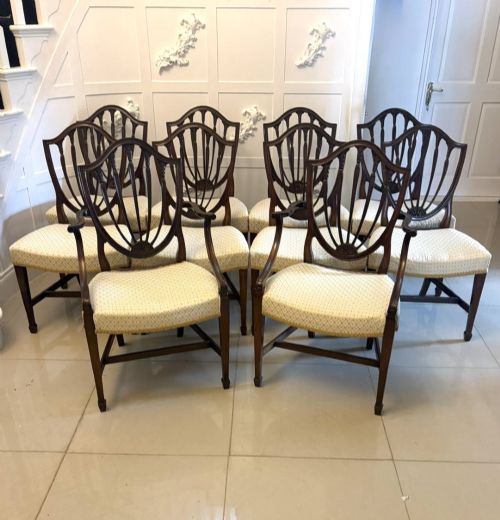
Edwardian Carved Mahogany Chairs
Edwardian carved mahogany chairs bring the confident cabinet work of the early twentieth century into modern dining rooms and studies.
Edwardian Carved Mahogany Chairs
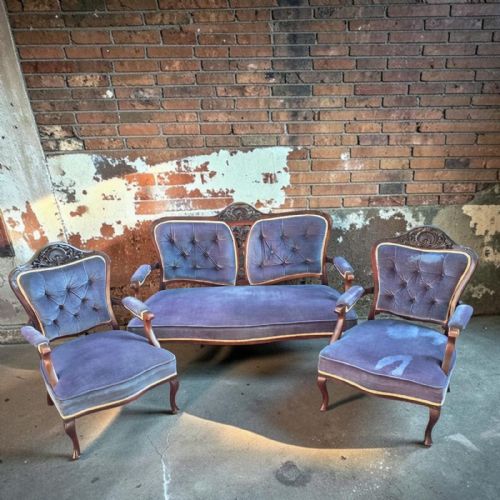
When you search for edwardian carved mahogany chairs, you encounter dining sets, armchairs, and side chairs produced around the turn of the twentieth century. The selections available on this page lean heavily towards dining chairs and library seating built from solid mahogany and detailed with period revival motifs.
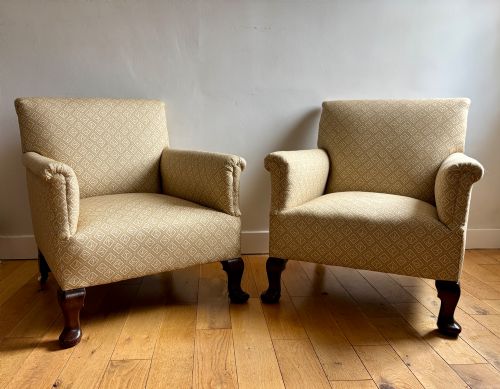
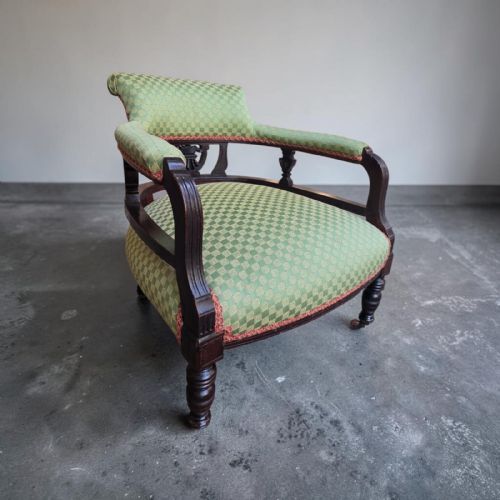
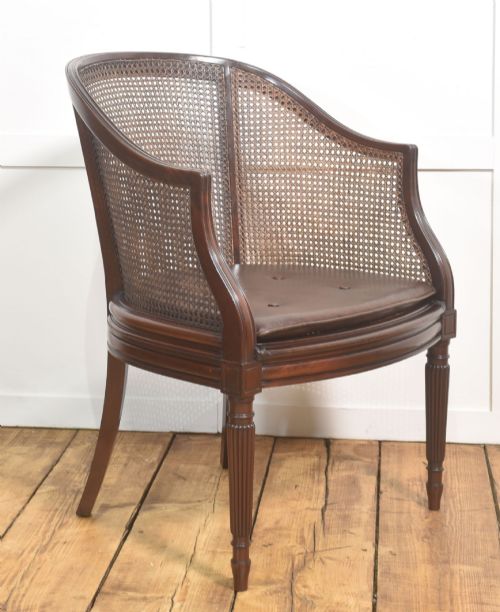
Makers of this era frequently drew inspiration from earlier centuries, resulting in numerous pieces finished with Chippendale, Hepplewhite, or Sheraton revival details. Alongside standard dining chairs, you will find tub armchairs, salon suites, and desk chairs designed for domestic comfort.
The construction typically reflects the transitional tastes bridging the Victorian era and the Edwardian period, often pairing traditional wood frames with cane panels or modern upholstery fabrics such as leather, velvet, and brocade.
How they were made
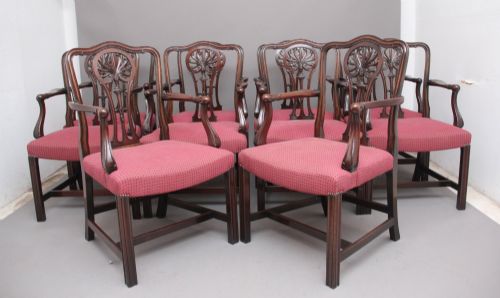
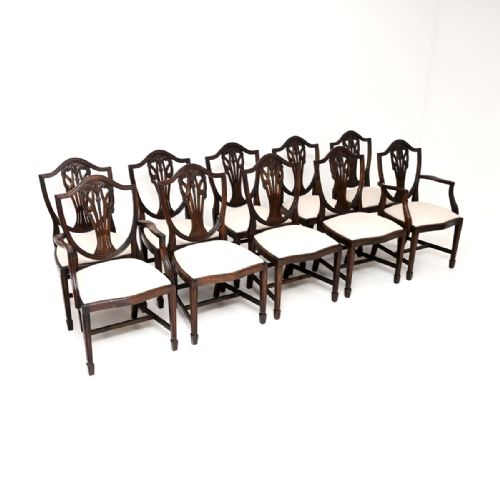
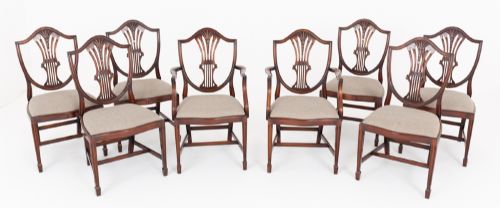
The primary material across these listings is mahogany, selected for its strength and deep grain, which workshop cabinet makers shaped into shield backs, cabriole legs, and pierced splats. Artisans utilised traditional joinery methods, including mortise and tenon frames, to ensure the structural integrity of dining chairs and armchairs subjected to daily use.
Detailing often involved hand carving along the crest rails and front legs, mirroring Georgian and Chippendale styles popular among Edwardian buyers. Where seating involved softer elements, workers integrated cane panels or applied sprung settee bases upholstered in fabrics like damask, leather, and deep pile brocade.
Edwardian Carved Mahogany Chairs Retail Price Guide 2026
Typical asking prices for edwardian carved mahogany chairs among the pieces listed under this phrase on Sellingantiques today, from the lower quarter to the upper quarter. They describe what is for sale here now, not the wider market.
Listings feature extensive sets of up to twelve dining chairs alongside smaller salon suites, library armchairs, and caned bergère seating.
What varies in quality
Quality in edwardian carved mahogany chairs rests upon the crispness of the timber carving and the integrity of the frame construction. Pieces produced by prominent cabinet makers or established workshops typically display superior depth in the pierced splats and tighter joints in the timber.
The condition of secondary materials also dictates the standard of a piece, distinguishing items retaining their original leather or cane work from those requiring extensive restoration. Uniformity across a large dining set separates ordinary production from cohesive suites made for formal rooms.
Howard and Sons·Warings·Maple and Co·Alfred Allen of Birmingham·Gillows·Waring and Gillow
The Edwardian Carved Mahogany Chairs Glossary
- Mahogany
- A durable tropical hardwood known for its reddish-brown colour and fine grain. It served as the primary timber for high-end Edwardian seating and revival furniture.
- Shield Back
- A chair back shaped like a classic heraldic shield, frequently featured in Hepplewhite revival dining chairs from the period.
- Cabriole Leg
- A furniture leg that curves outward and then tapers inward, ending in a pad or claw foot. This form appears often on Edwardian saloon and dining chairs.
- Caning
- Woven rattan material used to form light, flexible panels for chair backs and seats. It adds textural contrast to the dark mahogany frames.
- Carver
- An armchair designed with elbow rests, traditionally placed at the head of a dining table or paired with matching side chairs in larger sets.
Edwardian Carved Mahogany Chairs: Frequently Asked Questions
Can I mix these chairs with a modern table?
Edwardian mahogany seating pairs well with contemporary dining tables, where the dark wood grain provides a strong visual contrast against glass, metal, or light oak.
The classic proportions and restrained carving keep the chairs from overwhelming a modern minimalist room.
How do I identify a revival style?
Revival pieces incorporate specific historical motifs, such as the pierced splats of Chippendale design or the tapering shield backs associated with Hepplewhite.
Makers combined these older decorative elements with the lighter construction methods typical of the Edwardian period.
Are armchairs and side chairs matching?
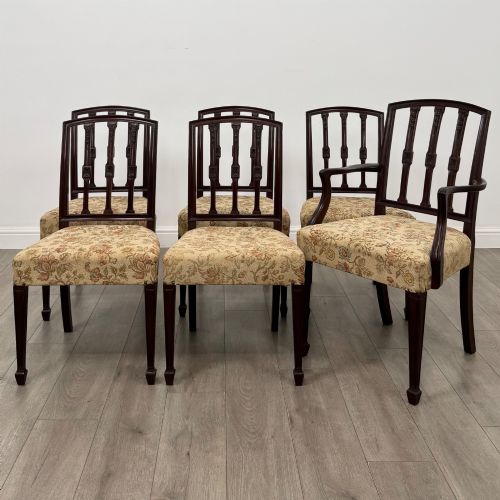
Dining sets from this era frequently include a mix of side chairs and elbow chairs, known as carvers, designed for the ends of the table.
The carving, wood tone, and upholstery match across the suite while the armchairs offer wider proportions.
What maintenance do mahogany frames require?
Mahogany benefits from occasional dusting with a soft cloth and minimal treatment with appropriate furniture wax to preserve the finish.
Keeping the wood away from direct heat sources prevents the timber and traditional joinery from drying out over time.