
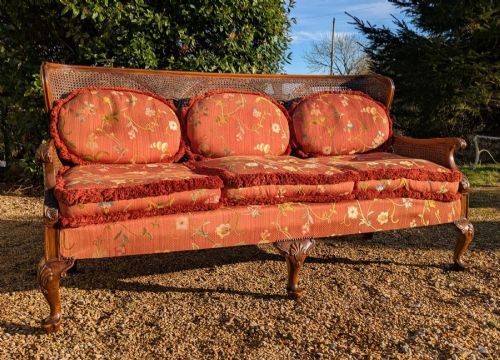
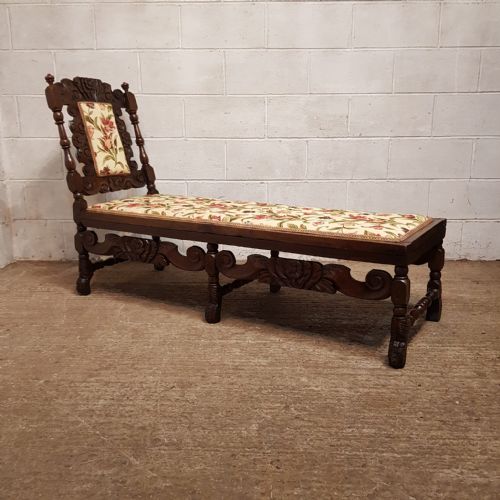


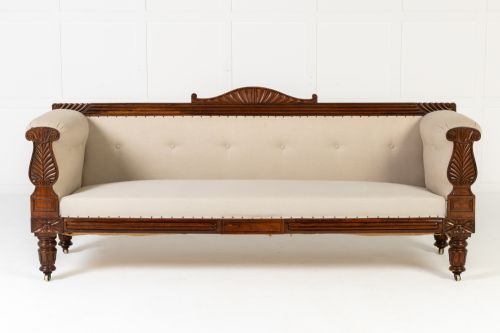


Edwardian Carved Couch
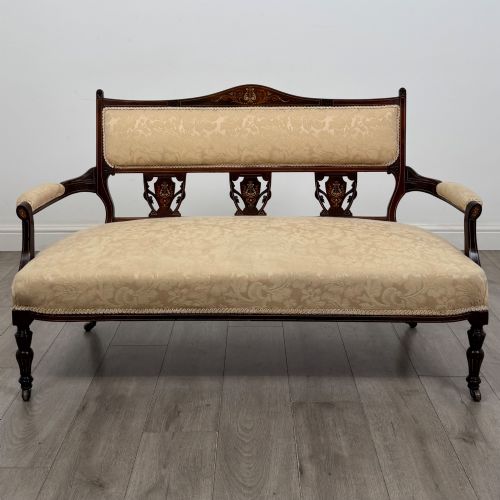
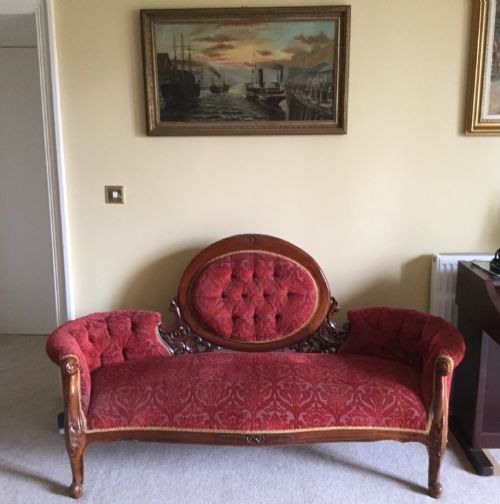
An edwardian carved couch brings solid mahogany frames, crisp detail and generous proportions to the drawing room.
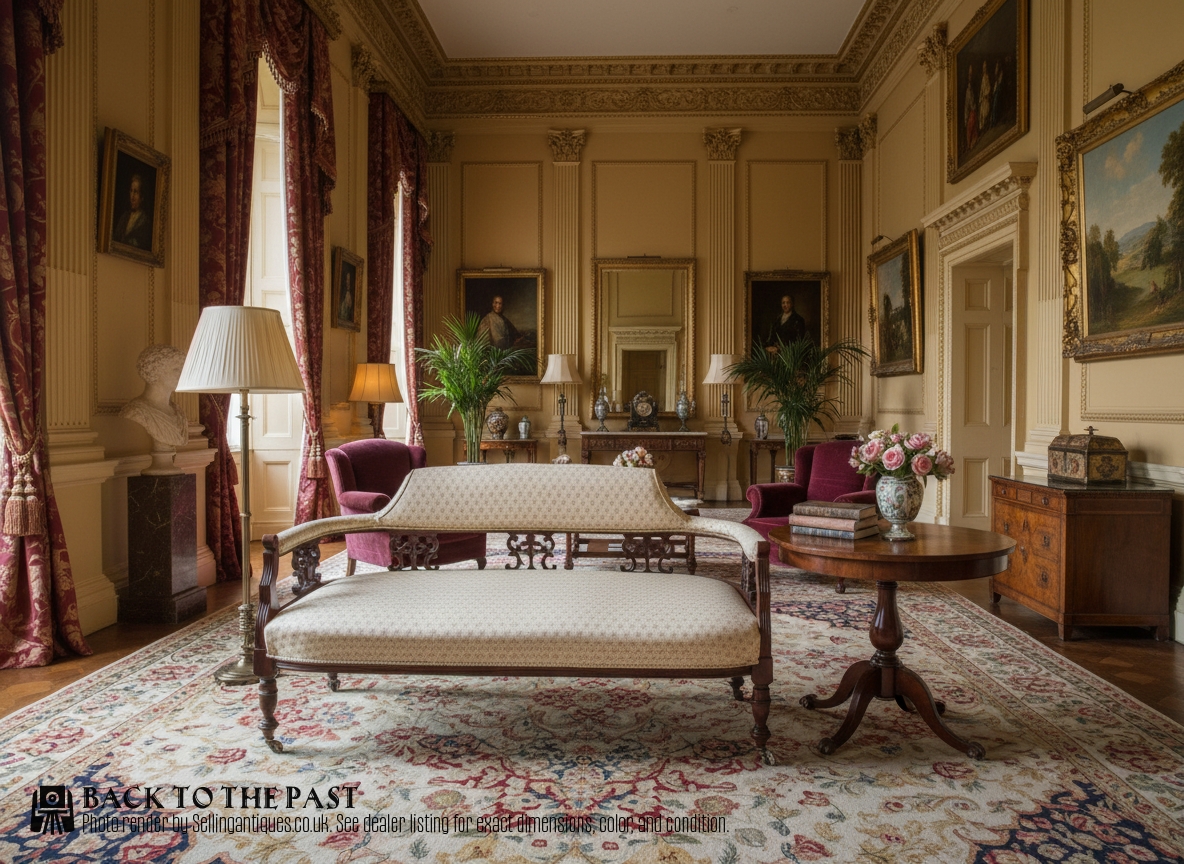
Edwardian Carved Couch
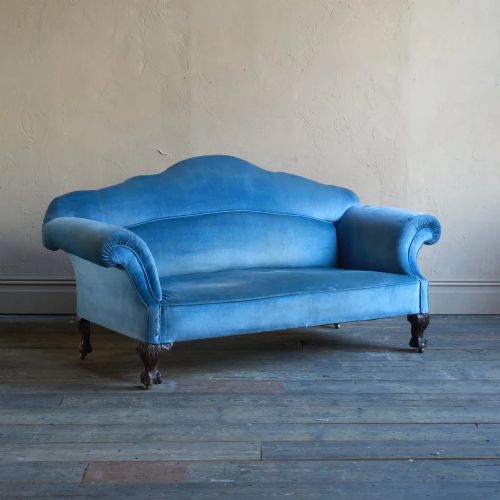
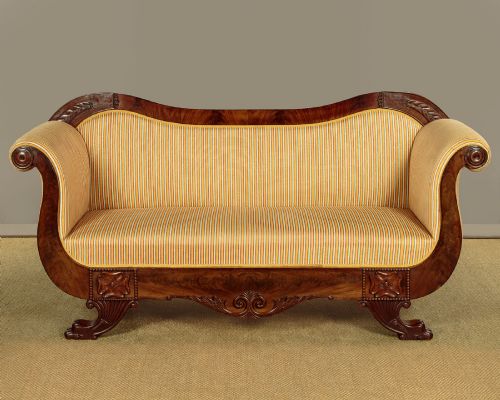
You are most likely to meet mahogany framed pieces displaying crisp carved details, occasionally accompanied by inlaid decoration or cabriole legs with ball and claw feet. Makers of this period frequently drew upon eighteenth-century vocabulary, producing camelback profiles and scroll ends that adapt earlier forms for Edwardian comfort. While some examples retain period fabric, others await re-upholstery to suit modern interiors.
Materials and construction
Frames rely primarily on solid mahogany, walnut and oak, selected for structural strength and rich grain. Carved ornaments are executed directly into the timber rather than applied as separate compo mouldings on standard production pieces.
Upholstery techniques involve sprung seat bases, horsehair stuffing and feather cushions, secured with traditional webbing and tacks. Silk damask, velvet, brocade and leather provide the durable outer surfaces seen across the surviving inventory.
Listings feature mahogany, walnut, oak and brass alongside various textiles including velvet, damask, fabric and leather.
Distinctions in quality
The degree of hand-carving defines the upper tier of these pieces, where crisp undercut foliage and well-defined mouldings separate bespoke cabinet work from factory-batch output. Timber selection plays an equally vital role, with dense, deeply figured mahogany and quarter-sawn walnut commanding greater attention than plain secondary woods.
Structural integrity of the frame joints and the retention of original upholstery foundations also determine long-term value. Pieces that maintain their rigid tenon joints and deep spring suspension without sagging represent the superior end of the market.
The Edwardian Carved Couch Glossary
- Cabriole leg
- A furniture leg that curves outward at the knee and tapers inward to an ankle, finishing in a foot such as a ball and claw. This form derives from ancient Chinese designs and gained popularity in European furniture during the eighteenth and early twentieth centuries.
- Bergere
- An enclosed upholstered armchair or sofa with wooden framing and cane-work sides or back. The exposed wooden frame is typically polished mahogany, walnut or painted beech.
- Camelback
- A sofa back featuring a graceful, undulating convex curve that resembles a camel's hump. This classic contour provides balanced support and visual movement across the rear frame.
- Chaise longue
- An upholstered couch shaped like a chair with a long seat large enough to support the legs. Originating in France, these pieces combine lounging comfort with formal elegance.
- Brocade
- A rich shuttle-woven fabric featuring raised patterns created with supplementary threads. It frequently appears in heavy silk or metallic yarn on period upholstery.
Edwardian Carved Couch: Frequently Asked Questions
How do I identify an edwardian carved couch?
Look for solid mahogany or walnut frames featuring crisp Edwardian carvings, often drawing on Chippendale or Queen Anne revival motifs. The construction typically displays early twentieth-century joinery methods alongside traditional sprung bases.
Check the underside and interior framing for signs of period hand-tooling and timber ageing. These structural clues distinguish genuine items from later reproductions.
Can I use an edwardian carved couch daily?
These pieces function well in modern reception rooms when the internal webbing and springs receive proper maintenance. Solid timber frames provide the necessary sturdiness for regular domestic seating.
Ensure the upholstery foundation remains supportive before heavy daily use. Professional reupholstery preserves the antique frame while offering modern comfort levels.
What is the difference between a settee and a couch?
A settee generally refers to a small, light two-seater upholstered bench designed for formal sitting. A couch often denotes a larger, more relaxed piece intended for reclining.
Historical terminology frequently overlaps between makers and retailers of the period. Both forms utilise similar carved timber frames and upholstery methods.
How should I care for the carved wood?
Dust the carved mahogany or walnut regularly with a dry, soft lint-free cloth to prevent dirt buildup. Avoid silicone-based polishes that can degrade the traditional wax finish over time.
Maintain stable indoor humidity levels to protect the solid timber from splitting. Occasional application of quality beeswax preserves the natural lustre of the grain.