

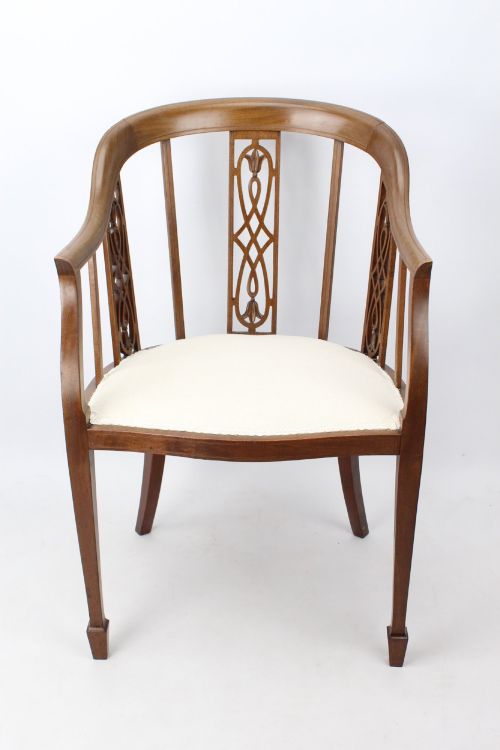
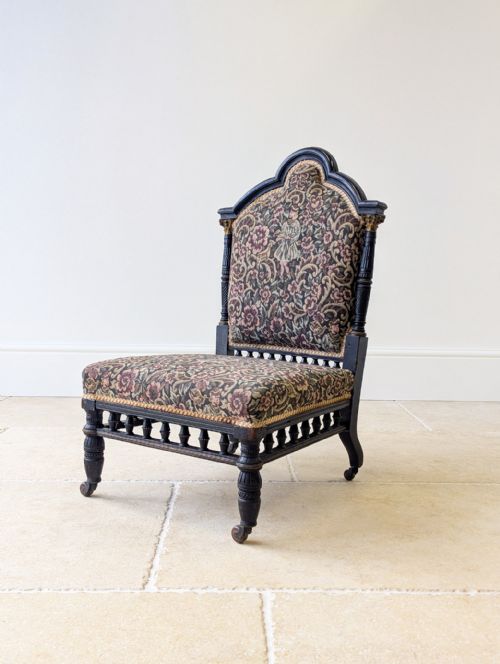

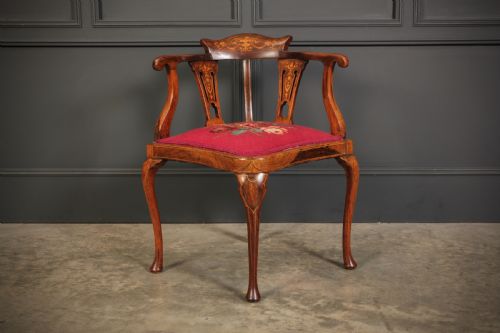


Edwardian Carved Corner Seat
These edwardian carved corner seat designs tuck neatly into awkward spaces while bringing period craftsmanship straight into your hall or parlour.
Edwardian Carved Corner Seat
An edwardian carved corner seat offers a clever seating solution designed to fit snugly into room angles where standard chairs fail. The listings here centre primarily on Edwardian examples, though related Victorian, 1900s and earlier iterations appear alongside them.
Most variations take the form of corner chairs or salon seating, often featuring supportive tub backs or inlaid frames. These items function well as accent seating in bedrooms, hallways or studies without overwhelming the floor plan.
How they were made
Carpenters relied heavily on rich timbers such as mahogany, rosewood and oak to construct these robust frames. Marquetry inlay, boxwood stringing and careful carving often decorate the structural wood.
Many examples incorporate upholstered pads in fabric or leather, whilst others utilise woven cane panels for lightness and texture.
Edwardian Carved Corner Seat Retail Price Guide 2026
Typical asking prices for edwardian carved corner seat among the pieces listed under this phrase on Sellingantiques today, from the lower quarter to the upper quarter. They describe what is for sale here now, not the wider market.
What varies in quality
The degree of hand-carving and the precision of marquetry inlay separate standard workshop output from finer pieces. Sharper detailing in the woodwork and more complex timber selections signal higher workshop standards.
Original upholstery methods and the preservation of secondary woods like boxwood indicate how well a piece has survived over the decades.
The Edwardian Carved Corner Seat Glossary
- Marquetry
- Decorative veneer applied to furniture in patterns using different woods and materials. This technique creates pictorial designs across the wooden surfaces of the chair.
- Tub armchair
- A chair with a rounded back that curves continuously into the arms. This style provides an enclosed, supportive seat.
- Boxwood
- A dense, pale wood frequently used for contrasting stringing and inlay work. It highlights the darker mahogany and rosewood frames.
- Cane
- Woven material made from rattan plant stems used for chair seats and backs. It adds a breathable, textured panel to the wooden structure.
Edwardian Carved Corner Seat: Frequently Asked Questions
Where should I place a corner seat?
These seats suit awkward room angles, narrow hallways and quiet bedroom corners where standard rectangular chairs look bulky.
Their angled design utilises dead space effectively while providing a functional place to sit.
How do I identify an Edwardian piece?
Edwardian seating often displays lighter proportions, subtle stringing and refined mahogany or satinwood timbers.
Makers of this era frequently drew inspiration from earlier Georgian and Queen Anne styles.
Are these chairs comfortable for daily use?
Most corner and salon chairs serve well for occasional seating rather than prolonged lounging.
Tub backs and upholstered pads offer reasonable support for reading or putting on shoes.
What maintenance do wooden frames need?
Keep wooden surfaces clean with a dry microfiber cloth and feed the timber occasionally with appropriate wax.
Protect cane panels from drying out by maintaining stable indoor humidity.