




Edwardian Canterbury Table
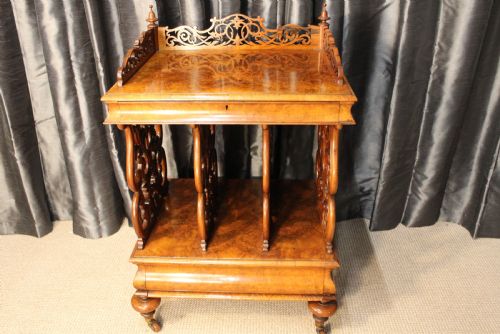
An Edwardian canterbury table combines a lower rack for folios or magazines with a surface above, offering practical elegance for the sitting room.
Edwardian Canterbury Table
The edwardian canterbury table brings together low vertical partitions for books and periodicals with a compact occasional table top, typically standing on slender legs. These hybrid pieces emerge most frequently from the Victorian and Edwardian eras, spanning variations such as music cabinets, whatnots, and side tables.
The form adapts readily to domestic spaces through diverse configurations incorporating drawers, reading slopes, and bookstands. Surviving examples demonstrate a lineage drawing upon earlier Victorian burr walnut models and refined Sheraton Revival influences.
How they were made
Cabinet makers utilised choice hardwoods including burr walnut, mahogany, rosewood, and oak as the foundational structure for these tables. Inlays of contrasting timbers and ebony add linear detail to tops and panels.
Fine joinery underpins the construction of the slatted compartments and drawers, while occasional pieces feature painted satinwood surfaces or applied brass and ceramic elements.
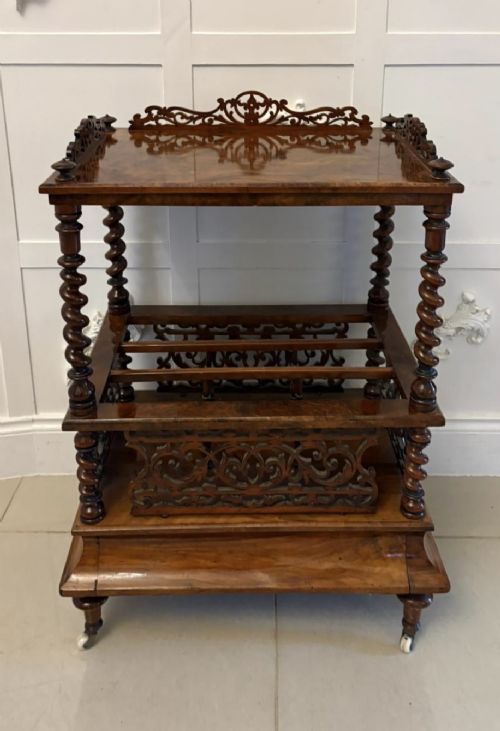
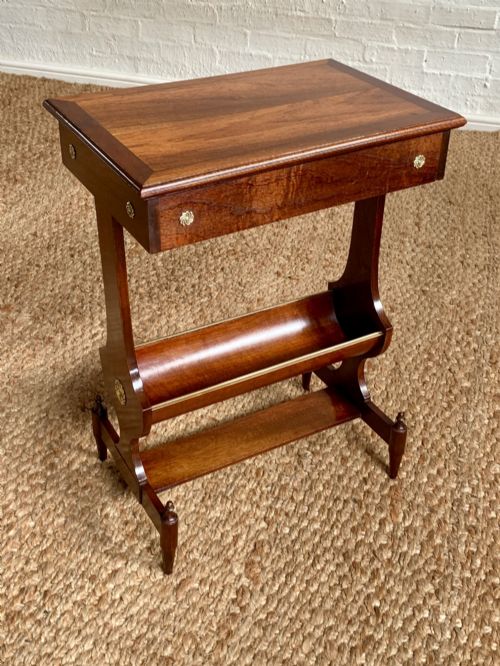
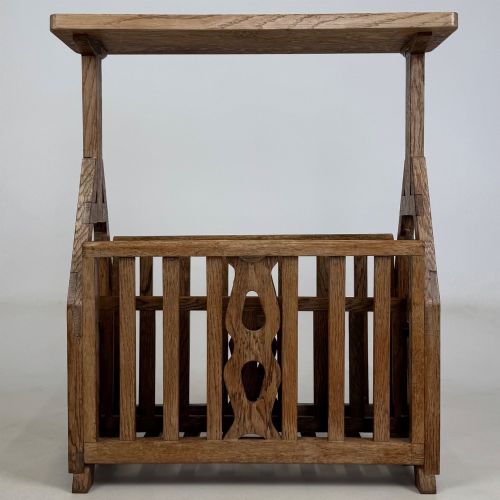
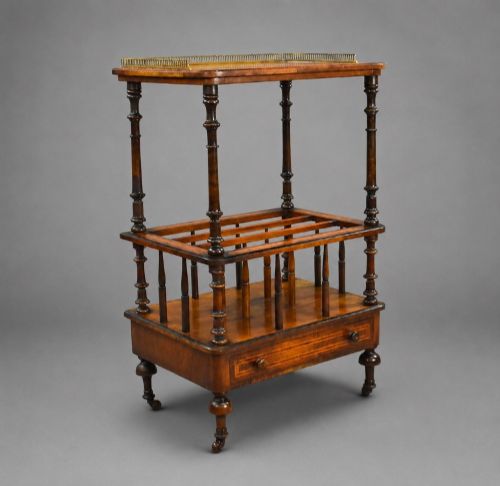
Listings demonstrate forms spanning Victorian burr walnut whatnots, Edwardian mahogany side tables, and Arts and Crafts oak designs.
What varies in quality
The distinction between standard production and superior work lies in the selection of timbers, particularly the choice of richly figured burr walnut veneers. Subtle execution of string inlay and the crispness of turned or tapered supports elevate the piece.
Multi-functional designs incorporating integrated drawers or reading slopes require sophisticated carpentry to maintain structural integrity alongside daily utility.
The Edwardian Canterbury Table Glossary
- Canterbury
- A low stand featuring vertical partitions, originally designed to hold sheet music or folios beneath a flat surface.
- Whatnot
- A multi-tiered piece of freestanding furniture featuring open shelves supported by slender pillars, often combined with a canterbury base.
- Burr Walnut
- Timber taken from the gnarled growth of a walnut tree, prized by cabinet makers for its intricate, swirling grain patterns.
- Sheraton Revival
- A late nineteenth and early twentieth century design style drawing inspiration from the lighter, neoclassical furniture of the eighteenth century.
Edwardian Canterbury Table: Frequently Asked Questions
What is an edwardian canterbury table used for?
These pieces serve as dual-purpose furniture providing a stable surface for lamps or ornaments alongside dedicated upright storage for periodicals or books.
Historically, they kept reading material organised beside seating areas in the drawing room or parlour.
How do I identify an edwardian piece?
Pieces from this period often display lighter timbers, delicate string inlay, and refined proportions influenced by revival styles.
Construction details and secondary woods help distinguish early twentieth century items from heavier Victorian precedents.
Are all canterbury tables fitted with drawers?
Many examples incorporate a single shallow drawer beneath the main surface, though others rely solely on the open rack below.
Drawer inclusion depends largely on the specific form, whether configured as a music cabinet, side table, or straightforward rack.
What materials are typical for these tables?
Makers predominantly employed figured burr walnut, mahogany, and rosewood, frequently enhanced with contrasting string inlays.
Secondary additions include brass castors, ceramic elements, and painted satinwood details on specific decorative variants.
How do I care for a walnut table?
Polished hardwood surfaces benefit from periodic treatment with appropriate natural waxes to maintain the lustre of the timber.
Placing the furniture away from direct sunlight and sudden temperature changes protects the delicate veneers from drying.