

Edwardian Cane Seating
Edwardian cane seating offers practical lightness and woven texture, bringing period character to sitting rooms and bedrooms alike.
Edwardian Cane Seating
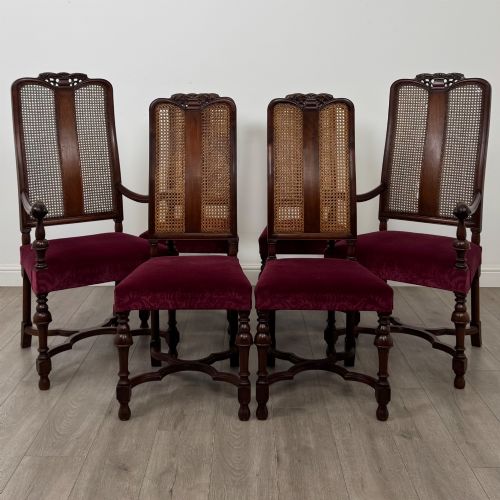
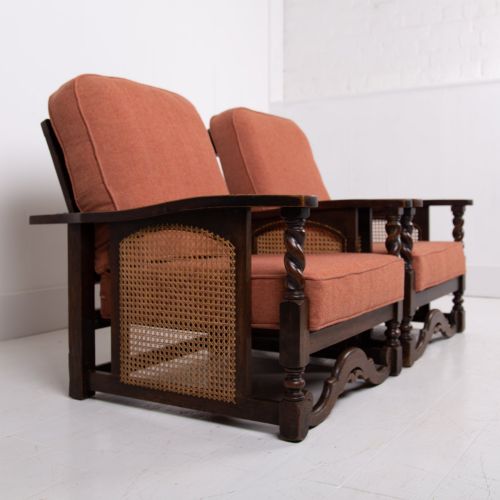
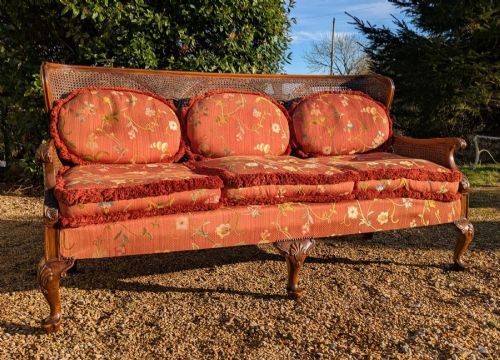
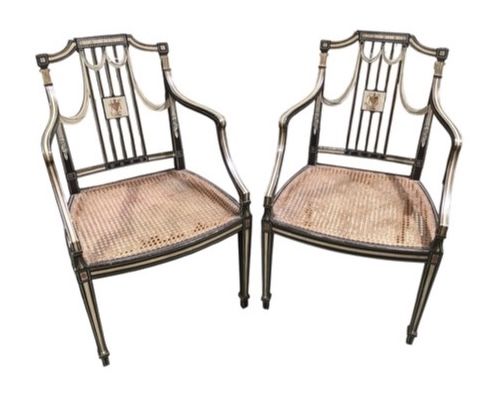
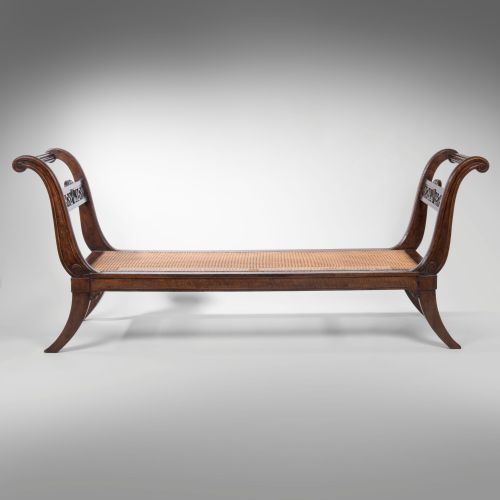
Edwardian cane seating comprises chairs, armchairs, and small settees constructed with woven panels in the backrests or seats. These pieces range from simple bedroom chairs to substantial library armchairs and matching dining sets.
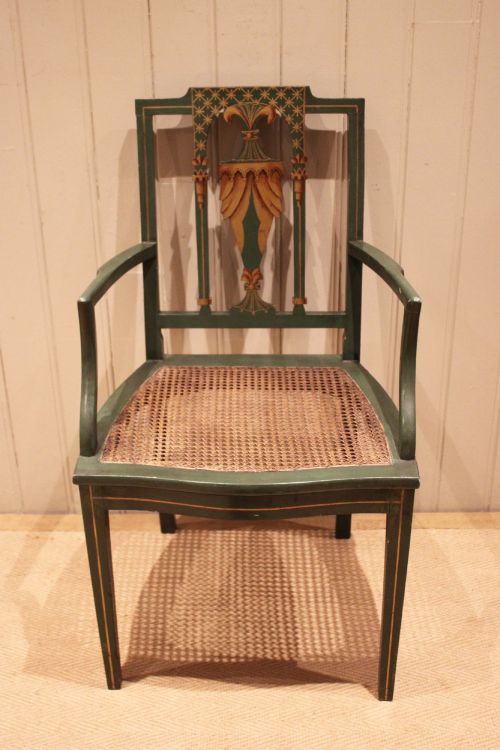
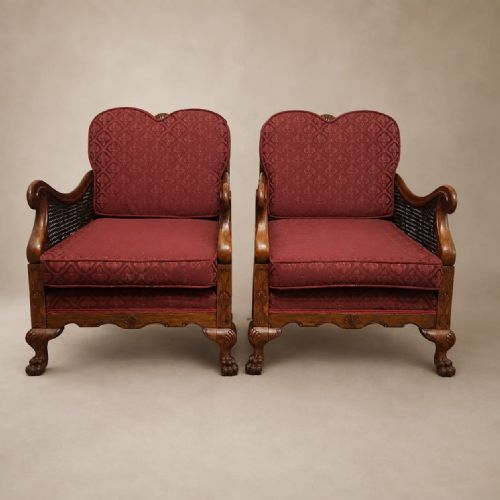
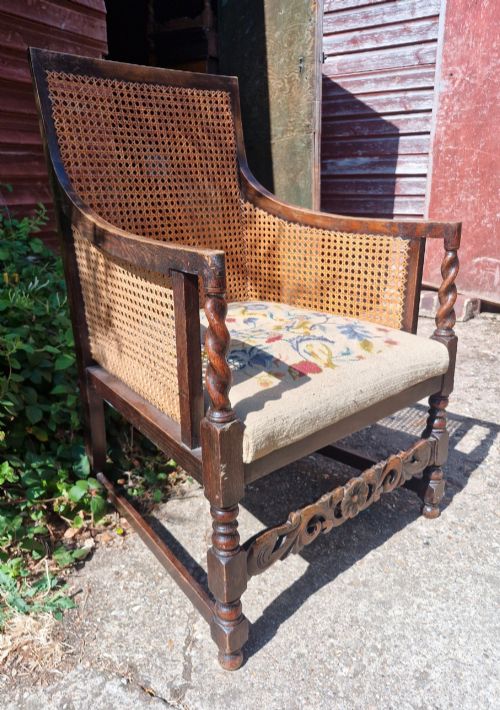
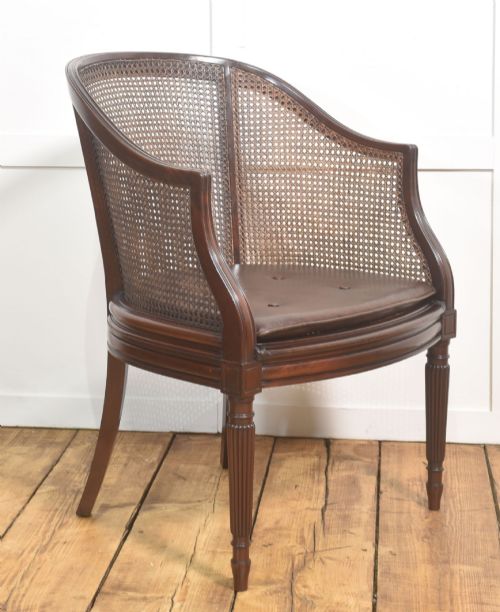
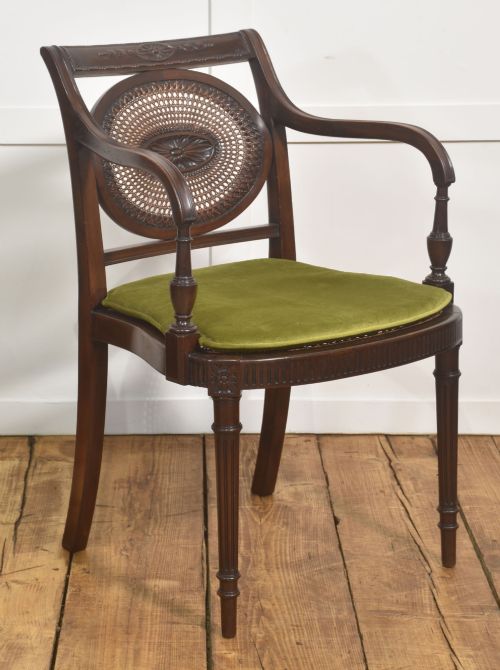
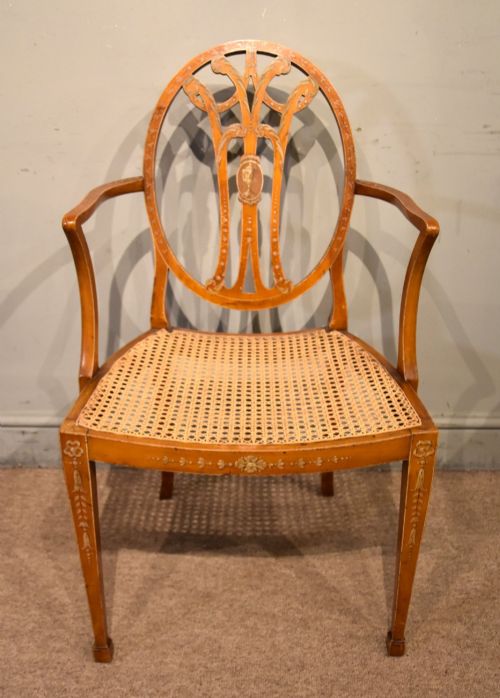
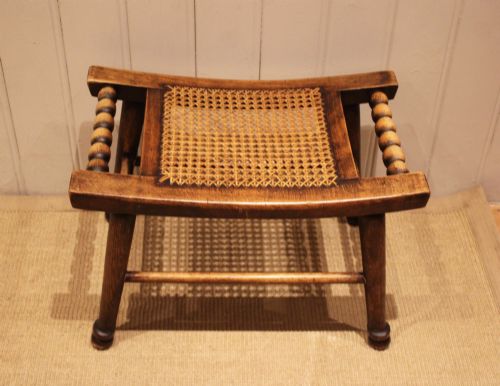
The version most commonly encountered on this page is the light timber armchair or bergère, often framed in mahogany, walnut, or satinwood with woven cane panels. Smaller bedroom chairs and dressing table stools also appear frequently alongside larger seating.
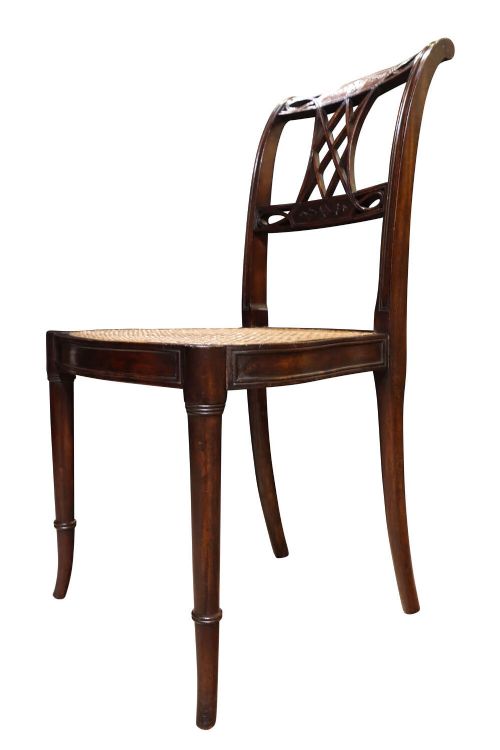
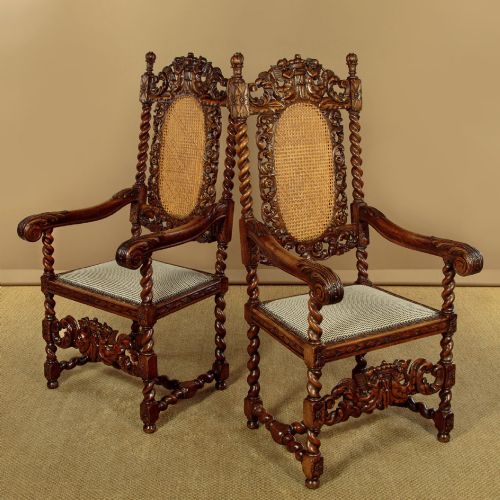
While many examples date directly to the Edwardian period or the surrounding decades, the selection includes revival styles referencing earlier centuries such as Regency and Jacobean designs. Makers utilised traditional joinery alongside contemporary decorative painting and inlay.
Materials and construction methods
Frames are built predominantly from hardwoods like mahogany, walnut, oak, and beech, chosen for structural rigidity and fine grain. Selected pieces feature painted finishes or satinwood veneers.
The characteristic woven panels utilise natural cane strands threaded through pre-drilled holes in the frame or locked into channeled grooves. This flexible mesh provides resilient support while maintaining an airy visual profile.
Listings feature oak, mahogany, walnut, and beech framing alongside painted and satinwood finishes across chair and sofa forms.
Distinctions in quality
Quality rests in the precision of the timber frame carving and the tightness of the cane weave. Finer examples display crisp detail in the woodwork and uniform tension across the woven surface.
The integrity of the frame construction and the condition of the woven panels determine the grade of the piece. Well-executed repairs or original woven sections preserve the structural balance intended by the maker.
James Shoolbred·Dryad And Co
The Edwardian Cane Seating Glossary
- Bergere
- An enclosed upholstered armchair with solid wooden sides filled with cane work. It frequently includes loose squab cushions for seat comfort.
- Cane
- The peeled bark of the rattan palm utilised for weaving resilient mesh panels in seats and backs. This material offers flexibility and durability.
- Split cane
- Cane stripped down to a flat profile specifically for intricate hand-woven grid patterns. It differs from whole cane used for structural wrapping.
- Tub armchair
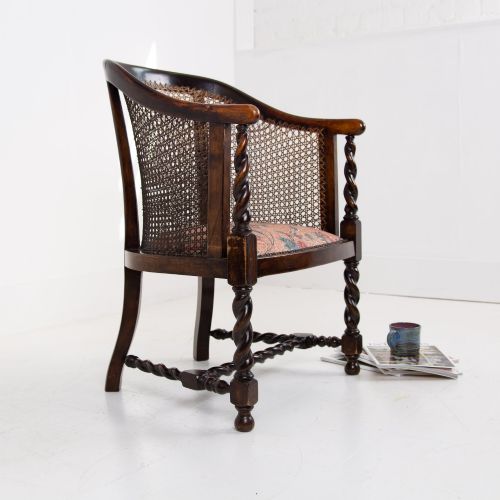
- A chair featuring a curved, continuous back and armrest rail forming a semi-circular enclosure. The back panel commonly incorporates woven cane.
- Satinwood
- A pale, lustrous hardwood sourced from tropical trees, utilised for fine cabinetmaking and decorative inlay. It appears frequently on polished Edwardian bedroom furniture.
Edwardian Cane Seating: Frequently Asked Questions
How do I care for cane seats?
Keep woven cane hydrated by wiping it lightly with a damp cloth occasionally to prevent the natural material from becoming brittle. Avoid placing these pieces directly against heat sources.
Support the woven panels with appropriate cushions to distribute weight evenly during daily use. This prevents excessive stretching of the natural fibres over time.
Are these chairs comfortable to sit in?
Many bergere armchairs and easy chairs include loose feather or fabric cushions that provide a soft seat while the cane back offers flexible support. Smaller bedroom chairs function best for occasional seating rather than prolonged lounging.
Adding a custom squab cushion transforms firm wooden or caned seats into comfortable spots for reading or writing at a desk.
Can damaged cane be repaired?
Traditional hand-woven cane panels can be repaired or entirely re-woven by skilled artisans using matching natural materials. Hole-drilled cane work requires threading new strands through the original frame channels.
Professional restoration preserves the structural integrity and historical appearance of period chairs without replacing the underlying wooden frame.
How do I identify Edwardian pieces?
Edwardian seating typically exhibits lighter proportions, refined inlay, and painted satinwood decoration that distinguishes it from heavier Victorian furniture. Timber choices like mahogany and walnut feature polished or lacquered finishes.
Stylistic revivals during this era frequently borrowed Hepplewhite, Sheraton, or Regency outlines while employing contemporary manufacturing techniques.