
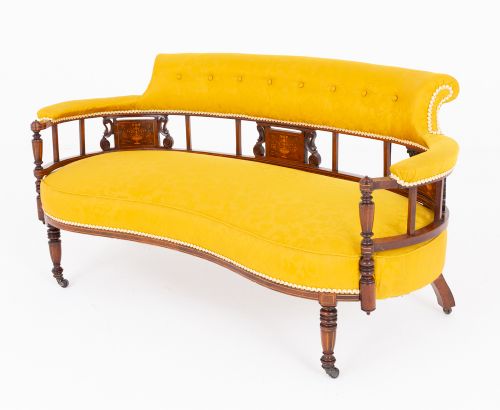


Edwardian Button Back Sofa
An edwardian button back sofa brings deep upholstery and sprung comfort to a room, offering the structured lines typical of the period.
Edwardian Button Back Sofa
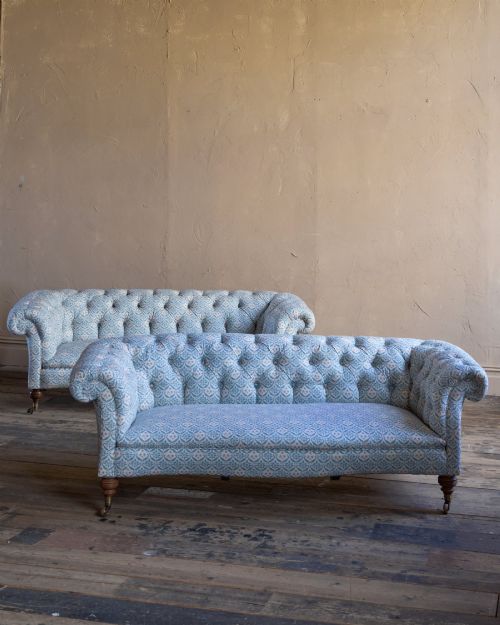
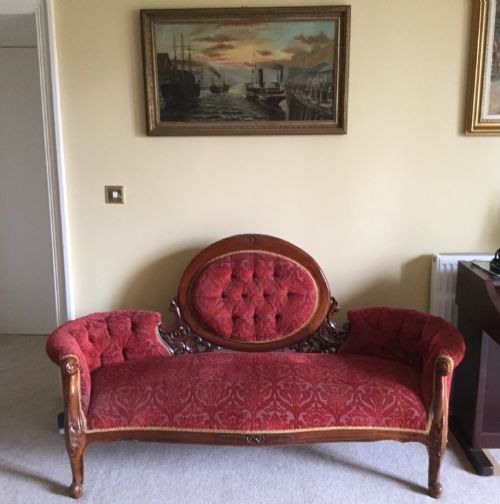
The search for an edwardian button back sofa uncovers seating that bridges late nineteenth-century styles and early twentieth-century forms. These pieces include deep buttoned chesterfields, upholstered salon settees, and chaise longues designed for formal drawing rooms.
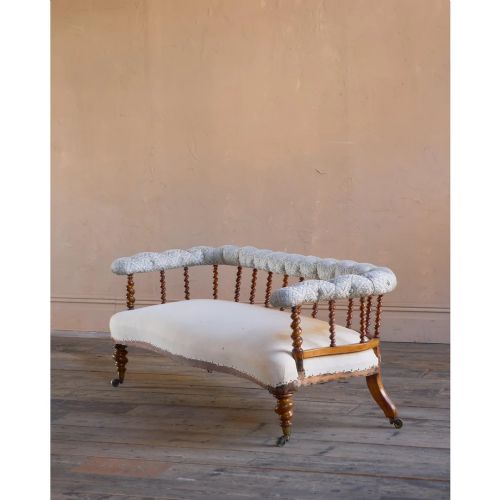
The evidence shows examples spanning from the mid-nineteenth century through to about nineteen-ten, drawing on Victorian and Edwardian traditions. Forms range from compact two-seater settees and drop arm sofas to expansive lounge suites and day beds.
Makers working within this period utilised mahogany, walnut, and rosewood for exposed frames, while retaining traditional sprung bases. Buyers frequently encounter versions covered in leather, velvet, fabric, or brocade, often featuring hand-carved details and brass accents.
How they were made
Makers constructed the primary frames of these sofas from solid hardwoods such as mahogany, walnut, and rosewood, ensuring structural integrity beneath heavy layers of padding. Exposed woodwork frequently featured hand-carved motifs or decorative inlay work.
Upholsters built the seating surfaces using traditional sprung bases combined with deep buttoning techniques to secure the internal stuffing. Outer coverings relied on durable materials including leather, velvet, fabric, and deep pile brocade, finished with brass details where appropriate.
Several pieces arrive ready for a completely new life, waiting patiently in workshops for someone to choose their next coat of leather.
What varies in quality
The standard of a piece rests on the integrity of its internal frame construction and the precision of the deep buttoning work. Original un-restored upholstery demonstrates the authentic ageing of leather and fabric, whereas re-upholstered examples depend entirely on the quality of the replacement textiles used.
Cabinetwork on exposed wooden frames reveals the skill of the workshop, particularly in carved walnut, mahogany, and rosewood elements. Pieces carrying documented attributions to notable makers command greater interest than anonymous workshop productions.
Howard and Sons·C. Hindley and Sons·Gillows·James Shoolbred
The Edwardian Button Back Sofa Glossary
- Chesterfield
- A large upholstered sofa characterised by arms and back of the same height, typically featuring deep buttoning. This form remains a staple of traditional British seating.
- Chaise Longue
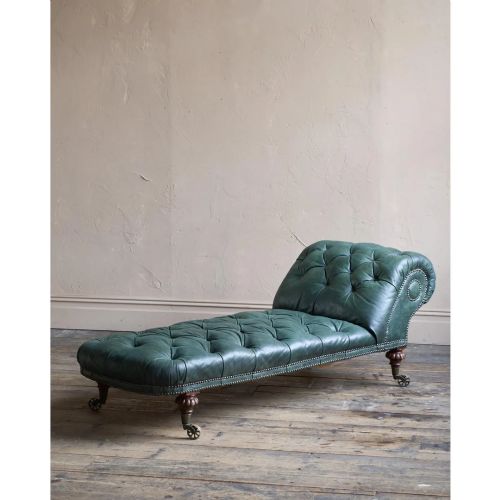
- An upholstered long chair or day bed designed for reclining, often featuring a single raised end. These pieces appear frequently in nineteenth-century drawing rooms.
- Button Back
- An upholstery style where buttons are pulled tight through the padding to create a uniform pattern of diamonds or squares. This technique secures the internal filling while providing firm support.
- Salon Suite
- A matched set of seating furniture, such as a sofa accompanied by matching armchairs, intended for formal entertaining. These suites utilise uniform wood frames and textiles.
- Drop Arm
- A sofa mechanism allowing one or both armrests to be lowered or adjusted. This feature provides versatility for resting or sleeping.
Edwardian Button Back Sofa: Frequently Asked Questions
How do I identify an Edwardian piece?
Look for lighter timber frames, refined proportions, and specific upholstery details that distinguish them from earlier nineteenth-century designs.
Comparison with documented pieces from around nineteen hundred helps confirm the period of manufacture.
Are these sofas suitable for daily use?
Traditional sprung bases and deep padding provide robust support for everyday seating in modern rooms.
Proper maintenance of the leather or fabric covering ensures the longevity of the upholstery.
What is a drop arm sofa?
A drop arm sofa includes a movable mechanism on one or both sides to lower the armrest.
This design allows the sofa to function as a day bed or day lounge.
How do leather and fabric finishes differ?
Leather options include hand-dyed finishes and original un-restored hides that develop a distinct patina over time.
Fabric choices range from velvet and brocade to heavy textile coverings suited to period salon suites.