
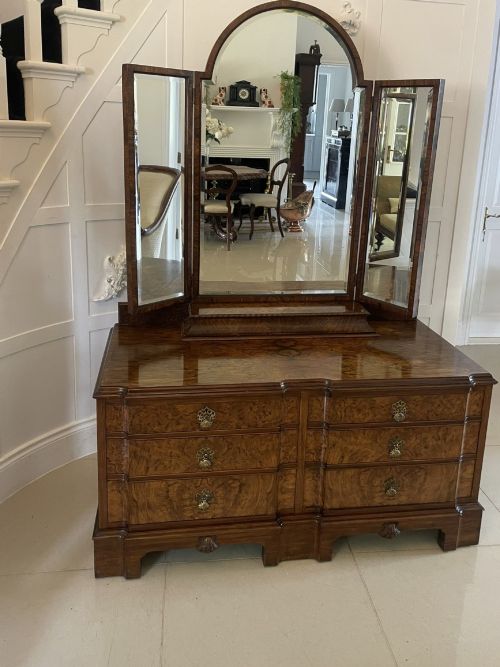


Edwardian Burr Walnut Mirror
These edwardian burr walnut mirror pieces bring tactile warmth and patterned grain to a room through centuries of English cabinet-making tradition.
Edwardian Burr Walnut Mirror
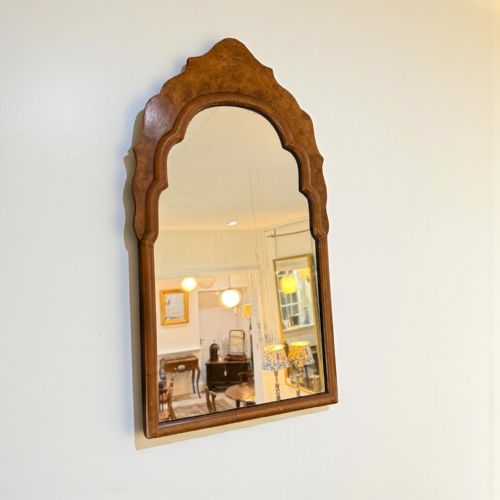
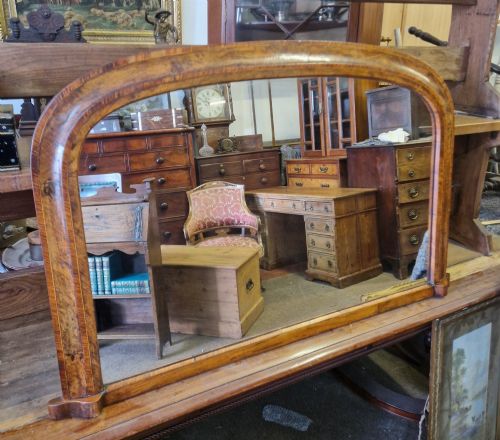
When you search for an edwardian burr walnut mirror, you encounter freestanding cheval glasses, dressing chest attachments, and wall-mounted glass frames. The archive shows that Edwardian examples often feature shaped crests and gilded carvings alongside the distinctive figured timber.
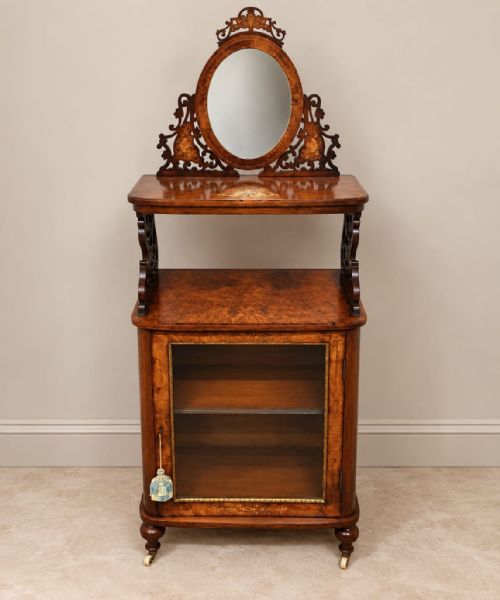
While the search names the Edwardian period, the wider selection spans Victorian, 19th Century, and 18th Century pieces, incorporating related forms like dressing tables, credenzas, and wardrobes that integrate mirror glass into burr walnut cabinetry.
The most frequent manifestations on this page combine mirror glass with walnut veneer, solid walnut framing, and decorative inlays, demonstrating how makers utilised timber with intense swirling patterns to catch the light.
Materials and construction methods
Cabinet-makers selected burr walnut for its mottled, knotty grain, slicing it into thin veneers that were laid over stable secondary woods on surfaces like dressing chests and credenza backs.
Glass plates were set into rebated frames, sometimes accompanied by applied brass hardware, ormolu mounts, and intricate marquetry inlays that punctuated the figured timber surfaces.
Carved wooden details and gilded accents frequently finished the borders of wall mirrors and cheval frames, contrasting sharply with the deep brown tones of the polished walnut.
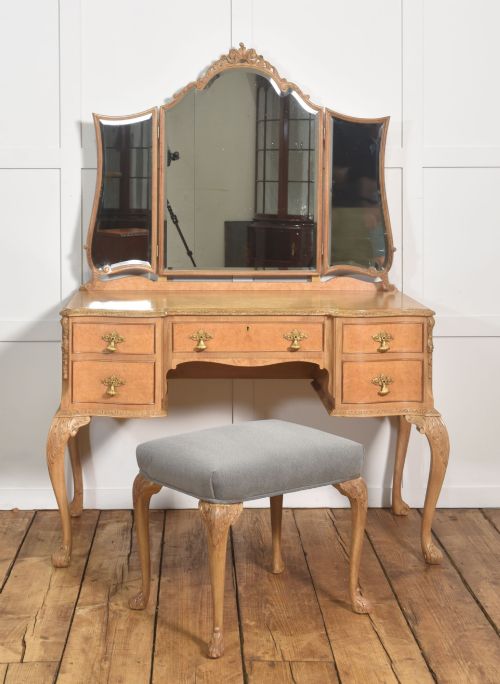
Some dressing chests arrived with triple mirrors so you could inspect your hat from angles the Victorians only ever imagined.
Distinctions in craftsmanship
The fidelity of the veneer matching across symmetrical door panels or mirror frames determines the visual harmony of a piece, separating standard production from exhibition pieces.
The depth and clarity of the original mercury or silvered mirror glass, alongside the crispness of any hand-carved gilded wood or marquetry inlay, signal the standard of the workshop.
Structural integrity relies on the stability of the primary walnut framing and the precision of the joinery connecting dressing mirror supports to the underlying chest or table.
Maurice Adams
The Edwardian Burr Walnut Mirror Glossary
- Burr walnut
- A prized timber harvested from the wart-like growths on walnut trees, yielding complex swirling grain patterns. It requires expert slicing into veneers to cover large furniture surfaces.
- Cheval mirror
- A full-length swing mirror supported by a freestanding frame with vertical pillars and stabilizing feet. They allow a complete view of attire in dressing rooms and bedrooms.
- Credenza
- A low cabinet, frequently fitted with mirror backs and glass doors in Victorian and later iterations. They served for display and storage in formal reception rooms.
- Marquetry
- The art of applying small pieces of veneer to a structure to form decorative patterns or pictures. Craftsmen used contrasting woods to create floral or geometric motifs.
- Ormolu
- Gilded bronze mounts applied to furniture edges and feet for decorative effect. This technique added metallic brilliance to dark walnut surfaces.
Edwardian Burr Walnut Mirror: Frequently Asked Questions
What is an edwardian burr walnut mirror?
These pieces comprise wall-hanging frames, dressing table attachments, and freestanding cheval glasses produced during the early twentieth century. They showcase the characteristic swirling, knotty grain of burr walnut timber.
Such items were designed to brighten domestic interiors by reflecting light while adding warmth and decorative presence to bedrooms and boudoirs through polished wooden surfaces.
How do I identify burr walnut?
Burr walnut is instantly recognised by its dense cluster of dark knots, swirls, and circular grain eyes within the rich brown wood. It differs from straight-grained walnut by offering a highly organic, abstract pattern.
In period pieces, this timber appears as a thin veneer applied carefully to flat surfaces like mirror frames, tabletops, and cabinet doors to create striking visual movement.
Where were these mirrors placed?
Wall-mounted versions typically hung above mantelpieces or console tables in principal reception rooms to bounce natural light around the space. Freestanding cheval mirrors and dressing chest variants occupied bedrooms and dressing rooms.
Their placement depended on the function of the furniture, combining utility with the decorative display of figured wood veneers and carved or gilded borders.
How do I care for my mirror?
Maintain the polished walnut surface by dusting with a soft, dry cloth and avoiding direct sunlight or excessive moisture. This protects both the delicate veneer and the wooden joints from warping.
Clean the mirror glass gently with a mild glass cleaner applied to a cloth rather than sprayed directly, preventing any liquid from seeping behind the frame into the backing.