


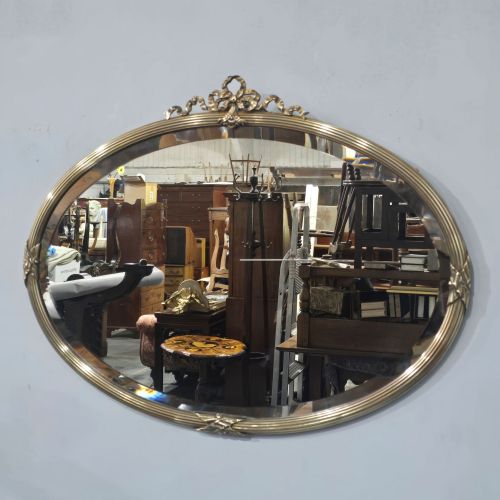


Edwardian Brass Wall Mirror
An edwardian brass wall mirror brings warmth and reflective light to an interior, combining metallic frames with period glass.
Edwardian Brass Wall Mirror
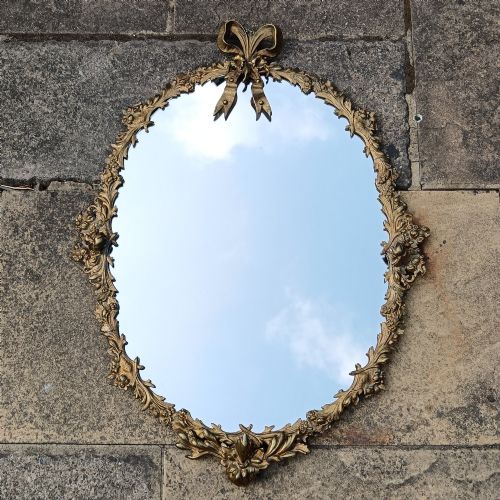
When you search for an edwardian brass wall mirror, you encounter hanging looking glasses framed in brass, often accompanied by wood, copper, or gilt bronze. These pieces range from plain metal borders to elaborate designs influenced by the Arts and Crafts movement.
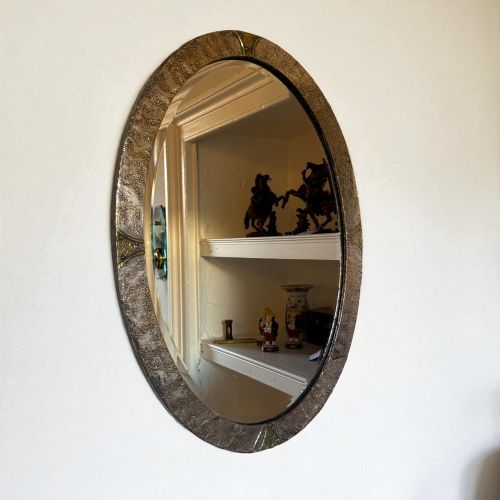
The versions most commonly met on this page include oval and rectangular wall mirrors, frequently featuring hand-embossed or repoussé metalwork. Many examples date from the late nineteenth century into the early decades of the twentieth century, aligning with Victorian, Edwardian, and Arts and Crafts aesthetics.
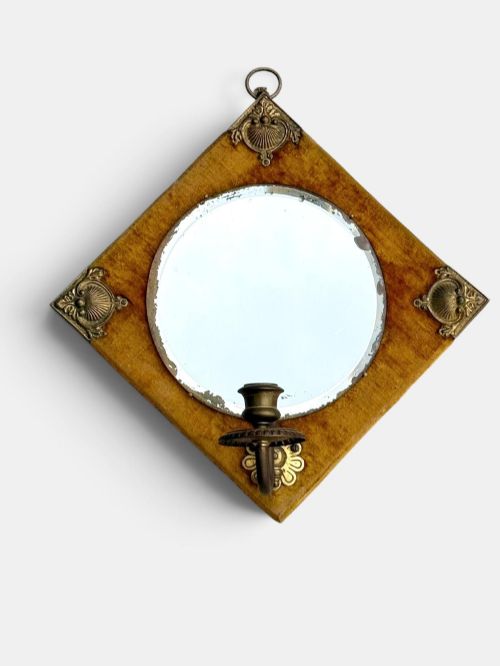
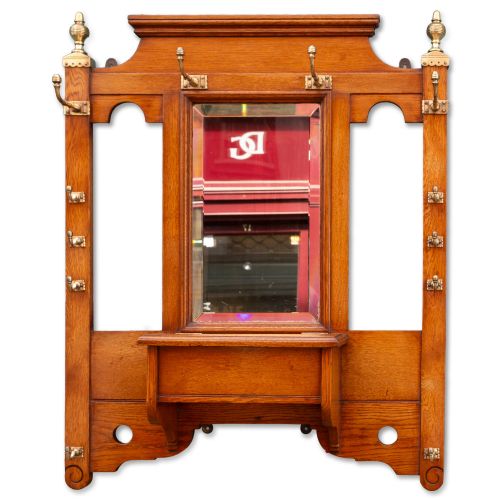
Beyond simple looking glasses, related wall pieces appear in the selection, including mirrored wall sconces and coat racks fitted with brass hooks. These domestic items served functional roles in hallways and reception rooms while adding decorative sheen to wall surfaces.
How they were made
Makers constructed these mirrors using sheet brass and cast metals, frequently mounted upon wooden carcasses of mahogany or oak. The reflective plates comprise mirror glass, sometimes cut with deep bevels or held within metal frames by brass clips and screws.
Decorative surfaces often display hand-worked details such as repoussé and embossing, techniques where artisans hammered sheet copper and brass from the reverse to raise patterns in relief. Other examples incorporate pierced edges, inlaid brass wire, or cast bronze mounts secured to wooden frames.
Edwardian Brass Wall Mirror Retail Price Guide 2026
Typical asking prices for edwardian brass wall mirror among the pieces listed under this phrase on Sellingantiques today, from the lower quarter to the upper quarter. They describe what is for sale here now, not the wider market.
Listings feature materials including glass, brass, wood, mahogany, copper, gilt bronze, and oak across various domestic forms.
What varies in quality
Quality in these mirrors rests upon the weight of the metal frame and the crispness of the hand-worked decoration. Heavy gauge brass and deeply chased repoussé work distinguish superior examples from lighter, stamped production pieces.
The preservation of the original mirror plate and the integrity of the wooden or metal backing further separate pieces within the range. Frames retaining untouched patination and secure structural joins demonstrate superior craftsmanship.
The Edwardian Brass Wall Mirror Glossary
- Repoussé
- Metalworking technique where the design is hammered into relief from the reverse side. This method appears frequently on Arts and Crafts frames.
- Bevel
- An angled edge cut around the perimeter of the mirror glass. It catches the light and adds depth to the reflection.
- Gilt bronze
- Bronze alloy treated with a gold-coloured finish or mercury gilding. It provides a rich metallic surface on revival frames.
- Girandole
- A branched wall-mounted candle sconce incorporating a mirror. The reflective glass serves to amplify the candlelight in a room.
- Overmantle
- A large mirror designed to hang specifically above a fireplace mantelpiece. These pieces often feature wide frames suited to prominent interior positions.
Edwardian Brass Wall Mirror: Frequently Asked Questions
How do I date an edwardian brass wall mirror?
Dating relies upon examining construction methods, backboards, and stylistic cues such as Arts and Crafts motifs or Louis XVI revival details. Fasteners like old screws and the composition of the mirror plate also provide clues to the era of manufacture.
Period labels in the evidence point towards the late nineteenth century and the early decades of the twentieth century. Comparing the brass gauge and framing style against known pieces helps narrow down the decade.
Where should I hang a brass wall mirror?
These mirrors suit hallways, reception rooms, and spaces above mantelpieces where they can bounce natural or artificial light around the room. Smaller oval or rectangular formats fit narrow wall spaces between doors or windows.
Consider the weight of the piece, especially those with solid brass frames or wooden backings, and use appropriate wall fixings. Placing them opposite a light source maximises their brightness in darker interiors.
How do I clean an antique brass frame?
Maintenance requires gentle dusting with a soft cloth to prevent dirt accumulation on the metal and glass surfaces. Avoid abrasive polishes that strip away the aged patination accumulated over decades.
If cleaning the glass, apply glass cleaner directly to the cloth rather than the mirror to prevent moisture seeping behind the plate or into the wooden backing.
What styles are common in these mirrors?
Arts and Crafts designs dominate the selection, often featuring hand-embossed copper and brass elements with nature-inspired motifs. Other pieces draw upon Neoclassical, Louis XVI, and Chinoiserie revivals.
Simple Victorian oval brass frames and mahogany combinations with integrated hooks also appear frequently. Each style reflects the interior tastes of the late nineteenth and early twentieth centuries.