





Edwardian Brass Wall Lights
Edwardian brass wall lights bring period warmth and proportion to a hallway or drawing room.
What edwardian brass wall lights are
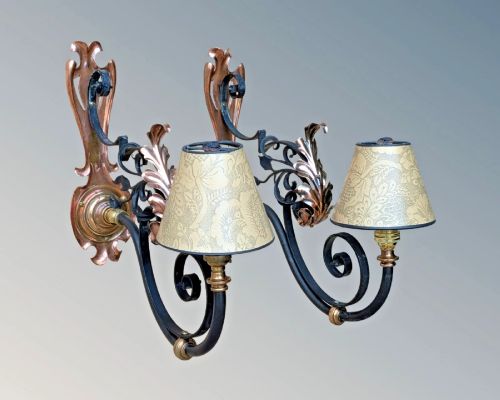
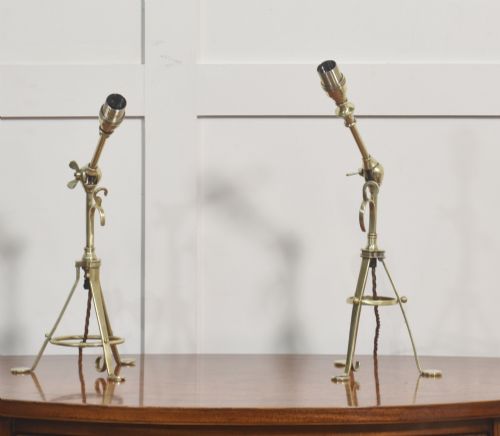
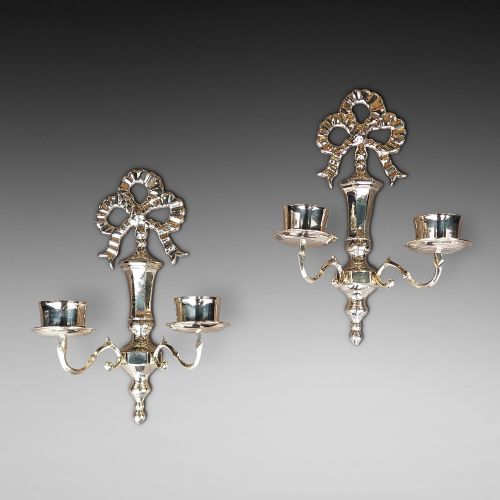
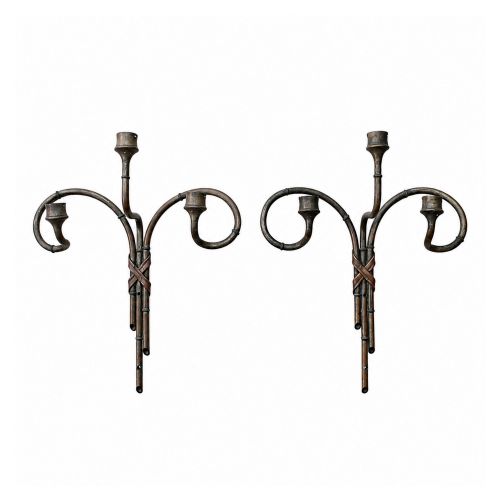
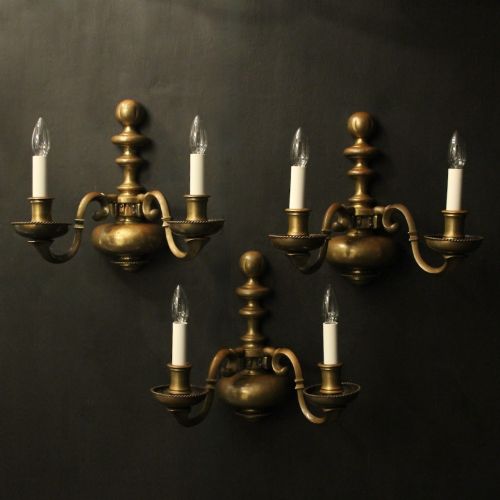
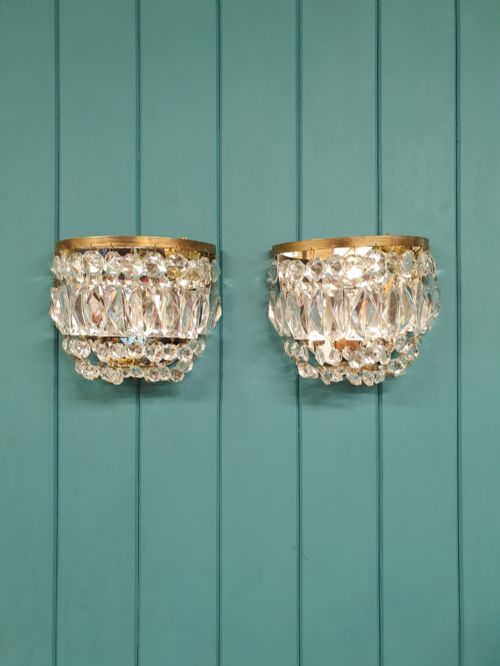
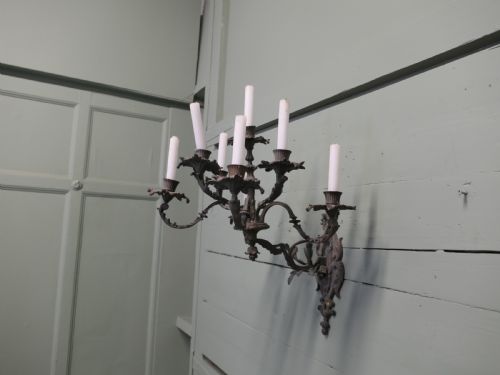
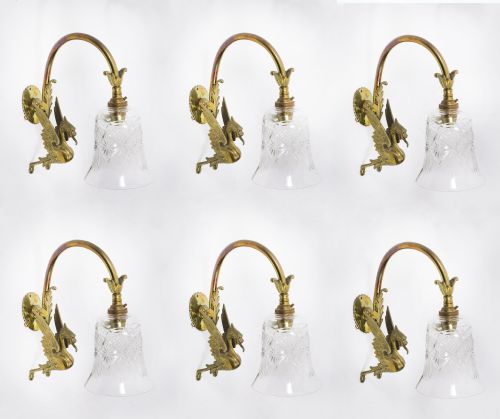
Edwardian brass wall lights encompass matching pairs and small sets designed to mount directly onto interior walls for ambient illumination. These fixtures appear across several related periods in the record, including Victorian, 1900, 19th century, 1890, and Edwardian eras, reflecting overlapping design influences from the turn of the twentieth century. The forms range from simple single-arm brackets to multi-branch sconces, often associated with Adam Revival and Art Nouveau stylistic details.
Most pieces encountered in this selection survive in matched pairs or small groups rather than as isolated singles, making them practical for flanking a mirror or fireplace. The physical configuration varies from straightforward two-branch twins to elaborate three-branch and triple-arm gasolier conversions. Buyers frequently find examples fitted with glass shades or cut glass elements that soften the direct output of the bulbs.
How they were made
Makers utilised cast and sheet brass alongside patinated brass, gilt brass, and ormolu finishes to construct these wall brackets. The structural elements rely on traditional metalworking methods, producing robust backplates and sweeping arms that could support the weight of multiple candle sockets or gas burners.
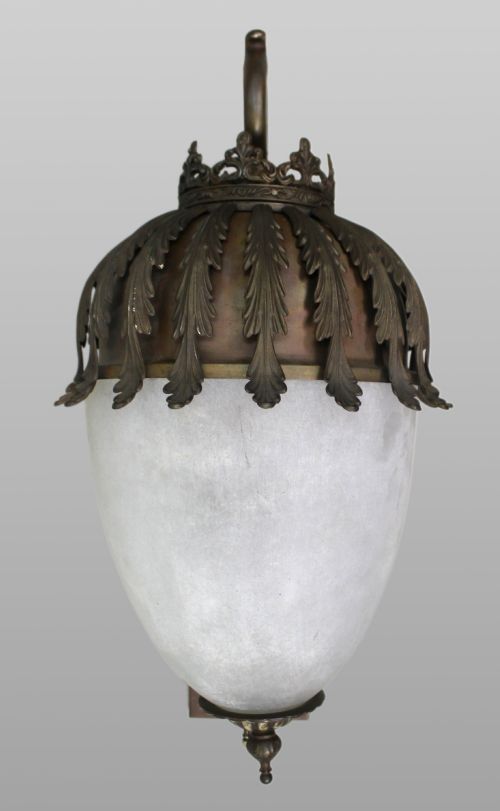
Component parts often include decorative glass shades or cut glass prisms that integrate into the metal framework. Many surviving pieces show evidence of period adaptation, having been converted from original gas fittings or early lighting systems to accommodate modern electrical wiring.
Retail Price Guide 2026
Typical UK retail prices for edwardian brass wall lights, calculated from the Sellingantiques database of over a million retail prices indexed since 2003. This retail price guide relies exclusively on Sellingantiques data; no external sources or auction records are used, so the figures do not describe the wider market.
The recorded material palette spans standard brass, patinated brass, gilt brass, ormolu, and integrated glass elements.
What varies in quality
Distinctions in quality often rest on the crispness of the casting and the depth of the original metal finish, whether patinated, gilt, or ormolu. Finer examples display cleanly defined ornamentation in Adam Revival or Art Nouveau styles rather than softened surface detail.
The architectural weight of the backplate and the structural integrity of the multi-branch arms separate standard utility pieces from more substantial decorative wall lights.
The Edwardian Brass Wall Lights Glossary
- Wall sconce
- A lighting fixture fixed to a wall that projects outward to hold candles, gas burners, or electric lamps. These fittings often serve a decorative role while providing localized illumination.
- Adam Revival
- A neoclassical style inspired by eighteenth-century architects that emphasises symmetry, delicate swags, and classical urn motifs. This aesthetic heavily influences many Edwardian brass wall fixtures.
- Art Nouveau
- A design movement characterised by flowing, organic lines and floral motifs that gained prominence around eighteen-ninety. Pieces in this style abandon strict symmetry in favour of naturalistic curves.
- Gasolier
- A multi-branched lighting fixture originally designed to burn coal gas before domestic electricity became standard. Surviving examples frequently show later conversion work to house electrical components.
Frequently Asked Questions
How do I install antique wall lights safely?
Most antique brass wall fixtures require mounting to a standard wall junction box by a qualified electrician.
Wiring must be checked or renewed to meet current safety standards, particularly on pieces that have undergone previous conversions from gas.
Are these lights supplied with glass shades?
Some surviving examples retain their period glass shades or cut glass elements, while others are designed for bare bulbs.
Listings specify whether glass components are included with the metal brackets.
Can I use modern bulbs in these fittings?
Standard modern lamp holders and low-wattage LED bulbs fit most converted fixtures once the internal wiring is updated.
Consulting a professional ensures the historical sockets match contemporary electrical loads.
How do I distinguish Edwardian from Victorian brass lights?
Edwardian designs generally favour lighter proportions and refined neoclassical revival motifs compared to heavier Victorian counterparts.
Stylistic crossover remains common because production dates often blur across the turn of the century.