





Edwardian Brass Desk Tidy
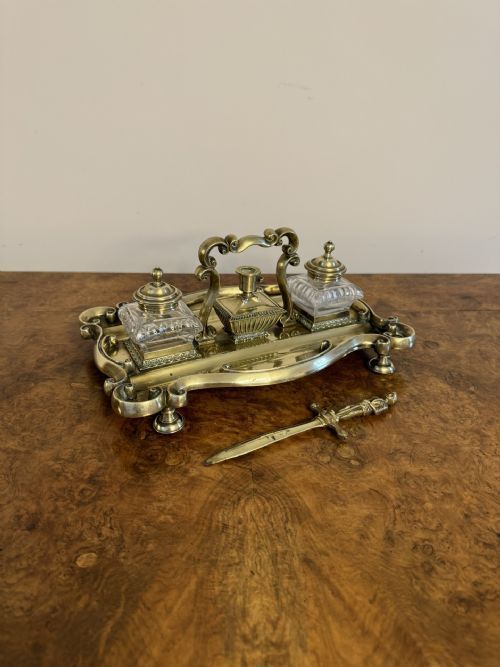
These edwardian brass desk tidy pieces are sturdy desktop organisers and inkstands designed to keep correspondence and writing implements in order.
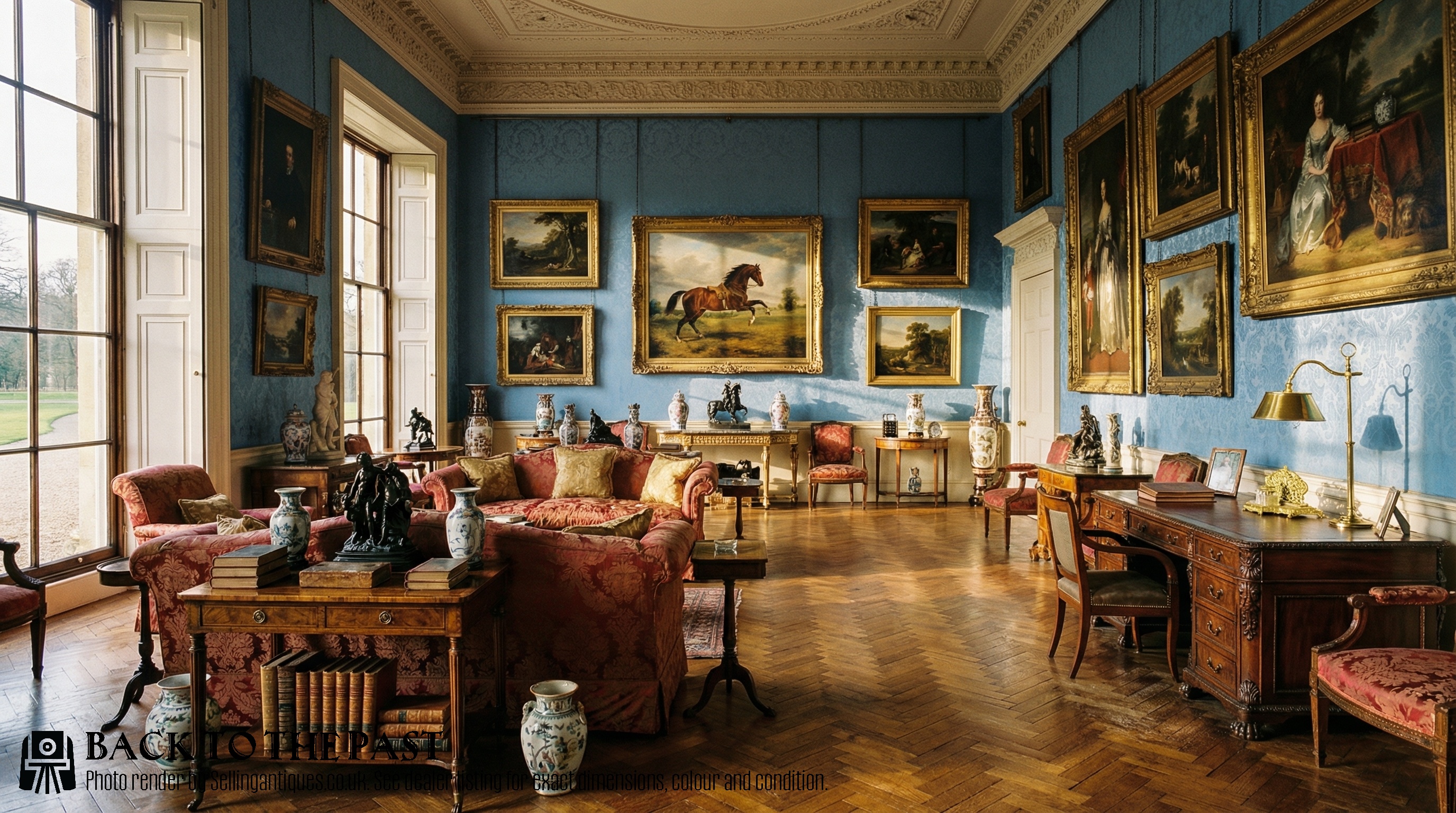
Edwardian Brass Desk Tidy
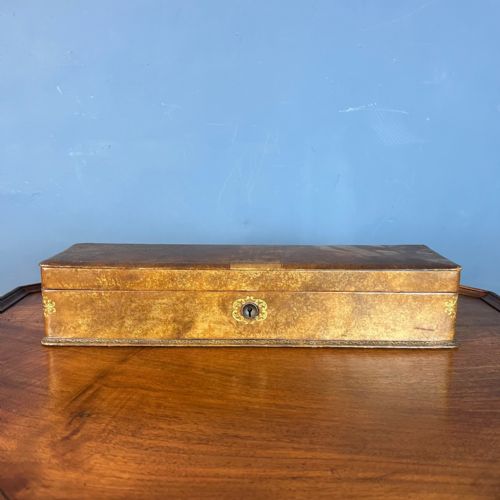
An edwardian brass desk tidy generally takes the form of an inkstand, letter box, stationery box, or desk set. These accessories were produced in large numbers during the Victorian and Edwardian periods for domestic and office use.
Most examples combine solid brass with heavy timbers such as oak, mahogany, or walnut, frequently incorporating cut glass ink pots and leather trim. The selection on this page spans late nineteenth century pieces through to early twentieth century productions.
Materials and Construction
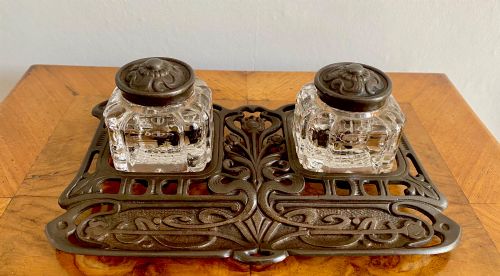
Makers utilised cast and sheet brass alongside dense hardwoods like oak, walnut, and coromandel to build durable desk equipment. Metal components were often shaped with ornate openwork or chased decoration reflecting Art Nouveau and Arts and Crafts tastes.
Fitted interiors commonly included glass ink bottles with brass collars, leather surfaces, and dedicated compartments for pens, stamps, and envelopes. Joinery on wooden boxes relied on solid plank construction and brass corner banding.
Listings feature items from the Victorian and Edwardian eras, spanning the late nineteenth century into the early decades of the twentieth century.
Quality and Finish
Superior examples distinguish themselves through heavier gauge brass castings, crisper chasing, and the retention of original matching glass ink wells. Finer pieces employ superior timbers such as burr walnut or coromandel rather than standard oak.
The presence of functioning locks, clean tooled leather inserts, and integrated drawers separates elaborate country house companions from simpler utilitarian desk stands.
The Edwardian Brass Desk Tidy Glossary
- Standish
- A tray or stand designed to hold inkwells, pens, and sanders on a desk. This term is frequently used interchangeably with a desk tidy or inkstand.
- Fall front
- A hinged door or panel on a box that drops open to reveal internal letter slots and stationery compartments. It is commonly found on Edwardian stationery boxes.
- Art Nouveau
- A decorative style characterised by sinuous plant-inspired lines and asymmetric motifs. It appears frequently on brass and copper desk accessories from around nineteen hundred.
- Gilded bronze
- Metalwork coated with a thin layer of gold for decorative effect. This finish is seen on figural inkwells from the period.
- Book slide
- An expanding desktop rack designed to hold a small row of books upright. Examples are constructed from hardwoods with metal mounts.
Edwardian Brass Desk Tidy: Frequently Asked Questions
What is an edwardian brass desk tidy?
An edwardian brass desk tidy is a functional desktop accessory intended to hold writing instruments, ink, and stationery. These pieces combine metalwork with wooden frames to organise correspondence.
They were standard fixtures on writing desks in homes and offices during the early twentieth century. Today they serve as both decorative items and practical desk organisers.
How were desk tidies used?
These items held ink bottles, pens, blotters, and letters close at hand for daily correspondence. Compartments kept envelopes and writing paper sorted before the advent of modern office supplies.
Larger versions included drawers for stamps and sealing wax, while letter boxes secured incoming post until it was read.
How do I clean brass desk accessories?
Cleaning depends on the desired appearance and the age of the metal surface. Many collectors prefer to leave an aged patina rather than polishing brass to a bright shine.
If cleaning is necessary, use a soft cloth and avoid abrasive compounds that can wear away fine chasing or damage surrounding wood and leather.
Are ink bottles usually original?
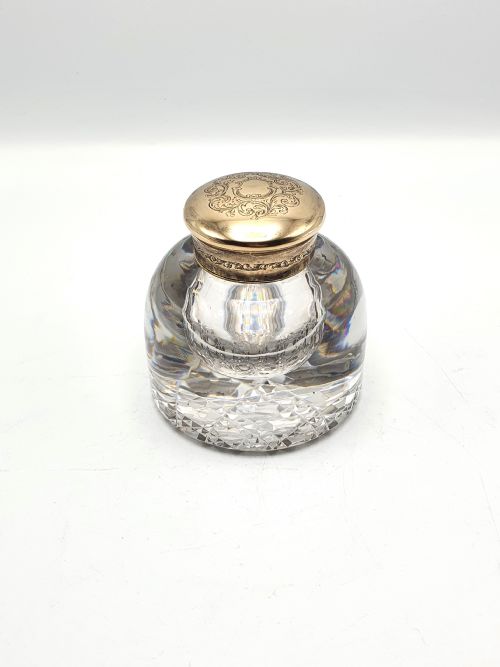
Many surviving desk sets retain their original cut glass ink pots, often fitted with hinged brass collars. Because glass inserts were easily broken or lost, replacements are common.
Matching glass bottles with correct dimensions and period characteristics add considerably to the completeness of an inkstand.
What woods were used for desk tidies?
Makers constructed these pieces using durable hardwoods such as oak, mahogany, and walnut. More ornate stationery boxes sometimes featured decorative veneers like coromandel or burr walnut.
These timbers were selected for their strength and stability when fitted with heavy brass hardware and metal hinges.