

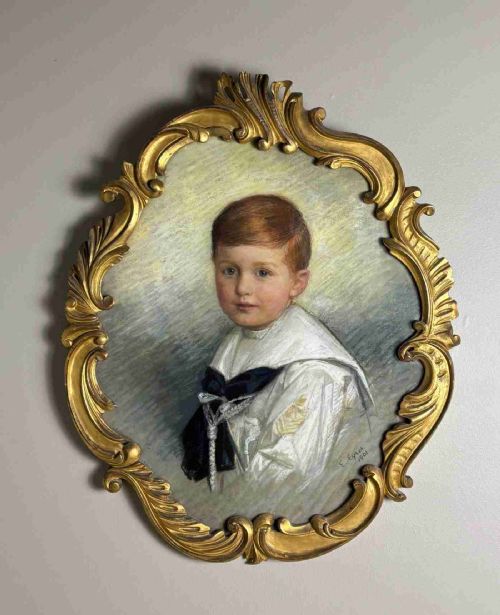
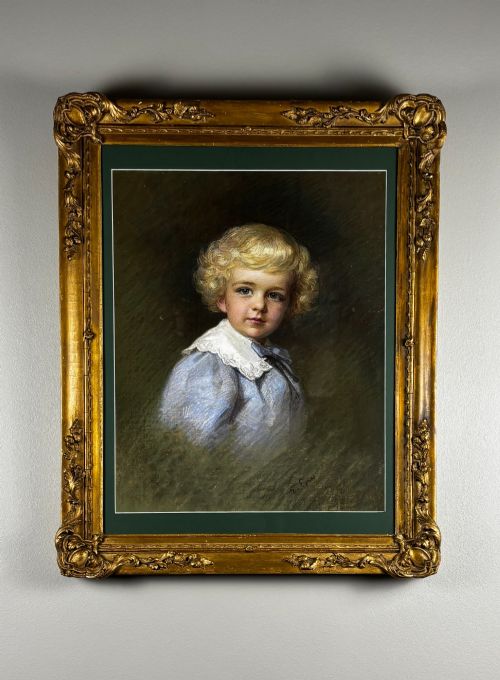
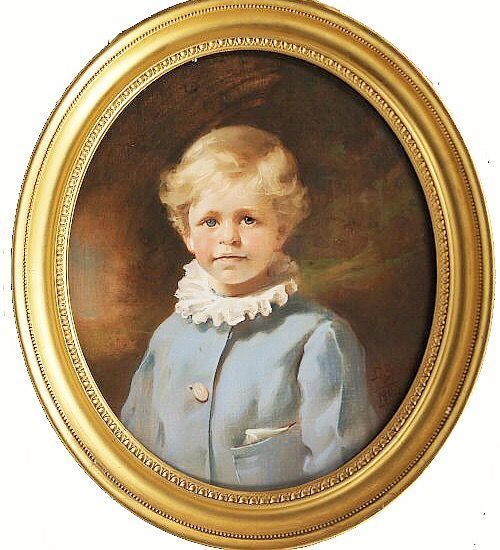
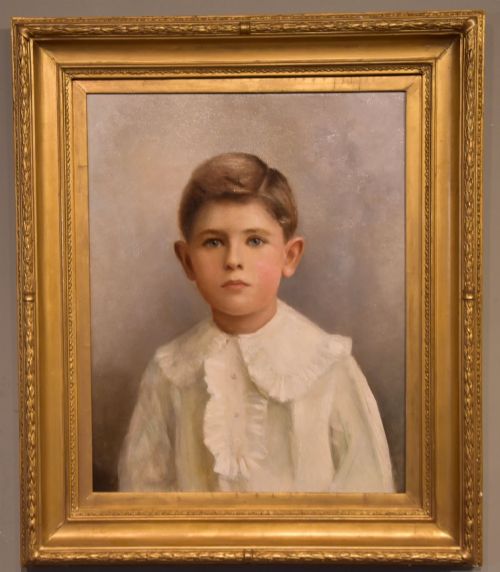




Edwardian Boy Painting
These edwardian boy painting works capture youth and character through traditional portraiture, offering buyers a genuine piece of historical portrait art.
Edwardian Boy Painting
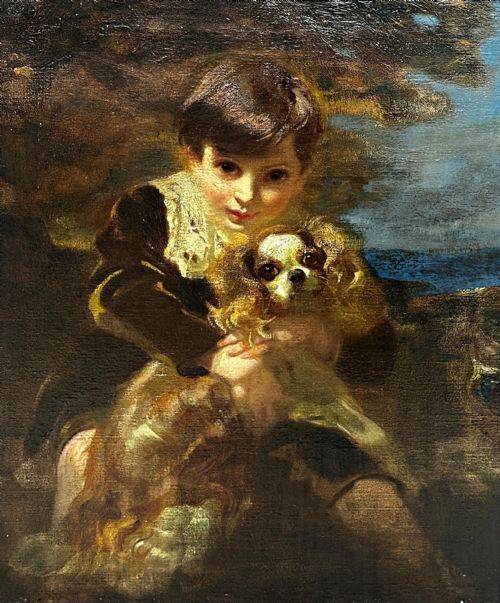
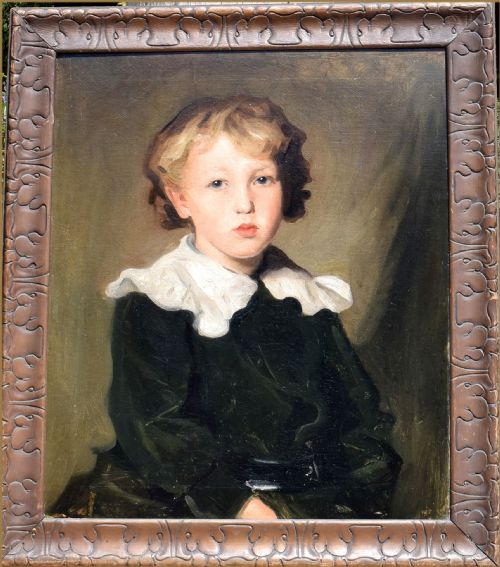
When you search for an edwardian boy painting, you encounter a selection of framed portraits and fine art originating from the Edwardian period and adjacent early decades. These works primarily depict young subjects in formal or domestic settings, reflecting the artistic conventions of the early twentieth century.
The pieces you are most likely to meet on this page include oil paintings on canvas and delicate pastel portraits on paper, often preserved beneath glass in gilt wood frames. Alongside these paintings, the category occasionally encompasses related figurative works such as cast iron garden statues and bisque figures.
Materials and Technique
Artists of the period utilised oil paint on canvas to build rich, textured surfaces that captured light and shadow across the subject's face and clothing. Alternatively, pastel on paper allowed for softer gradations of tone, producing intimate and immediate portrayals of young sitters.
Framing played a vital role in presentation, with many works housed in giltwood or gilt wood frames that complemented the tonal qualities of the artwork. Three-dimensional representations were similarly executed in durable cast iron or delicate bisque, demonstrating the era's diverse sculptural methods.
Edwardian Boy Painting Retail Price Guide 2026
Typical asking prices for edwardian boy painting among the pieces listed under this phrase on Sellingantiques today, from the lower quarter to the upper quarter. They describe what is for sale here now, not the wider market.
The listings span the Edwardian era, 1900, 1910, 1920, and the wider nineteenth century.
Distinctions in Quality
Quality in these portraits rests upon the artist's ability to render individual expression and anatomical proportion with convincing realism. Works attributed to established practitioners display a superior handling of light, fabric texture, and psychological depth compared to anonymous commercial productions.
The preservation of the primary medium, whether oil or pastel, and the originality of the accompanying giltwood frame significantly influence the standing of a piece. Finer examples maintain their original canvas tension and surface stability, showing minimal intervention over the decades.
Leon Sprinck·Henry Windsor Fry·Emily Eyres·Herbert Butler·Frank Owen Salisbury·William Orpen·Sir James Guthrie
The Edwardian Boy Painting Glossary
- Pastel
- A dry drawing medium composed of powdered pigment and a binder, shaped into sticks. Pastels produce velvety surfaces with vibrant colour that require glass protection.
- Giltwood
- Wood that has been coated with a thin layer of gold leaf or gilt powder. It provides ornate framing for traditional portraits.
- Bisque
- Unglazed porcelain fired at a high temperature to produce a matte, biscuit-like texture. It was frequently used for Victorian and Edwardian figurines.
- Realism
- An artistic movement focused on depicting subjects truthfully without artificiality. Edwardian Realism emphasises naturalistic observation in portraiture.
Edwardian Boy Painting: Frequently Asked Questions
How do I date an edwardian boy painting?
Dating relies on stylistic clues, costume details, and framing methods typical of the early twentieth century. Documentation or signatures inscribed on the canvas reverse also help establish the chronology.
Paintings from this era often bridge Victorian sensibilities and Edwardian realism, making the specific rendering of clothing and hair crucial indicators of the exact decade.
Are pastels as durable as oil paintings?
Pastels require permanent protection beneath glass because the dry pigment sits loosely on the paper support. Without this barrier, the delicate surface is easily disturbed by touch or moisture.
Oil paintings on canvas offer greater physical resilience, though they still benefit from stable environmental conditions to prevent cracking in the paint layer.
How should I display a framed portrait?
Position the artwork away from direct sunlight and excessive humidity to protect both the canvas and the giltwood frame from degradation. Stable indoor temperatures preserve the integrity of the materials.
Ensure the wall fixings adequately support the weight of the frame, particularly for larger oil paintings on canvas.
What is the difference between oil and pastel portraits?
Oil paintings utilise suspended pigments in drying oil, creating a rich, buildable surface that can be varnished for protection. Pastels use dry pigment sticks on paper, yielding a matte and direct finish.
Both mediums were popular during the Edwardian era, offering distinctly different visual textures for portraiture.