

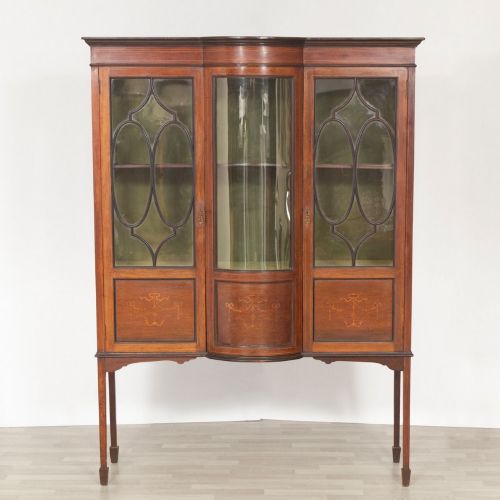


Edwardian Bowfront Vitrine
An edwardian bowfront vitrine brings curved glass and refined display space into a room, offering a bright home for porcelain and silver.
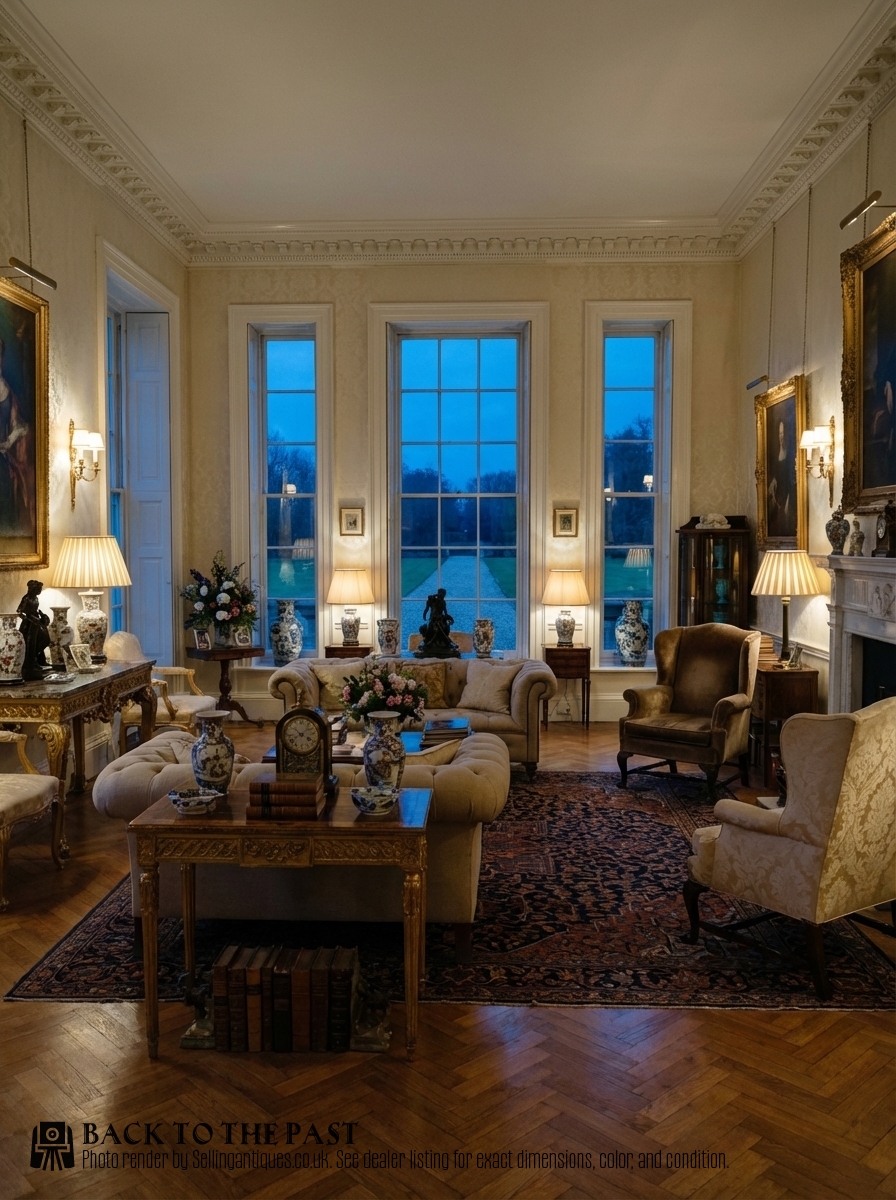
Edwardian Bowfront Vitrine
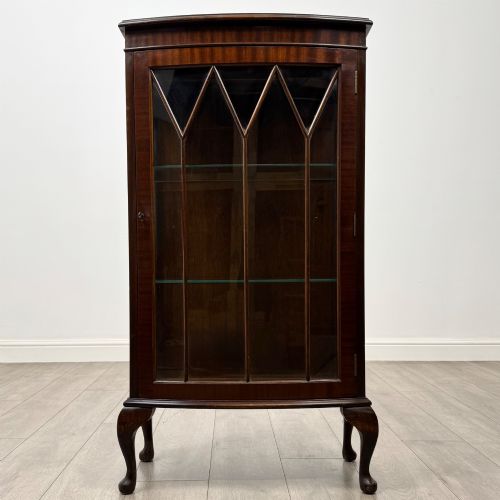
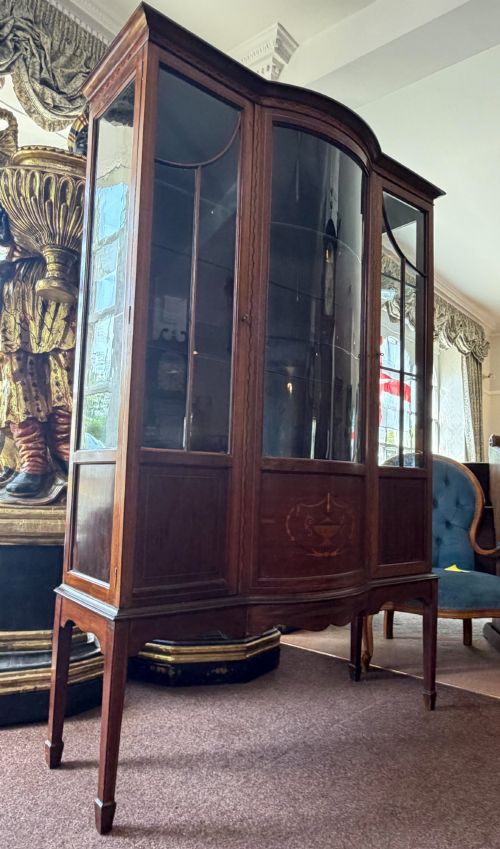
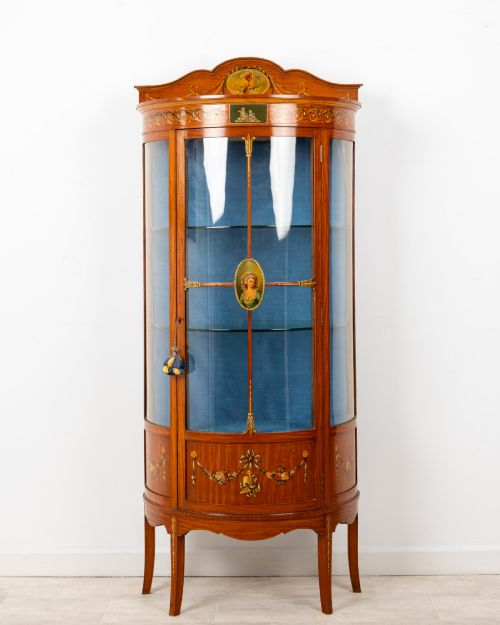
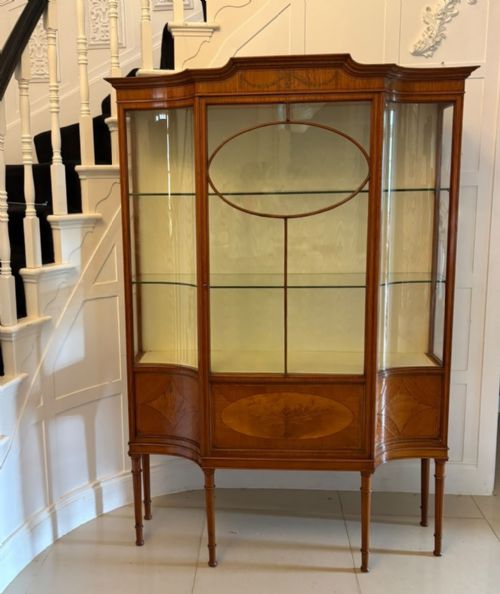
An edwardian bowfront vitrine is a glazed display cabinet designed to showcase fine objects with a curved front profile that catches the light from multiple angles. These pieces primarily date from the Edwardian era and the late nineteenth century, reflecting the revival of Georgian tastes through Sheraton and neoclassical influences.
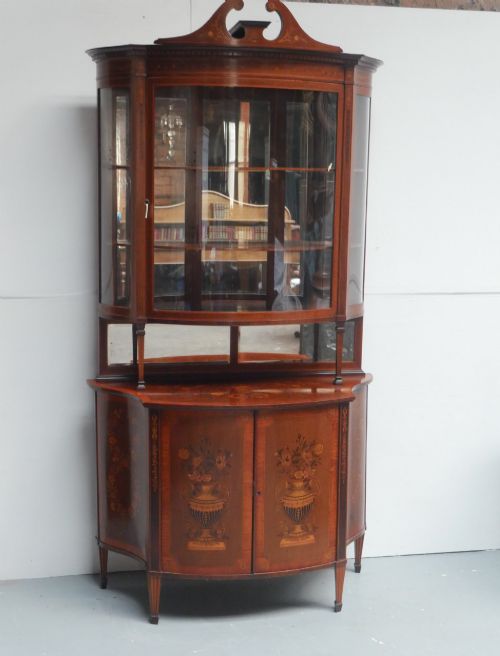
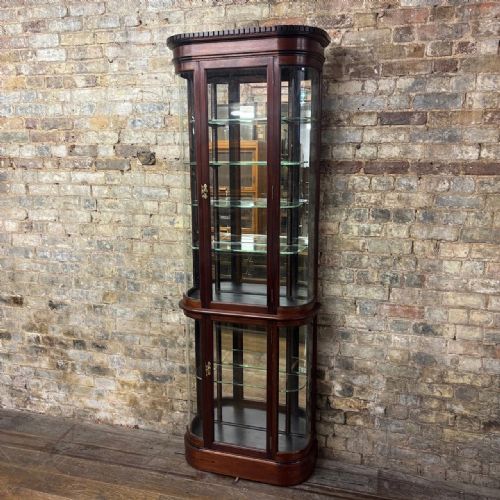
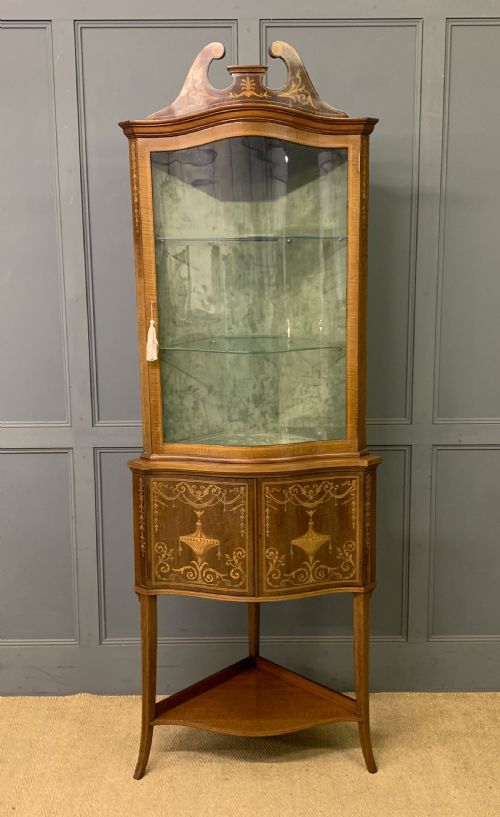
The form appears in various configurations on this page, ranging from single-door freestanding cabinets to larger two-part units and corner placements. Makers of the period utilised mahogany and satinwood as a primary carcase material, shaping the timber to form the distinctive bowed facade.
Interiors often feature fabric linings and mirrored backs to enhance the visibility of displayed items, whilst glazed doors protect collections from dust. The style bridges practical storage with ornamental elegance, suiting both traditional drawing rooms and contemporary interiors.
How they were made
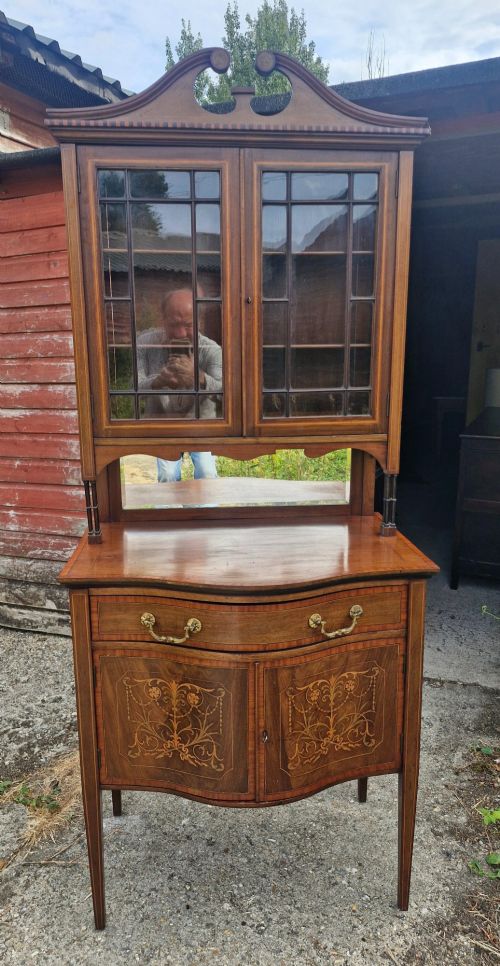
Cabinet makers built these vitrines using solid and veneered timbers such as mahogany and satinwood, applying intricate marquetry and contrasting wood inlays to decorate the surfaces. Skilled craftsmen bent glass panes to create the characteristic curved doors, mounting them into rebated wooden frames with brass hinges and locks.
Surface decoration frequently included painted floral motifs, delicate stringing, and mother of pearl accents set flush into the wood. Interior components incorporated mirrored panels and fabric-covered shelving platforms designed to support lighter decorative wares.
Edwardian Bowfront Vitrine Retail Price Guide 2026
Typical asking prices for edwardian bowfront vitrine among the pieces listed under this phrase on Sellingantiques today, from the lower quarter to the upper quarter. They describe what is for sale here now, not the wider market.
Mother of pearl makes occasional clandestine appearances, winking quietly from inside the floral marquetry.
What varies in quality
The distinction between standard production pieces and finer examples lies in the crispness of the marquetry, the choice of timber figure, and the subtlety of painted details. Superior cabinets display tight, hand-cut inlay work and select cuts of mahogany or satinwood with rich natural grain.
Construction methods also define grade, notably the use of curved glass rather than segmented flat panes, and the integration of substantial brass hardware. Finer pieces demonstrate careful attention to internal finishes, including high-grade mirrored glass and well-fitted timber joints.
Edwards and Roberts
The Edwardian Bowfront Vitrine Glossary
- Vitrine
- A glass-fronted display cabinet used for showing porcelain, curiosities, and small precious objects. The term derives from the French word for glass.
- Bowfront
- A convex curved cabinet front that projects outward in a smooth arc. This shape requires specialised glazing and curved woodwork.
- Marquetry
- Decorative woodwork where pieces of various coloured veneers are fitted into a design on a timber base. It often depicts floral or neoclassical patterns.
- Satinwood
- A lustrous, yellow-toned timber imported from the tropics, used extensively in fine cabinet making for banding and veneers. It provides a bright contrast to darker woods like mahogany.
- Sheraton Revival
- A design movement drawing inspiration from the late eighteenth-century furniture maker George Sheraton. It relies on light proportions, classical ornament, and balanced inlays.
Edwardian Bowfront Vitrine: Frequently Asked Questions
How do I care for the wood on an antique cabinet?
Maintain the timber surfaces by dusting with a soft, dry cloth and avoiding placement near direct heat sources or strong sunlight.
Apply a traditional beeswax polish occasionally to nourish the grain without building up heavy chemical layers.
Were these cabinets meant for corner placement?
Certain variations are built specifically as corner cabinets with angled backs designed to fit neatly into room junctions.
Most bowfront examples are freestanding pieces intended to stand flat against a primary wall.
How can I distinguish an original Edwardian piece from a later revival?
Examine the timber shrinkage, secondary woods used in the interior carcase, and the hand-cut nature of the dovetails and joints.
Original pieces show period-appropriate hardware fixings and natural ageing patterns in the glass and polish.