

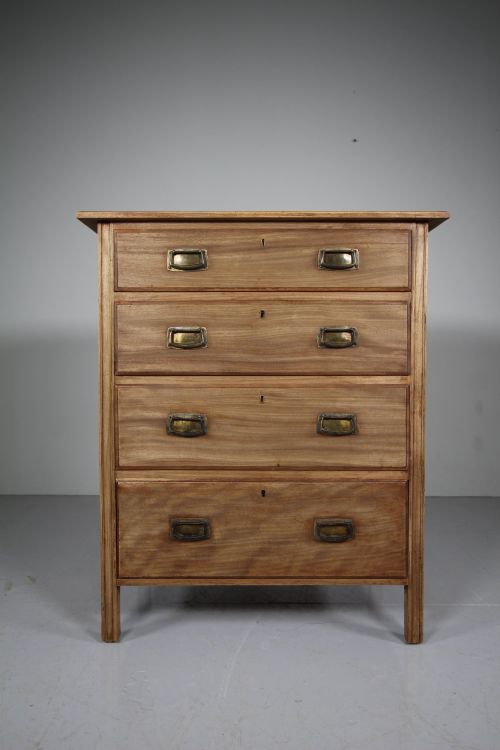
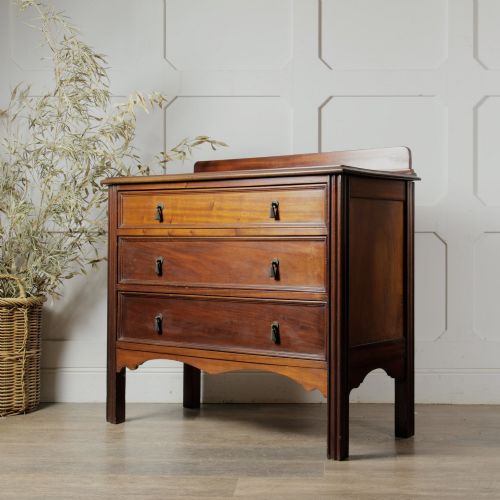
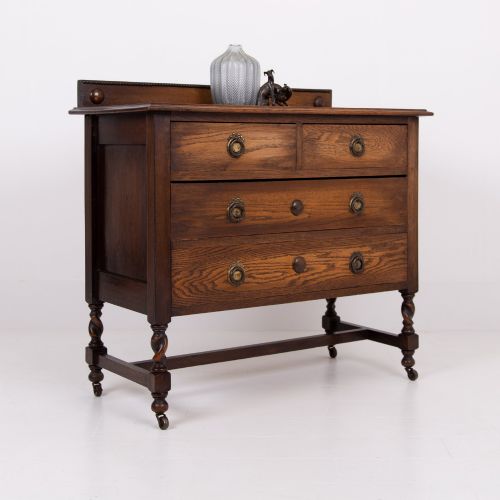
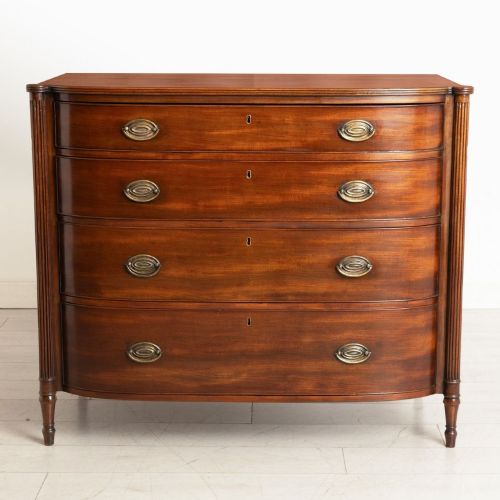
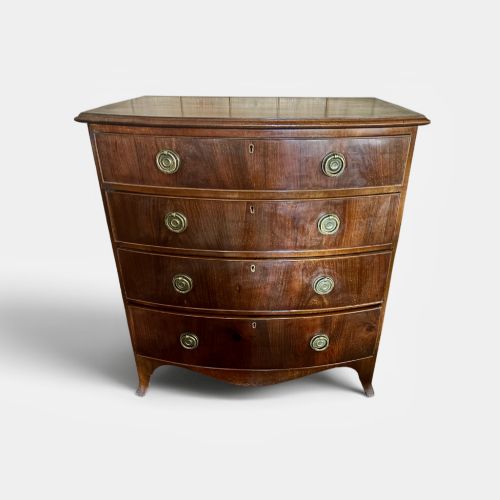
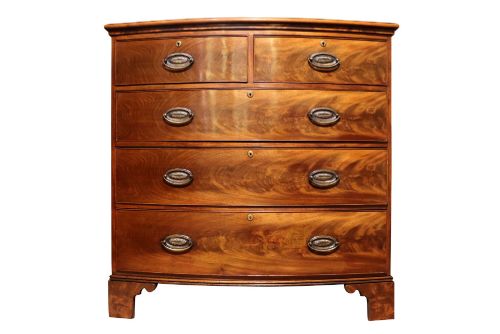
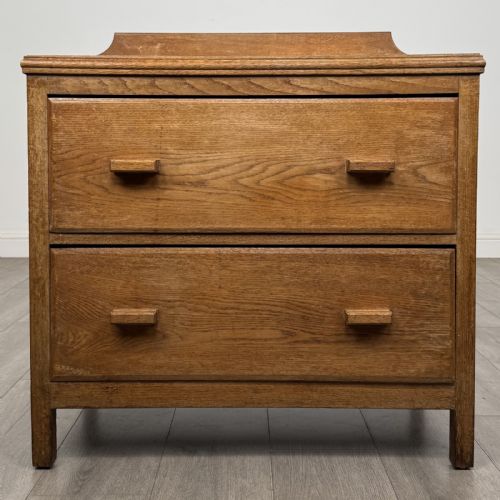
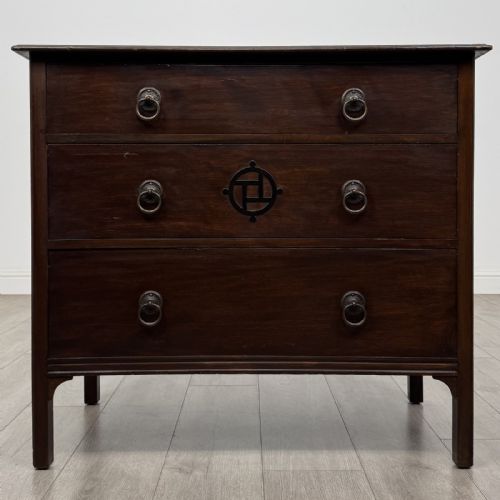
Edwardian Bedroom Dresser
An edwardian bedroom dresser brings practical storage and refined period joinery to a room, offering enduring utility for the home.
Edwardian Bedroom Dresser
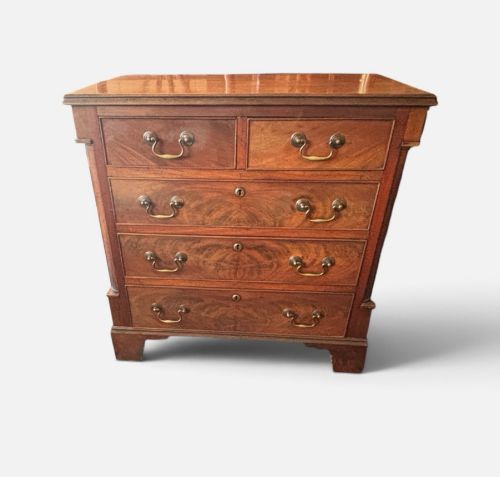
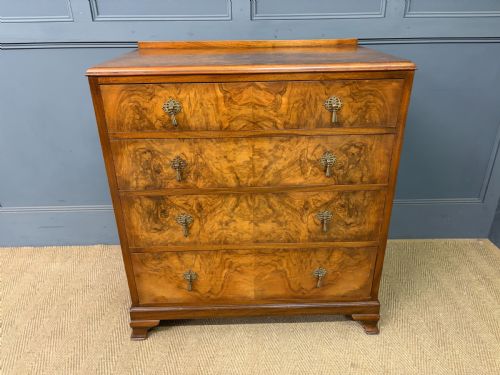
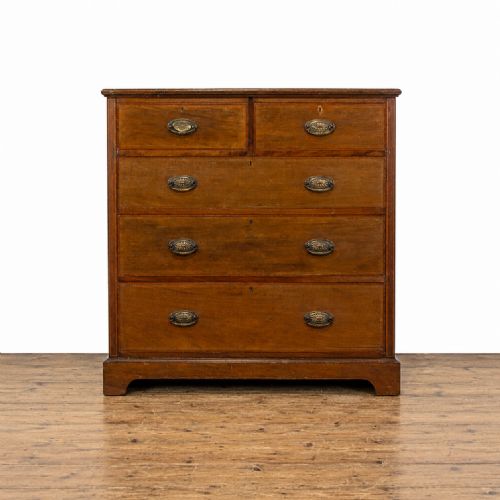
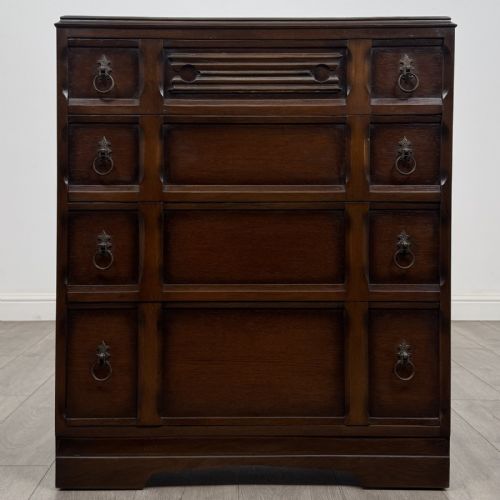
An edwardian bedroom dresser encompasses chests of drawers, dressing tables, and tallboys originating from the Edwardian period and adjacent years. These pieces provide functional storage through configurations such as two-over-three drawer layouts and raised galleries.
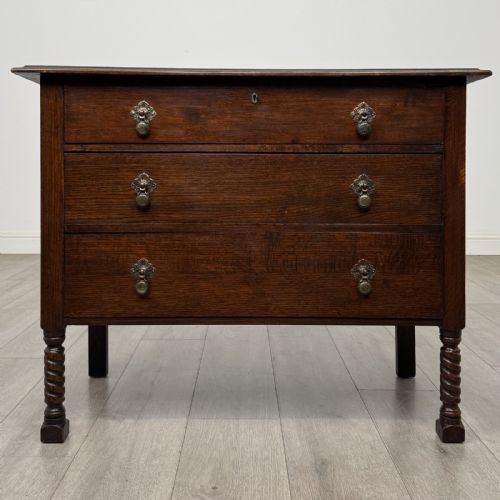
The materials and styles span from solid oak and figured mahogany to walnut, incorporating influences ranging from Arts and Crafts simplicity to Regency and Jacobean revivals. Buyers encounter compact proportions alongside larger scaled pieces suited to period interiors.
Materials and Construction
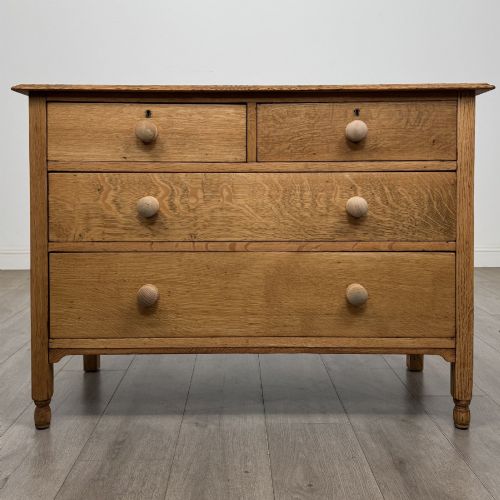
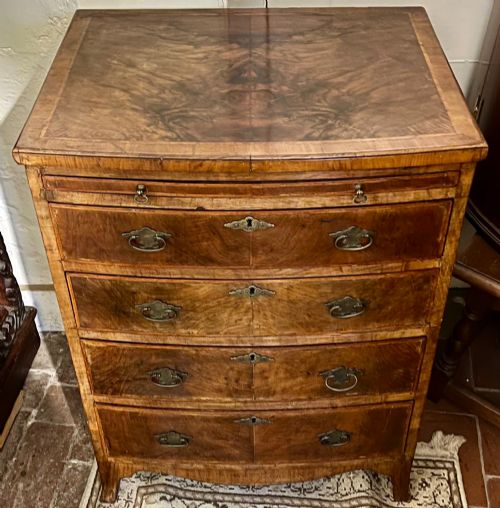
Makers utilised timber such as mahogany, oak, and walnut, often applying cross-banding, satinwood inlay, or burr walnut veneers to create visual depth on drawer fronts. Quarter sawn oak surfaces reveal distinctive medullary rays resulting from specific sawing techniques.
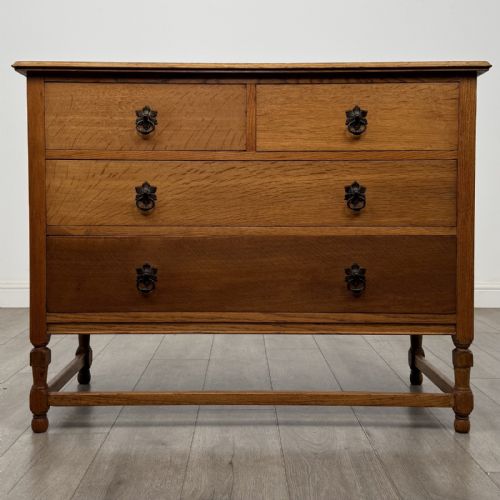
Hardware details include original brass handles, drop ring pulls, and acorn drop handles fixed to drawer frames built with traditional joinery. Structural elements like turned legs, barley twist supports, and raised galleries add distinct decorative accents.
Edwardian Bedroom Dresser Retail Price Guide 2026
Typical asking prices for edwardian bedroom dresser among the pieces listed under this phrase on Sellingantiques today, from the lower quarter to the upper quarter. They describe what is for sale here now, not the wider market.
Listings feature oak, mahogany, walnut, and satinwood, spanning the Edwardian era, Victorian period, and Arts and Crafts movement.
The Spectrum of Quality
Superior examples demonstrate meticulous timber selection, evidenced by figured mahogany and burr walnut with matching grain patterns across multiple drawer fronts. Cabinetry bearing documented maker attributions or stamps exhibits higher grade secondary woods and finer dovetail work.
Subtleties in finish, such as intact original brass hardware and crisp carving on drawer edges or gallery upstands, separate standard utility items from finer workshop output.
Heals·Waring and Gillow·Whytock and Reid·Sir Clough Williams-Ellis·Jas Shoolbred·Howard and Sons
The Edwardian Bedroom Dresser Glossary
- Bow-fronted
- A convex curved chest front that projects outward in the centre. This shape requires specialised joinery to bend or shape the timber and drawers accurately.
- Quarter sawn
- Timber cut radially toward the centre of the log. This method produces stable boards with prominent grain figuring known as medullary rays.
- Gallery
- A low raised railing or decorative upstand along the top rear edge of a piece. It prevents items from sliding off the surface.
- Cross-banding
- A decorative border of veneer laid with the grain running perpendicular to the surrounding wood. It creates a contrasting frame around drawer fronts.
- Tallboy
- A tall storage unit comprising a chest of drawers stacked vertically, sometimes featuring a cupboard or hidden compartment. This form maximises vertical storage space in a bedroom.
Edwardian Bedroom Dresser: Frequently Asked Questions
What defines an edwardian bedroom dresser?
These items primarily consist of wooden chests of drawers and dressing tables produced during the early twentieth century. They emphasise practical storage through varied drawer arrangements and timber surfaces.
Craftsmanship from this era blends traditional cabinet making with decorative revivals, resulting in pieces that range from plain oak utility to figured mahogany with inlaid details.
How should I care for timber surfaces?
Maintain the wood by keeping the piece away from direct heat sources and dramatic humidity fluctuations. Regular dusting with a dry cloth preserves the finish.
Apply traditional beeswax periodically to nourish the timber and protect the polished surface without creating heavy build-up.
Where were these pieces used?
They served as essential bedroom furniture for storing clothing, linens, and personal items. Dressing chests provided surface space for mirrors and grooming accessories.
Their robust construction made them suitable for daily domestic use across Edwardian households.