



Edwardian Bathroom Stand
An Edwardian bathroom stand is a sturdy wooden washstand or towel rail designed to hold basins and linens in period bedrooms.
Edwardian Bathroom Stand
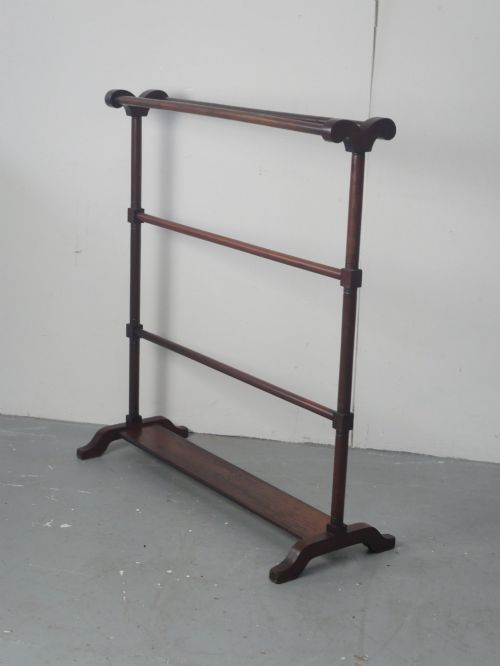
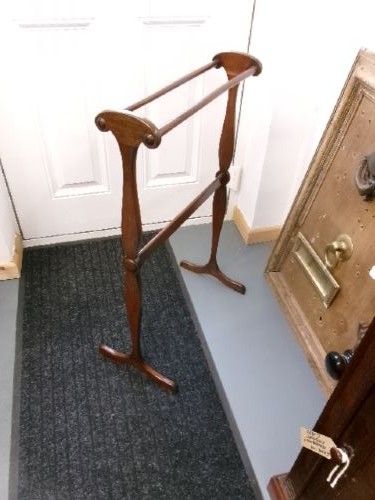
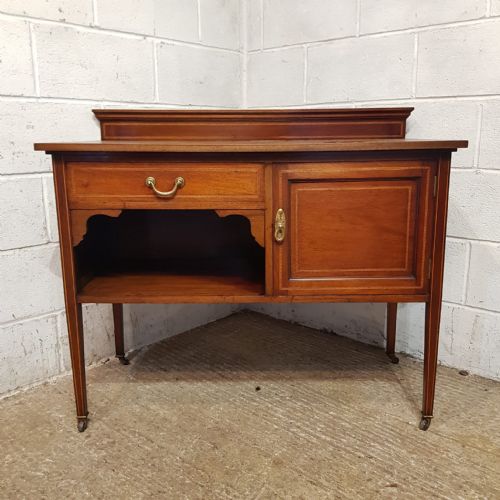
An Edwardian bathroom stand encompasses both timber washstands and standing towel rails produced around the turn of the twentieth century. These practical furnishings served washbasins and towels before plumbed bathrooms became standard in domestic bedrooms.
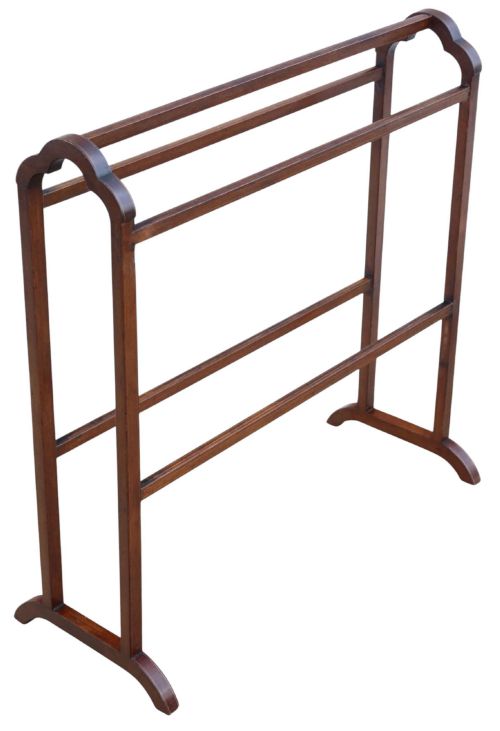
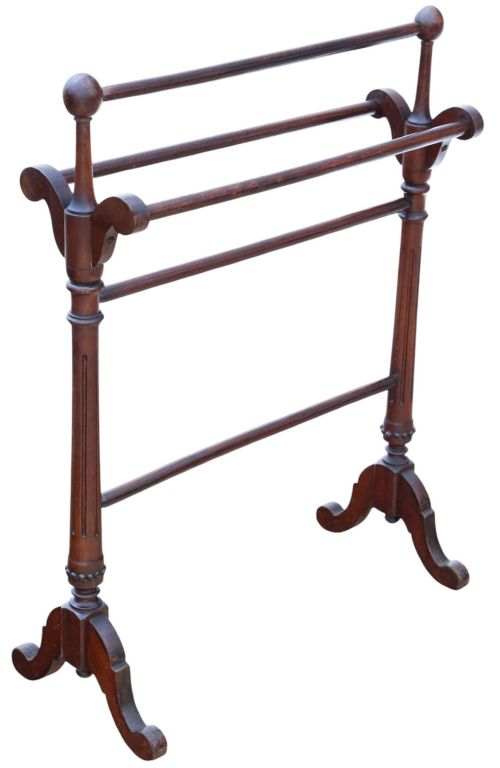
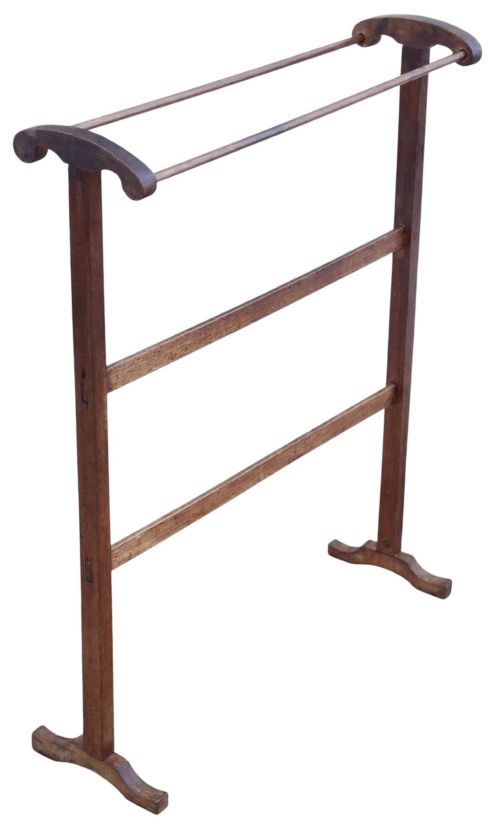
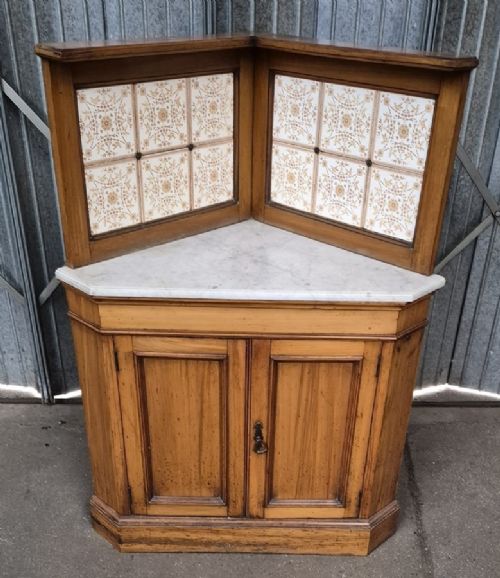
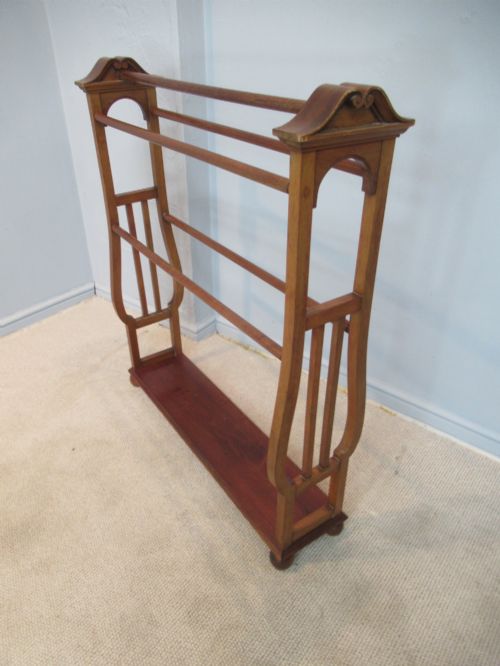
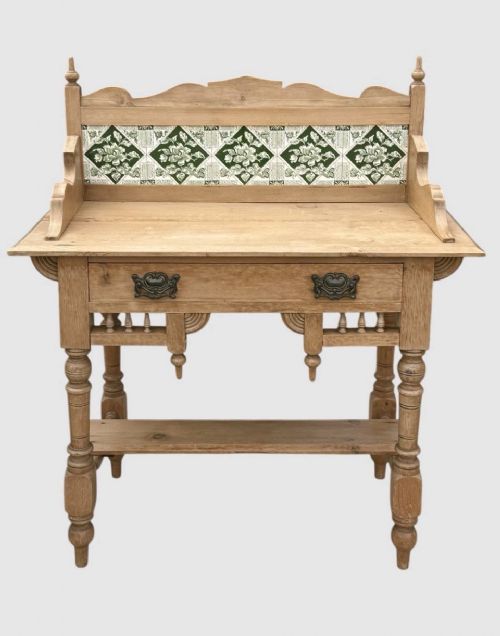
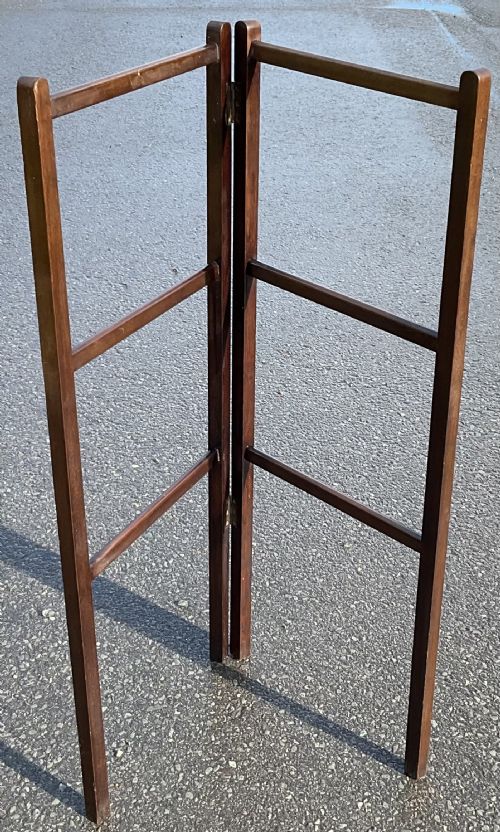
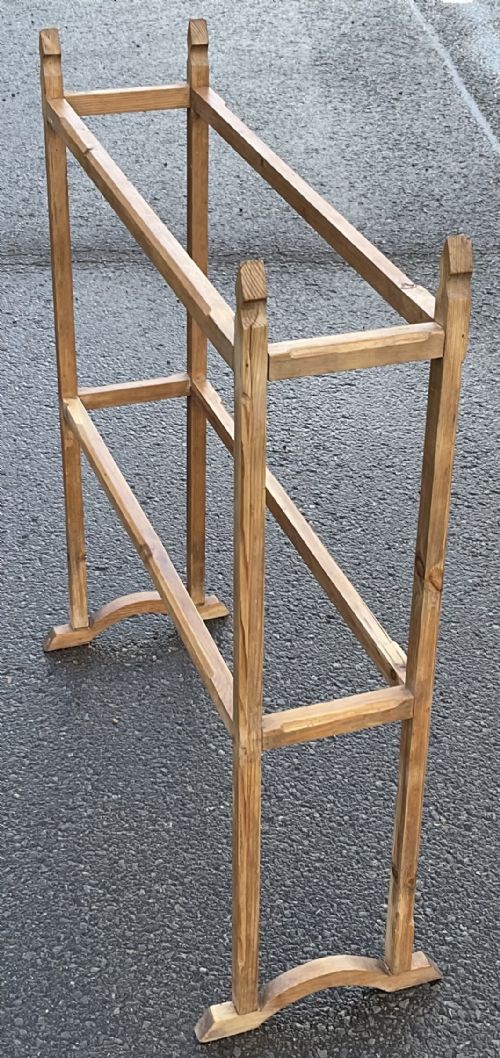
The pieces seen on this page divide into two main forms: substantial marble-topped washstands fitted with ceramic tiles or basins, and standing towel rails featuring multiple wooden bars. Mahogany and pine dominate the selection, spanning simple folding designs and larger Arts and Crafts furniture.
While the label points to the Edwardian era, surviving examples frequently cross over into Victorian periods and incorporate earlier styles such as Sheraton Revival and Regency. Buyers encounter everything from compact pine units to grand walnut and inlaid mahogany pieces.
Materials and construction methods
Carpenters built these stands using hardwoods such as mahogany, walnut, oak, and satinwood alongside softer timbers like pine. Many pieces feature fine satinwood or boxwood inlay work, brass fittings, and turned wooden supports.
Washstands frequently incorporate heavy marble slabs and ceramic tiles designed to withstand water splashes during daily washing. Towel rails utilise sturdy mortise and tenon joints to support multiple hanging bars without wobbling under damp linens.
Several stands come equipped with five separate rails, proving that our ancestors took their morning towel arrangements remarkably seriously.
Distinctions in quality and execution
Quality rests on the selection of timber and the precision of the joinery rather than mere size. Superior washstands display carefully matched marble tops, intact ceramic tiles, and crisp wood inlay, whereas utilitarian pieces rely on plain painted or polished pine.
Finer towel rails feature robust multi-bar frames with secure turning and stable feet, avoiding the looseness found in heavily worn examples. The presence of named makers or distinctive Arts and Crafts detailing elevates certain pieces above standard bedroom furniture.
Gillows·Walker and Sons
The Edwardian Bathroom Stand Glossary
- Washstand
- A piece of bedroom furniture designed to hold a basin, jug, and washing accessories. These often feature marble tops and tiled splashbacks.
- Towel rail
- A wooden frame with horizontal bars for hanging and drying towels. Edwardian versions range from simple two-bar stands to large five-bar configurations.
- Inlay
- A decorative technique where contrasting strips of wood like satinwood are fitted flush into the primary timber surface. This adds subtle geometric or floral patterns.
- Arts and Crafts
- A design movement prioritising traditional craftsmanship and simple, honest construction over mass-produced ornamentation. Oak is frequently used in these pieces.
- Marble top
- A polished stone slab fitted to the surface of a washstand to provide a waterproof working area. These slabs vary in colour from white to grey and mottled green.
Edwardian Bathroom Stand: Frequently Asked Questions
What is an Edwardian bathroom stand?
An Edwardian bathroom stand is a piece of wooden bedroom furniture, such as a washstand or towel rail, made around the early twentieth century.
These items were designed to hold washbasins, pitchers, and linens before modern indoor plumbing was common in every room.
How do I clean a marble top washstand?
Wipe the marble surface regularly with a soft damp cloth and mild, pH-neutral soap.
Avoid harsh acidic cleaners or vinegar, which can etch and dull the polished stone finish over time.
Can I use these stands in a modern bathroom?
Yes, many people place antique towel rails and marble-topped washstands in modern bathrooms to hold fresh towels and toiletries.
Ensure the wood is protected from standing water and excessive steam to preserve the vintage finish.
How do I tell Victorian from Edwardian stands?
Victorian pieces often display heavier, darker timbers and more ornate carvings or turned details.
Edwardian stands tend to exhibit lighter mahogany, simpler lines, and influences from the Arts and Crafts movement.