
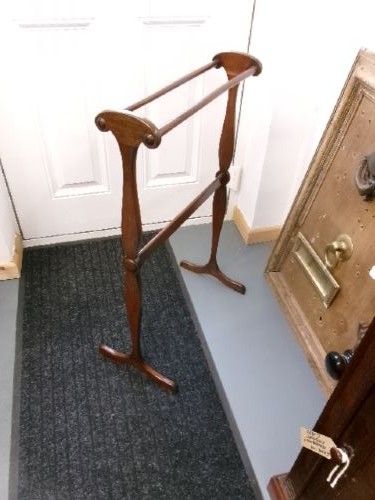
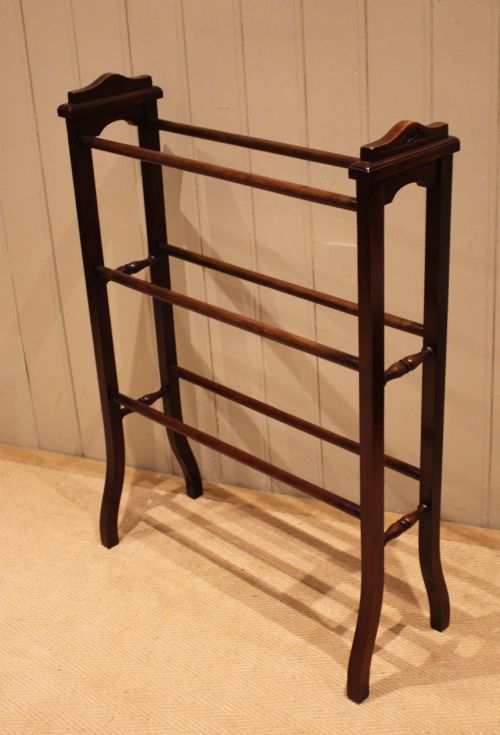
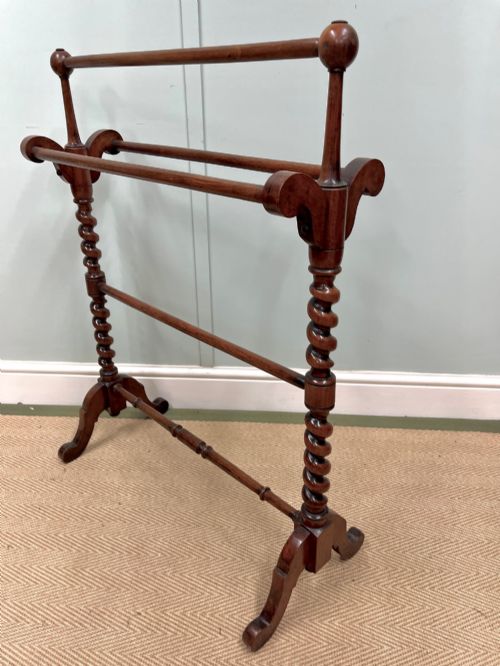
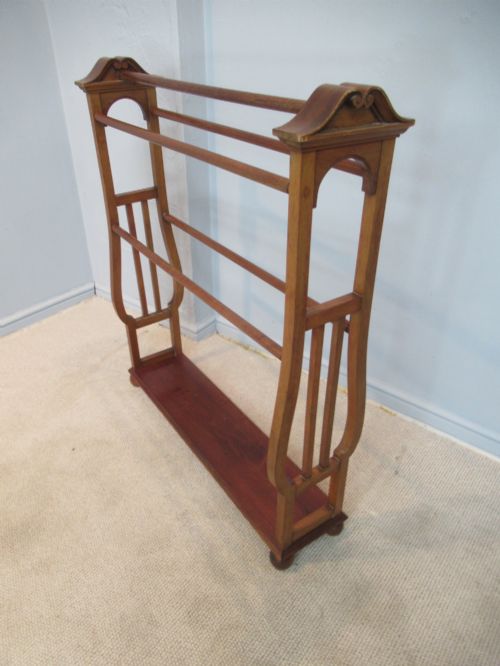



Vintage Clothes Airer
A vintage clothes airer provides sturdy, practical drying space while bringing traditional character into utility rooms and bathrooms.
Vintage Clothes Airer
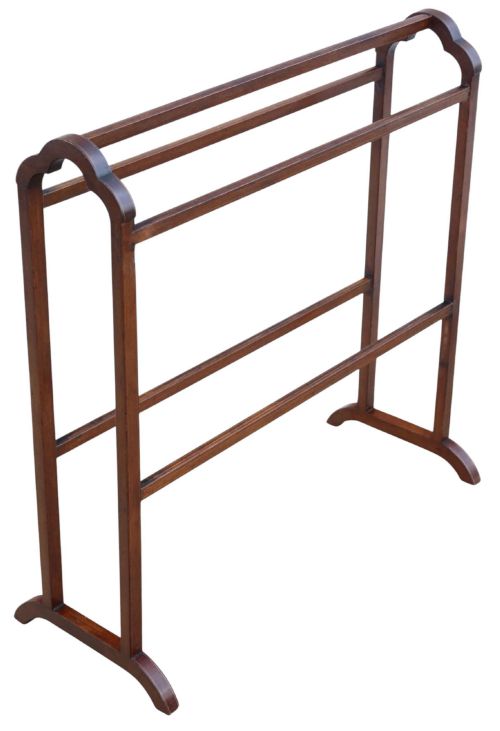
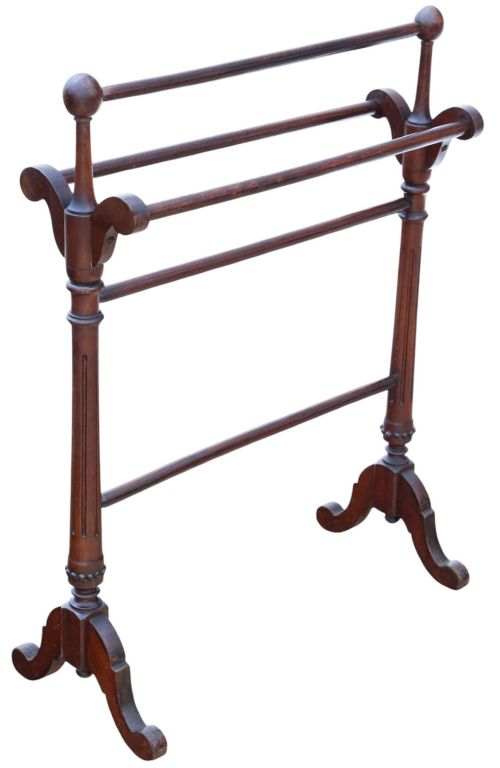
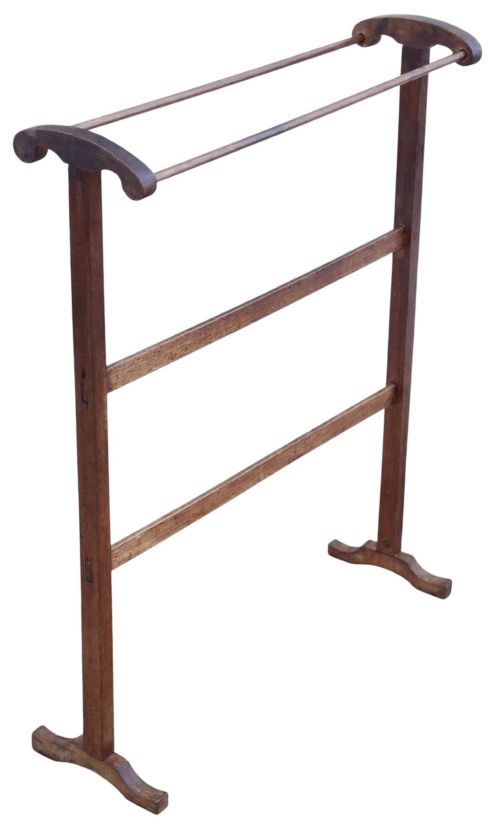
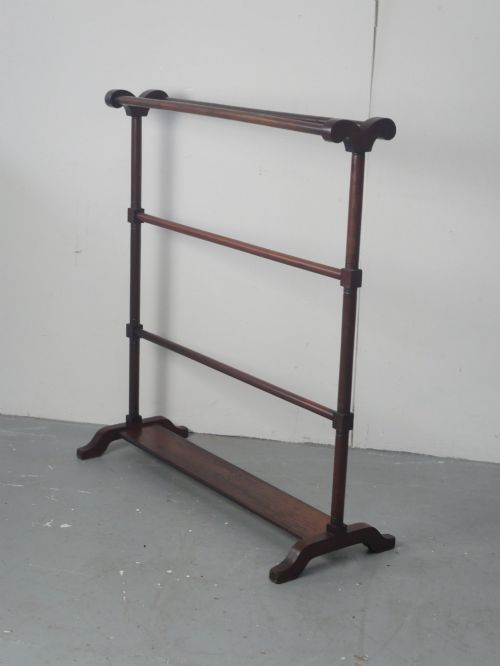
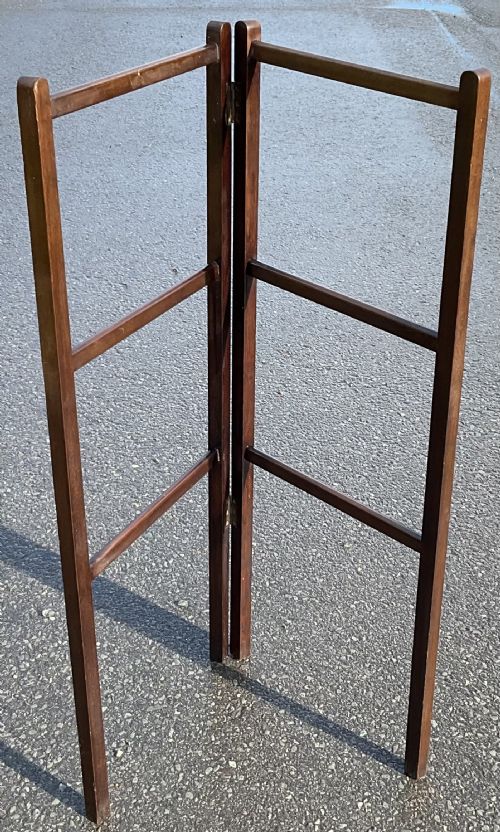
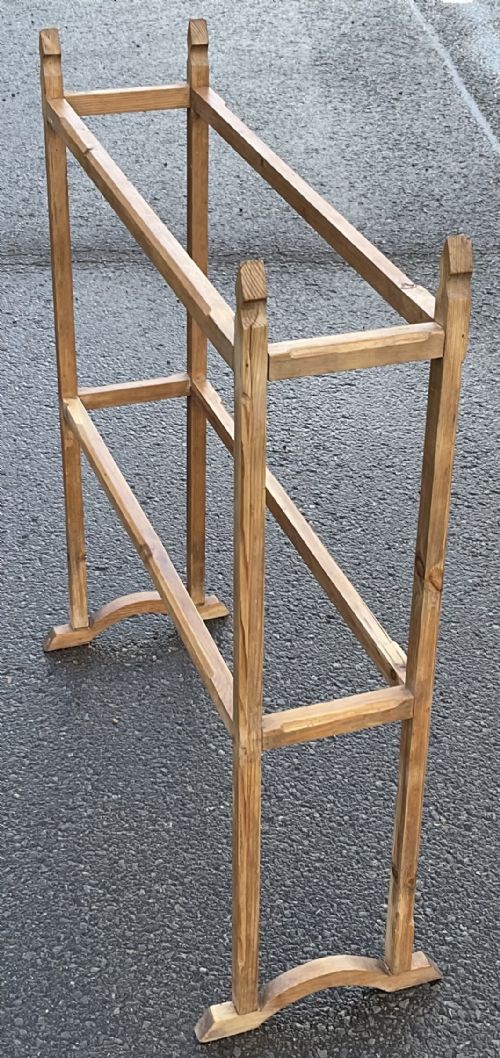
A vintage clothes airer primarily encompasses wooden towel rail stands and hanging kitchen racks utilised for drying textiles across domestic spaces. These pieces emerge predominantly from Victorian, Edwardian, and nineteenth-century periods, spanning styles from Arts and Crafts to Gothic Revival.
Standing configurations dominate the selections, ranging from simple pine frames to folding cheval and multi-bar mahogany stands. Wall-mounted airers and nursery fenders with integrated rails also appear, offering versatile options for laundry and textile management.
Materials and construction methods
Timbers form the core of these items, with mahogany, oak, pine, and walnut appearing frequently alongside secondary woods like satinwood inlay. Iron and brass provide structural hardware and detailing, particularly on freestanding stands and nursery fenders.
Joinery methods reflect traditional cabinet-making practices suited to items subjected to daily domestic use and damp textiles. Frames utilise sturdy joints to support folding mechanisms, multiple rails, and wall-mounted brackets without compromising stability.
The listings span from the early nineteenth century through the Edwardian era, featuring woods such as mahogany, pine, oak, and walnut.
Distinguishing quality in construction and finish
Superior examples demonstrate refined timber selection, such as figured mahogany or rich oak, complemented by subtle decorative elements like satinwood inlay or ebonised finishes. Simpler utility pieces rely on durable pine or basic hardwoods intended strictly for functional service.
Engineering integrity separates basic frames from exceptional pieces, visible in the smoothness of folding mechanisms, the rigidity of multi-bar assemblies, and the overall balance of standing towel rails and kitchen racks.
The Vintage Clothes Airer Glossary
- Cheval rail
- A standing frame designed with a pivoting or folding structure that allows the rails to angle outwards. This configuration maximises hanging capacity for laundry.
- Nursery fender
- A low metal or wooden guard placed around a fireplace to protect children, frequently fitted with an integrated clothes rail for drying garments near the hearth.
- Satinwood inlay
- A contrasting light wood veneer inserted into recesses on a darker timber surface, such as mahogany, to create decorative geometric or floral motifs.
- Arts and Crafts
- A design movement prioritising traditional craftsmanship, plain surfaces, and honest construction, often seen in sturdy oak frames from the turn of the twentieth century.
- Ebonised
- Timber treated with a dark stain or chemical process to imitate ebony, producing a sleek black surface finish popular on late nineteenth-century stands.
Vintage Clothes Airer: Frequently Asked Questions
How do I use a vintage clothes airer today?
These pieces function ideally in modern utility rooms or bathrooms for air-drying garments and linens. Freestanding folding models move easily between rooms depending on household laundry needs.
Wall-mounted versions and kitchen racks save floor space while keeping towels and textiles accessible. Their traditional timber construction adds period charm to contemporary interiors.
Can I place a wooden airer in a damp bathroom?
Most pieces survive normal bathroom humidity if they receive adequate ventilation after use. Solid hardwoods like mahogany and oak handle regular moisture better than softer timbers.
Avoid placing untreated pine directly against wet surfaces for extended periods. Periodic gentle waxing helps protect the wood finish from moisture damage.
How do I distinguish Victorian from Edwardian airers?
Victorian pieces often feature denser woods like walnut and mahogany, sometimes with Gothic Revival details or heavier turned supports. The construction tends to be robust and ornate.
Edwardian designs frequently utilise lighter pine or simpler mahogany frames with clean lines. Inlaid satinwood details and Arts and Crafts influences also point towards this later period.
Are folding towel rails stable when loaded with wet laundry?
Quality freestanding rails use multi-fold designs and sturdy hinges to distribute weight evenly across the base. Well-balanced mahogany and oak stands remain upright under standard domestic loads.
Overloading a single side can compromise stability, so spreading garments evenly across all available bars ensures the frame stays secure during use.