


Traditional Towel Stand
A traditional towel stand brings practical warmth and handsome timber grain to a bathroom or bedroom.
Traditional Towel Stand
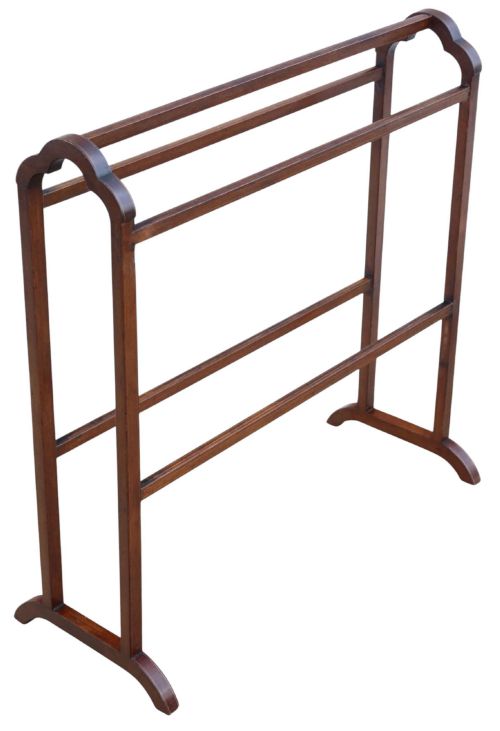
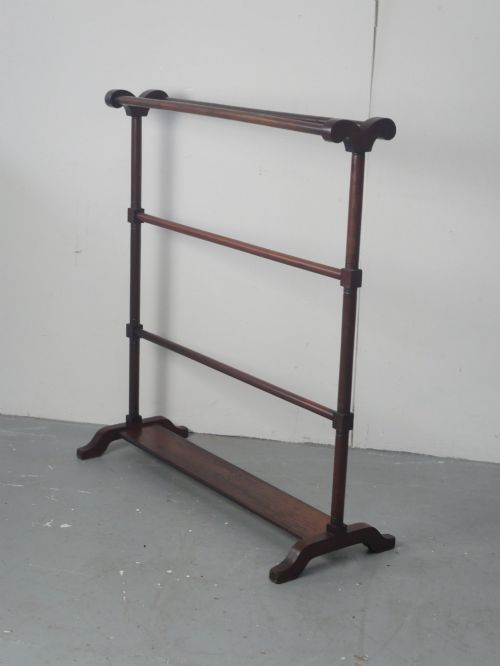
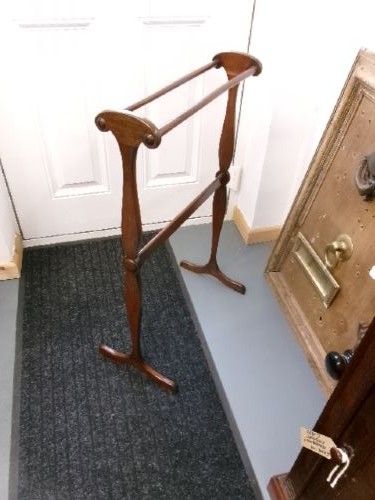
A traditional towel stand is a dedicated domestic furnishing designed for hanging and drying linens, commonly encountered here as a standing wooden rail or airer. These pieces span from mid-nineteenth-century examples through to Edwardian designs, serving both functional airing and bedroom organisation.
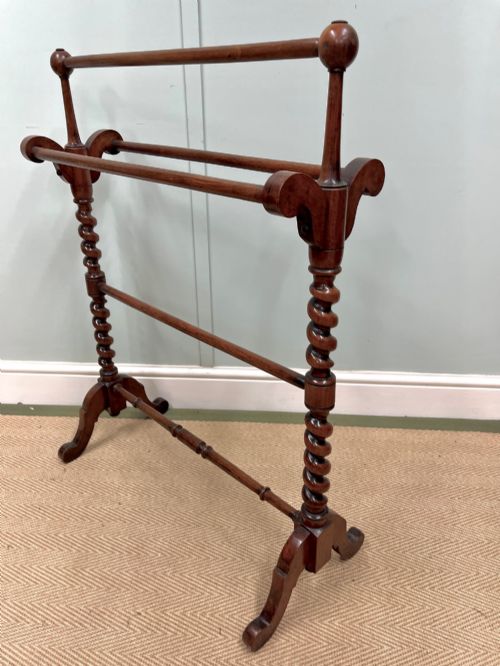
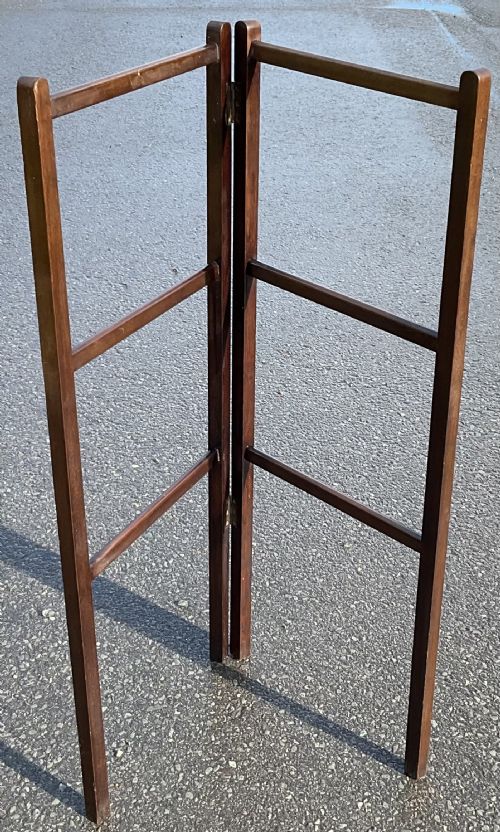
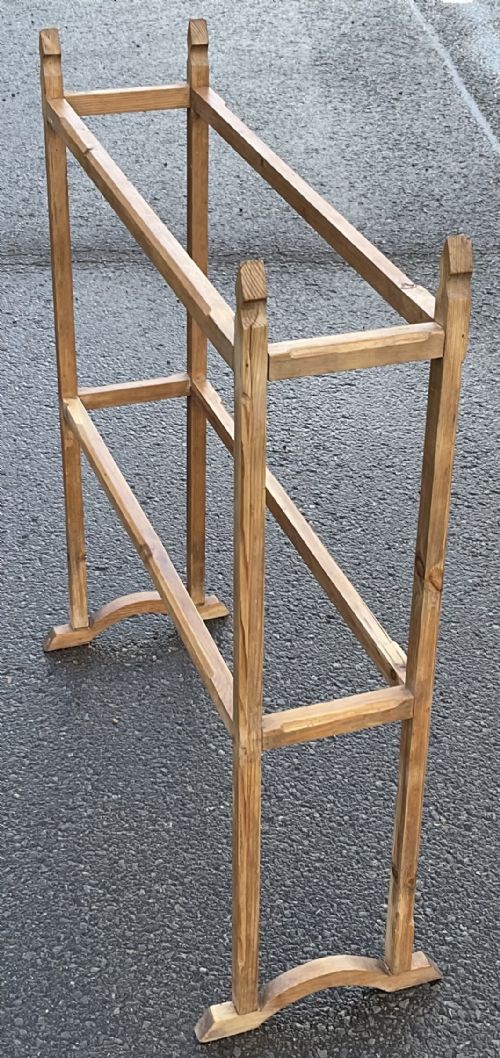
The versions most frequently met on this page are constructed in mahogany and pine, appearing in Edwardian and Victorian styles. Buyers will find everything from simple single-rail frames to larger five-bar folding models and more substantial Chinese Qing Dynasty robe stands.
What varies in quality
Quality in a traditional towel stand rests largely on the choice of timber and the crispness of its construction. Dense hardwoods like mahogany offer structural rigidity, whereas simpler pine pieces rely on honest proportions and sturdy joints.
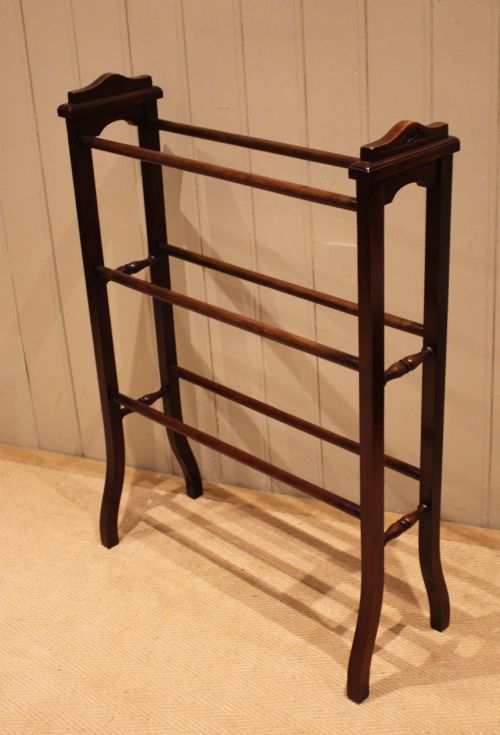
Refinement of detail elevates certain examples above standard utility items. The presence of satinwood inlay, multiple horizontal bars, clever folding mechanisms, or crisp turning distinguishes a workshop piece from basic domestic furniture.
Several stands boast five separate bars, proving that our ancestors took the business of warm towels very seriously indeed.
Gillows
The Traditional Towel Stand Glossary
- Mahogany
- A durable, reddish-brown tropical hardwood favoured by cabinetmakers for its strength and fine grain. It forms the backbone of many nineteenth-century and Edwardian towel rails.
- Ebonised wood
- Timber treated with a chemical stain or finish to imitate expensive ebony. This dark, formal surface treatment appears on selected nineteenth-century stands.
- Satinwood inlay
- A decorative technique using contrasting pale exotic timber inserted into a darker primary wood. It adds a refined border or motif to Edwardian mahogany frames.
- Clothes horse
- A traditional freestanding wooden frame utilised for airing garments and linens indoors. Larger versions provide generous proportions for domestic utility.
- Qing Dynasty
- The final imperial dynasty of China, spanning the seventeenth to early twentieth centuries. Pieces from this era include carved hall stands and large lacquered robe stands.
Traditional Towel Stand: Frequently Asked Questions
How were traditional towel stands used?
These stands were placed near fireplaces or in bedrooms to warm and dry household linens and garments.
They provided movable hanging space before fitted bathrooms and central heating became standard in homes.
Where should I place a towel stand?
They suit bathrooms, bedrooms, and dressing rooms where extra hanging space for textiles is required.
Their slim profile allows them to sit comfortably against walls or in unused corners without dominating the room.
How do I tell Victorian from Edwardian stands?
Victorian examples often feature darker, denser mahogany timbers and simpler, heavier construction from the mid to late nineteenth century.
Edwardian pieces, dating around 1900, frequently display lighter mahogany frames, occasional satinwood inlay, and multi-bar configurations.
Are these stands sturdy enough for daily use?
Most standing rails and airers are built from solid hardwoods or sturdy pine designed to bear the weight of damp towels.
Regular handling of folding mechanisms requires gentle care, but proper timber construction ensures lasting domestic utility.