

Edwardian Ball and Claw Table
An Edwardian ball and claw table brings classic revival carving and rich timber into a room, offering both practical surface space and distinct period presence.
Edwardian Ball and Claw Table
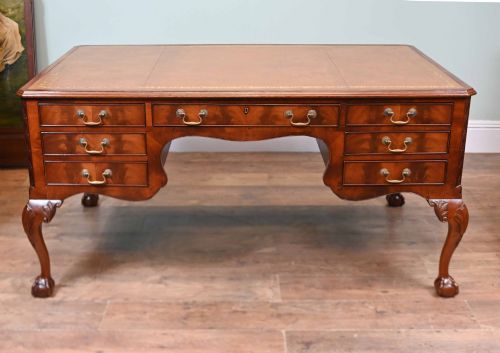
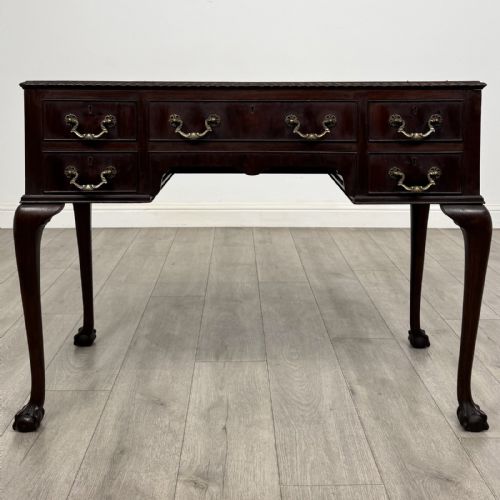
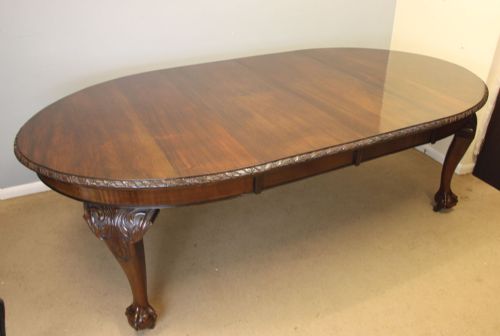
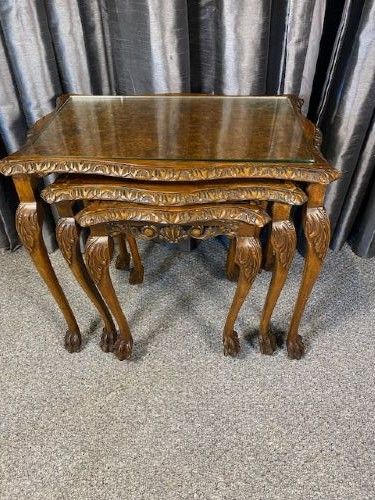
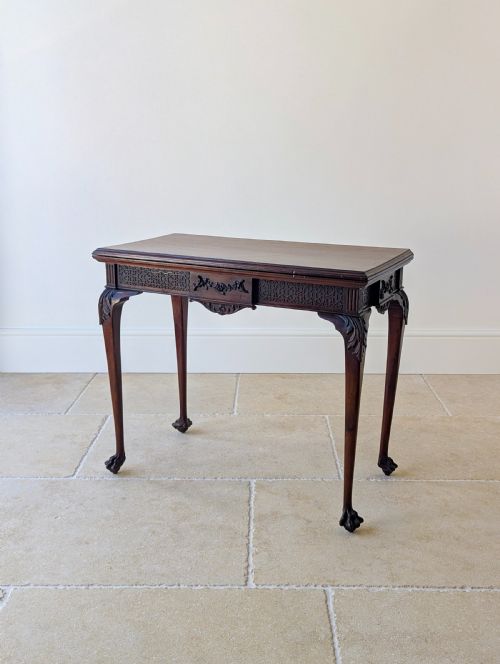
When you search for an edwardian ball and claw table, you encounter pieces spanning the Edwardian era alongside surrounding decades from the late nineteenth century to the 1930s. The selection includes dining tables, extending tables with chairs, side tables, card tables, coffee tables, and tripod tilt top tables.
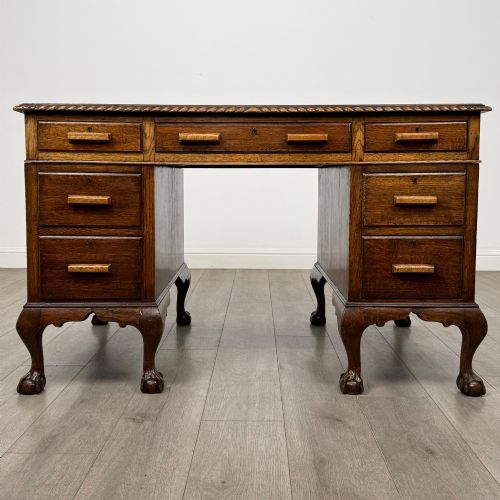
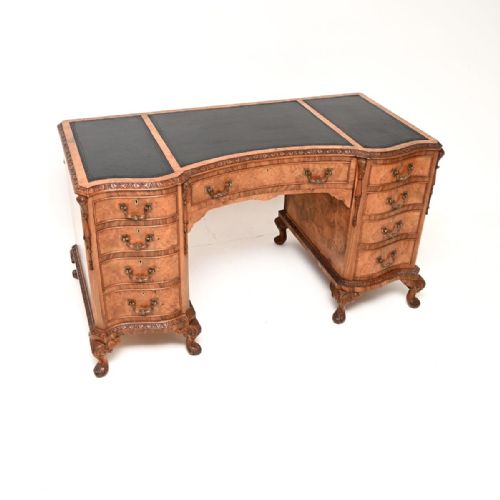
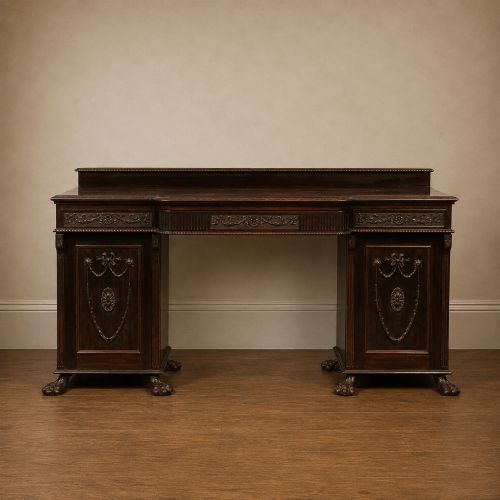
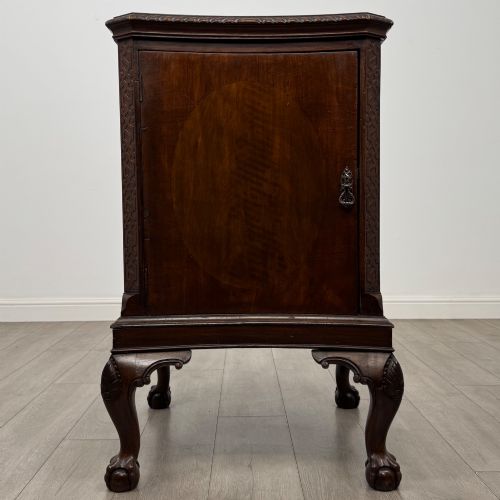
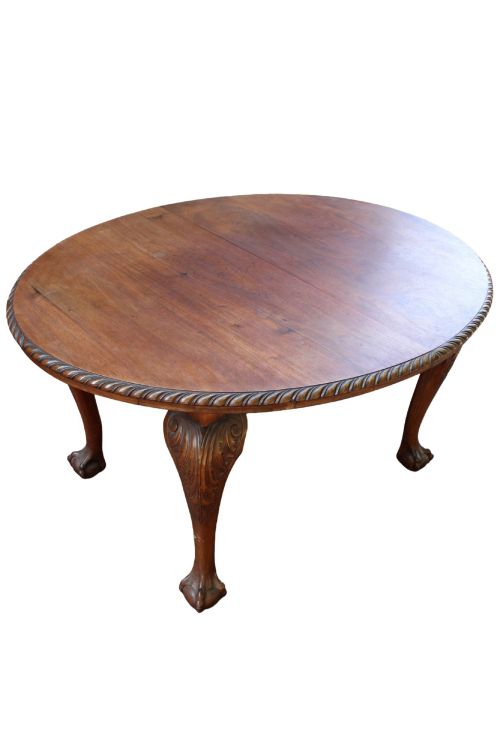
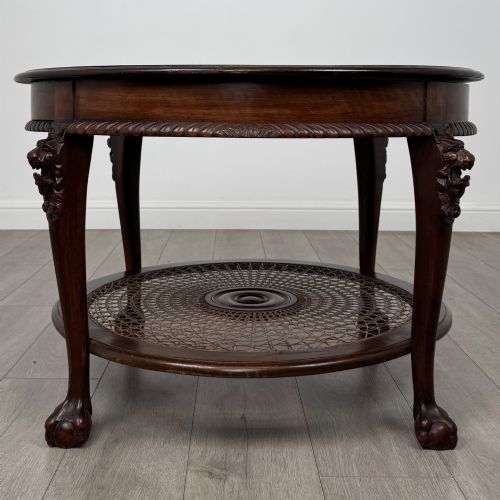
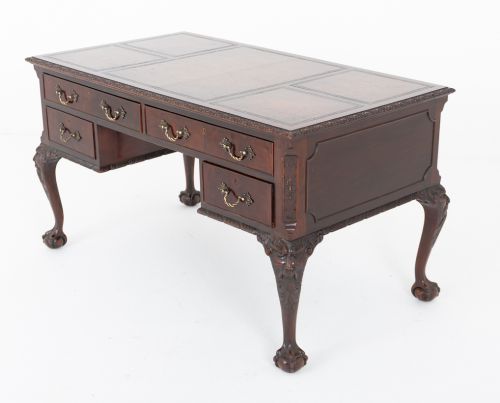
Makers and workshops of the period drew heavily on earlier vocabularies, producing pieces styled in Chippendale Revival, Queen Anne Revival, and Georgian Revival alongside Edwardian designs. Mahogany and burr walnut dominate the forms, frequently paired with carved claw and ball feet that anchor the design.
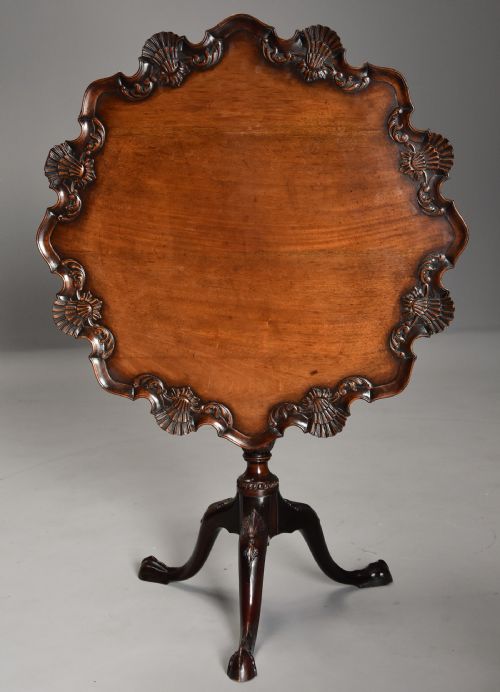
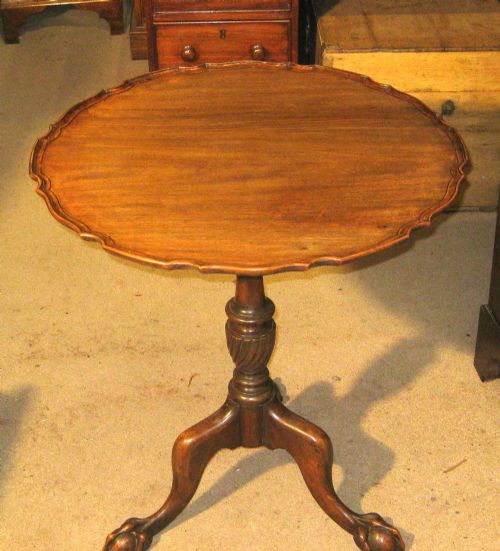
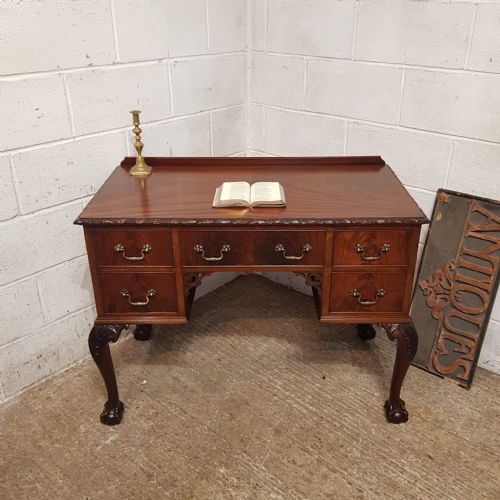
The version most commonly met on this page is the occasional or dining table in mahogany, often incorporating the tripod base with a tilt top and shaped rim. Alongside these, writing tables and card tables appear frequently, showing the same revival aesthetic and substantial timber construction.
Materials and Construction Methods
Cabinet makers utilised solid mahogany and walnut for structural frames and legs, frequently selecting burr walnut veneers for tabletops and cabinet fronts to display rich grain patterns. Timber selection determined the overall weight and tone of each piece, with walnut offering lighter figuring and mahogany providing a dense, dark substrate for carving.
Carving defines the ball and claw foot and the surrounding cabriole leg, executed by hand directly into the dense grain of the timber. Joinery relied on traditional methods such as mortise and tenon for frames, while tilt top mechanisms utilised brass catches and pivoting blocks to secure the surface.
Edwardian Ball and Claw Table Retail Price Guide 2026
Typical asking prices for edwardian ball and claw table among the pieces listed under this phrase on Sellingantiques today, from the lower quarter to the upper quarter. They describe what is for sale here now, not the wider market.
Listings feature woods including mahogany, burr walnut, and oak, spanning Edwardian, Georgian, and Victorian revival periods.
Distinctions in Execution
The depth and crispness of the carving on the ball and claw foot separate standard production from superior examples. Master carvers rendered the talons and the sphere with anatomical definition and undercut detailing, whereas lesser pieces show flattened relief and softened edges.
Selection of timber veneer creates a clear hierarchy in visual weight and cost. Matched burr walnut with symmetrical figuring commands greater visual presence than plain mahogany boards, requiring skilled veneering across complex curved surfaces such as card table tops and console edges.
Structural integrity in moving parts - such as the tilt mechanism of a tripod table, the folding action of a card table, or the extension runners of a dining table - reveals the standard of workshop assembly. Solid brass fittings and tight joints indicate careful original manufacture.
Gillows·Maple and Co.·Whytock and Reid
The Edwardian Ball and Claw Table Glossary
- Ball and claw foot
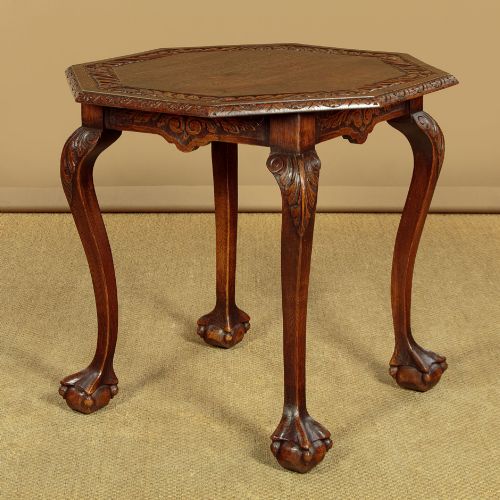
- A carved furniture foot depicting a bird's talon clutching a spherical ball, derived from Chinese motifs and popularised during the Georgian and revival periods. This detail provides a strong visual anchor to cabriole legs.
- Cabriole leg
- A furniture leg that curves outward and then tapers inward, mimicking the shape of an animal's leg. It typically terminates in a ball and claw or pad foot.
- Tilt top
- A tabletop mounted on a pivoting mechanism that allows the surface to tilt vertically when not in use. This design originated to save floor space in domestic rooms.
- Pie crust rim
- A raised, scalloped wooden tabletop border carved to resemble the crimped edge of a pastry crust. It is frequently found on small tripod and occasional tables.
- Burr walnut
- A wood veneer taken from the grotesque growths or burls of walnut trees, prized for its swirling, highly figured grain patterns. It is extensively used on high-end Edwardian cabinet furniture.
Edwardian Ball and Claw Table: Frequently Asked Questions
What is an edwardian ball and claw table?
An edwardian ball and claw table is a piece of furniture produced around the early twentieth century that incorporates revival styling, most notably Chippendale or Queen Anne motifs. These pieces feature distinctive carved feet depicting talons grasping a sphere.
They encompass various forms including dining tables, side tables, and tilt top occasional tables, usually constructed from solid mahogany or walnut.
How do I identify a ball and claw foot?
The foot consists of a carved avian or reptilian set of talons wrapped around a wooden sphere. Quality varies by how sharply the claws are undercut and defined against the ball.
On better examples, the knuckles and scales show clear hand-carved detail rather than a smoothed, machine-rounded shape.
Were these tables made during the Edwardian period?
Many tables carrying this design date from the Edwardian era and surrounding decades up to 1930, though the decorative style originates from the eighteenth century. Makers of the early twentieth century revived these classical proportions to satisfy demand for traditional aesthetics.
As a result, construction methods reflect early twentieth-century workshop practices applied to historical forms.
How do I care for a walnut table?
Walnut and mahogany surfaces respond best to natural wax polish applied sparingly and buffed with a soft cloth. Avoid placing timber tables in direct sunlight or near heat sources to prevent the wood from drying and veneers from lifting.
Using coasters and mats protects the polish and timber from moisture and heat damage.