

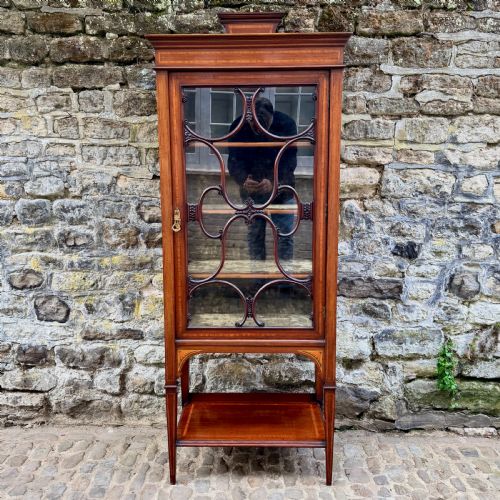
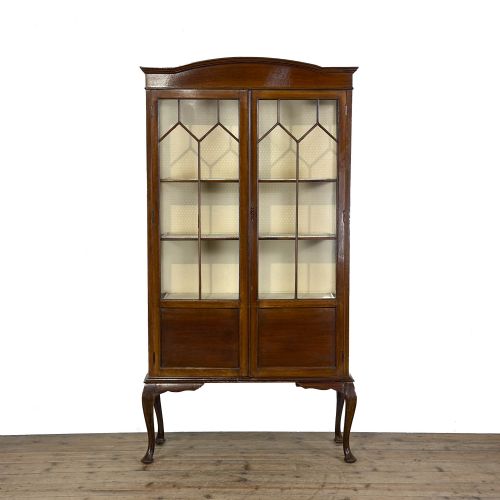
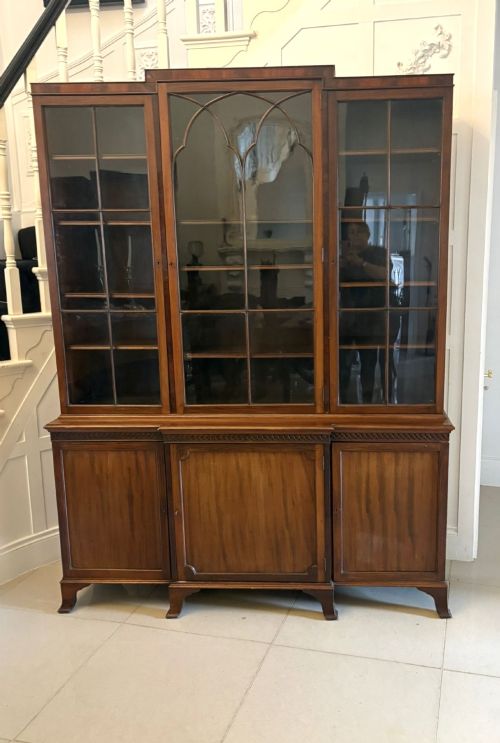
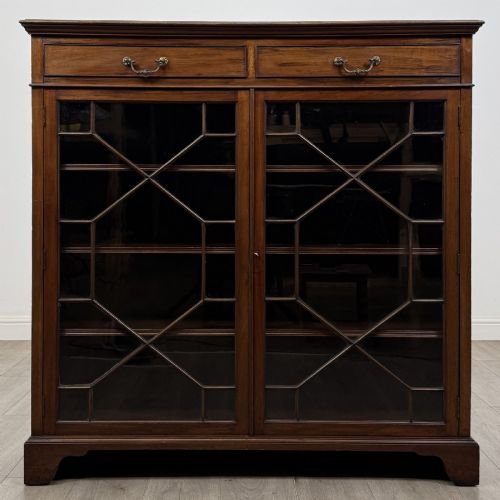
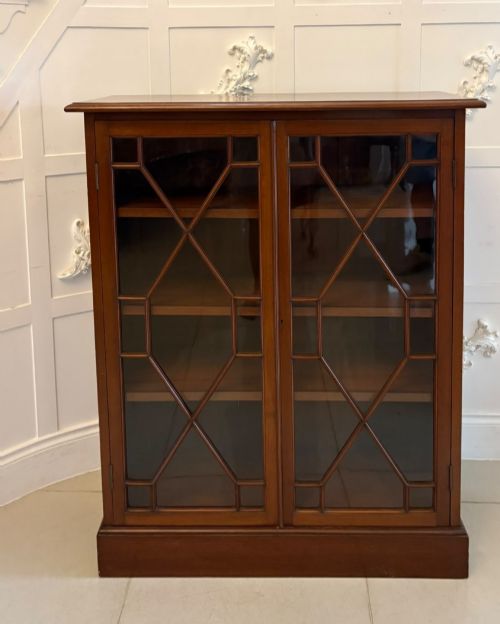
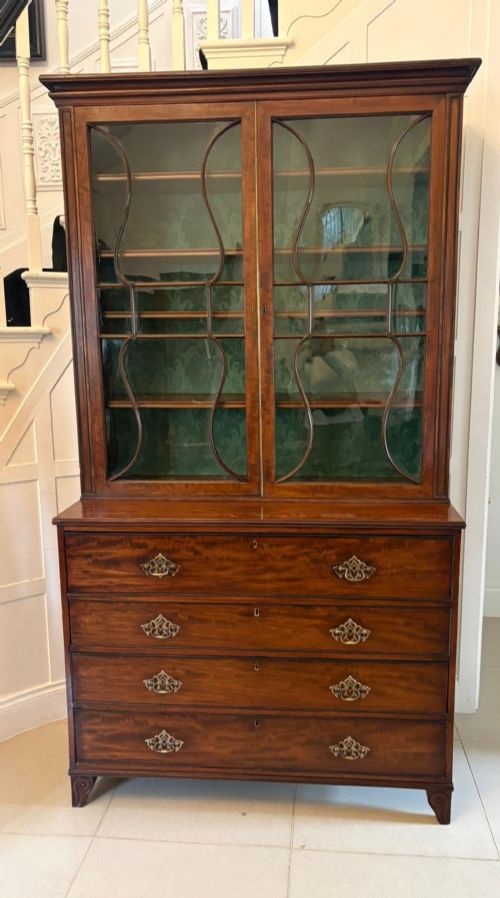
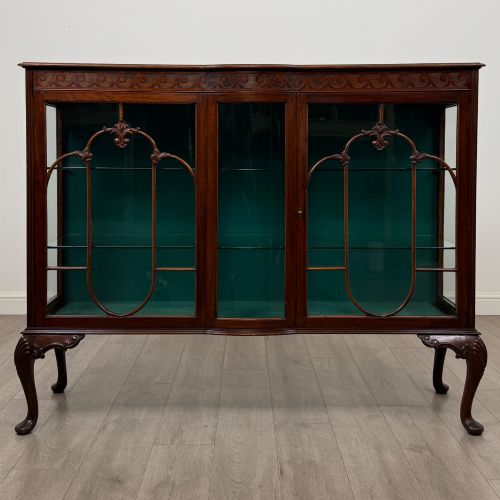
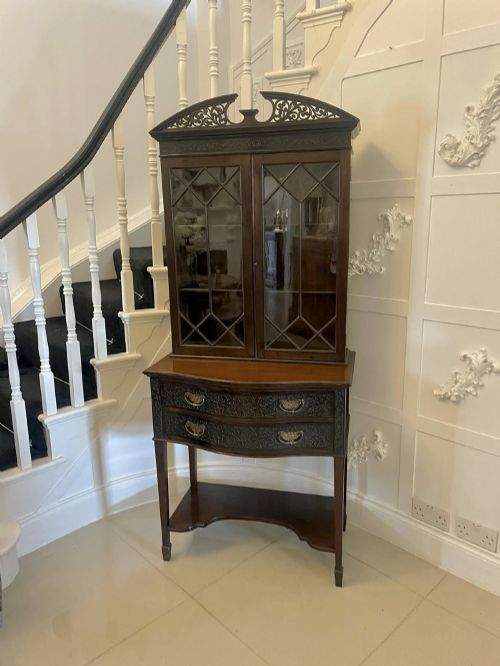
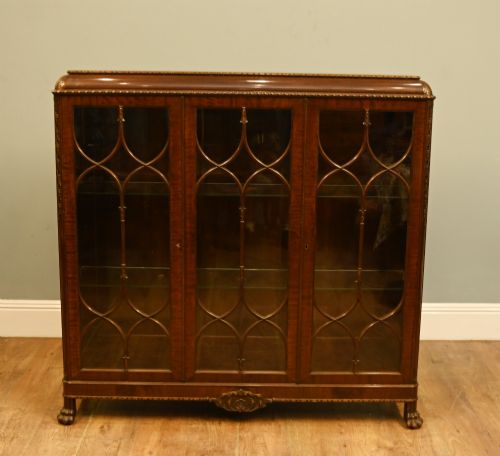
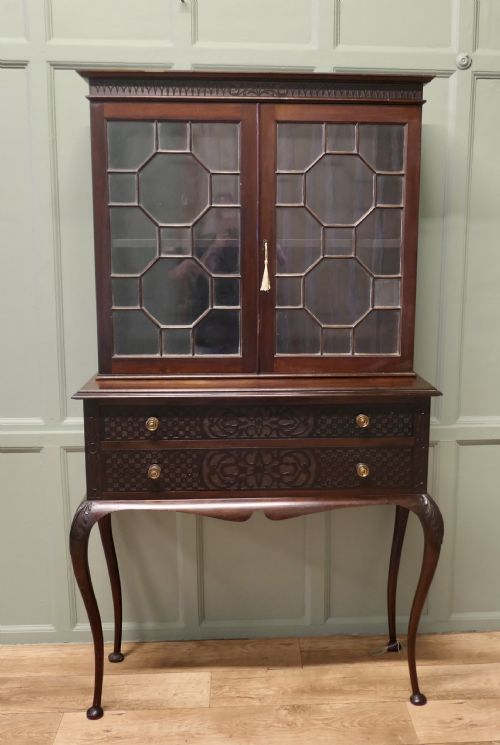
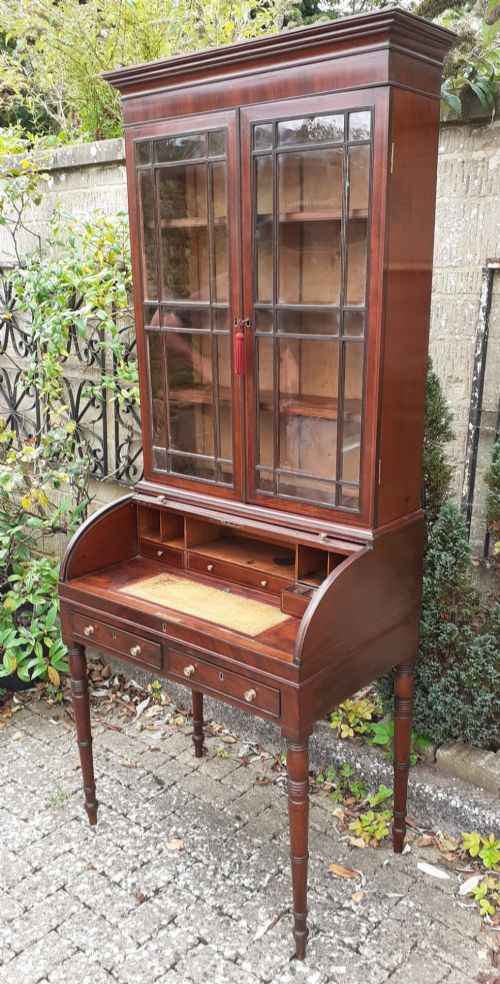
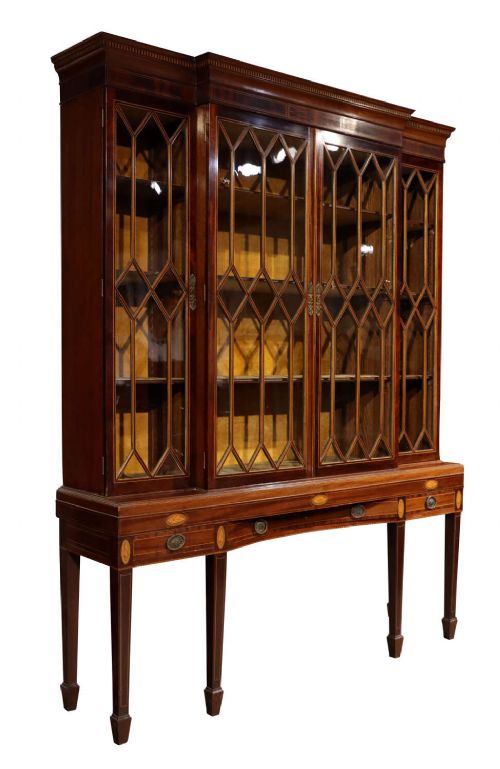
Edwardian Astragal Door Cabinet
When you choose an Edwardian astragal door cabinet, you bring home a piece of period furniture designed to display and protect books or china.
Edwardian Astragal Door Cabinet
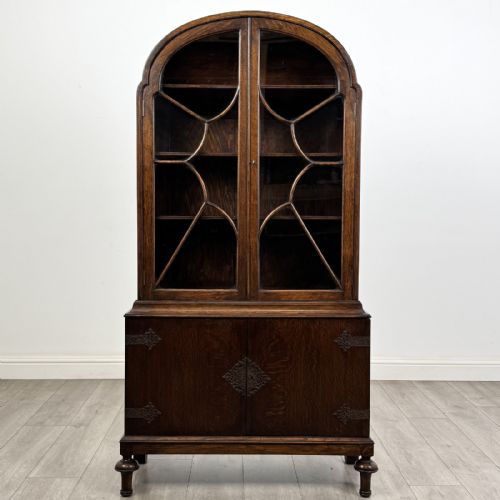
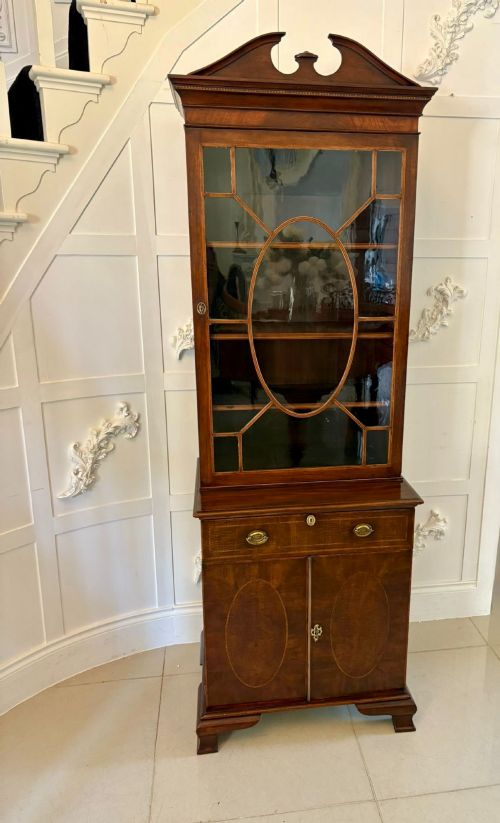
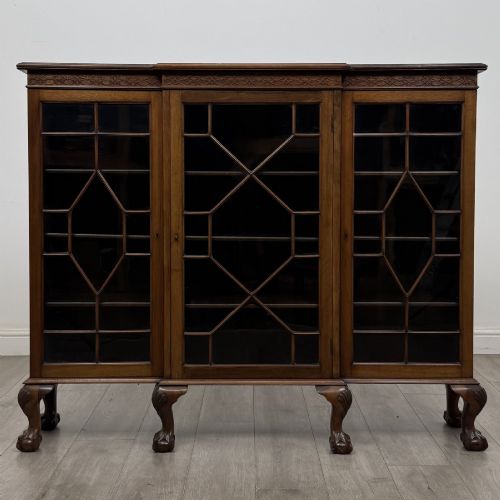
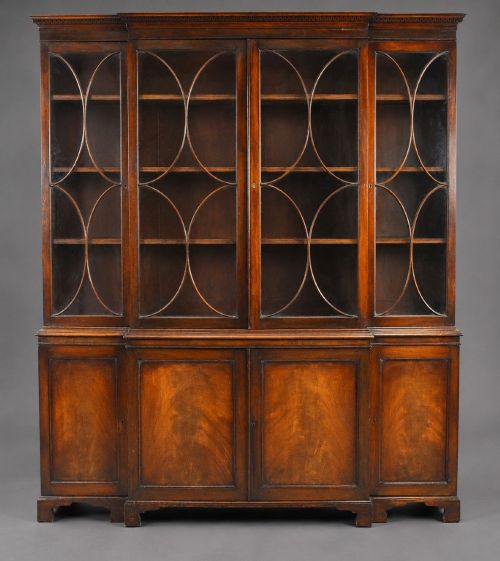
An edwardian astragal door cabinet is a display piece or bookcase defined by wooden glazing bars dividing the glass panes. These items appear primarily in Edwardian forms, alongside related examples from the nineteenth century and the Regency period.
The standard format on this page is the upright mahogany bookcase or display cabinet, often featuring glazed upper doors above lower cupboards or drawers. Makers also produced corner cabinets, breakfront forms, and bureau bookcases with fitted writing interiors.
While Edwardian examples dominate the selection, related pieces draw on Sheraton Revival, Chippendale Revival, and Arts and Crafts styles. Walnut and oak alternatives join the predominant mahogany constructions.
Materials and construction
Cabinet makers relied heavily on solid and veneered mahogany, frequently accented with satinwood inlay and brass hardware. Glass panes were secured into position by the characteristic wooden astragal glazing bars.
Alternative materials include walnut and oak, with occasional decorative treatments such as black paint. Support structures range from bracket and ball and claw feet to cabriole legs and stands.
Edwardian Astragal Door Cabinet Retail Price Guide 2026
Typical asking prices for edwardian astragal door cabinet among the pieces listed under this phrase on Sellingantiques today, from the lower quarter to the upper quarter. They describe what is for sale here now, not the wider market.
Timber choices recorded across the inventory include mahogany, walnut, oak, and satinwood.
Assessing quality in glazed cabinets
Quality rests in the precision of the timber selection, such as figured mahogany and crisp satinwood inlay. The fineness of the astragal bars and the proportion of the glazing pattern also distinguish standard production from exceptional workshop output.
Structural complexity dictates the tier of the piece, moving from simple single-door corner cupboards to large breakfront bookcases with fitted bureau sections and carved details.
Tudor & Burrey·Lamb & Co·Edwards & Roberts
The Edwardian Astragal Door Cabinet Glossary
- Astragal
- The narrow wooden moulding that divides a glass pane into smaller segments within a door frame. These bars form geometric patterns across the glazed sections.
- Breakfront
- A piece of furniture where the central section projects forward from the flanking wings. This architectural arrangement creates depth and visual balance.
- Bureau bookcase
- A hybrid form combining a sloping writing flap above drawers with a glazed bookcase top. The interior often contains small pigeonholes and drawers.
- Satinwood inlay
- Contrasting pale timber inserted into the primary wood surface to create decorative borders and motifs. This technique defines revival styles.
- Cabriole leg
- A furniture leg that curves outward at the knee and tapers inward to an ankle, finishing in a foot. It draws inspiration from eighteenth-century designs.
Edwardian Astragal Door Cabinet: Frequently Asked Questions
What is an astragal door?
An astragal door uses thin wooden glazing bars to hold multiple smaller panes of glass in place rather than one large sheet. This method creates a grid pattern typical of period display furniture.
Cabinet makers used this design to add architectural detail and strength to the doors of bookcases and display cabinets.
How do I distinguish Edwardian pieces from earlier styles?
Edwardian cabinets often draw inspiration from Sheraton and Chippendale revivals, showing lighter proportions and refined satinwood inlay. Earlier nineteenth-century examples tend to use heavier timber sections and deeper carving.
Looking at the feet, handles, and internal construction methods helps clarify the period of manufacture.
Where should I place a corner cabinet?
Floor standing corner cabinets fit directly into 90-degree room angles to utilise unused space effectively. They provide display storage without dominating the main wall area of a room.
These pieces work well in dining rooms or studies for holding glassware and books.
How do I care for mahogany and satinwood surfaces?
Keep wooden furniture away from direct sunlight and heat sources to prevent timber splitting and veneer lifting. Dust regularly with a dry cloth and apply occasional wax polish suited to antique wood.
Avoid using silicone-based sprays which can damage the traditional finish over time.