

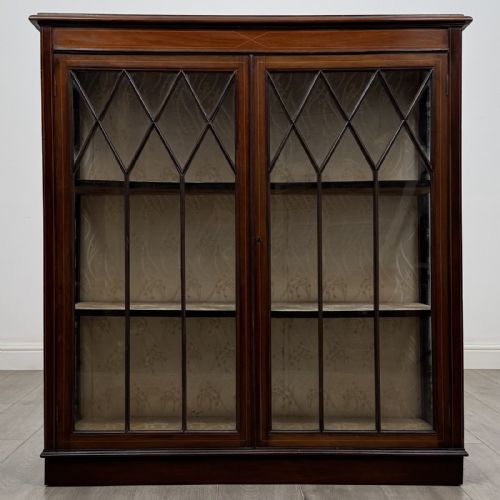
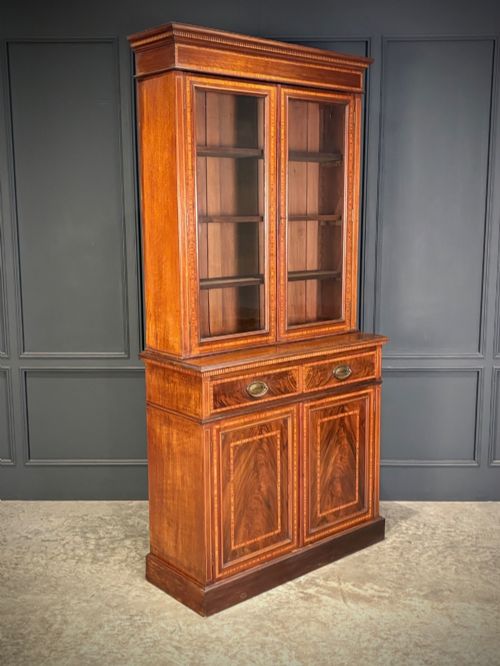
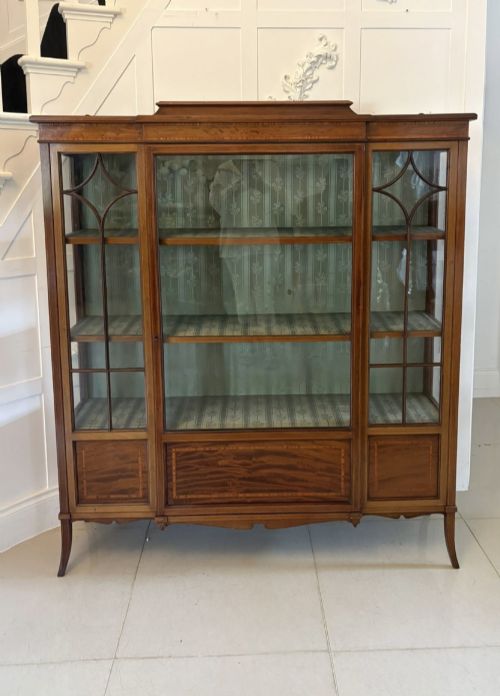
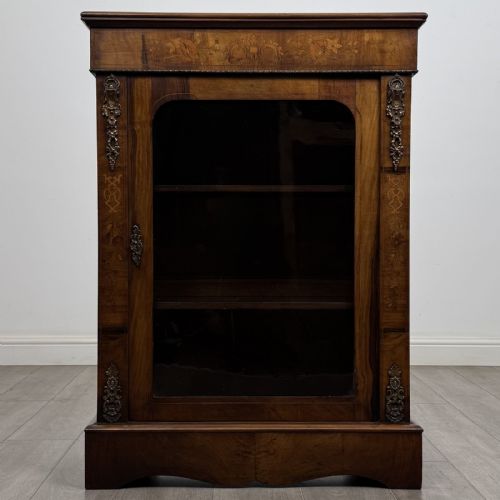
Inlaid Edwardian China Display
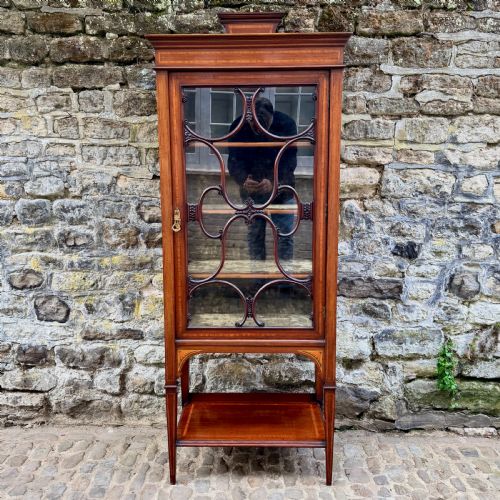
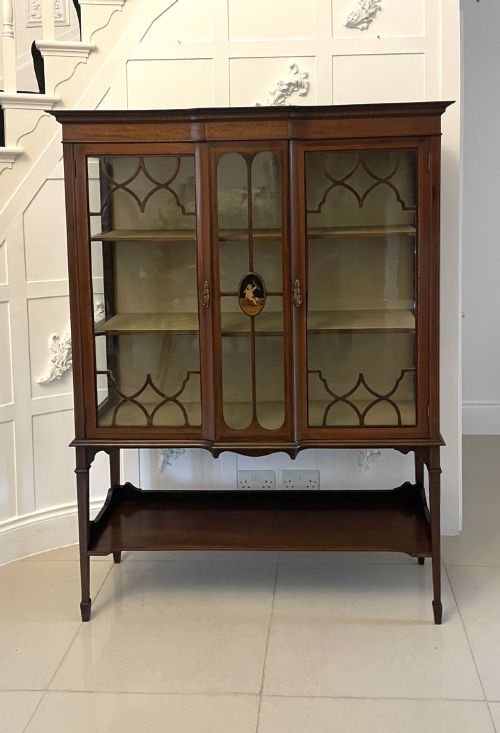
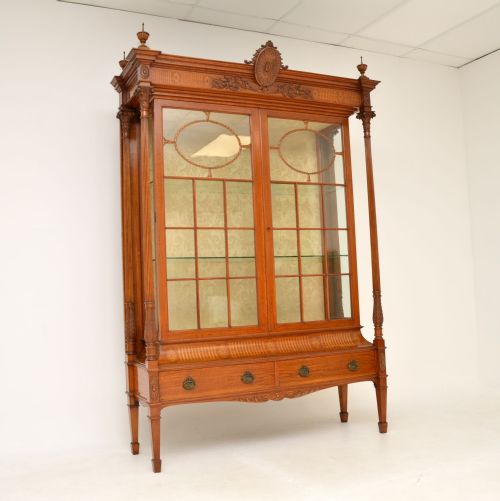
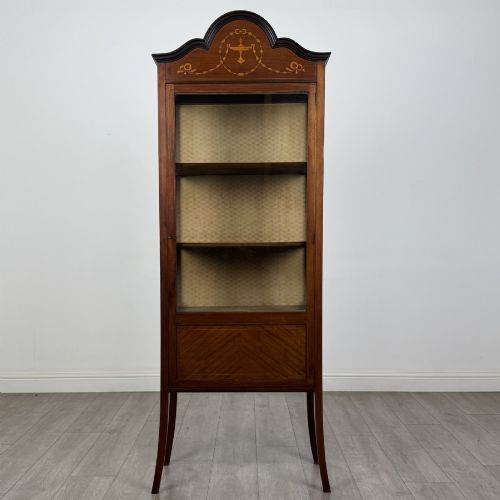
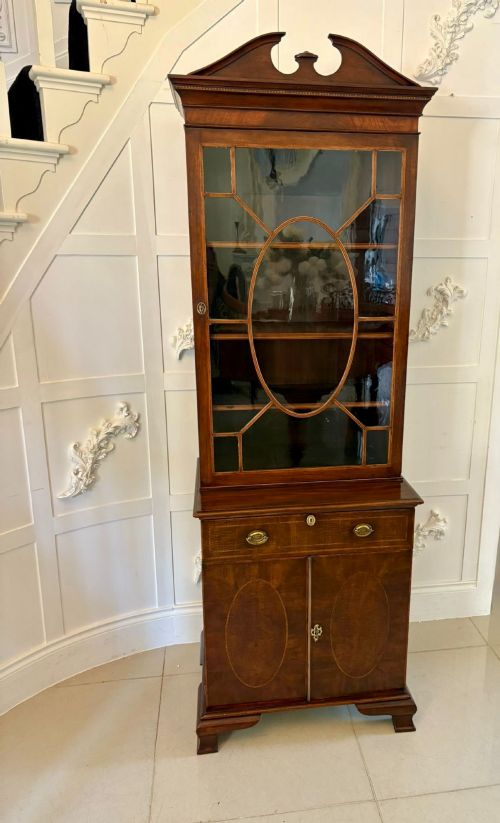
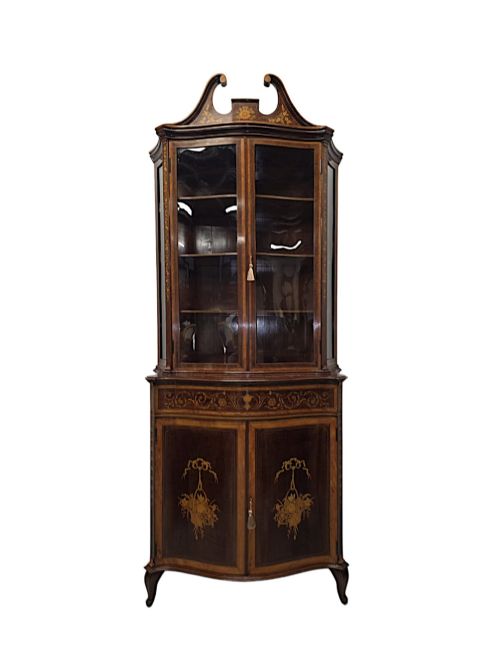
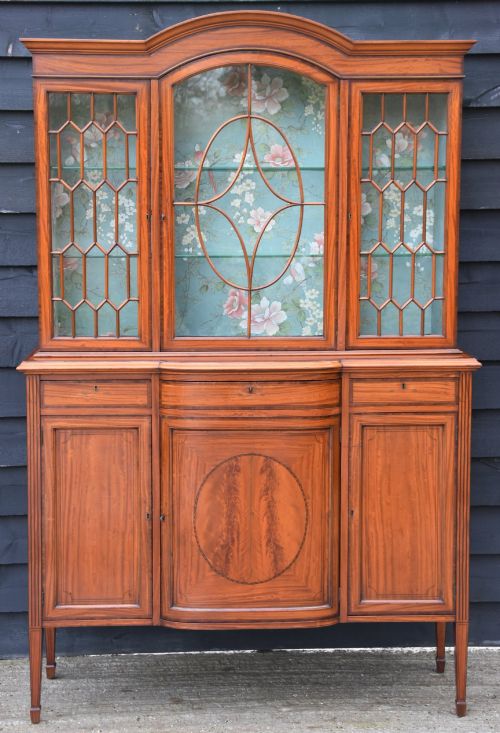
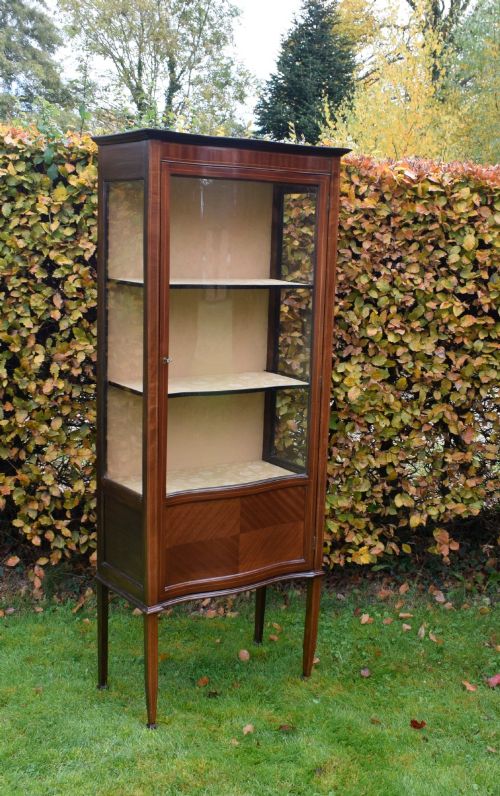
An inlaid edwardian china display provides refined glazed storage for porcelain, bringing delicate marquetry and polished mahogany into a reception room.
Inlaid Edwardian China Display
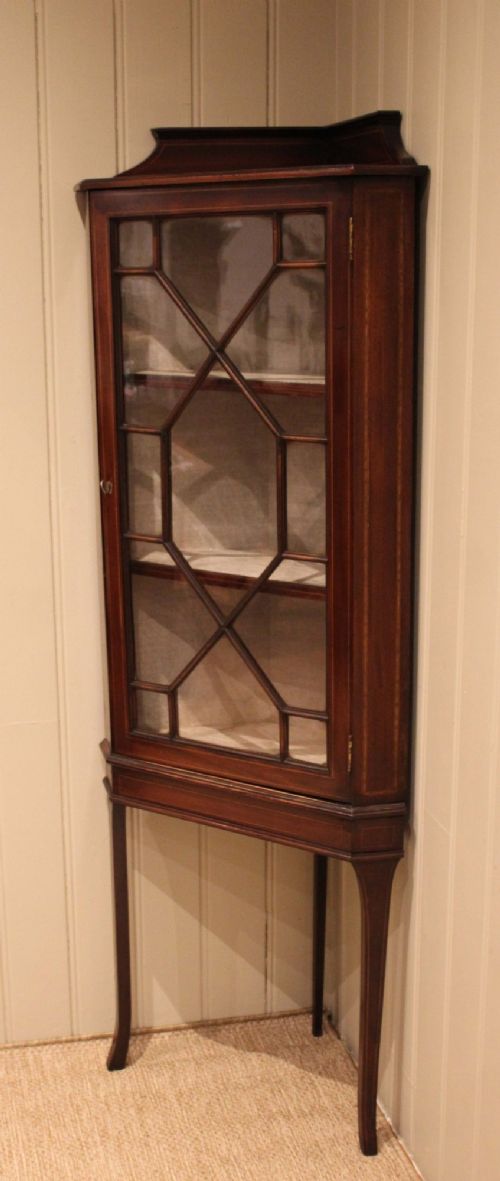
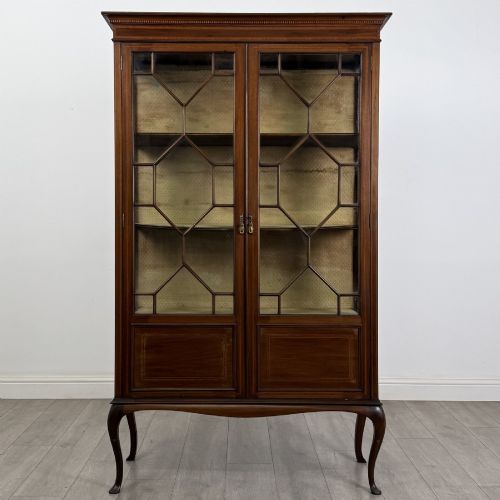
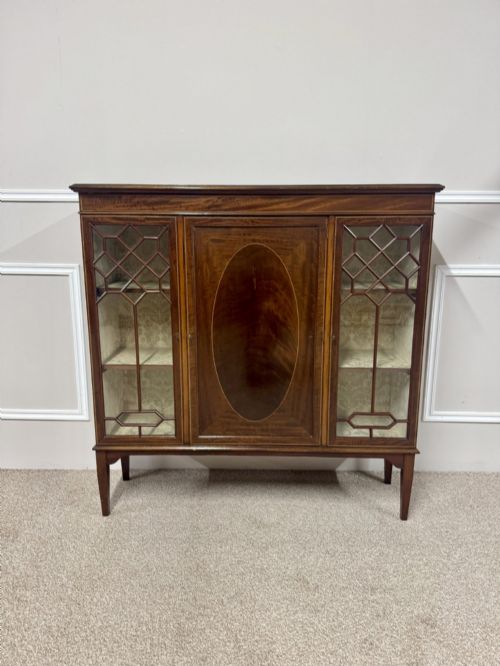
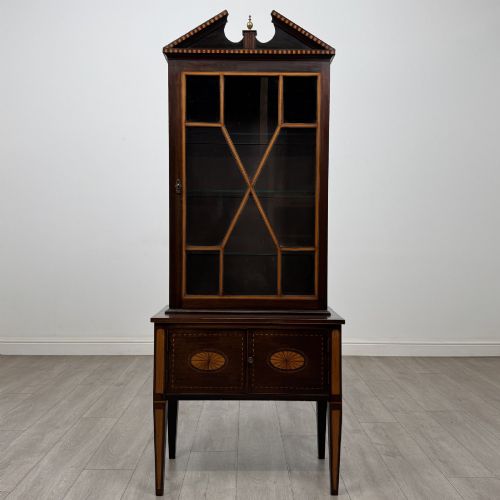
An inlaid edwardian china display brings together glazed cabinets, corner cabinets, and combined bookcases produced primarily around the Edwardian era and the late nineteenth century. These pieces serve to exhibit porcelain and glassware behind glass panels while incorporating decorative woodwork into domestic spaces.
Most examples encountered on this page date from the Edwardian period or the late Victorian decades, with occasional items stretching back to the eighteenth century or forward to nineteen ten. Formats range from straight-fronted cabinets and bowfronts to serpentine corners and raised galleries.
Makers and designers of these cabinets drew heavily on Sheraton Revival motifs alongside Art Nouveau and Neo Classical influences. Buyers typically select these items to house collections of ceramics while adding period character to a drawing room or study.
Craftsmanship and Proportion
Quality separates through the crispness of the wood inlay and the precision of the cabinet maker's joinery, where finer pieces display intricate botanical marquetry and seamless timber matching. The choice of primary timber also dictates standing, with rich satinwood and figured mahogany marking superior examples.
Proportion and structural balance define the upper tier of these cabinets, distinguishing workshop-produced items from standard commercial output. Refined pieces exhibit elegant proportions, harmonious glazing bars, and sophisticated hardware rather than heavy or utilitarian framing.
Inlaid Edwardian China Display Retail Price Guide 2026
Typical asking prices for inlaid edwardian china display among the pieces listed under this phrase on Sellingantiques today, from the lower quarter to the upper quarter. They describe what is for sale here now, not the wider market.
Object forms on this page range from standard glazed display cabinets and bookcases to corner units and bowfronts.
Edward and Roberts·Collinson and Lock·Maple and Co·Waring and Gillow
The Inlaid Edwardian China Display Glossary
- Marquetry
- Decorative patterns formed by fitting together thin slices of wood veneer and other materials onto a carcase. This technique allows cabinet makers to create complex pictorial or floral designs across door panels and friezes.
- Sheraton Revival
- A late nineteenth and early twentieth century design movement that reinterpreted the light, neoclassical furniture forms of the eighteenth century designer Thomas Sheraton. Pieces in this style utilise satinwood inlay, tapered legs, and delicate proportions.
- Bowfront
- A cabinet front that curves outward in a convex arc. This shape softens the rectangular geometry of a room and requires skilled timber bending.
- Vitrine
- A glass-sided display cabinet designed specifically for showing porcelain, silver, or curiosities. The term originates from the French word for glass.
- Serpentine
- A furniture contour shaped in a double curve, bending inward in the centre and outward at the ends. It demands advanced woodworking expertise to execute cleanly.
Inlaid Edwardian China Display: Frequently Asked Questions
What is an inlaid edwardian china display cabinet used for?
These cabinets were designed to protect and exhibit fine porcelain, tea sets, and glassware behind glass doors. The glazed panels kept dust away while allowing collectors to showcase their ceramics in principal rooms.
Today, they serve the same decorative and practical purpose in modern homes. They offer vertical storage that occupies minimal floor space while introducing period woodwork into an interior.
How do I identify an Edwardian piece from a Victorian one?
Edwardian cabinets generally display lighter satinwood timber, airier proportions, and delicate Sheraton Revival motifs. Victorian equivalents tend to use darker mahogany or walnut with heavier carvings and denser marquetry.
Stylistic crossover remains common because production techniques overlapped between the nineteenth and twentieth centuries. Examining the secondary woods and interior construction often helps clarify the manufacturing date.
Are corner cabinets practical for small rooms?
Corner displays utilise unallocated angles in a room, turning unused wall junctions into functional storage. Their angled footprint allows them to hold substantial china collections without projecting far into the floor space.
They work particularly well in dining rooms or studies where wall space for flat-fronted furniture is limited. The curved or bow-fronted variants soften the sharp ninety-degree angle of the corner.
How should I clean the interior woodwork and glass?
Dust the timber surfaces regularly with a soft, dry cloth to prevent dirt accumulation on the veneer and inlay. Avoid modern aerosol polishes, which can build up a greasy residue over the old finish.
Glass panels can be cleaned with a mild glass cleaner applied to a cloth rather than sprayed directly onto the glass. This precaution stops liquid from seeping into the surrounding timber frame and damaging the joinery.