

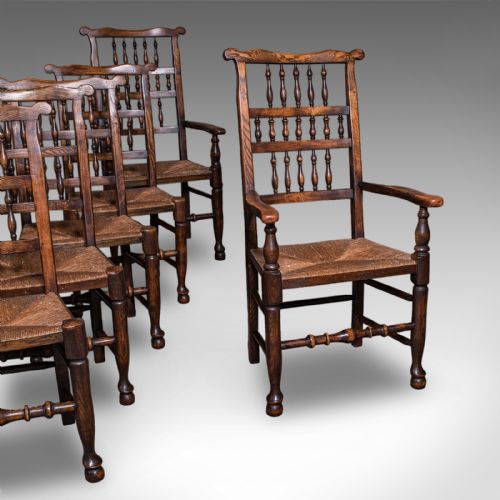


Edwardian Armchair Dining Set
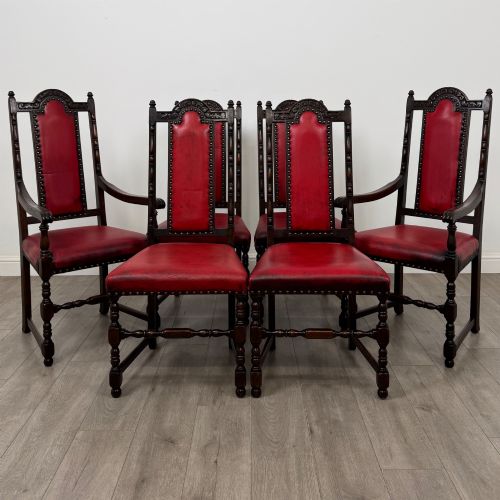
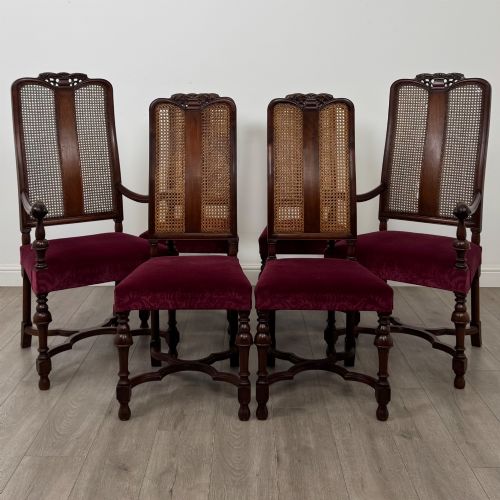
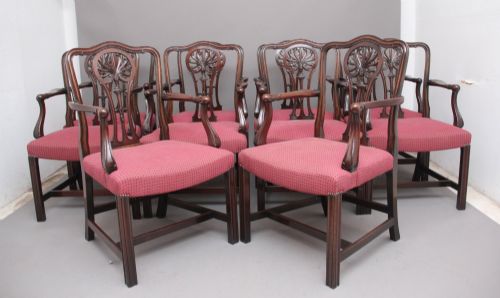
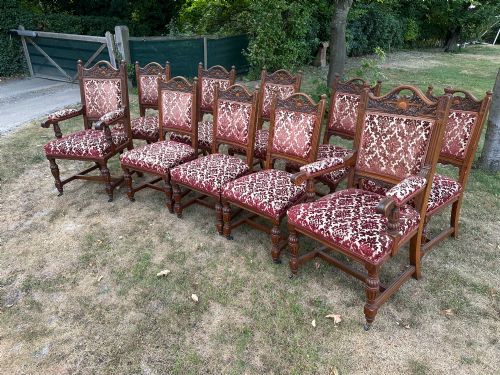
These edwardian armchair dining set options bring matched seating to the table, combining supportive carver armchairs with standard dining chairs for formal meals.
Edwardian Armchair Dining Set
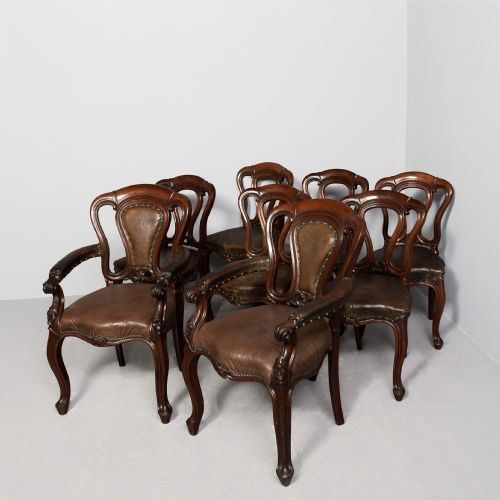
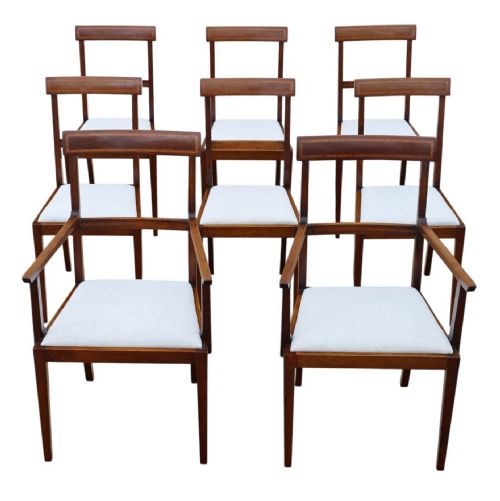
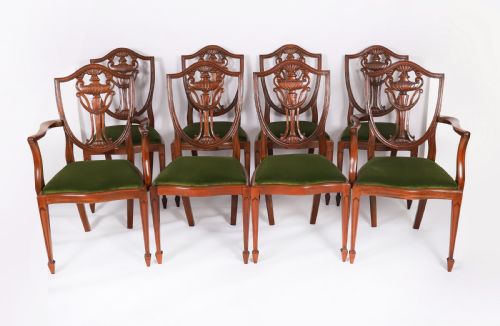
An edwardian armchair dining set typically comprises a matched group of timber seating featuring carver armchairs with elbow rests alongside side chairs. These collections often emerge from the Edwardian era and the early twentieth century, alongside revivals of Georgian, Chippendale, and Hepplewhite styles.
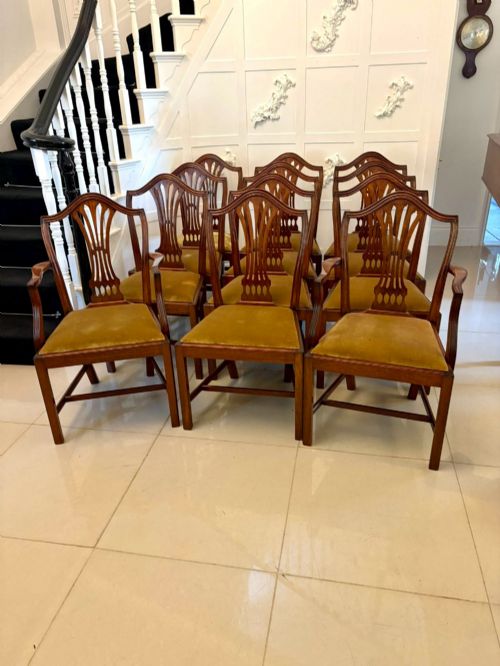
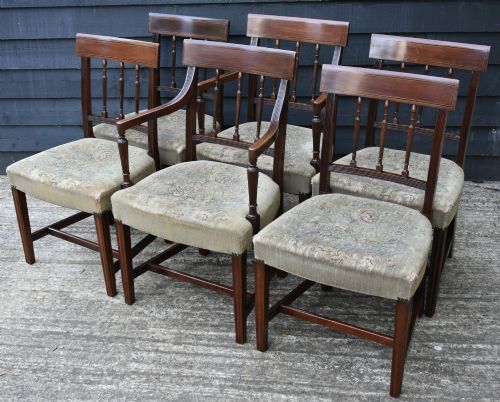
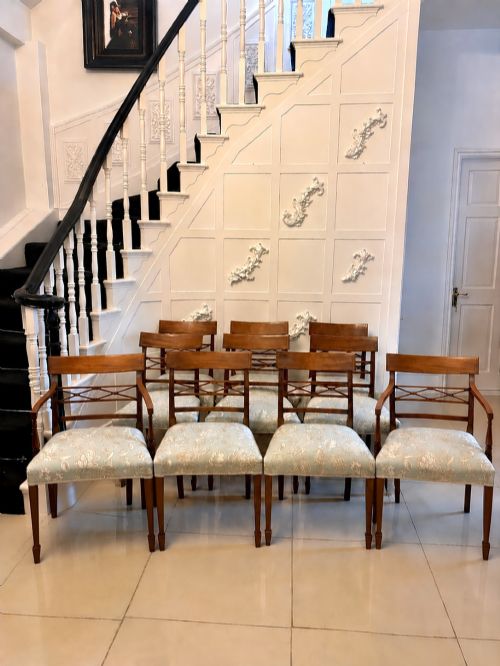
Buyers encounter sets ranging from four to twelve pieces, frequently configured with six single chairs and two armchairs for the heads of the table. The forms draw heavily on earlier eighteenth-century proportions while utilising the timber capabilities of nineteenth and twentieth-century cabinet makers.
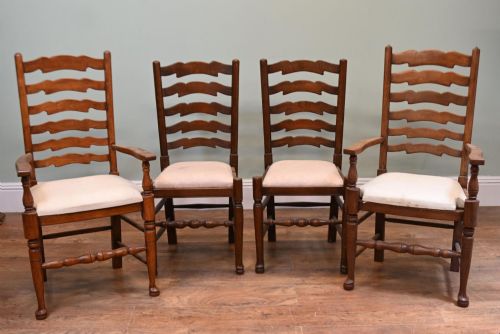
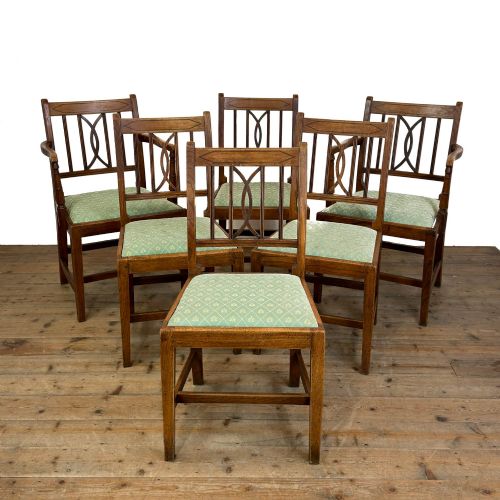
Mahogany and oak dominate the surviving examples, shaped into shield backs, ladder backs, and open splat designs. Makers of the period frequently supplied these dining suites to large households, ensuring uniformity across the entire room.
Materials and construction
Makers constructed these dining sets primarily from solid mahogany and oak, occasionally incorporating satinwood for string inlay or accent details. Secondary timbers such as beech, ash, and elm appear in provincial farmhouse and kitchen chair variations.
Joinery relied on traditional mortise and tenon construction to withstand daily use around the dining table. Carved details on the back splats and crest rails were executed by hand, while seats were upholstered in leather, fabric, velvet, or dropped-in rush and cane.
Edwardian Armchair Dining Set Retail Price Guide 2026
Typical asking prices for edwardian armchair dining set among the pieces listed under this phrase on Sellingantiques today, from the lower quarter to the upper quarter. They describe what is for sale here now, not the wider market.
One notable Edwardian dining carver set carries a direct historical link to Winston Churchill and Harry Warren House.
Distinctions in quality
Quality rests heavily on the selection of timber and the crispness of the carving on the back splats and legs. Sets produced by known cabinet makers or retailers display superior joinery, tighter grain matching, and more substantial carver armchairs.
The degree of original upholstery survival and the retention of matching hardware also separate standard utilitarian sets from finer parlour and dining room suites. The depth of the timber undercarriages and the stability of the leg joints dictate longevity.
Warings·Alfred Allen of Birmingham·Maple and Co·James Shoolbread·Spillman and Co·Waring and Gillow
The Edwardian Armchair Dining Set Glossary
- Carver
- An armchair designed with elbow rests, traditionally placed at the head and foot of a dining table.
- Shield back
- A chair back shaped like a heraldic shield, popularized by Hepplewhite and revived in later centuries.
- Splat
- The vertical wooden strip down the centre of a chair back, frequently pierced or carved.
- Stretcher
- The horizontal wooden member connecting the legs of a chair to provide structural rigidity.
- Revival
- A nineteenth or twentieth-century style that deliberately copies the proportions and ornamentation of an earlier historical period.
Edwardian Armchair Dining Set: Frequently Asked Questions
How many chairs come in a typical set?
Sets generally range from four to twelve pieces, with configurations like six single chairs and two armchairs being common for standard dining tables. Larger sets accommodating ten or twelve chairs also appear frequently in the Edwardian period.
Buyers should verify the exact breakdown of carver armchairs versus standard side chairs when purchasing a matched dining suite.
What is the difference between a carver and a side chair?
Carver chairs feature wooden arms attached to the sides, designed to support the elbows of the host and hostess seated at the ends of the table. Side chairs lack arms so they can tuck neatly beneath the table edges along the sides.
In a dining set, the carvers usually share the exact same back design and leg style as the side chairs to maintain visual harmony.
How do I identify Edwardian dining chairs?
Edwardian dining chairs date from roughly 1901 to 1910 and often draw inspiration from earlier Georgian, Chippendale, or Hepplewhite designs. They tend to feature lighter proportions than heavy Victorian furniture while maintaining sturdy mahogany or oak frames.
Many examples incorporate subtle string inlay, satinwood banding, or carved shield backs typical of the Edwardian revival aesthetic.
Are these chairs suitable for daily use?
Solid timber dining chairs from the Edwardian era and earlier revivals were built for heavy domestic service using traditional mortise and tenon joinery. They generally offer robust daily performance provided the joints remain tight and stable.
Upholstered drop-in seats or leather pads can also be easily maintained or recovered to suit modern dining room interiors.