

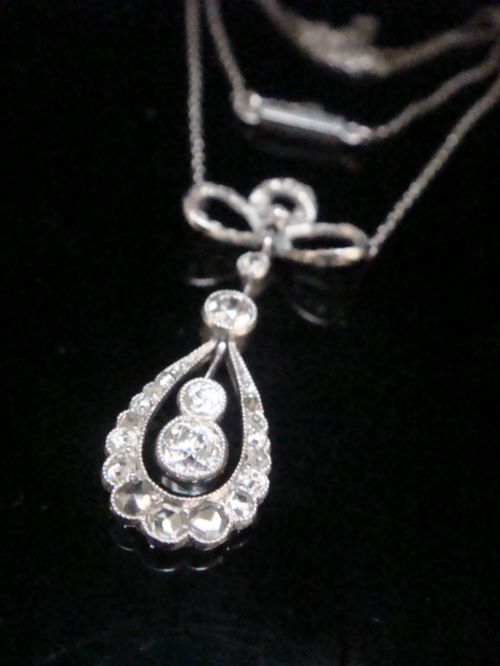


Edwardian 18ct Gold Necklace
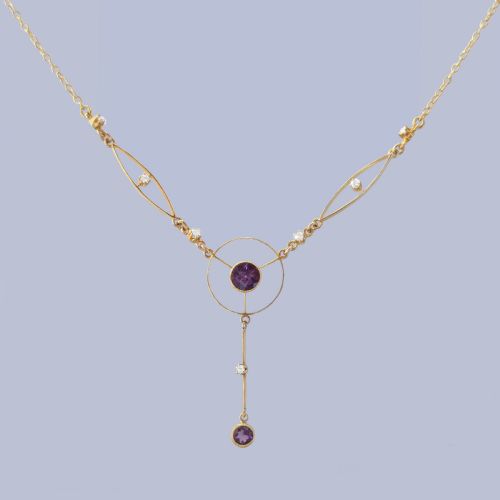
An edwardian 18ct gold necklace carries the distinct lightness and gem-set grace of the early twentieth century.
Edwardian 18ct Gold Necklace
When searching for an edwardian 18ct gold necklace, collectors encounter delicate pendants, lavalieres, and longer guard chains designed to sit gracefully on the neckline. The pieces span periods from the late nineteenth century through the Edwardian era and into Art Deco designs, reflecting shifting tastes in goldsmithing.
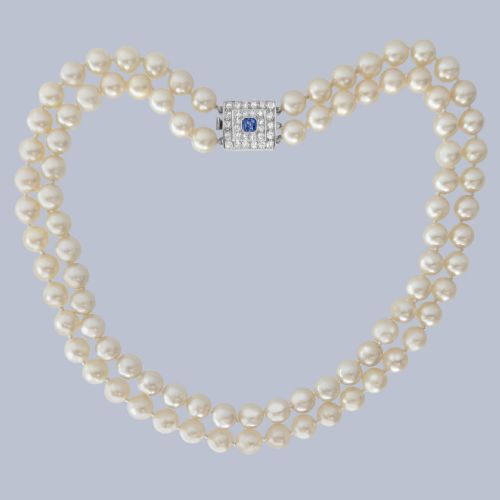
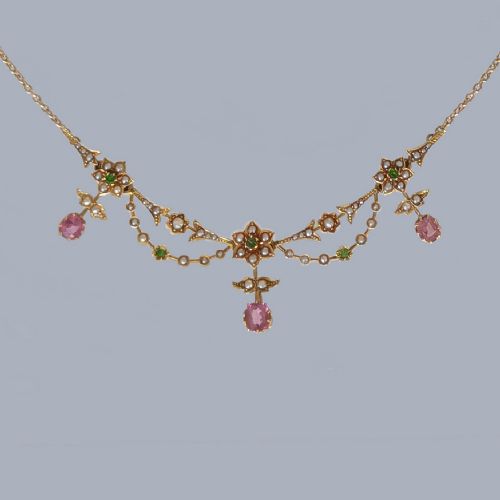
Yellow gold dominates the earlier examples, while white gold and platinum emerge in pieces leaning toward the nineteen-twenties. Buyers frequently meet gem-set drops incorporating pearls, diamonds, and coloured stones such as amethyst, aquamarine, and opal.
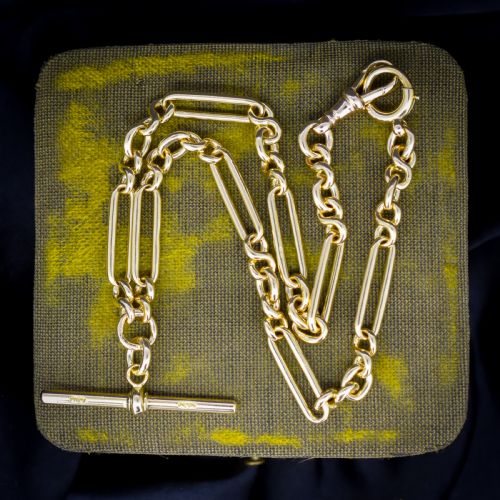
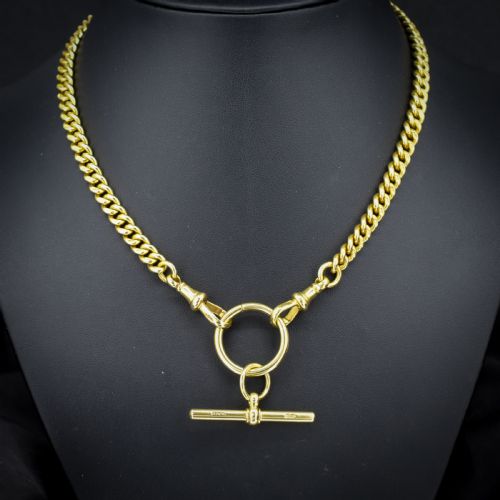
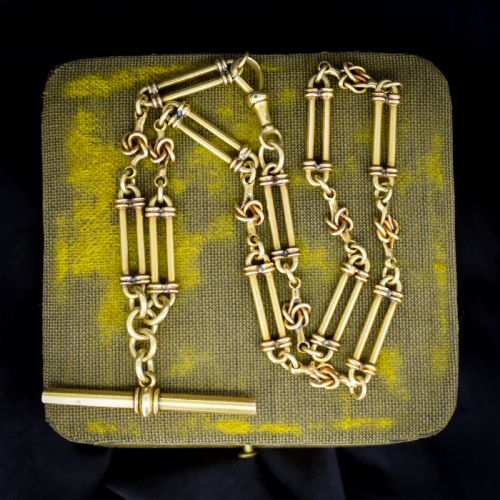
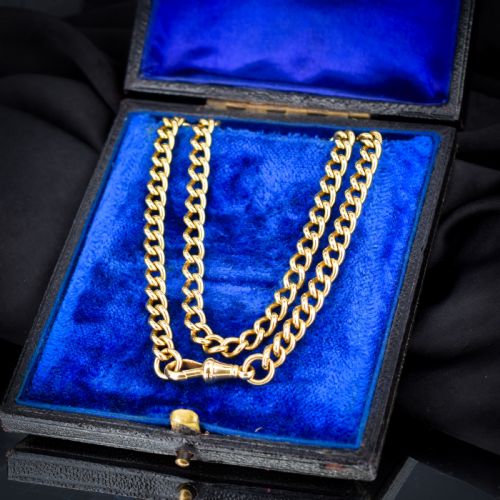
The inventory includes converted watch chains, rigid pendants, and multi-strand necklaces fitted with secure clasps or dog clips. Each form demonstrates the refined proportions typical of high-karat gold jewellery from these decades.
Materials and construction
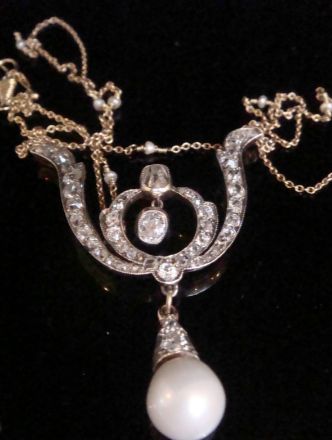
Craftsmen utilised eighteen-carat yellow and white gold alongside platinum to mount old-cut diamonds, seed pearls, and vibrant gemstones. Platinum settings allowed for finer claw and millegrain work, securing stones with minimal metal visibility.
Links were hand-formed into trombone, curb, and oval patterns for chains, whilst pendants utilised pierced openwork and filigree techniques. Gemstones were frequently bezel or collet set, complemented by delicate drop elements such as fringe motifs or swinging lavalier pendants.
Certain antique watch chains were originally engineered to secure heavy pocket timepieces, meaning they easily outlast modern counterparts while holding a delicate pendant.
Assessing quality in antique necklaces
Quality reveals itself in the precision of the metalwork, particularly the crispness of millegrain edges and the symmetry of pierced openwork galleries. Superior examples maintain original components, from dog clips and bolt rings to matching clasps, without intrusive modern replacements.
The selection of gemstones dictates the upper tier of the range, where natural pearls, clean aquamarines, and well-matched old-cut diamonds display superior brilliance. Proportion and balance between the chain and the central pendant also determine whether a piece achieves true harmony of design.
The Edwardian 18ct Gold Necklace Glossary
- Lavalier
- A pendant necklace featuring a central drop suspended below a smaller decorative motif. This style gained immense popularity during the Edwardian period.
- Millegrain
- A decorative technique involving a row of tiny raised metal beads along the edge of a setting. It softens the transition between metal and stone.
- Old-cut diamond
- A hand-faceted diamond cut before modern machinery standardised proportions, typically featuring a smaller table and a higher crown. These stones produce a softer, candlelight sparkle.
- Trombone chain
- A watch chain style composed of alternating long rectangular links and small round links. It offers structural strength and visual rhythm.
- Dog clip
- A spring-loaded snap hook traditionally used on watch chains to secure pocket watches or charms. They frequently serve as fastening points on antique necklaces.
Edwardian 18ct Gold Necklace: Frequently Asked Questions
How do I wear a longuard chain?
Longuard chains measure substantially longer than standard necklaces and were originally designed to hold pocket watches or lorgnettes. Today, they are typically doubled around the neck or left as a single long strand for a dramatic vertical line.
Many feature integrated dog clips or spring rings, allowing the wearer to attach a pendant or tuck the ends together to create varied styling options.
How can I date an 18ct gold necklace?
Dating relies on stylistic clues, mounting techniques, and the combination of metals used in the construction. Yellow gold is more prevalent in the nineteenth century and early 1900s, whilst white gold and platinum become prominent by the nineteen-twenties.
Motifs such as bows, garlands, and geometric Art Deco lines provide clear chronological markers for when the piece was made.
Can I replace the chain on a pendant?
Pendants and chains are frequently paired together after their initial manufacture, matching antique pendants with period-appropriate chains. When altering configurations, ensure the weight and gold colour of the chain complement the pendant mount.
Consulting a jeweller ensures that suspension loops and jump rings can accommodate the new chain securely without stressing the antique metal.