
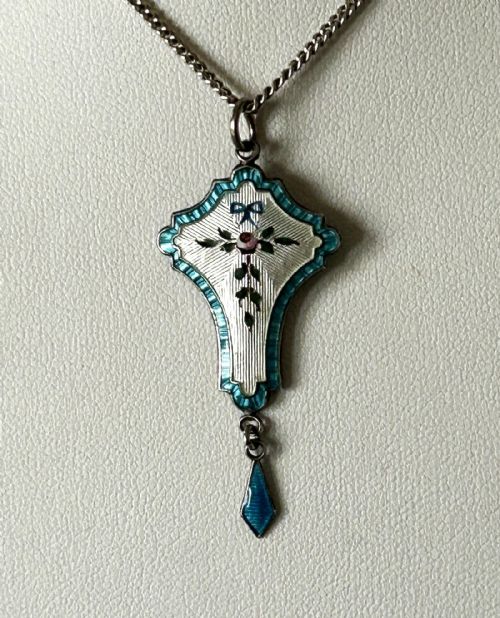


Antique Floral Drop Necklace
These antique floral drop necklace pieces bring delicate organic forms and fine gemstone work together, offering wearable history that collectors prize for period character.
Antique Floral Drop Necklace
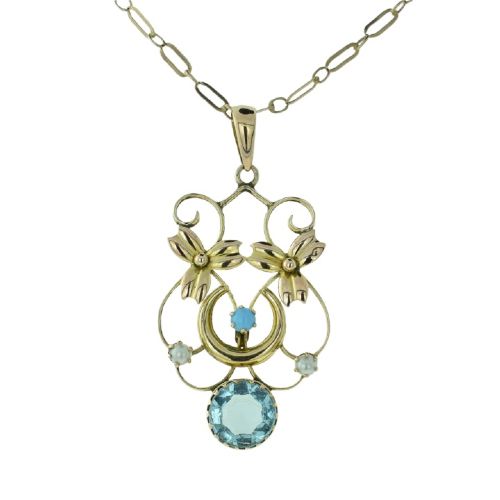
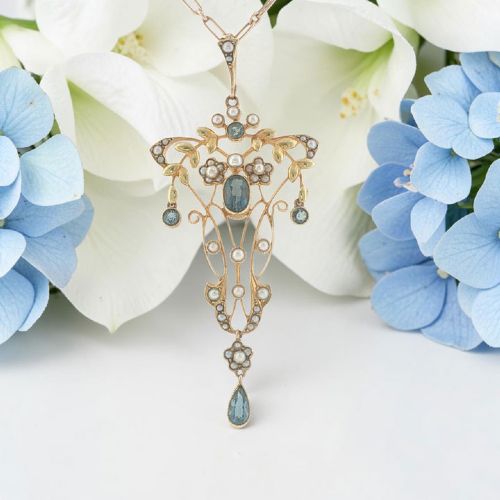
An antique floral drop necklace draws the eye downward with a central botanical motif suspended from a chain, collar or choker. These pieces emerge most often in Edwardian and Victorian designs, though examples extend into the Art Nouveau, Arts and Crafts and Art Deco periods.
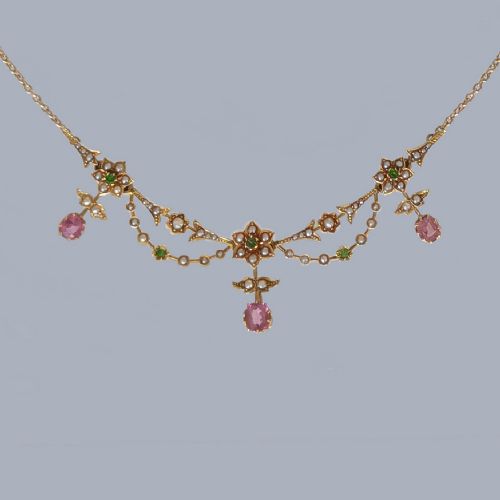
The form typically showcases flower heads, foliage or foliate clusters rendered in gold, silver or platinum. You will frequently encounter combinations of seed pearls, aquamarine, amethyst and turquoise set into these pendant drops.
Materials and construction methods
Goldsmiths utilised 9ct, 14ct, 15ct and 18ct gold alongside silver to form the delicate structures of these pendants. Enamel work and cloisonne techniques also appear, adding vibrant colour to the floral and foliate motifs.
Gemstones including diamonds, pink sapphires, garnets and blue topaz are meticulously collet set or claw set by hand. Seed pearls are threaded or pegged onto fine gold wire to create trembling floral clusters that catch the light.
Materials documented across these listings include 9ct, 14ct, 15ct and 18ct gold, silver, platinum, seed pearls, aquamarine, amethyst, turquoise, pink sapphires, garnets, diamonds, paste and enamel.
Distinctions in quality and execution
The finer examples demonstrate superior handiwork in the intricate piercing of the metalwork and the precise matching of delicate seed pearls and coloured stones. Master goldsmiths achieved balanced proportions where the drop hangs fluidly from its suspension loop without stiffness.
The depth of detail in enamel work and the absence of clumsy solder repairs separate exceptional workshop pieces from standard commercial production. Maker attribution and original chain retention also elevate the standing of a piece.
S. Blanckensee & Son·Charles Horner
The Antique Floral Drop Necklace Glossary
- Seed Pearl
- Tiny, naturally formed saltwater pearls often graded by size and drilled for delicate wiring. They form the signature delicate petals and borders on Edwardian floral pendants.
- Lavalier
- A pendant necklace featuring a central gemstone or drop suspended further down from a smaller secondary link or bow. This style gained immense popularity during the Edwardian era.
- Cloisonne
- An ancient enamelling technique where thin metal wires are soldered to a metal base to create compartments filled with coloured glass paste. These are then fired to a smooth finish.
- Foliate
- Design work incorporating leaves, vines and plant motifs arranged in naturalistic or stylised patterns. It forms the primary decorative vocabulary of these floral necklaces.
- Collar
- A rigid or semi-rigid neck-fitting chain or band designed to sit high on the collarbone. They often serve as the mounting base for substantial floral drop pendants.
Antique Floral Drop Necklace: Frequently Asked Questions
What periods do these necklaces come from?
The listings span from the late Victorian and Edwardian eras through to the Art Deco and Mid-Century periods. Edwardian and Victorian examples dominate the selection with distinct botanical motifs.
Craftsmanship evolved across these decades, moving from heavy naturalistic goldwork toward lighter platinum and silver settings.
How do I care for antique pearl necklaces?
Seed pearls require gentle treatment because organic material reacts poorly to chemicals, perfumes and ultrasonic jewellery cleaners. Wipe them softly with a dry cloth after wearing.
Store the necklace flat in a lined box to prevent tension on the fine wire or silk thread holding the tiny pearls.
Are original chains usually included?
Many Edwardian and Victorian pendants survive with period-appropriate chains, though some listings offer the pendant alone for your own pairing. Matching the gold purity or silver tone to the drop remains important.
Collar chains and choker lengths frequently accompany the pendant drops in Victorian configurations.
How are Edwardian and Victorian styles told apart?
Victorian pieces tend to use heavier rose or yellow gold with denser stone arrangements like diamonds and garnets. Edwardian design shifts toward lighter silver-topped gold, platinum and airy openwork.
Floral motifs in the Edwardian period often embrace pastel gemstones like aquamarine, amethyst and seed pearls.