


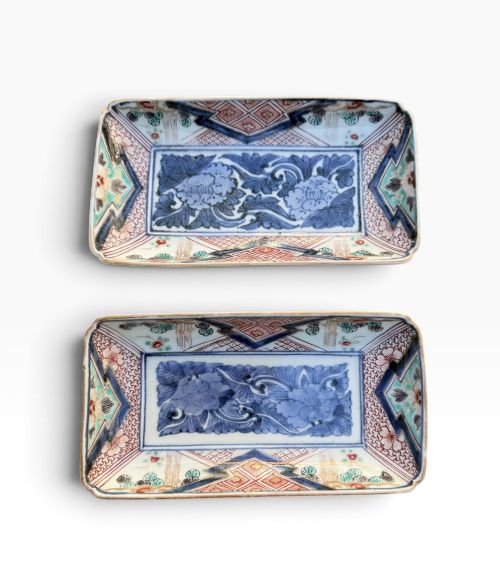



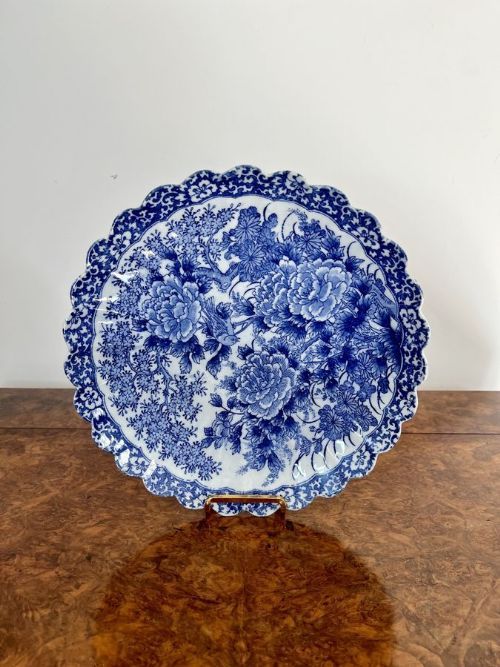
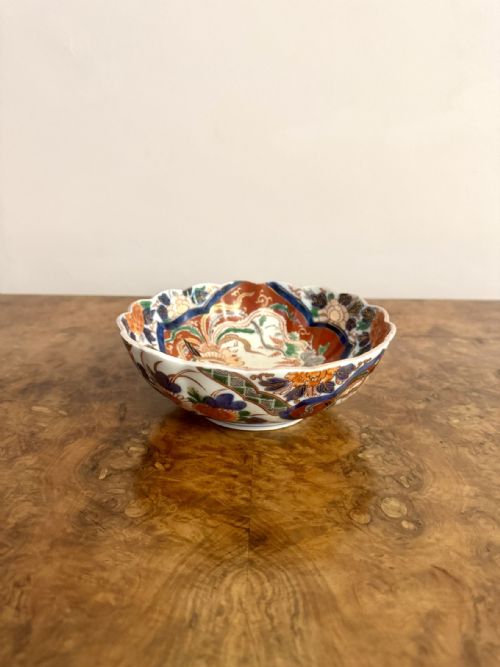

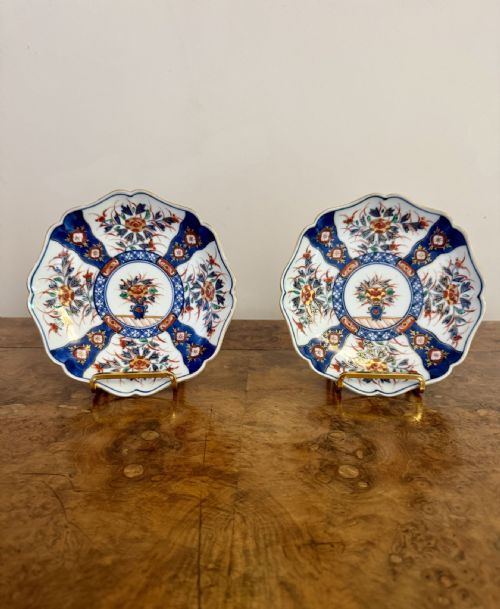


Edo Imari Ware
These pieces of edo imari ware bring centuries of ceramic artistry into your home, offering distinctive shapes and vivid painted palettes that anchor any room.
Edo Imari Ware
Most items meeting your eye derive from the Arita kilns in Hizen province, taking shape as either classic blue and white patterns or the polychrome Imari palette involving cobalt glaze, enamel, and gilt highlights. Garnitures of shaped vases and large chargers appear alongside everyday serving dishes housed in boxes.
Materials and Construction
These items rely on high-fired porcelain clay shaped by hand or moulded into complex forms like scalloped edges and shell contours. Artisans applied cobalt blue underglaze directly to the body before the initial kiln firing.
Overglaze decoration followed using enamel colours and gold leaf, fixing the vibrant palette during a subsequent, lower-temperature firing process. This layering of glaze and metallic leaf yields the characteristic depth found across the vessels.
Edo Imari Ware Retail Price Guide 2026
Typical asking prices for edo imari ware among the pieces listed under this phrase on Sellingantiques today, from the lower quarter to the upper quarter. They describe what is for sale here now, not the wider market.
The listings span porcelain, enamel, gold leaf, and cobalt glaze, predominantly taking the form of plates, bowls, chargers, and vases.
Judging Quality in Imari Ceramics
The distinction between ordinary and superior pieces rests upon the precision of the hand-painted brushwork and the complexity of the form. Plates and vases featuring crisp cobalt lines and meticulously applied enamel display a higher degree of artisan skill.
The presence of gold leaf integration and uncommon configurations, such as fan-shaped dishes or matched garnitures, separates standard utilitarian wares from exceptional collector examples.
The Edo Imari Ware Glossary
- Arita
- The Japanese town in Hizen province that served as the primary production centre for porcelain in the Edo period.
- Imari palette
- A distinct colour scheme combining underglaze cobalt blue with iron-red and gold overglaze enamels.
- Garniture
- A set of matching vases or vessels designed to be displayed together on a mantelpiece or cabinet.
- Charger
- A large decorative plate intended for display on a wall or sideboard rather than for dining use.
- Cobalt glaze
- A blue pigment applied beneath the transparent glaze to create deep, permanent underglaze designs.
Edo Imari Ware: Frequently Asked Questions
What is edo imari ware?
These pieces comprise Japanese porcelain items produced in Arita during the Edo period and later, recognised for their distinct painted schemes.
They encompass plates, bowls, and vases decorated in cobalt blue and iron-red enamel.
How were imari plates used?
Many large chargers and shaped dishes served as decorative display items in elite interiors rather than functional tableware.
Smaller plates and bowls saw use during formal meals and tea ceremonies within Japanese households.
How do I date these ceramics?
Dating relies on stylistic shifts in the blue and white underglaze, the complexity of the enamel palette, and vessel forms.
Seventeenth-century examples often exhibit robust potting and simpler scrolling foliate borders, while later Meiji items show finer detail.
How should I clean porcelain?
Dust these items gently with a soft, dry brush to prevent accumulation in scalloped edges and recessed crevices.
Avoid submerging pieces with delicate gold leaf or overglaze enamel in water for extended periods.